

What Makes a Damascus Folding Knife Special
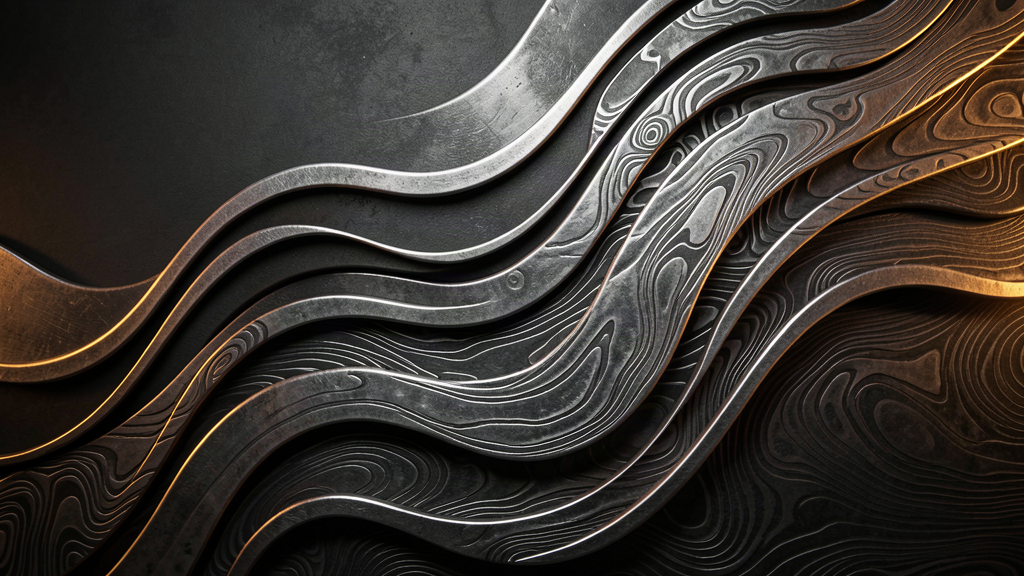
Modern damascus — often called pattern-welded steel — is made by forge-welding two or more different steels together, then folding, twisting, and grinding the billet to reveal a flowing grain pattern. The name comes from Damascus steel, the legendary blade material of the ancient Middle East, though today's version is a different, modern material inspired by that history.
Pattern-welded damascus pairs high-carbon edge layers with bright nickel-rich steel for a one-of-a-kind look.
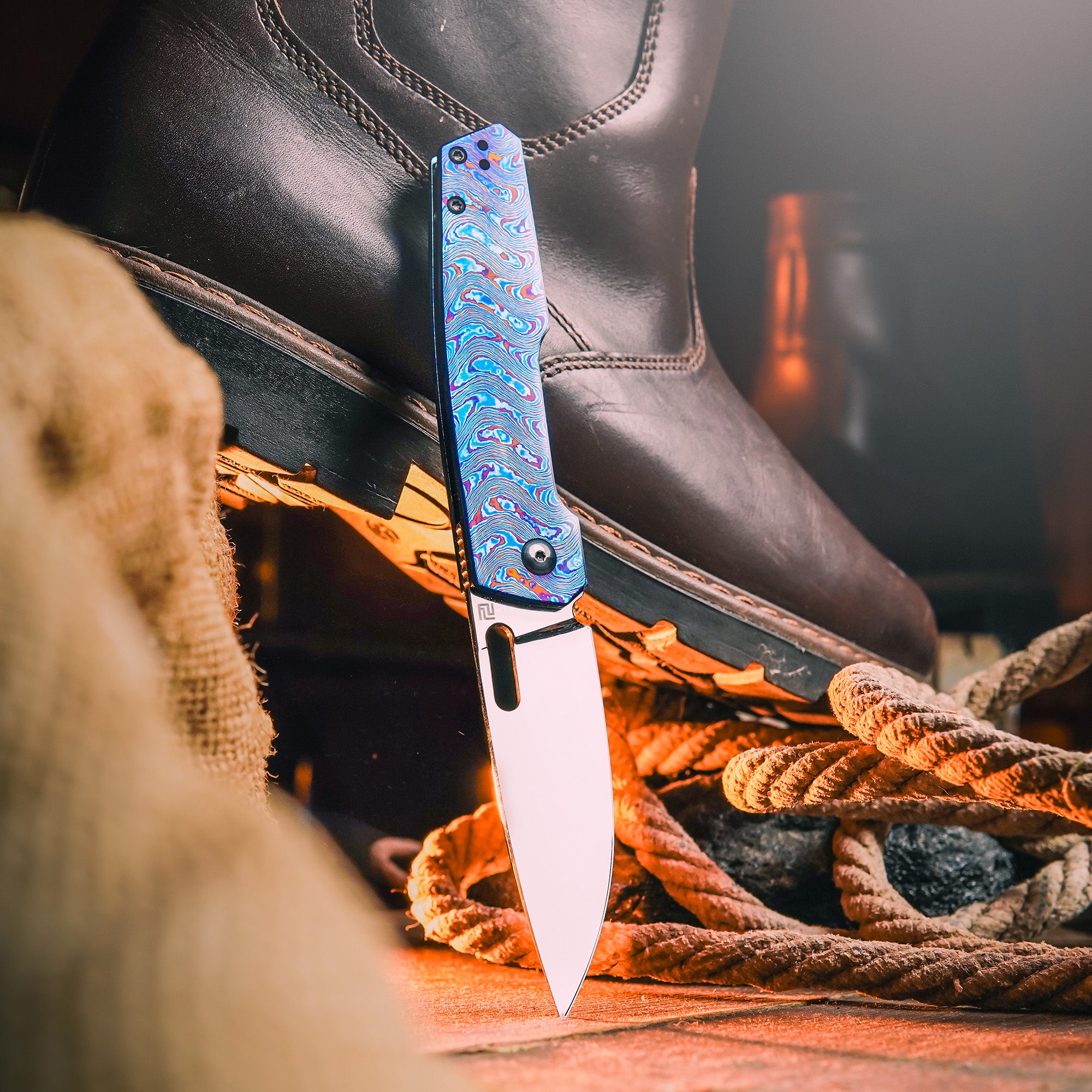
For everyday carry, a damascus folding knife is as much about character as cutting. Because each blade is etched to expose its layers, no two patterns are exactly alike — a damascus blade is effectively a one-of-a-kind piece of steel art that still has to do a day's work.
How Pattern-Welded Steel Is Built
Most modern damascus combines a high-carbon steel for edge holding with a nickel-rich steel that forms the bright layers and resists corrosion. The stacked billet is forge-welded at high temperature, folded or twisted to create the pattern, then ground flat and acid-etched. The etch is what makes the harder layers stand out in faint relief, giving the blade its signature texture and shimmer.
That also answers the biggest question buyers ask: does damascus cut better? Independent testing, including Knife Steel Nerds' comparison of damascus combinations against modern super steels, shows performance follows the component steels — a damascus blade cuts about as well as its base steel, not dramatically better. With damascus you are paying for pattern, craftsmanship, and uniqueness, and that is exactly what it delivers.
Artisan Cutlery's Damascus Lineup
Artisan Cutlery carries damascus across more than a dozen folding models, from accessible G10-handled folders to full titanium frame locks. All of the blades below are verified from the current product catalog, with hardness ratings around HRC 59–62 and flat-ground geometry.
| Model | Blade | Handle | Lock Type |
|---|---|---|---|
| Classic ATZ-1802GD | 3.94" drop point | G10 | Liner lock |
| Tradition ATZ-1702GD | 3.94" drop point | Titanium TC4 | Frame lock |
| Shark ATZ-1707GD | 3.94" drop point | Titanium TC4 | Frame lock |
| Osprey ATZ-1803GD | 3.74" drop point | Titanium TC4 | Frame lock |
| Tomahawk ATZ-1815GD | 3.94" drop point | Titanium | Frame lock |
| Orthodox ATZ-1817GD | 3.54" drop point | Titanium | Frame lock |
| Hyperion ATZ-1834GSD | 3" drop point | Titanium + carbon fiber | Frame lock |
| Blowback ATZ-1822GD | 3.72" clip point | Titanium | Recoil-Lock |
| Centauri ATZ-1839GD | 3.46" drop point | Titanium + carbon fiber | Frame lock |
| Tacit ATZ-1838GD | 3.42" drop point | Titanium | Frame lock |
| Eterno ATZ-1818GD | 3.54" drop point | Titanium | Frame lock |
| Arion ATZ-1843GD | 3.81" drop point | Carbon fiber / marbled CF | Liner lock |
The lineup spans a wide size range, so there is a damascus folder for everything from office-friendly 3-inch blades to full-size 3.94-inch workhorses. The Blowback stands out as the only recoil-lock model, while the Tacit and Hyperion pair damascus blades with titanium damascus handles for a fully patterned look.
What to Look For in a Damascus Folding Knife
- Base steel matters most. The edge-holding layers inside the pattern determine real-world cutting performance, so choose the model, not just the pattern.
- Hardness and grind. Look for blades around HRC 59–62 with a flat grind — a geometry that slices well and is straightforward to sharpen.
- Handle and lock. Titanium frame locks keep weight down and lockup solid; G10 and liner locks keep the price accessible; the Recoil-Lock offers ambidextrous operation.
- Size and carry. Smaller 3-inch blades disappear into a pocket, while 3.5–4-inch blades give more cutting edge for heavier tasks.
Care for Damascus Blades
Pattern-welded steel needs slightly more attention than a plain stainless blade. The acid-etched surface can dull if exposed to harsh chemical cleaners, so wipe the blade after use, wash with mild soap and water when needed, dry it completely, and keep a light coat of oil on the steel. Done consistently, that routine keeps the pattern crisp for years — and a damascus folder rewards the care with a look no factory blade can match.
Find your ideal everyday carry configuration — explore the Artisan Cutlery folding knife collection for premium EDC folders built for reliable everyday carry.

Leave a comment
This site is protected by hCaptcha and the hCaptcha Privacy Policy and Terms of Service apply.