

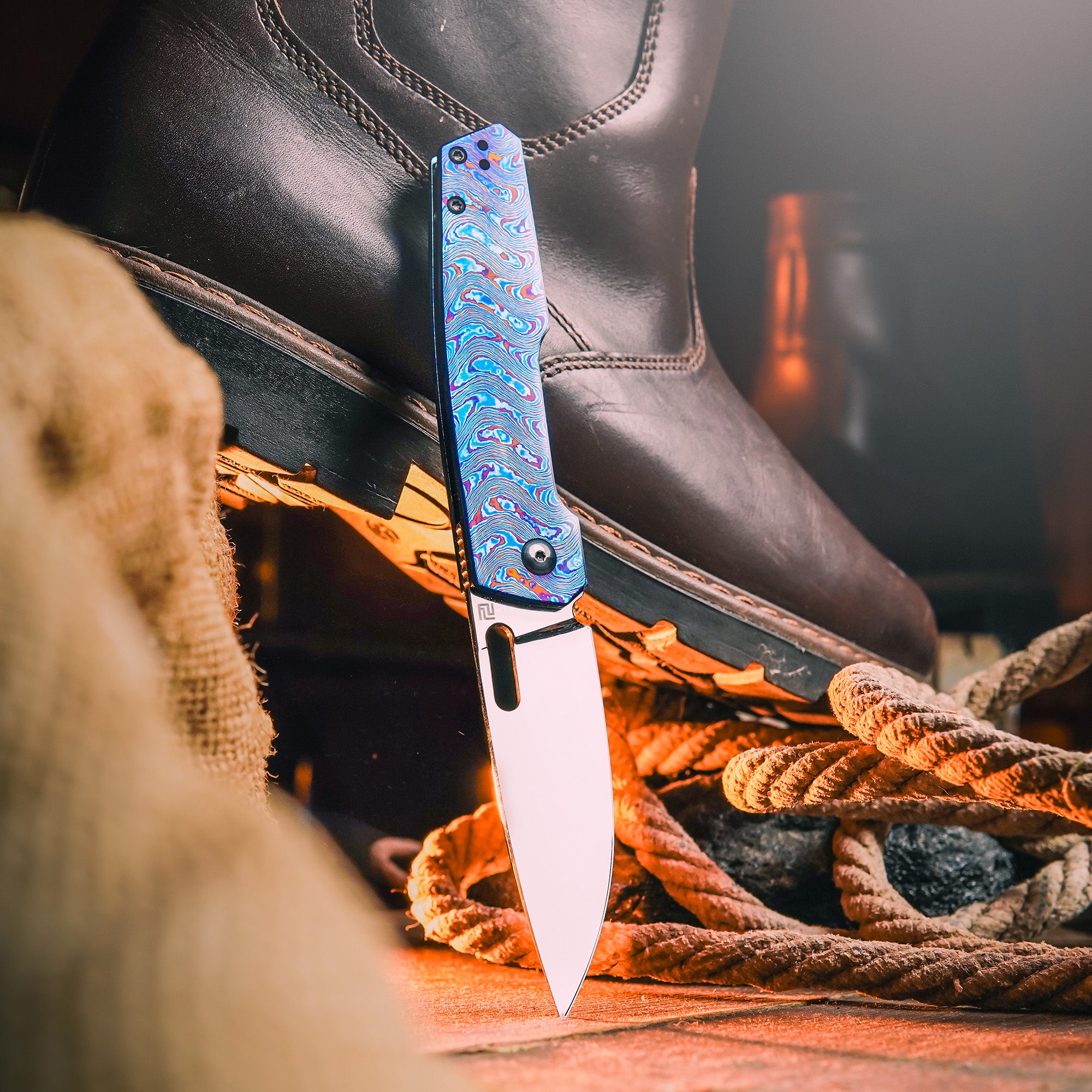
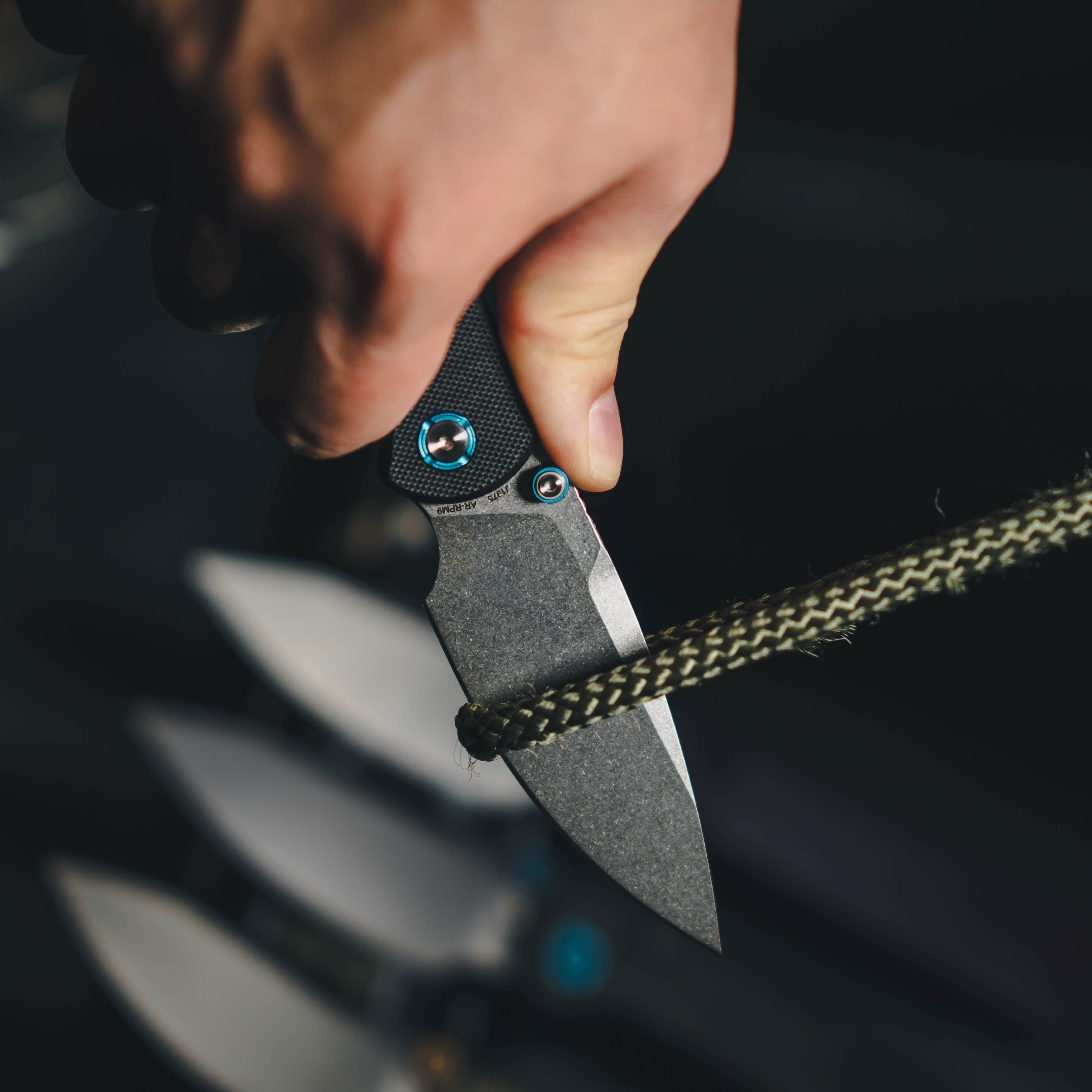

When you pick up a folding knife, the first question is usually about the blade steel or the lock. But the opening mechanism matters just as much: assisted-opening knives use a spring to finish the flip, while manual knives stay fully mechanical from start to finish. Here is how the two compare for everyday carry.
Assisted knives add a spring; manual knives rely on detent, bearings, and technique.
What Is an Assisted-Opening Knife?
An assisted-opening knife contains a spring or torsion bar that engages once you push the blade partway out. You start the motion with a flipper tab or thumb stud, and the spring takes over to snap the blade into the locked position. The assist does not deploy the blade on its own — it needs your initial push — which is the key difference from an automatic (switchblade) knife, where pressing a button releases the blade entirely.
What Is a Manual Folding Knife?
A manual folding knife relies entirely on you: you push the flipper, thumb stud, or thumb hole through the full arc until the lock engages. The only assistance comes from the pivot hardware — bearings or washers — and your own technique. Manual knives are mechanically simpler, with no spring to wear out or fail.
Assisted Opening vs Manual: Side by Side
| Factor | Assisted opening | Manual |
|---|---|---|
| Deployment speed | Spring finishes the flip quickly | Depends on detent and pivot tuning |
| Mechanism complexity | Spring adds moving parts | Simpler, fewer parts |
| Reliability | Springs can fatigue over years | Nothing extra to break |
| Maintenance | Spring mechanism adds cleaning steps | Standard pivot lubrication only |
| Legality | Some jurisdictions restrict spring-assisted knives | Fewest restrictions |
| Action feel | Consistent, one-handed snap | Customizable — snappy to drop-shut |
Pros and Cons
Assisted-opening knives
- Fast, consistent one-handed deployment
- Good for users who want reliable opening without mastering flipper technique
- Spring mechanism adds parts that can wear
- Some areas regulate them like automatics — always check local law
Manual knives
- Simpler, more durable mechanism with nothing to fatigue
- Easier to maintain and clean
- Action can be tuned from snappy to drop-shut
- Deployment rewards a little practice
Legality Notes
Knife law varies by country, state, and even city. Automatic knives — commonly called switchblades — are restricted in many jurisdictions, and some places treat spring-assisted knives the same way, while others draw a clear line between the two. The switchblade article on Wikipedia gives a useful overview of how different regions classify automatic knives. Before carrying any knife, check your local blade-length and mechanism rules. A pocketknife with a manual mechanism is generally the least regulated option.
Which Should You Choose for EDC?
For everyday carry, manual knives have a strong case: fewer moving parts, easier maintenance, and the widest legal compatibility. Modern manual folders with ceramic bearings open fast enough for most hands, and a well-tuned detent gives you that satisfying snap without any spring. Artisan Cutlery builds manual folding knives exclusively, from budget-friendly D2 models to M390 and S35VN titanium frame locks — so the whole lineup stays simple, reliable, and legal-friendly.
Browse the Artisan Cutlery folding knife collection to find a manual EDC folder built for reliable everyday carry.


Leave a comment
This site is protected by hCaptcha and the hCaptcha Privacy Policy and Terms of Service apply.