

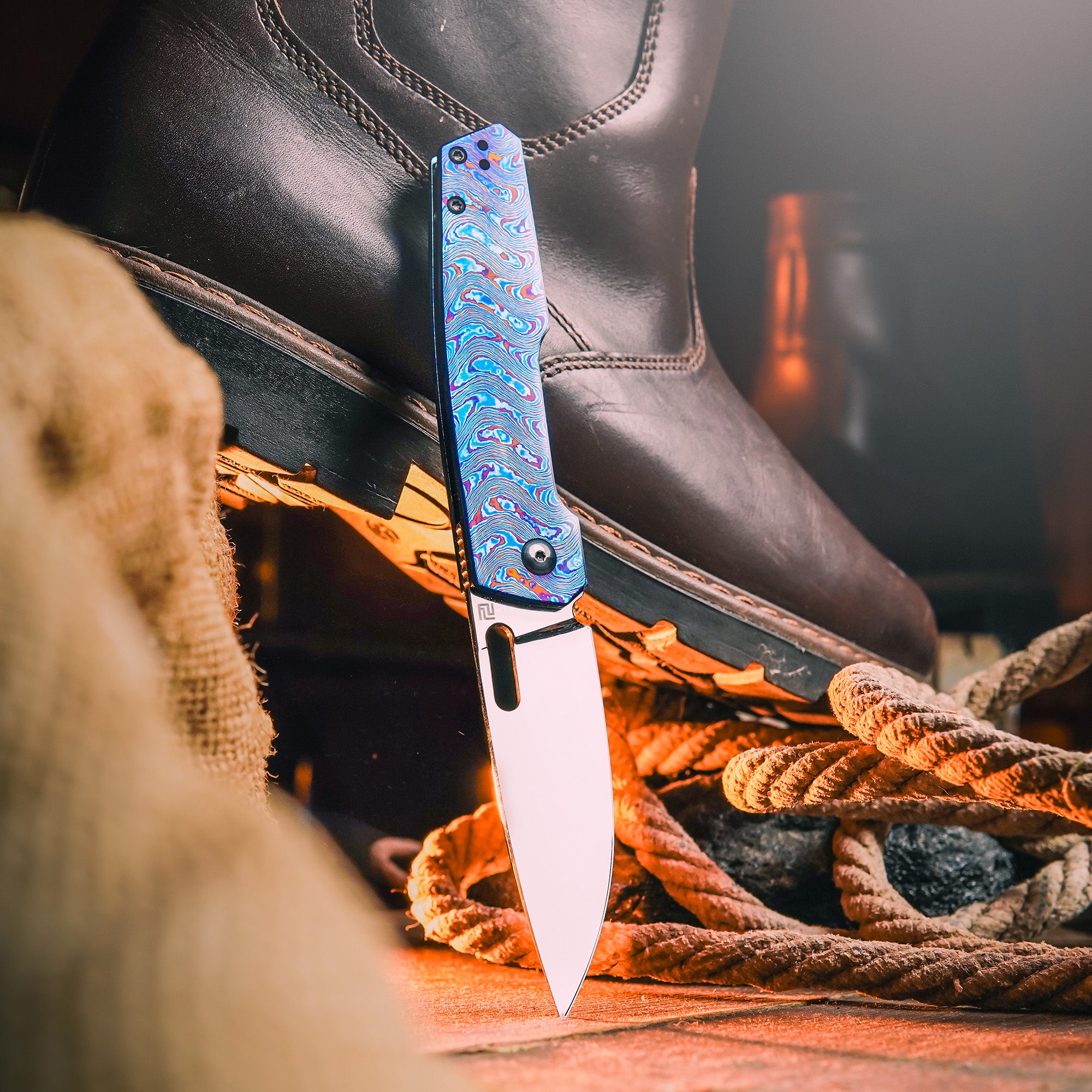
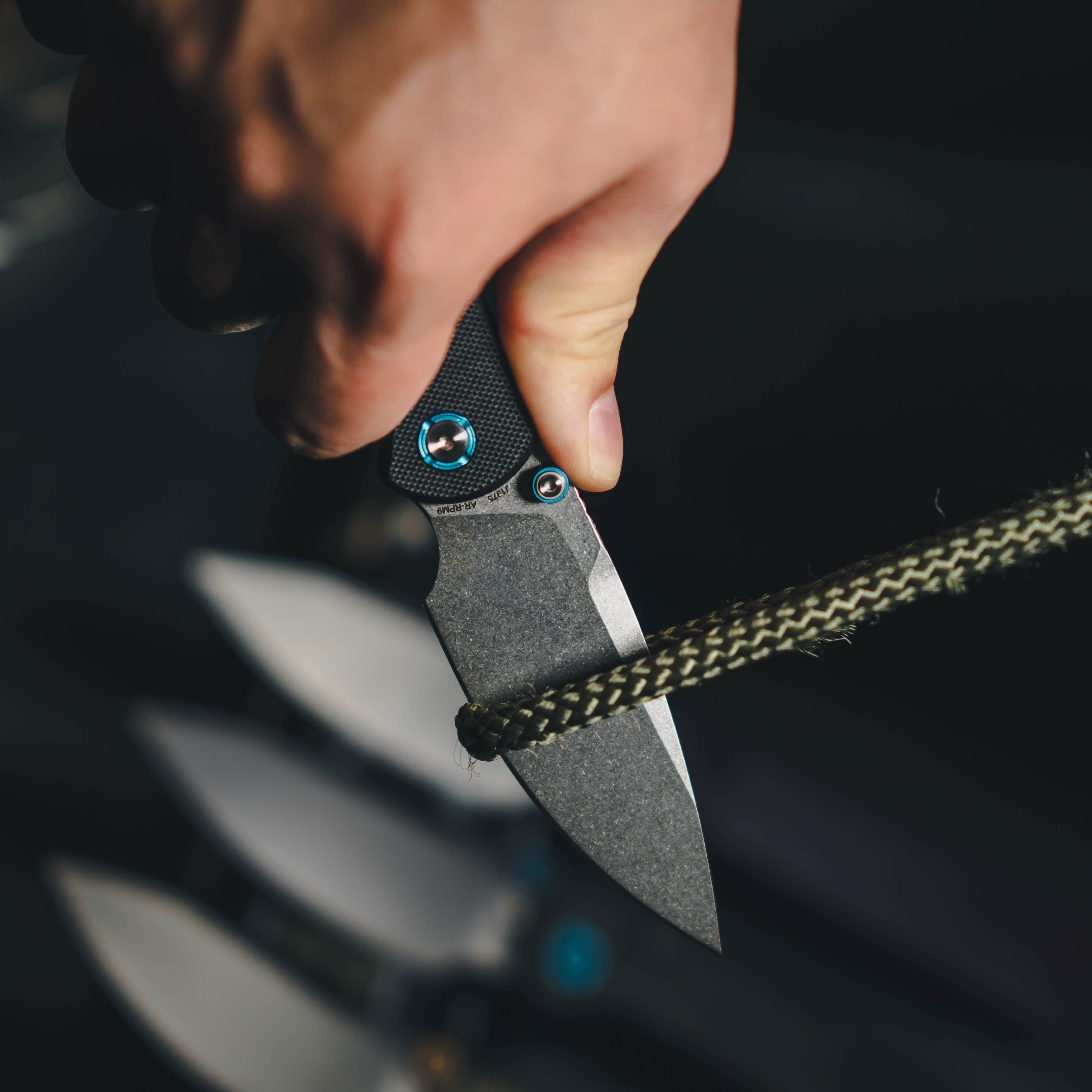
A spec sheet tells you what a folding knife is made of — it does not tell you whether the knife is any good. The best way to judge a folder is to handle it, and a five-minute inspection before you buy can save you from a disappointing purchase. This folding knife buying checklist walks through the essential hands-on tests: lockup, blade centering, detent strength, and action.
A few minutes of hands-on inspection tells you more about a knife than any spec sheet.
Why a Hands-On Check Matters
Two knives with identical materials can feel completely different in hand. Tolerances, pivot tuning, and lock geometry vary from unit to unit, especially at lower price points. A quick inspection catches the common failure points — weak lockup, off-center blades, inconsistent detent — that no photograph will ever show you.
1. The Lockup Test
Open the knife firmly and examine the lock engagement. For a frame lock or liner lock, look at how much of the lock bar contacts the blade tang: a healthy lockup is roughly 40-60 percent of the blade's contact surface. The lock should engage with a solid, audible click, with no vertical play (blade movement up and down) and no lock rock. A lock that engages early and barely holds the blade is a red flag; so is a lock that requires excessive force to disengage.
2. Blade Centering
Close the blade and look down the handle from the pivot. The blade should sit centered between the scales, with even gaps on both sides. Minor off-center bias is common and usually harmless, but a blade that rubs against one scale when closing — or sits visibly crooked — points to an assembly problem. Centering that is off on a new knife rarely improves on its own.
3. Detent Strength
The detent ball holds the blade closed and governs how the knife opens. Test it by holding the knife upright and pressing the blade gently to the side: it should resist, then release cleanly with the flipper, thumb stud, or thumb hole. Too-light a detent lets the blade open with just a wrist flick — and can mean the blade creeps open in the pocket. Too-heavy a detent makes opening stiff and wears on your thumb. A good detent holds firmly but breaks away smoothly.
4. The Action Test
Open and close the knife a dozen times. Feel the pivot: is it gritty, or glassy? Does the blade swing freely on washers or bearings? Decide which action you prefer — drop-shut (the blade falls closed under its own weight), hydraulic (controlled and slow), or snappy (fast, springy deployment). Then check for blade play: a knife that develops horizontal wobble when new will only get worse with use.
5. Edge and Grind Quality
Look down the edge under good light. The bevel should be even on both sides, with no burr or rolled edge. Check the blade grind for symmetry — a lopsided grind indicates inconsistent manufacturing. A sharp, even edge out of the box is a good sign of quality control; a dull or uneven one is not.
6. Handle, Clip, and Fit
Grip the knife and check for hot spots — sharp corners or rough edges that dig into your hand. Test the pocket clip tension: it should hold firmly without being impossible to slide over fabric. Check the clip screws for burrs, and make sure the clip is positioned for the carry style you prefer (tip-up or tip-down, deep carry or standard).
Quick Reference: What Good Looks Like
| Check | What Good Looks Like |
|---|---|
| Lockup | Solid click, 40-60% engagement, no vertical play |
| Centering | Blade centered, even gaps, no rubbing |
| Detent | Firm hold, clean breakaway, no pocket creep |
| Action | Smooth pivot, no grit, minimal blade play |
| Edge | Even bevel, sharp, no burr |
| Fit | No hot spots, solid clip, clean finishing |
A Five-Minute Buying Ritual
- Open and close the knife ten times to feel the action.
- Check lockup and vertical play.
- Look down the handle for centering.
- Test detent with a firm side press.
- Inspect the edge and grind symmetry.
- Grip the knife and test the clip.
Verdict
Materials and design matter, but execution is what separates a great folding knife from a frustrating one. Run this checklist on any folder before you buy it — new or used — and you will consistently pick the better knife. Every reputable maker, including Artisan Cutlery, benefits from an informed buyer who knows exactly what to check.
Browse the Artisan Cutlery folding knife collection for premium EDC folders built for reliable everyday carry.


Leave a comment
This site is protected by hCaptcha and the hCaptcha Privacy Policy and Terms of Service apply.