

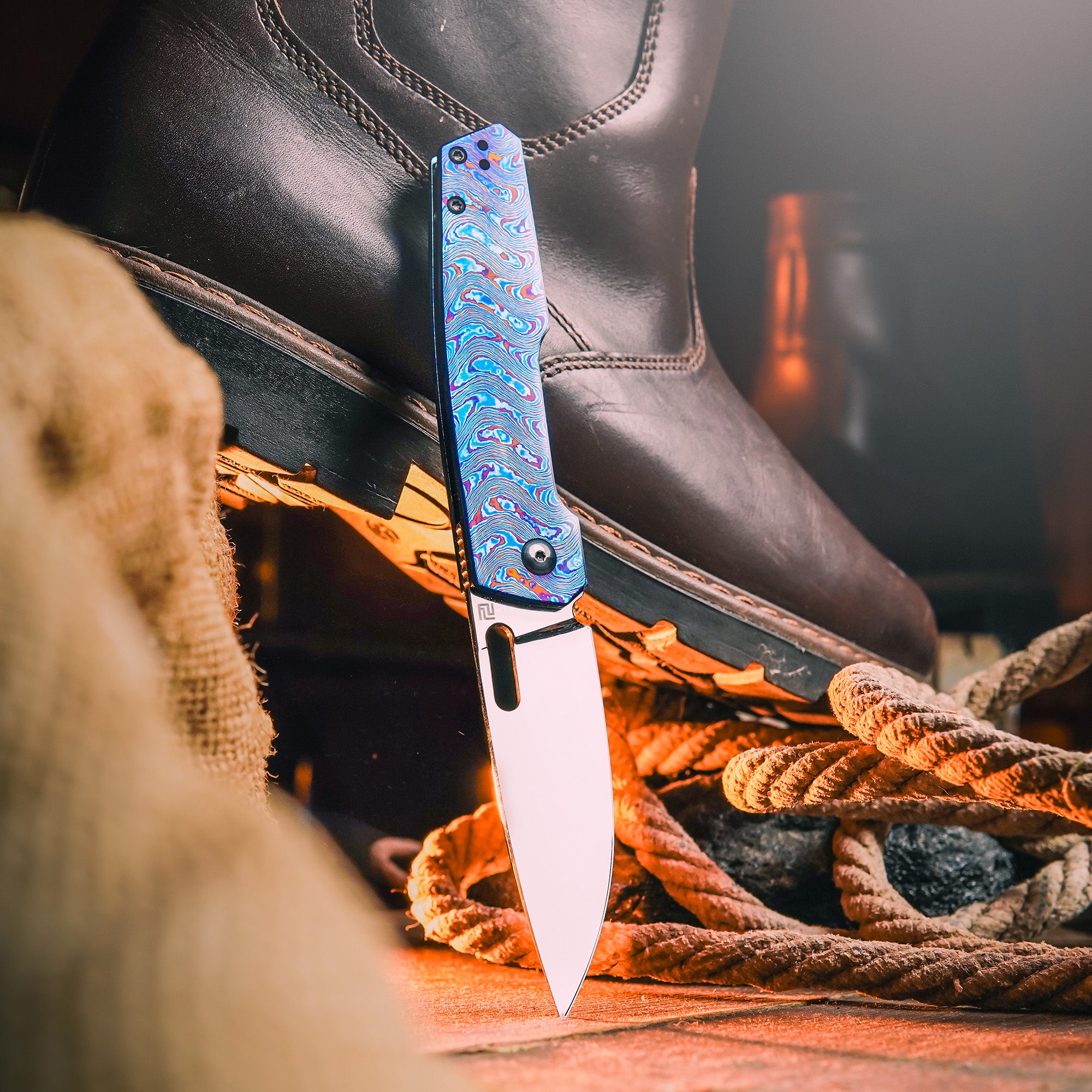
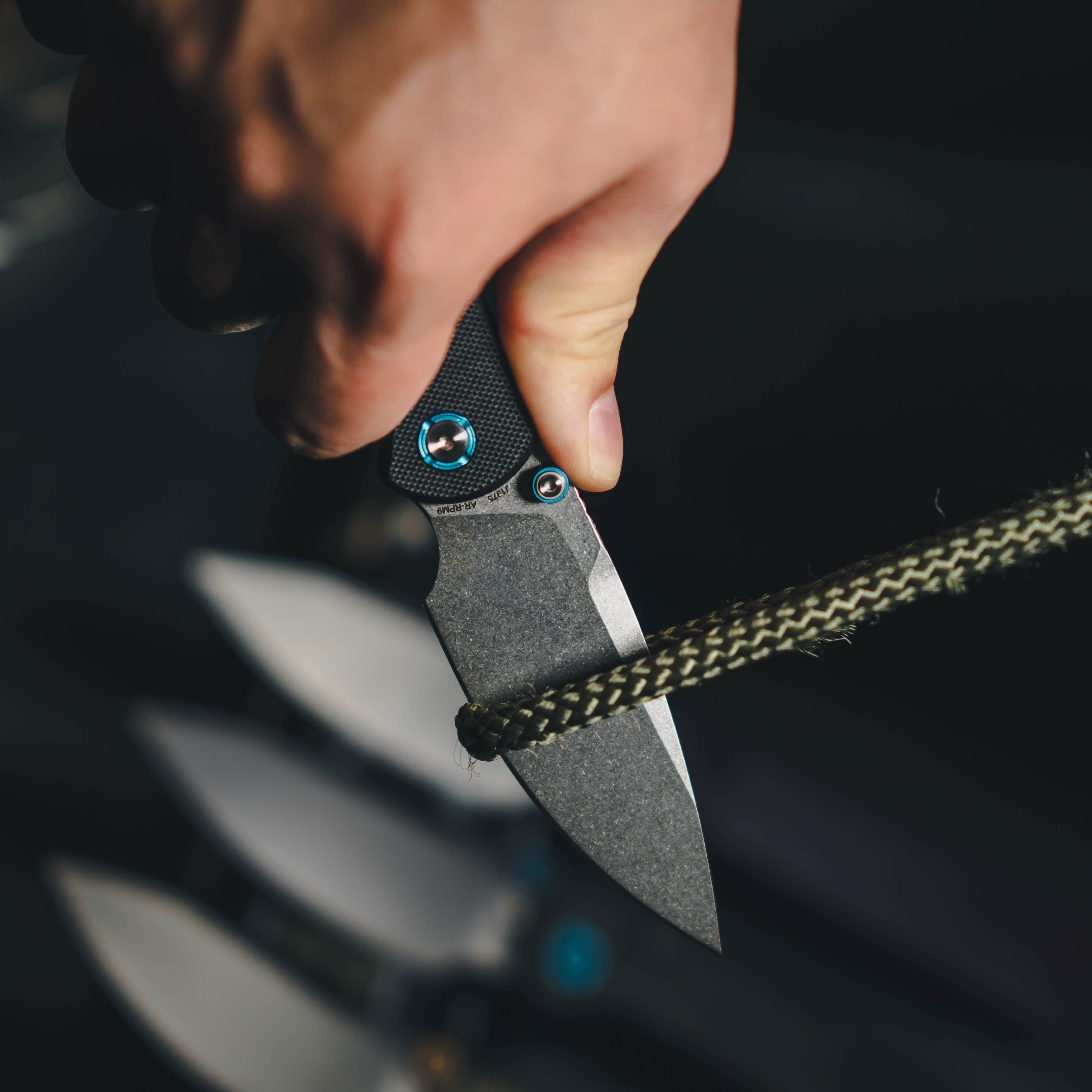


A brand-new folding knife rarely feels like it will. The pivot is tight, the detent is stiff, and the action can be gritty straight out of the box. That is normal — and it is exactly what the break-in period is for. With a little routine care in the first week, most folders settle into a smooth, reliable action that lasts for years. This guide covers the full break-in process: cleaning the factory oil, lubricating the pivot, cycling the action, tuning pivot tension, and understanding how the detent wears in.

A few minutes of break-in care turns a stiff new folder into a daily driver.
Why Break-In Matters
Every folding knife is assembled with tolerance stacks: the blade, the washers or bearings, the pivot screw, and the detent ball all need to seat together. At the factory, knives are shipped with a protective lubricant and the pivot set to a middle tension, so the action you feel on day one is not the action the knife will have in a month. Break-in is simply the process of letting the moving parts polish themselves against each other while you keep them clean and properly lubed.
Day One: Clean and Lube
- Open the knife and wipe the blade with a dry cloth to remove excess factory oil.
- Apply one small drop of light lubricant to the pivot area — a drop, not a soak. A light oil or a quality lubricant designed for knife pivots works best.
- Work the action a few times to distribute the lubricant, then wipe away any that squeezes out. Excess oil only collects lint.
- Check the blade for debris. New knives can carry fine metal dust from the factory; a soft cloth or a puff of compressed air clears it out.
The Action Cycle
Plan to cycle the knife open and closed 100 to 200 times over the first week. You do not need to do it in one sitting — a dozen cycles while watching TV each evening adds up fast. What you should notice as you go:
- The opening action gradually feels less gritty.
- The blade settles into the detent with less resistance.
- The closing swing becomes smoother and more consistent.
Do not force a new knife. If the action is genuinely rough or the blade scrapes, stop and check for a problem rather than grinding through it.
Tuning the Pivot
Once the action has cycled a few dozen times, the pivot tension is yours to set. Most folders use a torx pivot screw you can adjust in small increments:
- Loosen an eighth of a turn at a time, testing the action and blade centering after each step.
- Stop at the loosest setting with no blade play. That is the sweet spot: smooth action, zero wobble.
- If the blade develops side-to-side play, tighten back until it disappears — play always wins over smoothness.
- Leave the pivot alone once it is right. Over-adjusting is the most common way owners introduce problems that never existed.
Knives with ball bearing pivots are usually smooth right out of the box and need less tuning; washer-based pivots benefit most from the cycling process above.
Detent Wear-In: What Is Normal
The detent is the small ball-and-ramp that holds the blade closed, and it is the part that changes most during break-in. A stiff detent on a new knife is normal — the detent ball has not yet seated into its ramp. Over the first weeks:
- A firm detent will gradually lighten as the ball seats into the ramp.
- A thumb-stud knife with a very strong detent may feel frustrating at first but will usually settle into a crisp, confident release.
- If the detent is so weak that the blade opens accidentally in your pocket, that is a defect, not a break-in artifact — contact the manufacturer.
Common Break-In Problems
| Symptom | Likely cause | What to do |
|---|---|---|
| Gritty, scratchy action | Factory debris in the pivot | Disassemble, clean, relube, reassemble |
| Blade play after tuning | Pivot too loose | Tighten an eighth of a turn at a time |
| Blade not centering | Pivot tension imbalance | Loosen slightly and re-test centering |
| Detent still brutal after a week | Strong ramp geometry | Continue cycling; if unchanged, contact maker |
| Action feels dry and slow | Lubricant worn off | Add one drop of lubricant to the pivot |
When to Contact the Maker
Break-in fixes friction, not manufacturing defects. If a blade scrapes the liner, if the lock fails to engage, if the detent is dangerously weak, or if a pivot problem persists after cleaning and tuning, stop and contact the manufacturer — no amount of cycling will repair a defective part, and most makers stand behind their pocket knife warranties.
The Takeaway
Breaking in a new folding knife is a small investment of time with a large payoff: clean it, lube it, cycle it, tune it, and let the detent seat itself. In a week or two, a stiff new folder becomes a smooth daily driver — and you will have learned exactly how your knife likes to be treated, which is the whole point.
Find your ideal everyday carry configuration — explore the Artisan Cutlery folding knife collection for premium EDC folders built for reliable everyday carry.



Leave a comment
This site is protected by hCaptcha and the hCaptcha Privacy Policy and Terms of Service apply.