

Why Sharpening Coated Blades Is Different
Coated knife blades — whether DLC (Diamond-Like Carbon), PVD (Physical Vapor Deposition), Cerakote ceramic coating, or blackwash — add corrosion resistance, reduce glare, and improve aesthetics. But they also complicate sharpening. The wrong technique can strip coating from the apex, leaving an uneven appearance and reducing corrosion protection at the edge. This guide explains how to sharpen each coating type without damaging the finish.
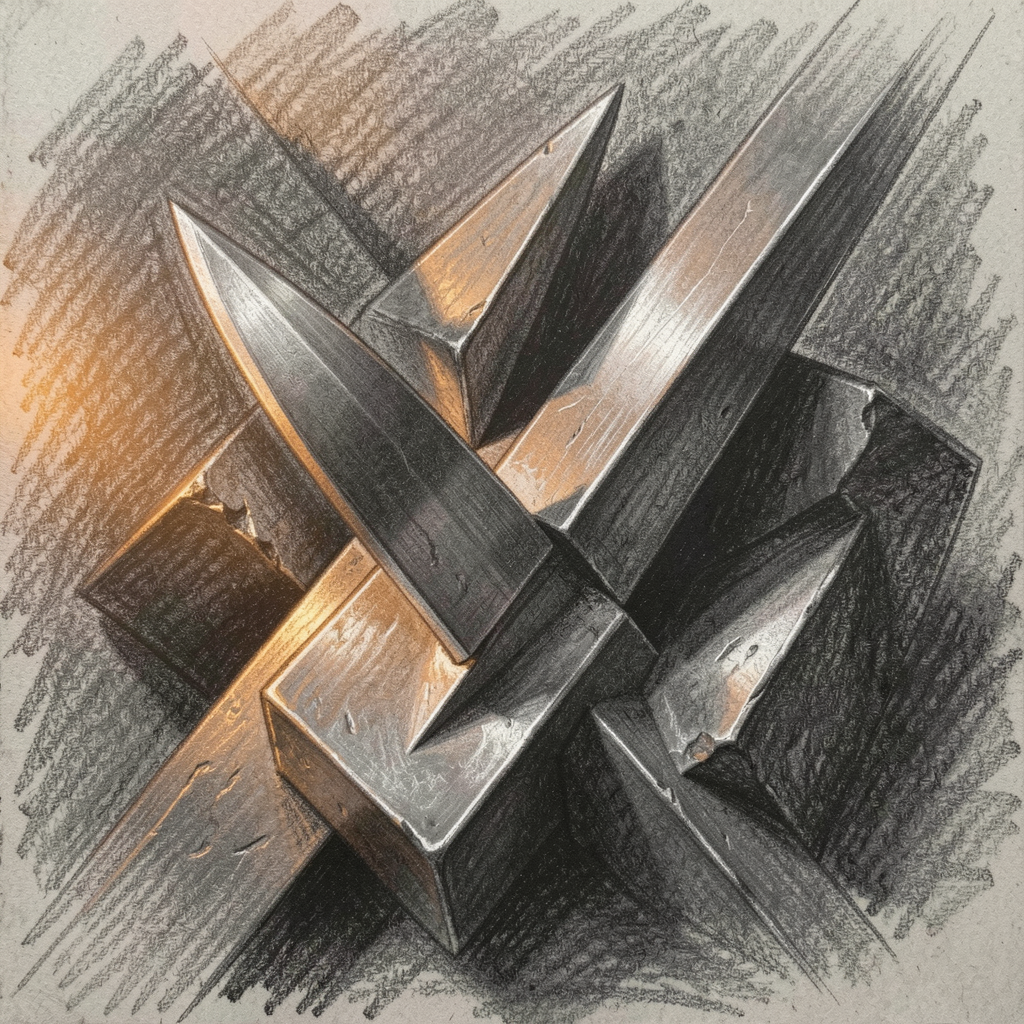
Sharpening a coated blade requires different technique than bare steel — the right angle and abrasive choice protects your coating.
Coating Types and Their Hardness
Each coating has different hardness and adhesion characteristics, which affects how you should sharpen them.
| Coating Type | Hardness | Thickness | Sharpening Sensitivity |
|---|---|---|---|
| DLC (Diamond-Like Carbon) | Very hard (up to 5000 HV) | 1–3 microns | Low — very durable |
| PVD (Titanium Nitride / CrN) | Hard (2000–2500 HV) | 2–5 microns | Low — good adhesion |
| Cerakote | Moderate (ceramic-polymer) | 25–75 microns | High — can chip at edge |
| Blackwash / Stonewash Coated | Moderate | 5–15 microns | Medium — wears at apex |
General Principles for Sharpening Coated Blades
Before getting into coating-specific advice, these rules apply to all coated blades:
- Use a higher angle — A 20° per side edge angle leaves more coating material at the apex than a thin 15° edge
- Avoid aggressive abrasives — Diamond plates can tear coating. Start with medium grit (600–1000) instead of coarse
- Use light pressure — Heavy pressure during sharpening can delaminate coating at the edge boundary
- Finish with stropping — A leather strop with green compound polishes the edge without further coating loss
- Never power sharpen — Belt grinders generate heat that can discolor or delaminate coatings
Sharpening DLC-Coated Blades
DLC is the most durable coating commonly found on EDC knives. Its extreme hardness means it resists abrasion well, but it's also brittle under sharp impact. When sharpening DLC blades:
- Grit progression: Start at 600 grit ceramic or silicon carbide, move to 1000, then 3000, finish on a strop
- Angle: 18–20° per side is ideal. DLC can handle lower angles than Cerakote
- Watch for: The very edge apex will always lose coating after a sharpening session — this is normal. A thin DLC-free line along the apex is expected
- Avoid: Coarse diamond plates (sub-400 grit) which can chip DLC at the edge boundary
Sharpening PVD-Coated Blades
PVD coatings like titanium nitride (gold finish) or chromium nitride (silver-gray) have excellent adhesion to the steel substrate. They're commonly used on budget and mid-range EDC knives for corrosion resistance.
- Grit progression: 400–600 grit to establish the edge, then 1000+, finish on strop
- Angle: 20° per side minimum — PVD is harder than steel but thinner than DLC
- Watch for: Uneven wear at the edge is more visible on PVD than DLC because of the color contrast. Expect some coating loss at the apex
- Avoid: Scrub strokes that dig into the coating above the edge bevel
Sharpening Cerakote Blades
Cerakote is the thickest coating and the most delicate to sharpen. It's applied as a ceramic-polymer spray that cures hard but can chip at sharp transitions. Many EDC owners avoid sharpening Cerakote blades themselves for fear of damaging the finish.
- Grit progression: 800 grit minimum starter — skip coarse stones entirely. Move to 1500, then 3000+
- Angle: 20–22° per side — the thicker coating needs more support at the edge
- Critical technique: Use a guided sharpening system (Worksharp, KME, Lansky) to maintain a consistent angle. Freehand sharpening risks digging into the coating
- Expect: Some Cerakote may peel back from the edge on the first sharpening — this can be minimized by using a micro-bevel approach
Sharpening Blackwash and Coated Stonewash Blades
Blackwash and coated stonewash finishes are typically darker, matte coatings applied over a textured surface. They wear naturally with use, giving the blade a worn-in look over time.
- Grit progression: 400–600 grit ceramic, 1000, finish on strop
- Angle: 18–20° per side
- Note: These coatings are more forgiving than Cerakote — minor edge coating loss blends into the overall aesthetic
Maintaining Coated Blades Between Sharpenings
To extend the time between full sharpening sessions:
- Stropping only: 10–15 passes on a leather strop with 1-micron diamond compound can restore a working edge without removing coating
- Ceramic rod touch-ups: A fine ceramic rod (like a Spyderco Sharpmaker) lightly applied at 20° can realign the edge without grinding coating away
- Avoid cardboard cutting: Cardboard contains abrasive silica that accelerates coating wear at the edge
When to Reshape vs. Refresh
If the blade has suffered a rolled edge or significant dulling, a full sharpening is unavoidable and some coating loss at the apex is expected. If the edge is simply less sharp from everyday use, stropping or a ceramic rod may restore it without compromising the coating. Many experienced EDC carriers accept that a thin line of bare steel along the apex is the natural trade-off for the benefits of a coated blade. For more on maintaining your premium folding knives, visit Artisan Cutlery's folding knife collection.

Leave a comment
This site is protected by hCaptcha and the hCaptcha Privacy Policy and Terms of Service apply.