


Starting Your Knife Collection: A Budget-First Approach
Building a knife collection doesn't require a massive upfront investment. The smartest approach is to start at an accessible price point, learn what you like, and gradually refine your taste as your budget allows. This guide breaks down every price tier from entry-level to premium, with honest guidance on where your money goes at each level.

A well-balanced knife collection spans multiple price tiers, each serving a different role in your EDC rotation.
Entry Tier: Under $50 — Starting Smart
The under-$50 range is where you learn the fundamentals. Knives at this level typically use 8Cr13MoV, 12C27, or entry-level D2 steel with G10, FRN, or stainless steel handles. While fit and finish won't match premium knives, they're perfectly capable for everyday cutting tasks.
- What to expect: Basic steel heat treatment, synthetic handle materials, simple lock mechanisms (liner lock or lockback), minimal pivot refinement
- Best strategy: Buy 2–3 different blade shapes to learn what you prefer — drop point, wharncliffe, and tanto cover the most ground
- Focus on: Ergonomics and carry comfort more than steel type
- Target budget: $30–$50 per knife
Value Tier: $50–$100 — The Sweet Spot
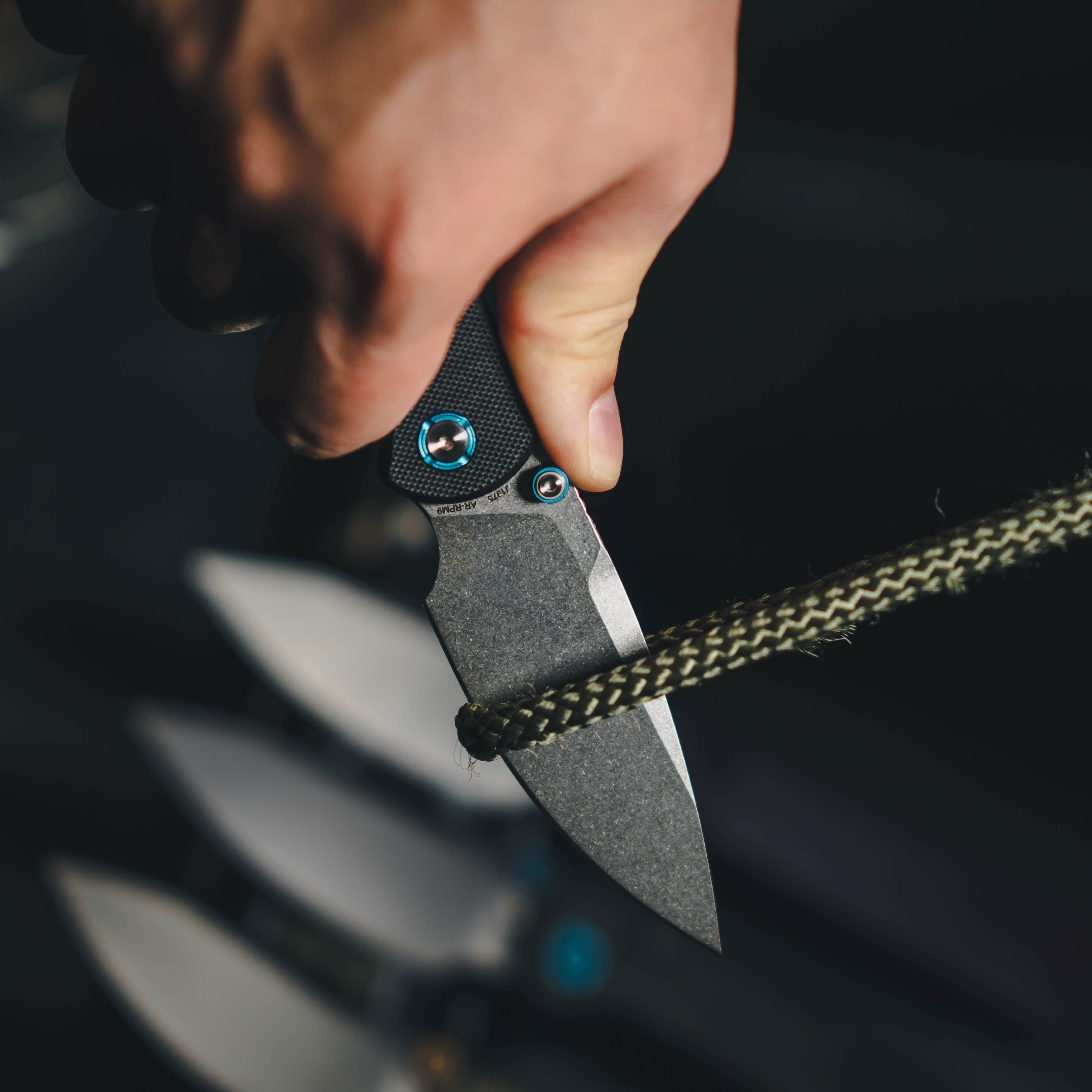
This is the most competitive price range in the folding knife market. You'll find well-executed D2, 14C28N, and entry-level AR-RPM9 steel with better heat treatment, G10 or Micarta handles, and improved pivot systems running on phosphor bronze washers or caged bearings.
| Feature | Under $50 | $50–$100 |
|---|---|---|
| Steel | 8Cr13MoV, basic 12C27 | D2, 14C28N, AR-RPM9 |
| Handle | FRN, basic G10, stainless | G10, Micarta, aluminum |
| Pivot | Washers, basic | Bronze washers or bearings |
| Fit & Finish | Inconsistent | Good to very good |
- What to expect: Consistent edge geometry, reliable lockup, smoother action
- Best strategy: This is where you should build the core of your rotation — 4–6 knives covering different opening mechanisms and handle materials
- Focus on: Lock type preference and blade-to-handle ratio
Mid-Range: $100–$200 — Premium Entry Level
Cross the $100 mark and you enter territory where S35VN, Nitro-V, and premium D2 become standard. Handle materials expand to titanium, carbon fiber, and solid Micarta. This tier is where many collectors find their long-term daily carries.
- What to expect: S35VN or premium D2 steel, titanium or carbon fiber handles, precision bearing pivots, excellent lock geometry
- Best strategy: Invest in one exceptional knife per quarter rather than several mid-range ones
- Focus on: Heat treatment quality and design philosophy — this is where designer collaborations really shine
- Examples: Many of Artisan Cutlery's premium D2 and S35VN models sit in this range, offering designer-level performance at accessible pricing
Premium Tier: $200–$400 — Serious Collecting
At this level, you're paying for premium materials executed well: M390, CPM 20CV, S90V, or MagnaCut steel paired with full titanium frames, marbled carbon fiber, or Fat Carbon inlays. Heat treatment is optimized for the specific steel, pivot systems run on ceramic bearings, and every edge and chamfer receives hand attention.
| Steel | Typical Use Case | Why Collectors Want It |
|---|---|---|
| M390 / 20CV | Premium EDC | Excellent edge retention, stainless, polish-friendly |
| S90V | Hard-use EDC | Highest wear resistance in stainless family |
| MagnaCut | All-purpose premium | Best toughness-edge retention balance in stainless |
- What to expect: Zero-play lockup, drop-shut action, flawless blade centering
- Best strategy: Curate a small collection of 3–5 knives you actually carry rather than a large safe queen collection
Ultra-Premium: $400+ — Investment Pieces
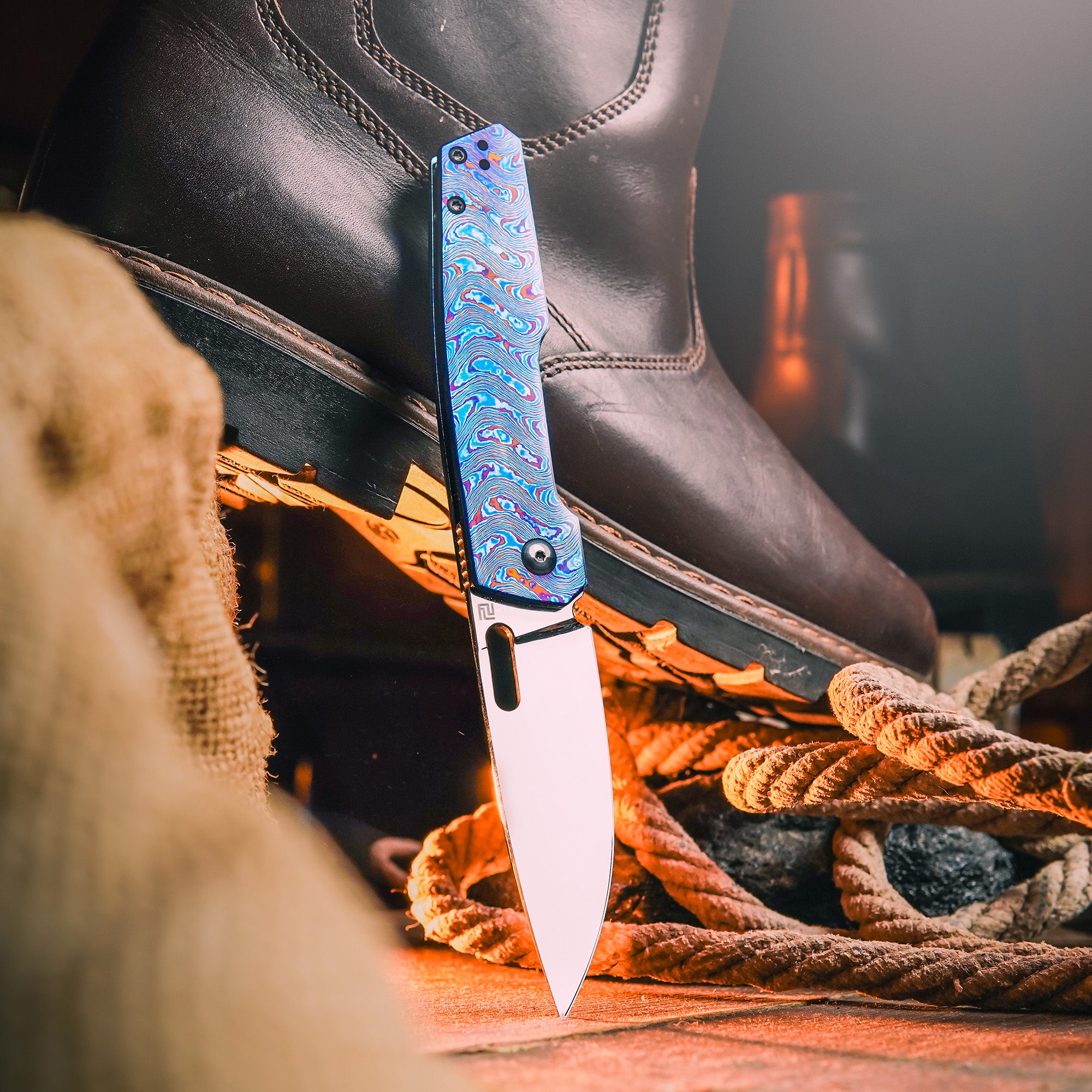
Beyond $400, you're paying for exclusivity, limited production runs, exotic materials (Damascus, ZDP-189, custom anodizing), and often, designer name recognition. These knives may appreciate in value over time, especially numbered limited editions.
- What to expect: Museum-grade fit and finish, custom-detailed anodizing, numbered serialization
- Best strategy: Buy what speaks to you, not what you think will appreciate. The best investment in knife collecting is the knives you actually enjoy carrying
- Focus on: Design uniqueness and personal connection over raw specs
Building Your Collection: A Practical Roadmap
- Phase 1 — Foundation ($200 total): 4 budget-friendly knives covering different blade shapes and lock types. Learn what you like.
- Phase 2 — Refinement ($500 total): 2–3 mid-range knives with better steel and materials. This is where your taste crystallizes.
- Phase 3 — Curation ($1,000+ total): 2–3 premium knives that represent your preferred design language. These become your regular carries.
- Phase 4 — Specialization (variable): Limited editions, exclusives, and collaborations that resonate with your personal aesthetic.
The most successful collections aren't the largest — they're the most thoughtful. For a closer look at current premium folding knife options, visit Artisan Cutlery's folding knife selection.

Leave a comment
This site is protected by hCaptcha and the hCaptcha Privacy Policy and Terms of Service apply.