
Knife steel names look like secret codes. D2, M390, S35VN, 14C28N, VG-10, 8Cr13MoV — each one is a string of letters and numbers that seems designed to confuse. In reality, most steel names follow recognizable conventions, and once you learn to read them, a blade's basic character is written right in its name. This guide decodes the major naming systems so the next spec sheet you read actually means something.
Steel names encode carbon, chromium, and process
The AISI System: Carbon Content in the Numbers
The American Iron and Steel Institute system is the oldest and simplest. Plain carbon steels start with 10, and the last two digits tell you the carbon percentage in hundredths. 1095 is therefore a plain carbon steel with roughly 0.95% carbon. Stainless steels use different families: the 440 series (440A, 440B, 440C) is a chromium stainless family where the trailing letter marks the carbon level, with 440C the highest. Tool steels get a letter for their family — D2 is a D-family (high-carbon, high-chromium) tool steel — and a number for the specific grade.
Crucible CPM Names: S Series and the Steel Grade
Crucible Industries makes its steels with a powder metallurgy process, and the CPM prefix tells you that. The letter identifies the family: S means stainless. So S30V, S35VN, S45VN, S90V, and S110V are all stainless powder steels, and the number is the grade identifier — higher numbers generally mean more alloying and higher performance, with S90V and S110V at the extreme edge-retention end. The trailing letters also mean something: in S35VN, the V stands for vanadium and the N for niobium, a small addition that improves toughness compared with S30V. The full naming rules for engineering steels are documented in the steel grades overview.
Japanese Names: Maker Plus Grade
Japanese steel names usually combine a maker code with a grade number. VG-10 is a Hitachi name where VG stands for V Gold and 10 indicates roughly 1% carbon — it is the classic high-end Japanese stainless used in kitchen and folding knives. AUS-8 comes from Aichi Steel, with the 8 marking a carbon content in the 0.8% class. SG2 (also called R2) is Takefu's powder stainless, a name built on the maker's own grade ladder rather than a universal code.
Chinese Names: The Most Literal System
Chinese steel naming is the most transparent of all, because the name is a chemical formula. 8Cr13MoV breaks down as 0.8% carbon (8), chromium (Cr) at 13%, with molybdenum (Mo) and vanadium (V) present. Read it left to right and you have the recipe. The same pattern appears across the budget steel world, which is why 8Cr13MoV, 9Cr18MoV, and their cousins are easy to compare at a glance.
European Names: Bohler and Sandvik
European makers use their own internal grade systems. M390 is a Bohler microclean stainless — the M marks the microclean stainless family and 390 is the grade number; it is a 20% chromium steel famous for combining high hardness with easy polishability. Elmax is another Bohler powder stainless with a standalone brand name. 14C28N is a Sandvik name where 14 means 14% chromium, 28 is the internal grade, and N flags the nitrogen addition that boosts hardness and corrosion resistance.
Branded Steels: Names as Marketing
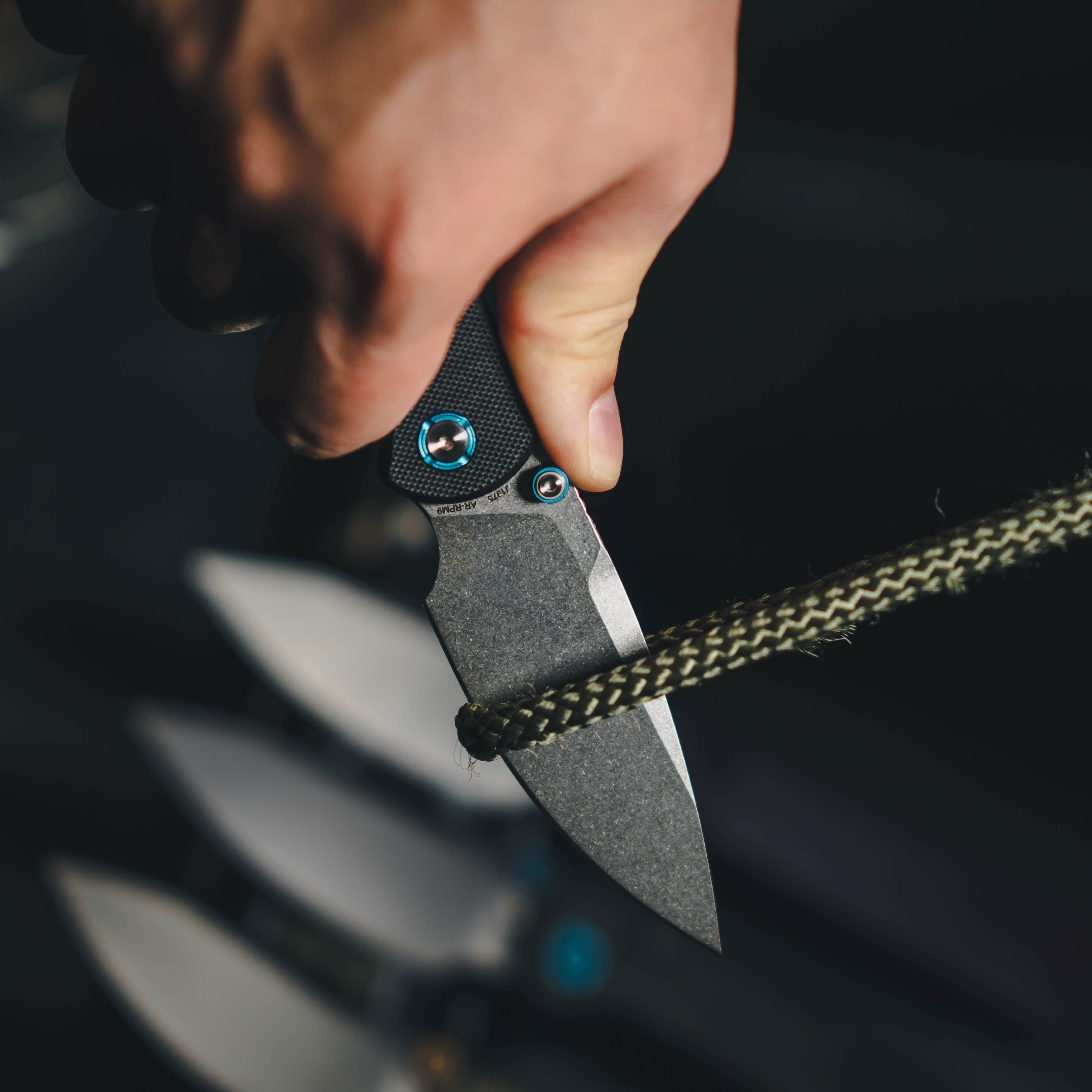
Some names are trademarks rather than standards. AR-RPM9, used across Artisan Cutlery's value lineup, is a branded powder metallurgy steel — the AR prefix marks it as Artisan's own designation over an RPM9 base. Branded steels are still real steels with real spec sheets, but the name alone does not tell you the recipe the way 8Cr13MoV does. When a name is a brand, look up the manufacturer's published composition instead of decoding it.
Why Naming Matters When You Buy
| Name | System | What It Tells You |
|---|---|---|
| 1095 | AISI | Plain carbon, ~0.95% carbon |
| D2 | AISI tool steel | High-carbon, high-chromium tool steel |
| S35VN | Crucible CPM | Powder stainless, vanadium + niobium |
| VG-10 | Hitachi | V Gold, ~1% carbon |
| 8Cr13MoV | Chinese | 0.8% carbon, 13% chromium, Mo + V |
| M390 | Bohler | Microclean stainless, 20% chromium |
| 14C28N | Sandvik | 14% chromium, nitrogen enhanced |
Once you can read steel names, shopping becomes faster and safer. You will know at a glance whether a blade leans toward easy sharpening or extreme edge retention, and you will stop being impressed by letters that are mostly marketing. For real-world examples of these steels in production knives, browse the Artisan Cutlery folding knife collection, where the steel is named honestly on every blade.
A steel's name is a shortcut to its personality — decode the letters and numbers and you will never misread a spec sheet again, for reliable everyday carry.

Leave a comment
This site is protected by hCaptcha and the hCaptcha Privacy Policy and Terms of Service apply.