



When choosing an everyday carry folding knife, two of the most debated specifications are weight and size. Some users prefer a lightweight, compact knife that disappears in the pocket. Others want a larger blade with a substantial handle that feels secure during heavy use. Finding the right balance between knife weight, blade length, and handle size is key to a satisfying EDC experience. This guide breaks down how to find your ideal pocket knife dimensions.

Finding the right knife weight and blade size balance ensures comfortable carry and capable cutting performance.
Why Knife Weight and Size Matter
The weight and dimensions of your EDC knife directly affect how you carry it, how it performs, and how often you actually use it. A knife that is too heavy might stay at home instead of going in your pocket. A knife that is too small might not handle the cutting tasks you encounter. The sweet spot varies by person, use case, and carry method, but understanding the trade-offs helps you make an informed choice.
Blade Length: Short vs Medium vs Long
| Blade Length | Range | Best For | Weight Impact |
|---|---|---|---|
| Compact | 2.0 - 2.75 in | Office carry, minimalist, legal restriction compliance | Lightweight, usually under 3 oz |
| Medium | 2.75 - 3.5 in | General EDC, versatile cutting | Moderate, 3 to 5 oz typical |
| Large | 3.5 - 4.5 in | Heavy use, outdoor, tactical | Heavier, often 5 oz and up |
The most common blade length for general everyday carry falls between 2.75 and 3.5 inches. This range offers enough cutting edge for most daily tasks while remaining compact enough for comfortable pocket carry. Knives under 2.5 inches are more suitable for office environments where larger blades may draw unwanted attention or violate local blade length restrictions.
Handle Length and Ergonomics
Handle length must accommodate a full four-finger grip without the pinky slipping off. For most adults, this means a handle length of at least 4 inches. Handles shorter than 4 inches may require adjusting your grip or using a three-finger hold, which reduces control during cutting.
Handle material significantly affects weight. A knife with a 4-inch handle can weigh anywhere from 2 ounces (titanium or carbon fiber handle) to 6 ounces (brass or copper handle). The material choice affects not only weight but also grip texture, durability, and ease of maintenance.
Weight Categories for EDC Knives
- Ultra-light (under 2.5 oz): Disappears in the pocket. Great for lightweight carry but may feel insubstantial for heavy cutting. Typically carbon fiber, FRN, or thin titanium handles.
- Light (2.5 to 4 oz): The sweet spot for most EDC users. Comfortable in pocket, substantial enough for most cutting tasks. Common with G10, Micarta, or titanium handles.
- Medium (4 to 5.5 oz): Solid and reassuring in hand. Better for heavy-duty cutting but more noticeable in pocket. Steel or thick titanium liners add weight.
- Heavy (5.5 oz and up): Premium feel but demands sturdy pocket clip and belt carry. Full steel liners, thick handle scales, or large blades contribute to the heft.
Finding Your Personal Sweet Spot
The ideal knife weight and size depend on several personal factors:
- Your daily cutting needs. If you primarily open boxes, cut tape, and trim thread, a 2.5 to 3 inch blade weighing 2.5 to 3.5 ounces is ample. If you cut rope, food, or tougher materials, consider a 3 to 3.5 inch blade in the 3.5 to 5 ounce range.
- Your carry method. Pocket clip carry can handle slightly heavier knives than loose pocket carry. Belt sheath carry supports larger, heavier knives without comfort issues.
- Your hand size. Larger hands need longer handles and thicker grip scales. A knife that fits comfortably in one person's hand may feel cramped or overly large in another's.
- Your clothing. Lightweight pants and shorts pocket carry best with lighter knives under 4 ounces. Heavier pants or belt carry support larger knives.
- Local laws. Blade length restrictions in your area may limit your options. Many jurisdictions restrict blades over 3 or 3.5 inches.
A Practical Starting Point
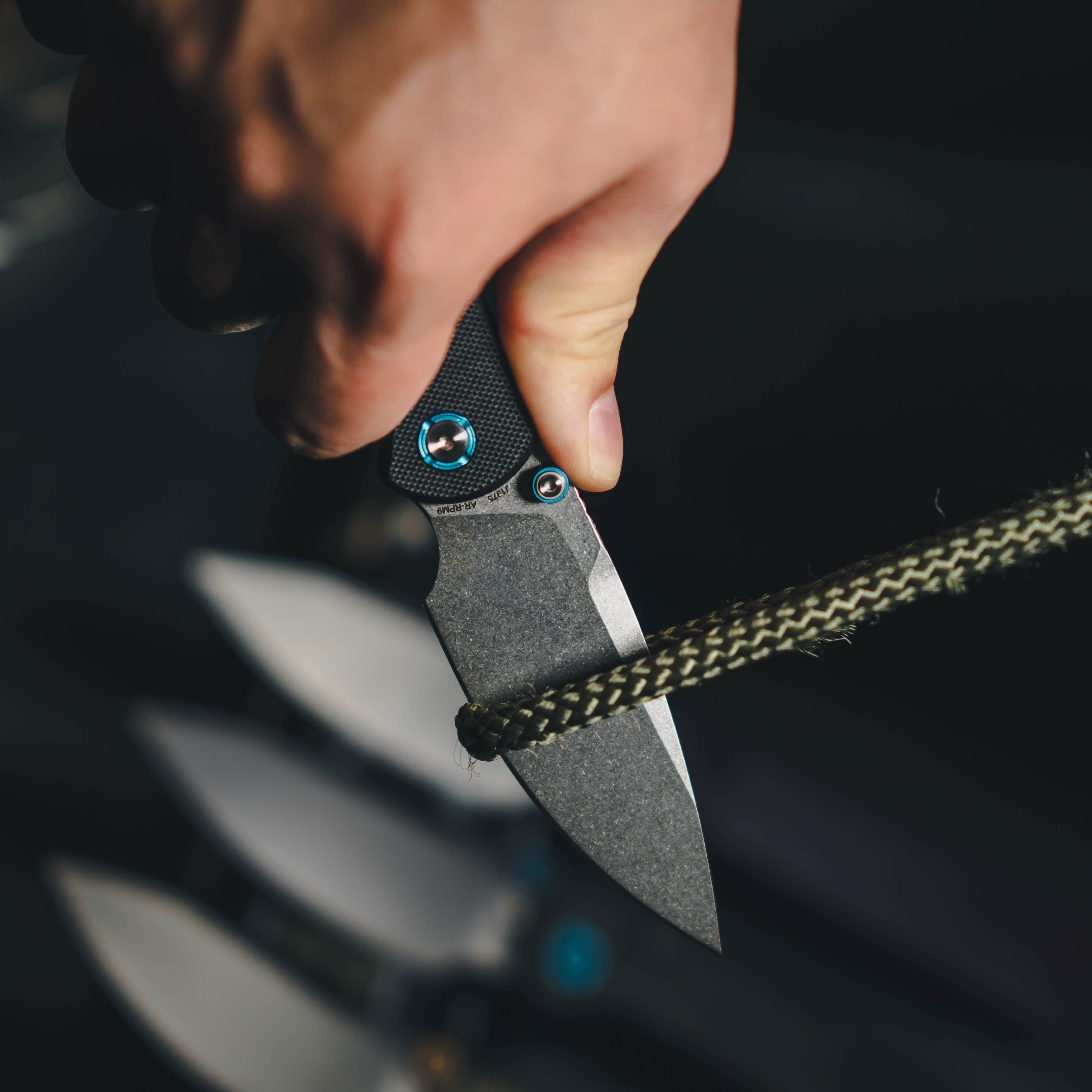
If you are new to EDC knives or looking for a versatile daily companion, start with a knife featuring a 3 to 3.3 inch blade and a total weight of 3 to 4 ounces. This range covers a wide variety of tasks and carry scenarios. A G10 or Micarta handle with a blade in D2, 14C28N, or AR-RPM9 steel offers an excellent balance of performance, weight, and value. From this starting point, you can adjust heavier or lighter based on your experience.
Find your ideal EDC weight and size in the Artisan Cutlery folding knife collection — premium pocket knives designed for reliable everyday carry.


Leave a comment
This site is protected by hCaptcha and the hCaptcha Privacy Policy and Terms of Service apply.