

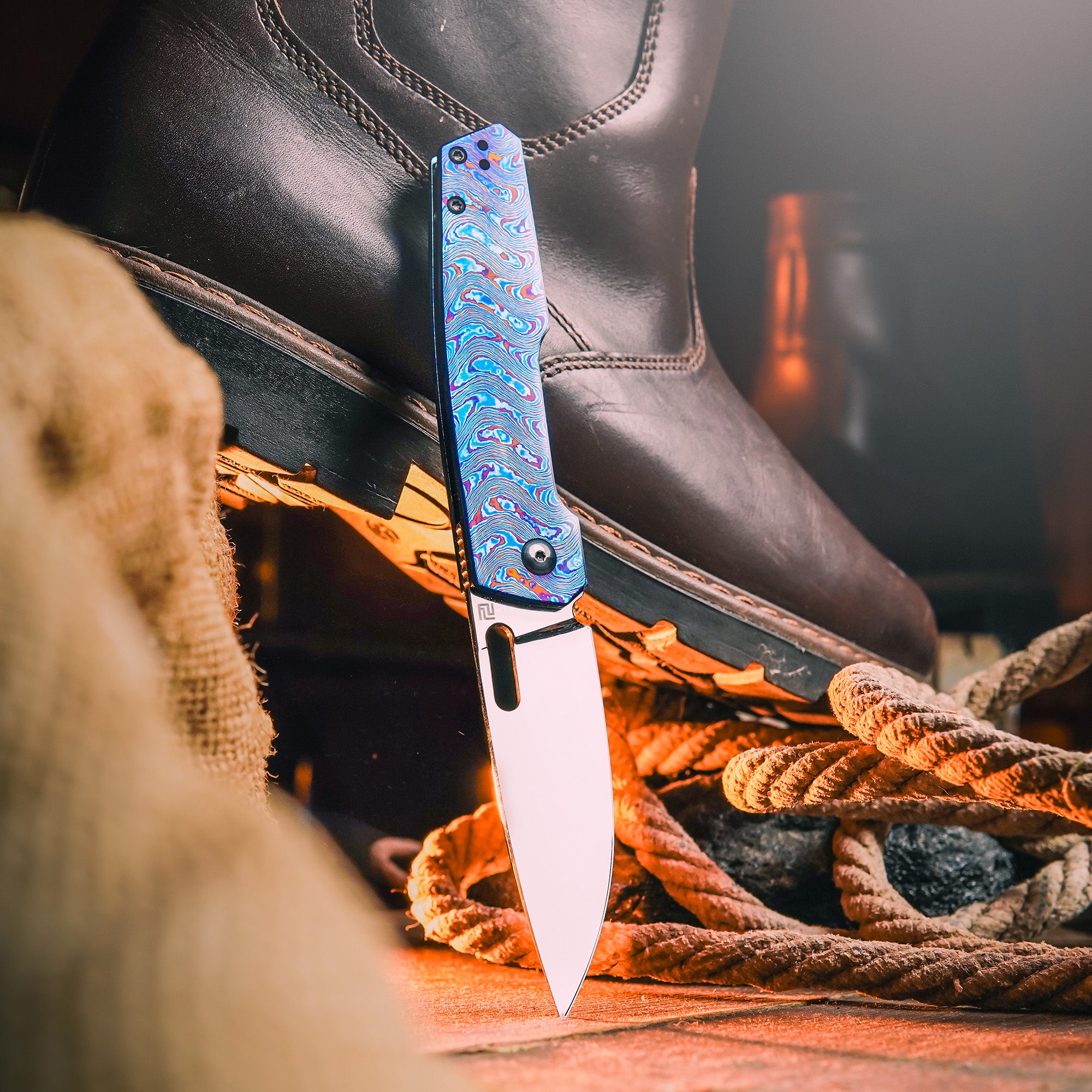
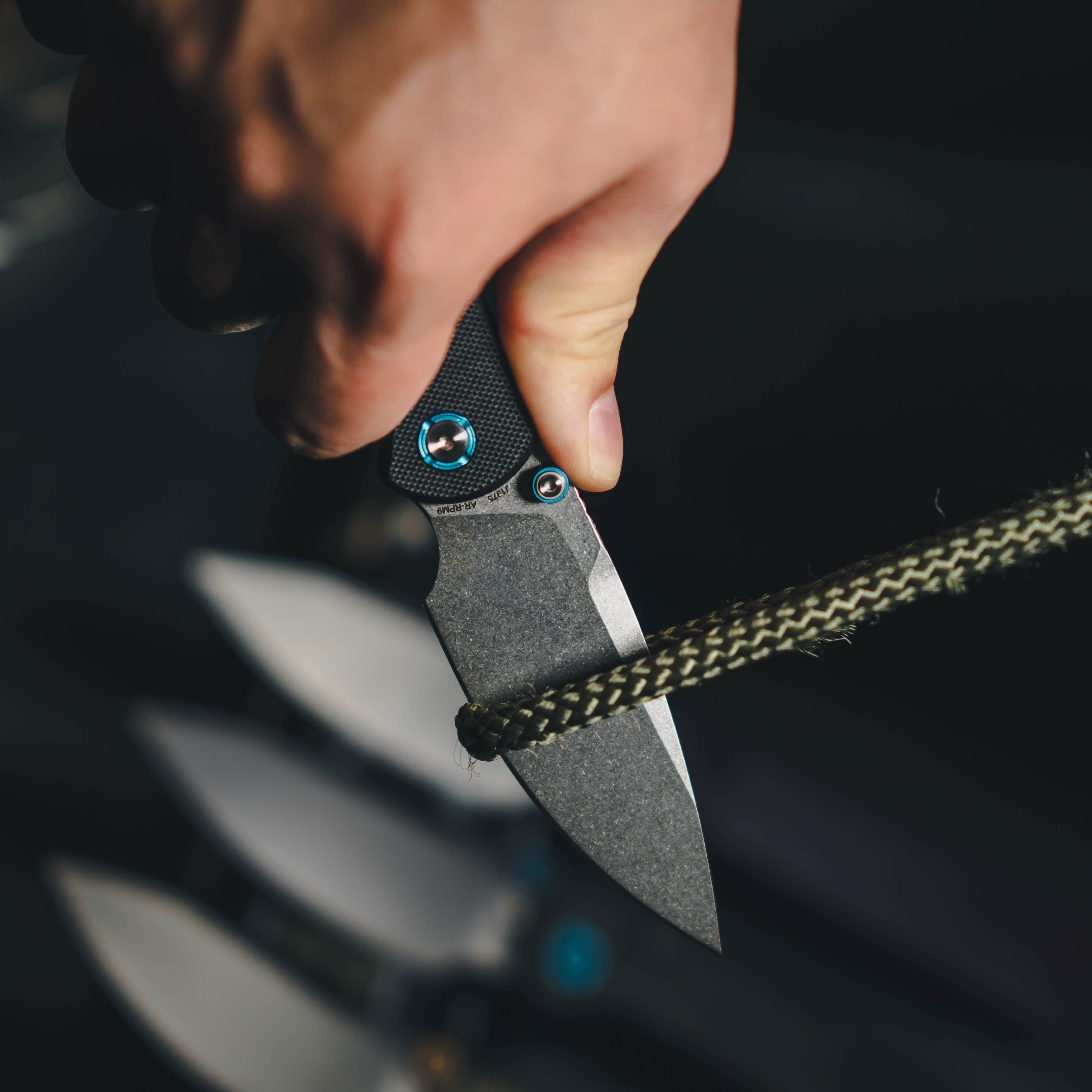
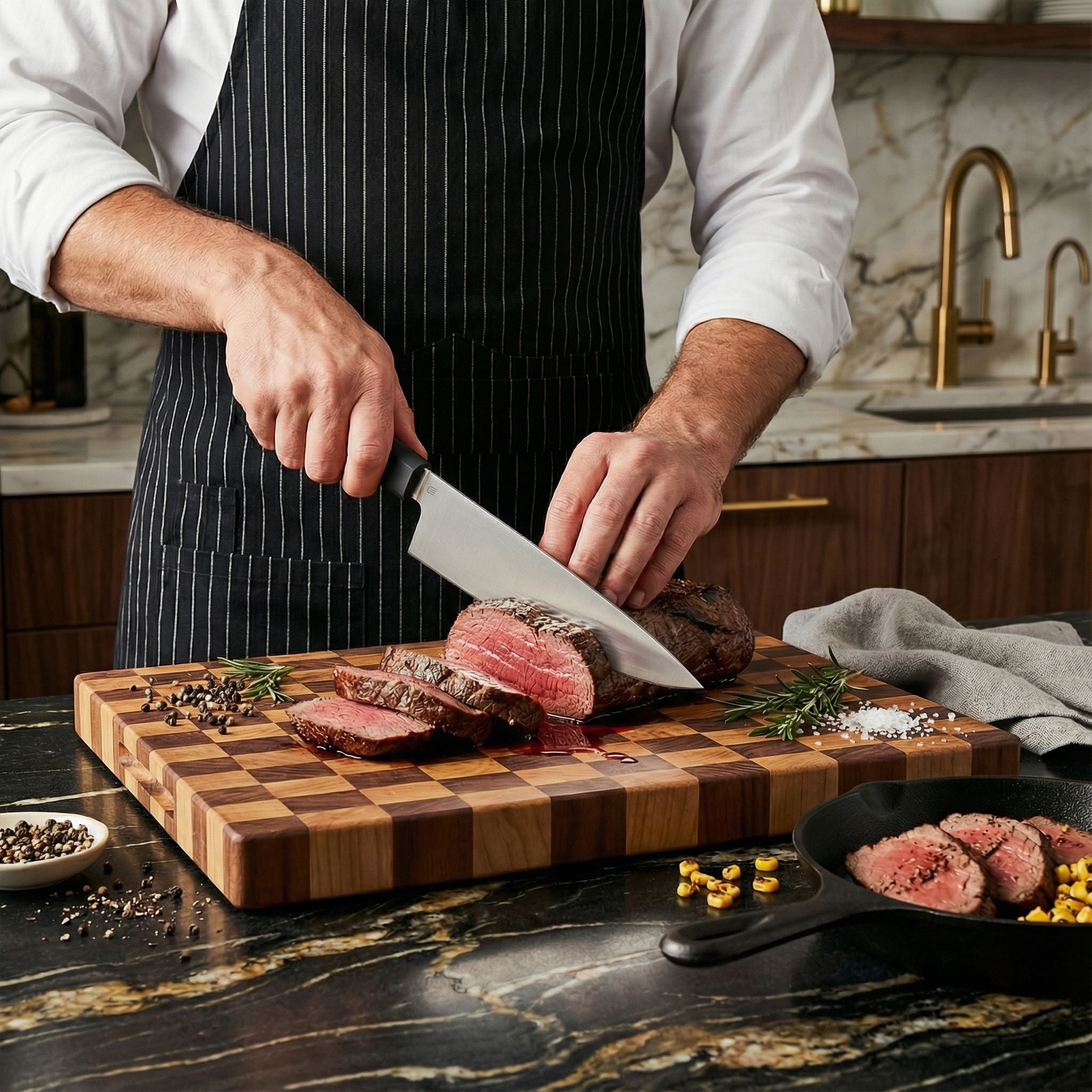

CPM-S35VN and CPM-S30V are two of the most popular premium stainless steels in the knife world, and they are close relatives. Both are powder-metallurgy steels made by Crucible Industries, and both appear across countless production folding knives. But they tune their properties differently, and understanding the difference helps you choose the right EDC blade. Here is how S35VN and S30V compare.
Both are premium powder-metallurgy stainless steels — but they balance their properties differently.
Two Siblings from the Same Family
Both steels are made with powder metallurgy, a process that produces very fine, evenly distributed carbides for better toughness and consistency than conventionally cast steel. S30V arrived first and became a benchmark for premium stainless. S35VN was introduced later as an evolution: it adds a small amount of niobium to refine the carbide structure, which improves toughness and makes the steel easier to sharpen, while giving up very little edge retention.
Nominal Composition Comparison
| Element | CPM-S30V | CPM-S35VN |
|---|---|---|
| Carbon | 1.45% | 1.40% |
| Chromium | 14% | 14% |
| Molybdenum | 2% | 2% |
| Vanadium | 4% | 3% |
| Niobium | — | 0.5% |
Edge Retention
Vanadium forms very hard vanadium carbides, which are the main driver of wear resistance in these steels. S30V carries 4% vanadium versus S35VN's 3%, which gives S30V a small edge-retention advantage on paper — and in many real-world cutting tests it holds a working edge slightly longer. The gap is modest, though: both are far above budget stainless steels and sit comfortably in the premium category.
Toughness and Sharpenability
This is where S35VN earns its reputation. The niobium addition produces finer, more evenly distributed carbides, which improves toughness and chip resistance. S35VN is also noticeably easier to sharpen than S30V — a real practical benefit for anyone who maintains edges by hand. For most everyday users, the toughness and sharpening ease of S35VN outweigh S30V's small edge-retention advantage.
Corrosion Resistance
Both steels carry roughly 14% chromium, so their corrosion resistance is broadly similar. In humid or coastal environments, either will outperform carbon and low-alloy tool steels, though no stainless is fully rust-proof. Keep either steel clean and lightly oiled, and corrosion should not be a concern for typical everyday carry.
Hardness in Production
Heat treatment varies by maker, which matters more than the steel's theoretical limits. Artisan Cutlery, for example, lists S35VN blades at HRC 59-61 on models like the Great White and HRC 60-62 on the Corsair. S30V is commonly heat-treated in a similar 58-60 range by most manufacturers. A good heat treat at a moderate hardness often outperforms a higher number done poorly.
Which Should You Choose?
- Choose S35VN if you value toughness, chip resistance, and easy sharpening — the best all-rounder for general everyday carry.
- Choose S30V if you want the absolute maximum edge retention from these two and are comfortable maintaining a slightly harder-to-sharpen edge.
- Choose either if you want a proven premium stainless — both are excellent, and the differences are matters of degree.
Artisan Cutlery builds a wide range of its premium models in S35VN — including the Centauri, Great White, Corsair, and Cygnus — which says a lot about how well the steel performs in production. For a deeper dive into how knife steels work, our knife steel explainer covers the fundamentals.
Verdict
S35VN vs S30V is a friendly rivalry. S30V keeps a slight edge-retention crown, while S35VN answers with better toughness and easier sharpening. For the vast majority of everyday carry, S35VN is the more forgiving, more practical choice — which is exactly why it has become the default premium stainless across so many production lines.
Explore the Artisan Cutlery collection for premium EDC folders built for reliable everyday carry.

Leave a comment
This site is protected by hCaptcha and the hCaptcha Privacy Policy and Terms of Service apply.