

Why Deployment Method Matters
How you open a folding knife is one of the most personal decisions in EDC. The deployment mechanism affects how quickly you can access the blade, how the knife carries in your pocket, and even how the knife balances in hand. This comparison covers the three most common methods — thumb hole, thumb stud, and flipper tab — plus their modern variations.
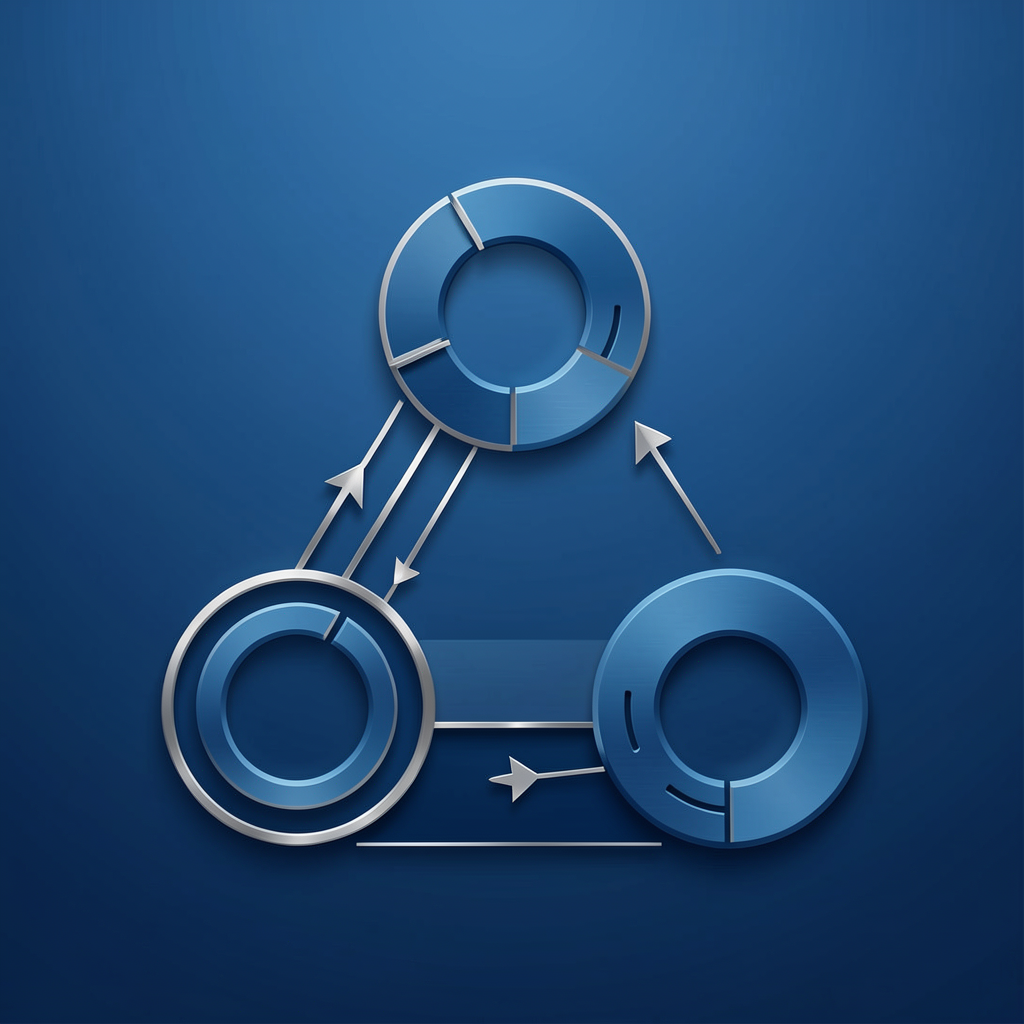
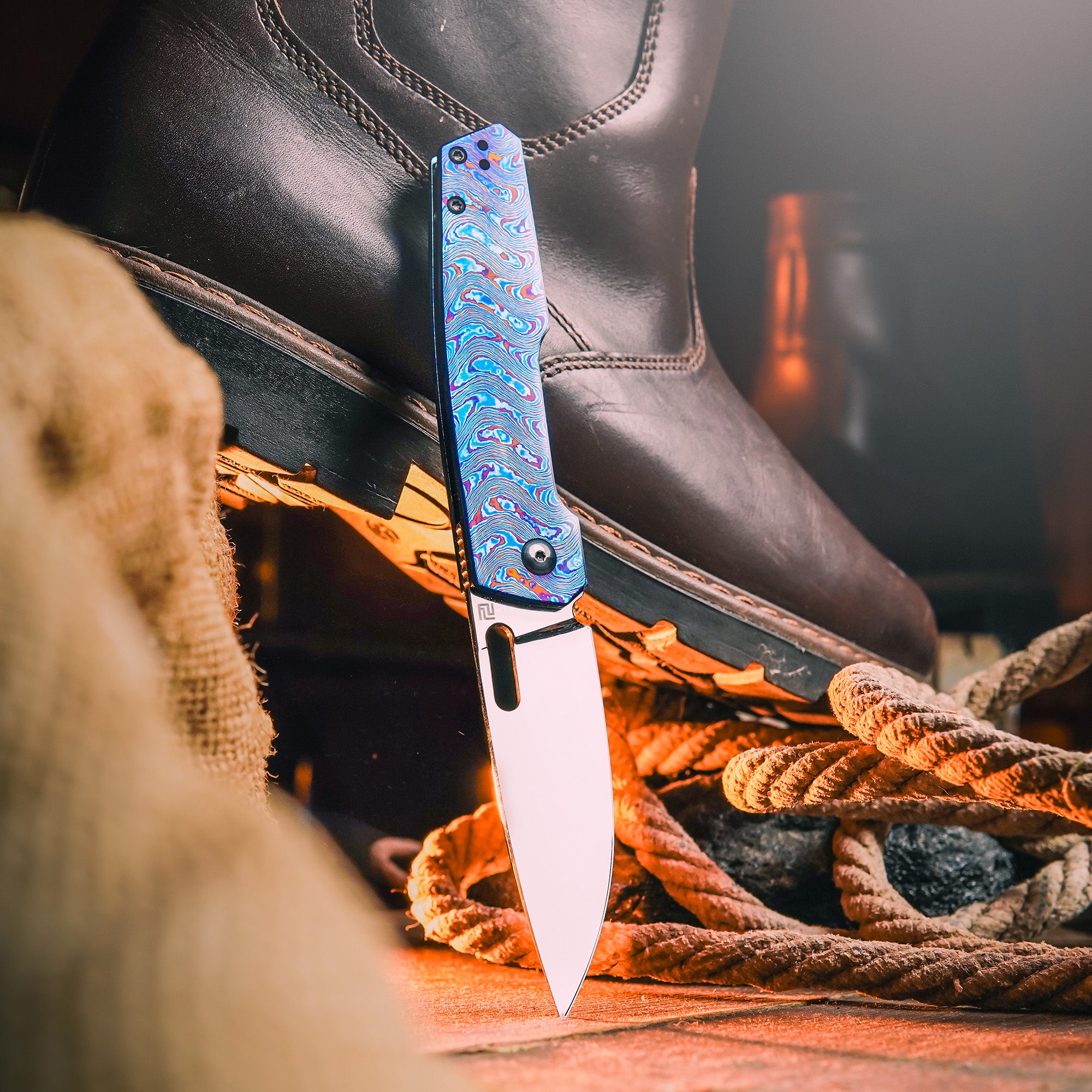
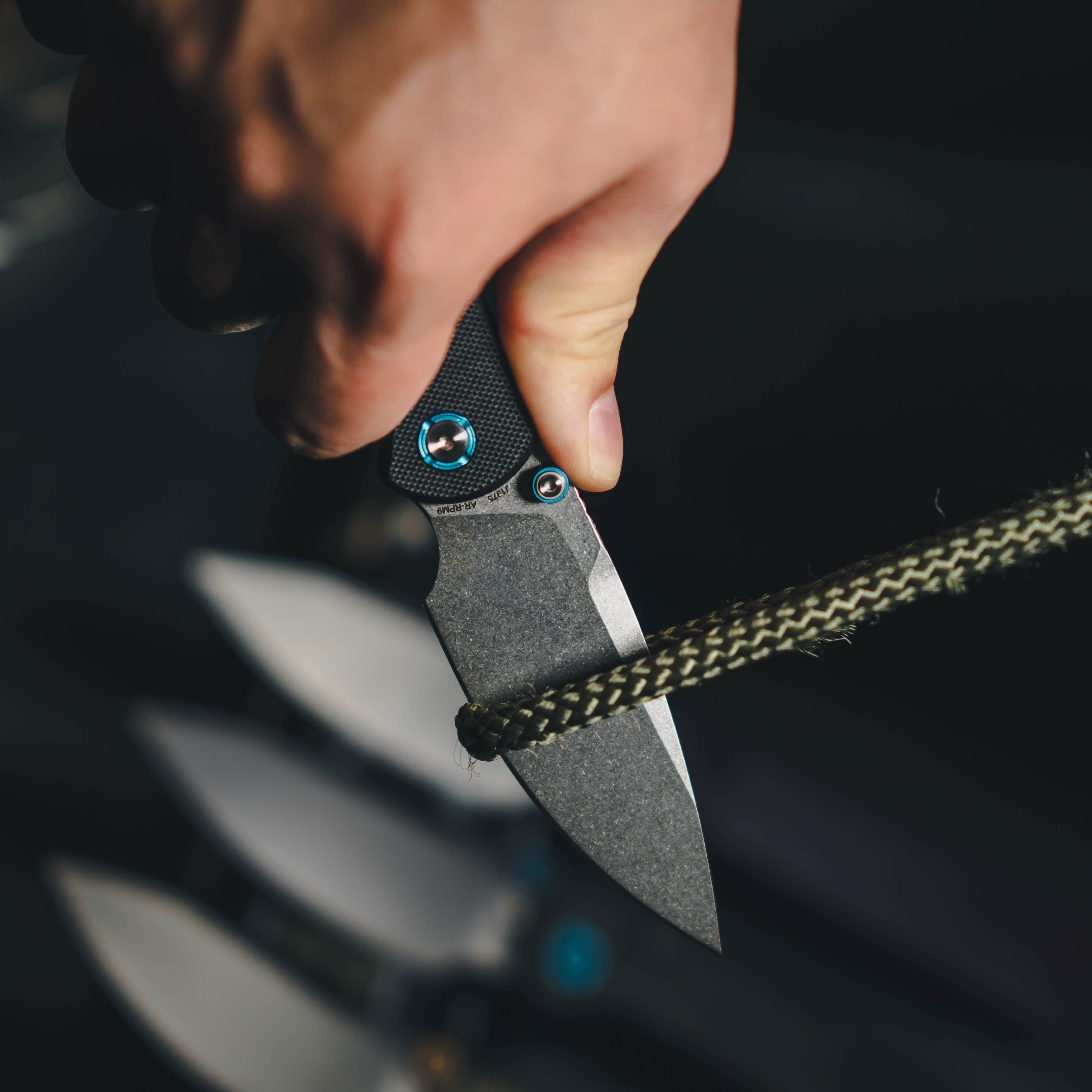
Three common deployment methods — thumb hole, thumb stud, and flipper tab each offer distinct advantages for different carry styles and preferences.
Thumb Hole Deployment
The thumb hole, popularized by Spyderco's round opening hole, is a circular or oval cutout in the blade that gives your thumb a purchase point to sweep the blade open.
Pros
- Ambidextrous: Works equally well for left- and right-handed users — no need for reversible clips or hardware
- No external protrusions: The opening mechanism is cut into the blade itself, meaning nothing sticks out when closed
- Glove-friendly: Thick gloves slide right into the hole without catching on a small stud
- Aesthetic: Many collectors prefer the clean look of a blade with no external hardware
Cons
- Learning curve: Requires more deliberate thumb placement and practice to achieve consistent, fast deployment
- Blade geometry compromise: The hole removes blade material at the spine, which can affect the grind profile on smaller blades
- Slower than flippers: Even with practice, a thumb hole is typically slower than a well-tuned flipper tab
- Not ideal on very small knives: On sub-3" blades, the hole may be too small for comfortable thumb engagement
Thumb Stud Deployment
Thumb studs are small cylindrical protrusions — one or two — mounted on either side of the blade. Pressing upward on the stud with your thumb sweeps the blade open. This is one of the most common deployment methods across all price ranges.
Pros
- Widely used: Found on everything from budget to premium knives — most EDC users are already familiar with the motion
- Fast with practice: A well-placed thumb stud allows for rapid, consistent deployment
- Low profile: Single studs can be very unobtrusive; dual studs add visual symmetry
- Adjustable feel: Some designs let you change stud size or shape for better grip
Cons
- Not fully ambidextrous: Most knives come with a stud on only one side or require disassembly to swap. True ambidextrous carry requires dual studs
- Snag potential: The stud can catch on pocket fabric when drawing or re-pocketing the knife
- Glove interference: Thick winter gloves can make precise stud engagement difficult
- Can loosen over time: Threaded studs can back out with heavy use if not secured with thread locker
Flipper Tab Deployment
The flipper tab is an extension of the blade tang that protrudes from the handle when closed. Pulling the tab back with your index finger engages the detent and snaps the blade open. This method has become the dominant deployment mechanism in premium folding knives.
Pros
- Fastest deployment: A well-designed flipper with ceramic bearings delivers lightning-fast, reliable opening every time
- Minimal hand adjustment: No need to reposition your grip — your index finger naturally rests on the tab
- Flipper acts as a guard: The extended tab provides some protection against the blade closing on your fingers
- Ambidextrous: Flipper tab can be used from either side without reconfiguration
Cons
- Protrudes when closed: The flipper tab adds to the closed profile, taking up pocket space and potentially snagging
- Relies on detent quality: A weak detent results in unreliable deployment; heavy detent can be hard on fingers
- Bearing dependency: Most flippers require a bearing pivot for smooth action — washers may not deliver consistent flipper performance
- Not ideal for low-light: Requires visual or tactile alignment to find the tab quickly
Front Flipper: The Modern Variation
A front flipper places the tab at the top of the blade tang rather than the bottom. It requires a different motion — pressing downward with the thumb rather than pulling back with the index finger. Front flippers offer a cleaner closed profile (less protrusion) but require more finesse. They're increasingly popular in premium, design-focused knives from makers like Artisan Cutlery, where clean aesthetics are a priority.
Comparison Table
| Feature | Thumb Hole | Thumb Stud | Flipper Tab | Front Flipper |
|---|---|---|---|---|
| Speed | Moderate | Fast | Very Fast | Moderate |
| Ambidextrous | ✅ Yes | ⚠️ Sometimes | ✅ Yes | ✅ Yes |
| Pocket Profile | Clean | Low snag | Snag risk | Low snag |
| Glove Friendly | ✅ Yes | ⚠️ Moderate | ✅ Yes | ⚠️ Moderate |
| Learning Curve | Moderate | Low | Low | Moderate |
| Aesthetic | Clean | Functional | Sporty | Clean |
Which Deployment Method Is Right for You?
Your choice depends on your priorities:
- Maximum speed and reliability: Choose a flipper tab on a bearing pivot
- Left-handed or ambidextrous carry: Thumb hole is the most ambidextrous option without hardware adjustments
- Cleanest pocket profile: Thumb hole or thumb stud — nothing protrudes beyond the handle
- Traditional feel with modern action: Thumb stud on a washer pivot
- Design-forward aesthetics: Front flipper offers the best of clean looks and functional deployment
Many modern EDC knives combine methods — a thumb hole with a flipper tab, or thumb studs on a front-flipper design. Artisan Cutlery's lineup includes models with thumb holes, thumb studs, front flippers, and traditional flipper tabs. For a closer look, visit Artisan Cutlery's folding knife collection.

Leave a comment
This site is protected by hCaptcha and the hCaptcha Privacy Policy and Terms of Service apply.