


EDC stands for everyday carry: the small set of items a person keeps on their body or in their pockets every single day. For most adults that means a wallet, phone, keys, and one cutting tool — and for the people who take it seriously, a flashlight and a pen join the list. The term describes a habit, not a product category.
A daily kit works best when every item earns its space.
The idea is simple enough that it gets overcomplicated constantly. EDC is not a hobby, a budget, or a personality. It is the answer to one question: what do I reach for often enough that carrying it every day is worth the pocket space?
Where the term comes from
Everyday carry started as a phrase among outdoors and gear communities, then spread through forums and, later, social platforms where people posted photos of what was in their pockets. The format — a flat-lay of wallet, keys, knife, light, and watch — turned a practical habit into something people compare and discuss.
What survived from those early threads is the useful part: a bias toward fewer, better-used items. What did not survive is the arms race. A pocket dump with nine tools usually means eight of them are dead weight.
The core kit, and what each piece actually does
Most functional EDC setups converge on the same short list. The details vary by job, climate, and local law, but the roles do not.
| Item | What it solves | What to look for |
|---|---|---|
| Wallet | ID, payment, a card for the one place that still wants one | Thin enough to sit in a front pocket without a bulge |
| Phone | Communication, maps, notes, light in a pinch | Case that survives a drop, not one that adds a centimeter |
| Keys | Access, plus the anchor point for anything small | A clip or ring that does not jingle against a screen |
| Knife | Cutting tape, cord, packaging, fruit, zip ties, sharp edges of all kinds | A lock you trust, a blade you can sharpen, a weight you forget |
| Flashlight | Looking under a desk, behind a rack, into a bag | One cell, a low mode, a clip |
| Pen | Signing, labeling, writing down what you will otherwise forget | Retractable, refillable, does not leak in a warm car |
Everything past that list is a judgment call. A multi-tool earns its weight for some jobs and sits in a drawer for most. A pry bar looks useful until you notice you have never needed one. The test is always the same: if you have not reached for it in a month, it is not everyday carry.
Why a knife is the item most people add first
A phone replaced the camera, the map, the calculator, and the notebook. It did not replace an edge. Opening packaging, trimming a loose thread, cutting a zip tie off a new cable, breaking down a box — these come up constantly, and every substitute (keys, teeth, scissors at the other end of the building) is worse than the right tool.
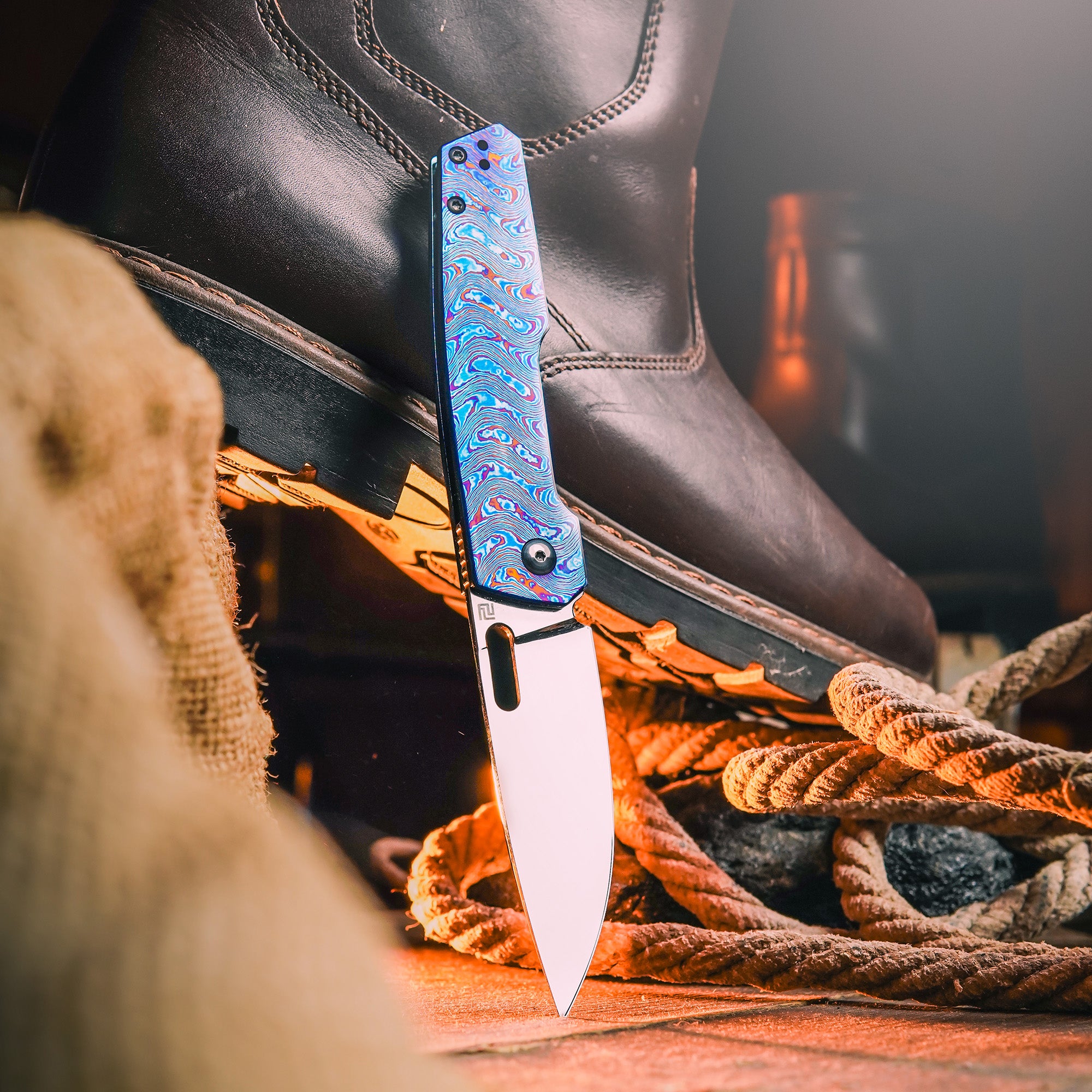
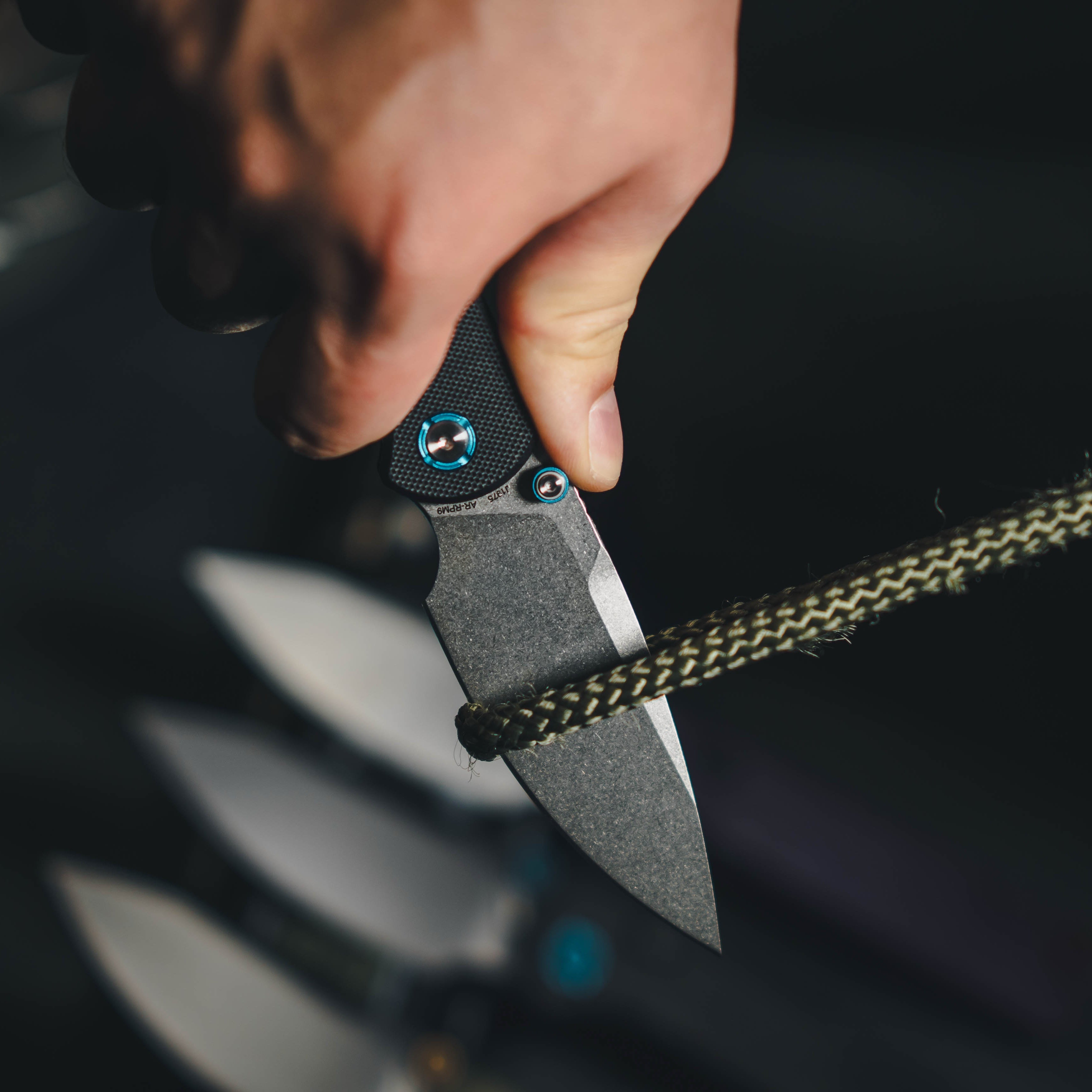
That is why the folding knife became the signature EDC item. It folds to roughly the length of a pen, carries in a pocket without a sheath, and opens one-handed on most modern designs. A folding knife with a blade in the 2.5 to 3.5 inch range covers the overwhelming majority of daily cutting without becoming awkward to carry or to use in front of other people.
What EDC is not
Three things get confused with everyday carry, and separating them saves money:
It is not a survival kit
A survival kit assumes you are stranded. EDC assumes you are at a desk, a job site, or a grocery store. Fire starters and water filters belong in a bag you keep in the car, not in your front pocket.
It is not a collection
Collecting is a legitimate hobby with its own logic — rare runs, discontinued models, historical patterns. It is just a different activity. The knife you carry is the one you are willing to scratch.
It is not a statement
The most common mistake in EDC is buying for the photograph rather than the pocket. A knife that is too heavy, too large, or too expensive to use gets left at home, and a knife at home is a knife that does nothing.
How to build a kit that survives contact with real life
Start with what you already carry
Empty your pockets onto a table. Whatever is there is your baseline. Do not add anything until you can name a moment in the last week when you wished you had it.
Add one cutting tool and carry it for two weeks
Pick a size you can legally carry where you live and work, then commit. Two weeks tells you whether the blade is long enough, whether the clip sits where your hand expects it, and whether the weight is tolerable. Most people discover they want something smaller than their first pick.
Add light only if you keep borrowing it
A phone flashlight works until you need both hands. If you have held a phone in your teeth this month, a small dedicated light is justified.
Then stop
A kit of four items you use daily beats a kit of ten you admire. There is no prize for pocket volume, and the extra weight is paid every single day.
Choosing the knife: the four decisions that matter
Ignore the spec sheet for a moment. Almost every practical question about an EDC knife comes down to these four trade-offs.
| Decision | Options | What most people should pick |
|---|---|---|
| Blade length | Under 2.5 in, 2.5–3.5 in, over 3.5 in | 2.5–3.5 in — enough for real work, legal in more places |
| Lock | Slip joint, liner lock, frame lock, crossbar/button lock | A liner or frame lock for simplicity, a crossbar lock for ambidextrous use |
| Weight | Under 2 oz, 2–4 oz, over 4 oz | 2–4 oz — light enough to forget, substantial enough to control |
| Steel | Budget stainless, mid-grade (D2, 12C27), premium powder steel | Mid-grade — holds an edge longer than budget steel without premium pricing |
Two more specs deserve a mention because they show up in every conversation about feel. Handle material decides how the knife sits in the hand and how it ages; G10 and micarta are textured and grippy, titanium and aluminum are smoother and lighter per unit of strength. Opening method decides how the knife comes out: a thumb stud or thumb hole is the classic, a flipper tab is the fastest, and a front flipper is the most discreet in public.
If you are starting from zero and do not want to overthink it, a pocket knife under $50 from a maker with a real warranty will handle years of daily use. Budget steel that you can sharpen in two minutes beats premium steel you are afraid to touch.
Carry rules worth knowing before you buy
Knife law is local by design, and it changes. Blade length limits, lock-type restrictions, and whether a clip must be visible all vary by state, city, and sometimes by building. A few general points hold almost everywhere in the US:
- Workplace and venue rules usually override everything else. A courthouse, airport, school, or sports arena can prohibit what your state allows.
- Intent language matters. Carrying a tool is ordinary; describing it as something else is not.
- Check before you travel. Air travel is the strictest case: knives do not go in carry-on baggage, and they belong in a checked bag that complies with the airline's rules.
- Local ordinances are stricter than state law in some cities. A quick search for your city plus "knife carry" is worth five minutes.
For a deeper look at how restrictions differ, our guides to banned knife types and state-level carry rules go further. This article is general information, not legal advice.
The kit that actually gets used
After the novelty wears off, most people land on something close to this: a thin wallet, a phone, keys with nothing dangling, one knife sized to their actual cutting, and maybe a light. That is a complete everyday carry setup. It fits in two pockets, weighs less than a paperback, and covers the small frictions that fill a day.
Everything else is optional, and optional is fine. The point of carrying less is not minimalism as an aesthetic. It is that the items you do carry get used, maintained, and replaced when they wear out — which is the only version of EDC that pays for itself.
If you want to see where a first kit usually starts, the best-selling folding knives and the latest arrivals are both reasonable browsing points, and the accessories shelf covers the small things — clips, pouches, lubricant — that keep a kit working.
For background on the term itself, see the encyclopedia entry on everyday carry.
Quick answers
Is EDC only about knives?
No. Knives are the most discussed item because they are the most regulated and the most personal, but a phone, wallet, and keys are the heart of most kits.
Do I need an expensive knife?
No. A well-made budget knife with a decent lock and steel you can maintain will outlast a poorly made expensive one. Spend more when you know exactly what you want from the upgrade.
What is the minimum kit?
Whatever you actually use. For many people that is wallet, phone, keys, and one knife — four items, no bag required.


Leave a comment
This site is protected by hCaptcha and the hCaptcha Privacy Policy and Terms of Service apply.