


The Changing Face of Everyday Carry in 2026

The world of everyday carry, or EDC, has changed a lot as we head into 2026. A few years ago, people mostly cared about how a knife looked in a photo on social media. Today, the community has shifted toward what experts call minimalist preparedness. This means people want tools that are actually useful, reliable, and easy to keep in good shape without needing a professional workshop. At the center of this shift is the most important part of any pocket knife: the blade steel.
For a long time, if you were looking for a budget knife that could actually work hard, there was only one real answer. That answer was D2 tool steel. D2 has been the heavyweight champion of affordable knives for decades because it is very hard and stays sharp for a long time. However, D2 has some old-fashioned problems. It can rust if you just look at it the wrong way in a humid room, and it can be a nightmare to sharpen once it finally gets dull.

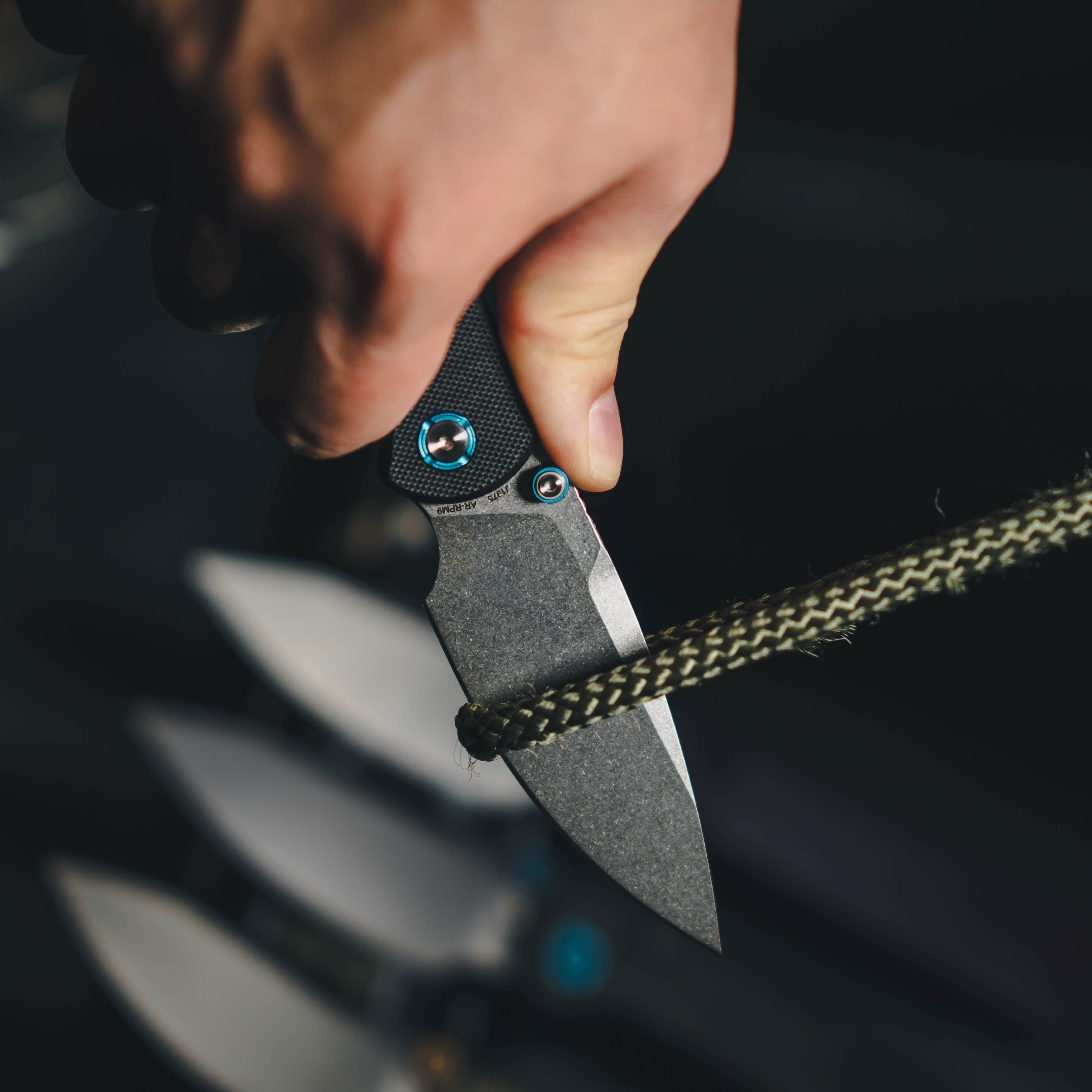
Because of these problems, a new kind of steel was needed. Artisan Cutlery, a leader in knife innovation, decided to stop waiting for someone else to fix these issues. In 2020, they created their own proprietary material called AR-RPM9. They didn't just want another cheap metal; they wanted to bridge the gap between "budget" and "premium" performance. By using a special process called spray-form technology, they created a steel that stays sharp like D2 but resists rust like a high-end stainless steel.
This report will look deep into these two materials. We will compare their chemistry, how they are made, and how they perform in the real world. Whether you are a construction worker who needs a "tank" of a knife like the CJRB Doubletap, or someone who just needs a clean, sharp slicer for the office like the CJRB Pyrite, understanding the difference between AR-RPM9 and D2 is the first step to finding your perfect carry.
The Basics of Knife Steel Metallurgy
To understand why one steel is better than another, we have to look at what is happening inside the metal. Steel is not just a solid block of one thing. It is a recipe of different elements that work together to give the blade its personality. In the knife world, we judge this personality using four main pillars: hardness, toughness, edge retention, and corrosion resistance.
Hardness is measured by pushing a diamond point into the metal to see how much it resists. This is called the Rockwell C scale, or HRC. A harder steel can be sharpened to a very fine edge and won't roll over when you cut something tough. But if a steel is too hard, it can become brittle, meaning it might snap or chip like a piece of glass.
Toughness is the opposite of brittleness. It is the ability of the steel to take a hit or bend a little bit without breaking. Edge retention is how long that sharp feeling lasts while you are using the knife. This is usually determined by "carbides," which are tiny, super-hard particles that act like teeth inside the steel. Finally, corrosion resistance is how well the steel fights off rust and stains from things like sweat, salt air, or the juice from an apple.
The table below shows a quick look at how D2 and AR-RPM9 compare in these important categories.

D2 Tool Steel: The Gritty Veteran
D2 is often called the "old guard" of knife steels. It wasn't originally made for knives; it was made for industrial tools like dies and punches that have to cut through other pieces of metal all day long in a factory. This industrial background is why D2 is so tough and why it has a reputation for being a "hard-use" steel.
The Chemistry of the "Semi-Stainless" Powerhouse
The secret to D2’s long-lasting edge is its high carbon content. It usually has between 1.4% and 1.6% carbon, which is a lot for a budget steel. This high carbon allows the steel to reach very high hardness levels, making it a favorite for tactical knives and heavy-duty tools.
However, the way D2 handles its chromium is its biggest weakness. It has about 11% to 13% chromium. To be called a "true" stainless steel, you generally need at least 13-14% of "free" chromium—chromium that isn't already busy holding onto other elements. Because D2 has so much carbon, most of its chromium gets pulled away to form big, chunky chromium carbides. These carbides are great for cutting cardboard, but they leave the rest of the steel unprotected from rust.

This is why D2 is called "semi-stainless." If you leave it wet, or even if you carry it in your pocket on a hot, sweaty day, it will likely develop small orange spots called "pitting".
Why People Still Love (and Hate) D2
D2 stays popular because it offers a "toothy" edge. If you look at a D2 blade under a microscope, those big carbides act like a tiny serrated saw. This makes D2 feel like it's "biting" into whatever you are cutting, especially slippery things like rope or plastic straps. For a work knife that is going to be used in a warehouse or on a construction site, this aggressive cutting ability is a huge plus.
The downside is the "maintenance tax." Owning a D2 knife like the Artisan Predator or the CJRB Doubletap is a commitment. You have to wipe it down after use and occasionally put a little bit of mineral oil on the blade to keep the rust away. If you aren't the kind of person who likes to "baby" your tools, D2 might frustrate you.
Furthermore, sharpening D2 can be a chore. Because those carbides are so big and hard, they don't like to be ground down by a standard sharpening stone. You often need diamond plates to get a good edge back on a D2 blade. For many casual users, once their D2 knife gets dull, it stays dull because they don't have the right equipment or patience to fix it.
AR-RPM9: The Modern Proprietary Solution

In 2020, Artisan Cutlery recognized that many people were looking for a "budget knife" that didn't come with the "budget problems" of D2. They wanted something that could compete with expensive "super steels" but still be affordable for a normal person. Their answer was AR-RPM9, a steel designed from the ground up to be the "people's choice" for EDC.
Spray-Form Steel: Atomizing the Future
The most important thing to know about AR-RPM9 isn't just what’s in it, but how it’s made. Traditional steels like D2 are made by pouring molten metal into a mold and letting it cool down slowly. As it cools, the different elements clump together into uneven patterns. This can create "weak spots" and large, irregular carbides that make the steel harder to sharpen and more likely to chip.
AR-RPM9 uses a more advanced process called spray-form technology. Instead of pouring the steel, they use high-pressure nitrogen gas to turn the molten metal into a fine mist of tiny droplets. These droplets freeze almost instantly as they hit the mold. This "locks" the elements in place, creating a very fine and very even grain structure.
Think of it like the difference between a block of ice with big air bubbles in it (traditional steel) and a block of high-quality, clear ice from a professional machine (AR-RPM9). Because the grain is so fine, the steel is much tougher and can be sharpened to a literal razor edge in just a few minutes.
The True Stainless Advantage
AR-RPM9 was engineered to be a true stainless steel. It contains 18% chromium, which is much higher than D2. This high chromium level, combined with the even distribution from the spray-form process, means that AR-RPM9 resists rust exceptionally well.
Users have reported taking AR-RPM9 knives like the CJRB Ekko or the Artisan Sea Snake on fishing trips or using them to cut up lemons for food prep with no signs of rust or staining. This makes it a perfect choice for people who live near the ocean, people who work outdoors in the rain, or anyone who just doesn't want to worry about oiling their knife every single day.
Chemistry Comparison Table
The following table compares the chemical makeup of these two steels to show why they behave so differently.
While D2 has more carbon, AR-RPM9 uses its chromium, molybdenum, and nickel to create a more balanced and durable blade for everyday tasks.
Head-to-Head: Which Steel Performs Better?
When we put these two steels together, the "best" one depends on what you do with your knife every day. Here is a breakdown of how they stack up in the categories that actually matter to a knife owner.
Edge Retention: The Toothy Bite vs. The Razor Slicer
If you spend your whole day cutting thick, gritty cardboard boxes in a warehouse, D2 might have a slight advantage. Its large carbides act like a saw and keep ripping through material even when the microscopic edge starts to dull. Experts give D2 an 8/10 for edge retention.
AR-RPM9 is a better "slicer." Because its grain is so fine, you can get it much sharper than D2. It is perfect for precise tasks, like cutting paper, food prep, or making fine wooden shavings for a fire. It still holds an edge very well—getting a 6/10 to 7/10 in comparison tests—which is much better than common budget steels like 440C or 8Cr13MoV.
Toughness: Chipping vs. Rolling
Toughness is a big concern for a "budget knife" because these tools are often worked hard. D2 is hard, but its big carbides make it more likely to "chip" if you hit a staple in a box or accidentally drop it on a concrete floor.
AR-RPM9 is significantly tougher. The nickel in the recipe and the spray-form process make the metal more flexible on a microscopic level. Instead of a piece of the edge snapping off (chipping), an AR-RPM9 edge is more likely to "roll" or bend slightly under extreme stress. A rolled edge can be easily fixed with a few swipes on a sharpening rod, but a chip usually requires grinding away a lot of metal. In performance ratings, AR-RPM9 scores a 7.5/10 for toughness, while D2 scores a 4/10.
Sharpening: The Five-Minute Fix
This is where the competition ends for most people. AR-RPM9 is a joy to sharpen. Because the metal structure is so uniform, it responds immediately to sharpening stones or even a simple ceramic rod. You can bring a dull AR-RPM9 blade back to a hair-shaving edge in half the time it takes to fix a D2 blade.
For the modern EDC user who wants a tool that is always ready, AR-RPM9 provides an "anxiety-free" experience. You aren't afraid to use it because you know you can fix the edge easily. With D2, many people hesitate to use their knife for tough tasks because they dread the hour of sharpening that might follow.
Artisan Cutlery and CJRB: Leveraging the Proprietary Edge
As the creator of AR-RPM9, Artisan Cutlery and their budget-focused brand, CJRB, have built an incredible lineup of knives around this steel. By controlling the steel production, they can offer features that other brands can't match at this price.
The Best of AR-RPM9: Popular Models
If you are looking to try this modern steel, these are the top-selling models that showcase why AR-RPM9 is the "people's choice" for 2026.
| Model | Type | Key Highlights | Estimated Price |
| CJRB Pyrite | EDC Folder |
The absolute gold standard for budget knives. Features a button lock and incredibly smooth ceramic bearing action. |
$43 - $80 |
| CJRB Ekko | Designer Folder |
Designed by Ray Laconico. Sleek, stylish, and an amazing slicer. Great for both work and office carry. |
~$50 |
| Artisan Orthodox V2 | Tactical/Unique |
A modern take on a straight razor. The V2 features a thinner hollow grind that makes the AR-RPM9 steel feel sharper than ever. |
$45 - $237 |
| Artisan Sea Snake | Fixed Blade |
A thin, precision tool designed by Mike Emler. The stainless nature of the steel makes it great for skinning or detail work. |
~$40 |
| CJRB Maileah | Compact EDC |
A tiny powerhouse that fits in any pocket. Extremely popular for those who want a capable tool that doesn't look threatening. |
~$31 |
The Best of D2: Hard-Use Veterans
Even though AR-RPM9 is the star, Artisan still uses D2 for knives meant to be "sharpened bricks"—tools that can take a beating and keep cutting through the grit.
| Model | Type | Key Highlights |
| CJRB Doubletap | Hard-Use Folder |
A massive knife with a 3.86-inch D2 blade. Built like a tank with the Recoil Lock V2 for maximum safety. |
| CJRB Feldspar | Classic Worker |
A very popular "entry-level" knife. It has contoured handles and a simple design that makes it a great gift for a new knife owner. |
| Artisan Predator | Tactical Flipper |
A beefy design with an oversized finger choil. D2 steel ensures it stays sharp through heavy construction work. |
Second-Order Insights: Why Proprietary Steel Matters
When a company like Artisan Cutlery creates its own steel, it changes more than just the blade. It changes the entire value proposition of the knife industry. For a long time, if you wanted high-performance steel, you had to pay $150 to $200. This was because knife makers had to buy their steel from large, expensive mills.
Democratizing Performance
By developing AR-RPM9, Artisan Cutlery has effectively "flipped the script". They have brought advanced metallurgy—specifically spray-forming—to the $50 budget knife category. This means that a college student or a tradesperson can now carry a knife that performs almost identically to a high-end collector's piece, but without the high price tag. This democratization of performance is a major reason why CJRB has become one of the most respected names in the EDC community.
The Psychology of Ownership
There is also a psychological shift in how people use their knives. Because D2 is prone to rust and hard to sharpen, owners often treat it with a "proactive" mindset—they worry about it. AR-RPM9 allows for a "reactive" mindset. If you forget to wipe it down, it's fine. If you hit something hard and it dulls, it only takes five minutes to fix. This leads to a more satisfying user experience because the tool is serving the human, rather than the human serving the tool.
The Search for Reliable Information (EEAT)
When looking for knife steel advice, it is important to find trustworthy sources. The Google Helpful Content Guidelines remind us to look for information written by people with real, first-hand experience. In the knife world, this means looking for data from metallurgical experts and reviews from people who actually carry these tools every day.
While some internet experts have debated whether AR-RPM9 is a "true" powder metallurgy steel, the real-world results are clear. In independent CATRA testing (a machine that tests how long a knife stays sharp), AR-RPM9 performs in the same league as "super steels" that cost three or four times as much. This objective data, combined with the thousands of positive reviews from the EDC community, proves that AR-RPM9 is more than just marketing—it is a significant technological leap for budget knives.
Conclusion: Which Steel is Right for You?
The decision between AR-RPM9 and D2 comes down to your lifestyle and your willingness to maintain your gear. In 2026, the needs of the average person have clearly shifted toward convenience and reliability.
You should choose AR-RPM9 if:
-
You want a knife that is virtually rust-proof for daily tasks.
-
You are new to knives or prefer a tool that is fast and easy to sharpen at home.
-
You live in a humid or coastal environment.
-
You use your knife for food prep or often get it wet in the rain.
You should choose D2 if:
-
You prioritize raw edge retention and want a "toothy" edge for cutting heavy materials like rope or thick cardboard.
-
You are comfortable with a maintenance routine that includes oiling your blade.
-
You have high-quality sharpening equipment (like diamond stones) to handle harder tool steels.
-
You want a dedicated workhorse for tactical or heavy construction use.
For the vast majority of everyday carry users, AR-RPM9 is the superior choice. It offers a balanced, high-performance experience that makes knife ownership easy and fun. Artisan Cutlery’s innovation has solved the biggest complaints about budget knives, making tools like the CJRB Pyrite the gold standard for the modern pocket. While D2 will always have a place in history as a gritty, hardworking steel, the future of EDC belongs to the refined, stainless, and easy-to-use performance of AR-RPM9.
Works cited
https://artisancutlery.net/blogs/knife-knowledge/the-ultimate-guide-to-everyday-carry-edc-in-2026
https://nobliecustomknives.com/knife-steel-chart/
https://schneidwerkharz.de/en/blogs/news/ar-rpm9-die-innovative-stahlsorte-von-artisancutlery
https://butterfork.com/blogs/news/the-steel-that-costs-50-but-rivals-200-knives
https://www.reddit.com/r/BudgetBlades/comments/1lcjrez/d2_supremacy/
https://knifesteelnerds.com/2024/05/10/ar-rpm9-knife-steel-is-false-advertising/


Leave a comment
All comments are moderated before being published.
This site is protected by hCaptcha and the hCaptcha Privacy Policy and Terms of Service apply.