

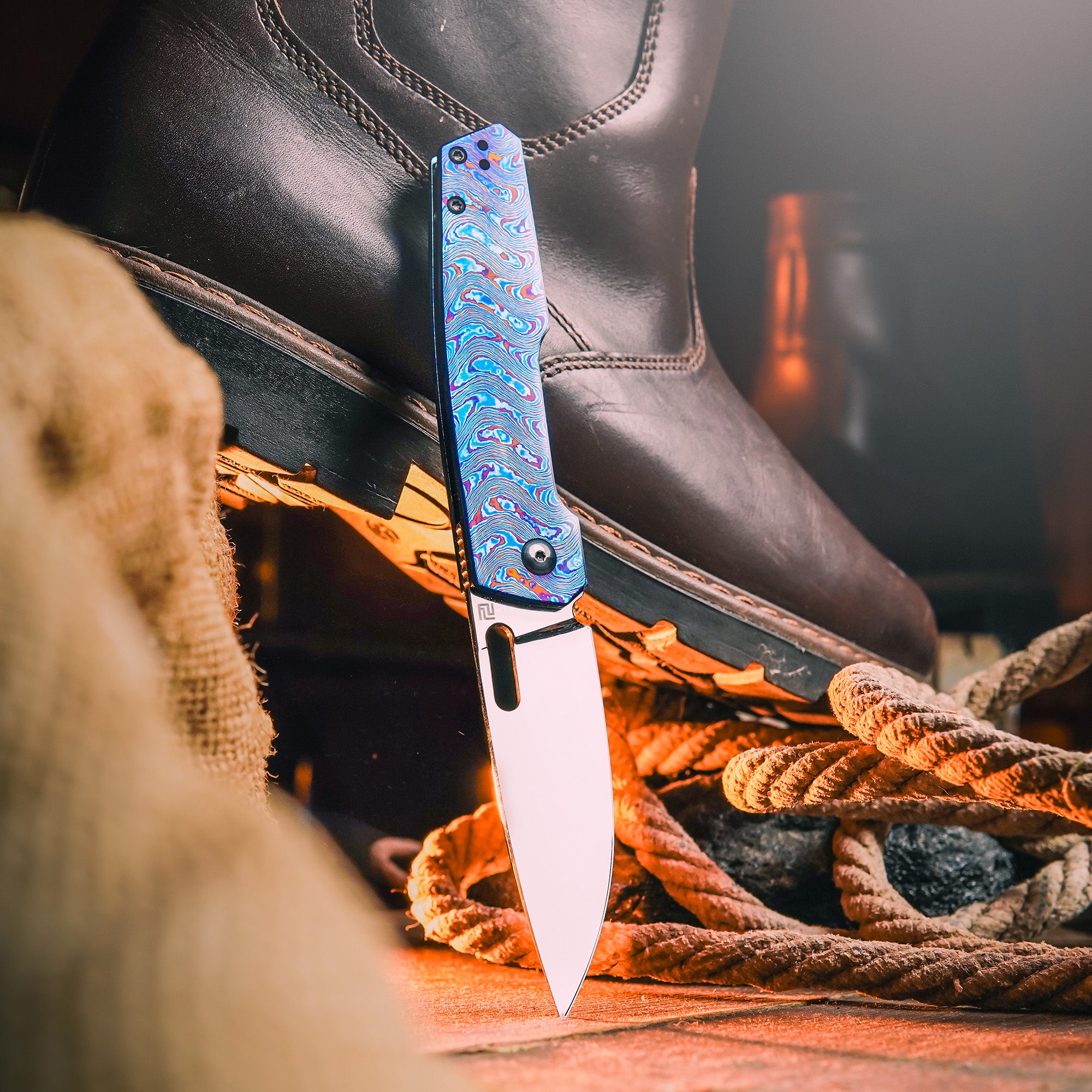
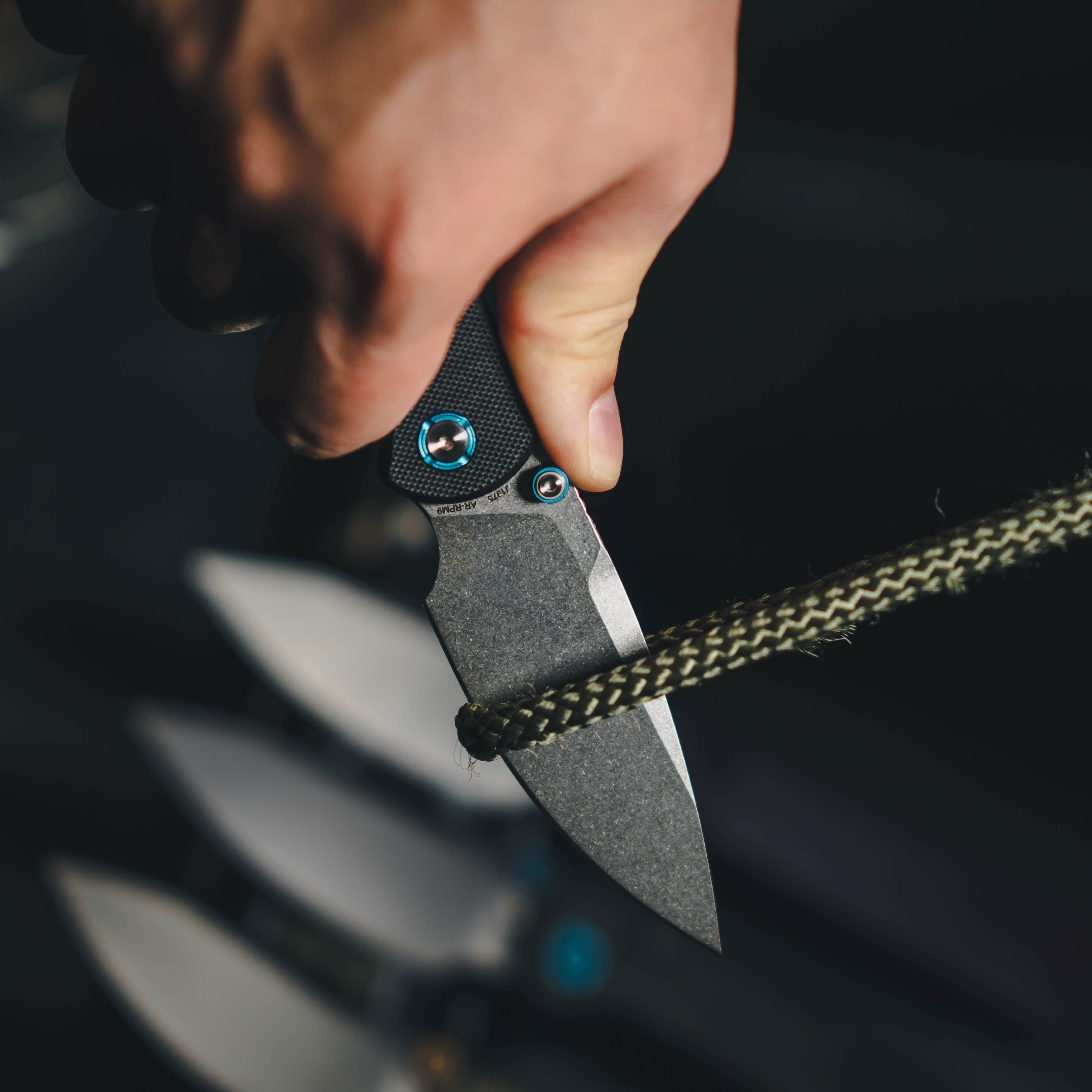
20CV is a premium powder metallurgy stainless steel used in high-end folding knives. Also known as CPM-20CV, it belongs to the same family as M390 and 204P — steels with very similar chemistry produced by different mills — and it shows up in the Artisan Cutlery lineup in models like the Arion. This guide explains what 20CV is, how it behaves, and how to sharpen it.
Powder metallurgy creates the fine, uniform carbide structure behind 20CV's edge retention.
What Is 20CV Steel?
20CV is a powder metallurgy stainless steel. The powder metallurgy process atomizes molten steel into fine particles that are then consolidated under heat and pressure. The result is an extremely uniform microstructure with fine, evenly distributed carbides — which translates directly into better edge retention and more predictable sharpening than conventionally cast steels.
The '20' in the name refers to its roughly 20 percent chromium content, which gives it strong corrosion resistance, placing it in the stainless category alongside M390 and 204P. Those three steels are widely considered near-equivalents, differing mainly in brand and minor composition details.
Key Properties of 20CV
- Edge retention: Excellent. The dense carbide structure resists abrasive wear, so a 20CV edge stays sharp far longer than budget steels like 8Cr13MoV or D2 in typical EDC use.
- Corrosion resistance: Very good. The high chromium content makes it a true stainless, comfortable for humid environments and everyday carry.
- Toughness: Moderate. Like other high-carbide steels, 20CV trades some toughness for wear resistance — it is not the best choice for hard-impact prying, but it is plenty tough for normal cutting tasks.
- Sharpening difficulty: High. The same carbides that hold an edge resist abrasion during sharpening. Diamond or CBN abrasives make the job far easier than conventional stones.
20CV vs M390 vs S90V
| Steel | Family | Edge Retention | Corrosion Resistance | Sharpening |
|---|---|---|---|---|
| 20CV | Powder metallurgy stainless | Excellent | Very good | Requires diamond/CBN for efficiency |
| M390 | Powder metallurgy stainless | Excellent (near-identical to 20CV) | Very good | Same — diamond/CBN recommended |
| S90V | Powder metallurgy stainless | Superior (higher vanadium carbides) | Good | Hardest of the three to sharpen |
For most everyday carry tasks, the practical difference between 20CV and M390 is negligible — buy on design and price. S90V pushes edge retention further but demands more patience at the sharpening bench.
How to Sharpen 20CV
- Use diamond or CBN stones. Conventional aluminum-oxide stones cut 20CV very slowly.
- Start coarse (around 300-600 grit) if the edge is damaged or heavily dulled, then progress through medium to fine grits.
- Finish with a strop loaded with diamond or CBN compound to restore a keen, toothy edge.
- Expect more passes than you would need on a simpler steel — the hardness is the price of the edge retention.
Best Uses for 20CV
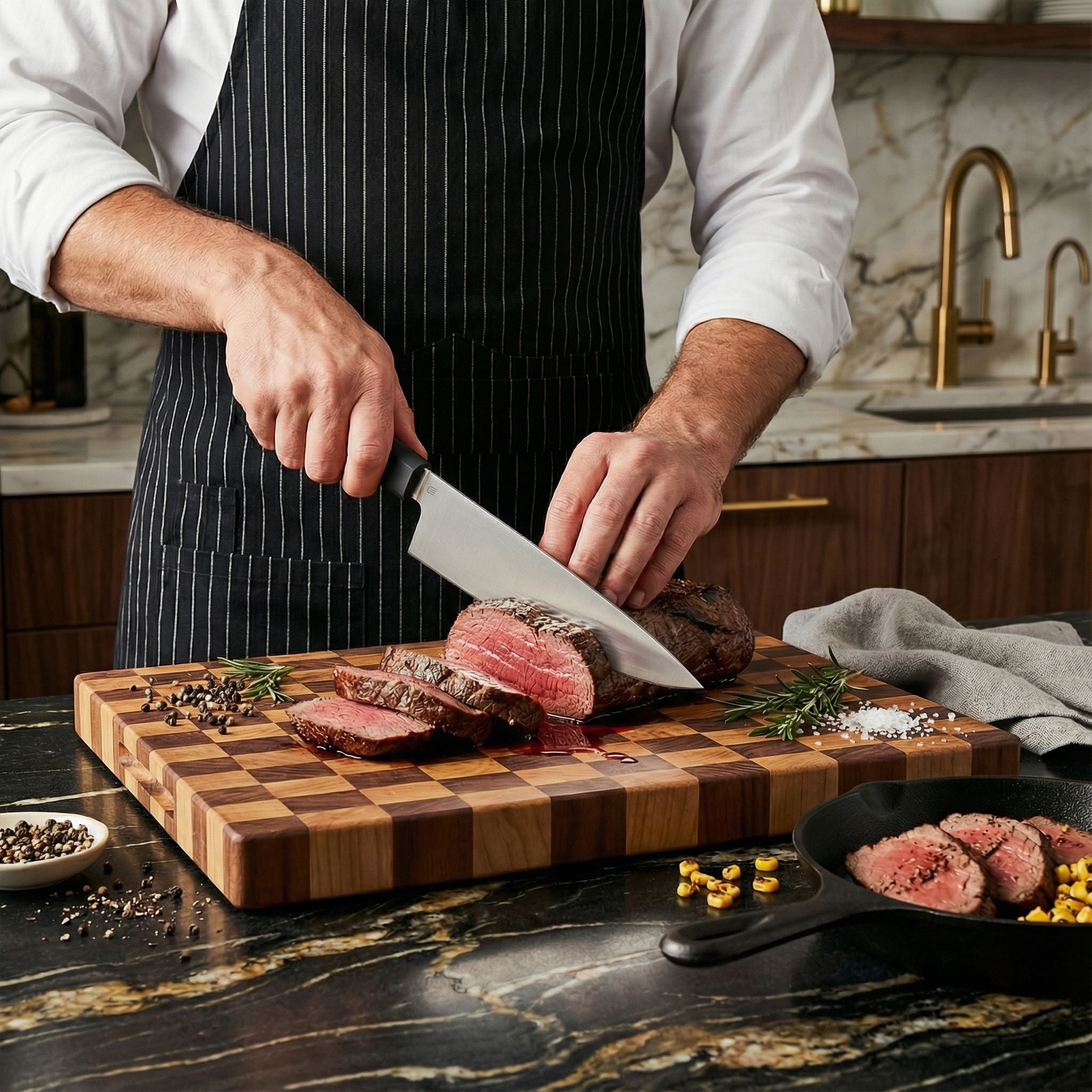
20CV is ideal for EDC folders where edge retention is the priority: box opening, package cutting, food prep, rope and strap work, and any task where you want the edge to last between sharpenings. It is a poor choice for heavy-impact or prying work, where a tougher, lower-carbide steel like S35VN or 14C28N serves better. In the Artisan catalog, the Arion is a flagship 20CV folder, pairing the steel with titanium or marbled carbon fiber handles.
See 20CV in production on the Artisan Cutlery Arion product page, or browse the full Artisan Cutlery folding knife collection for reliable everyday carry.

Leave a comment
This site is protected by hCaptcha and the hCaptcha Privacy Policy and Terms of Service apply.