

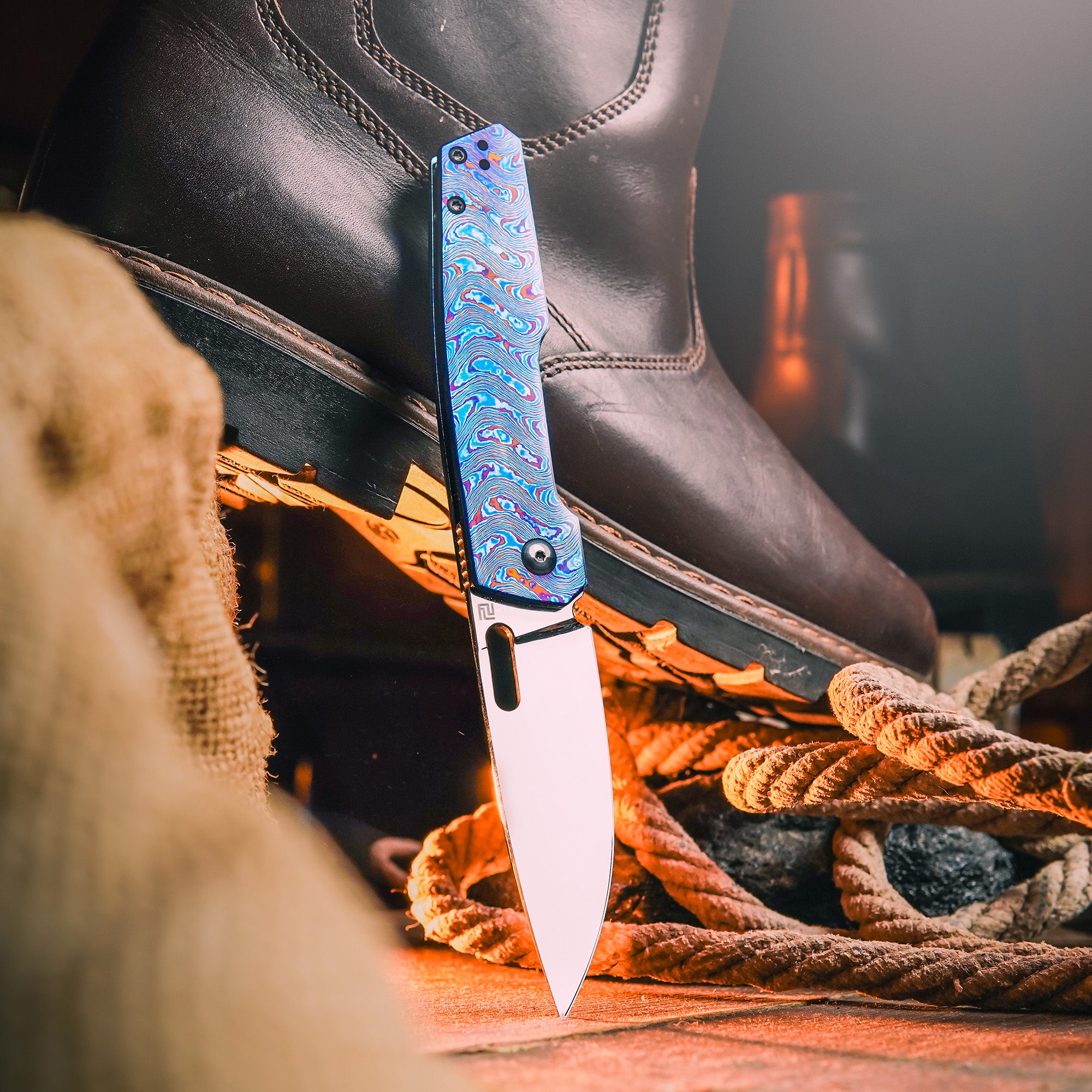
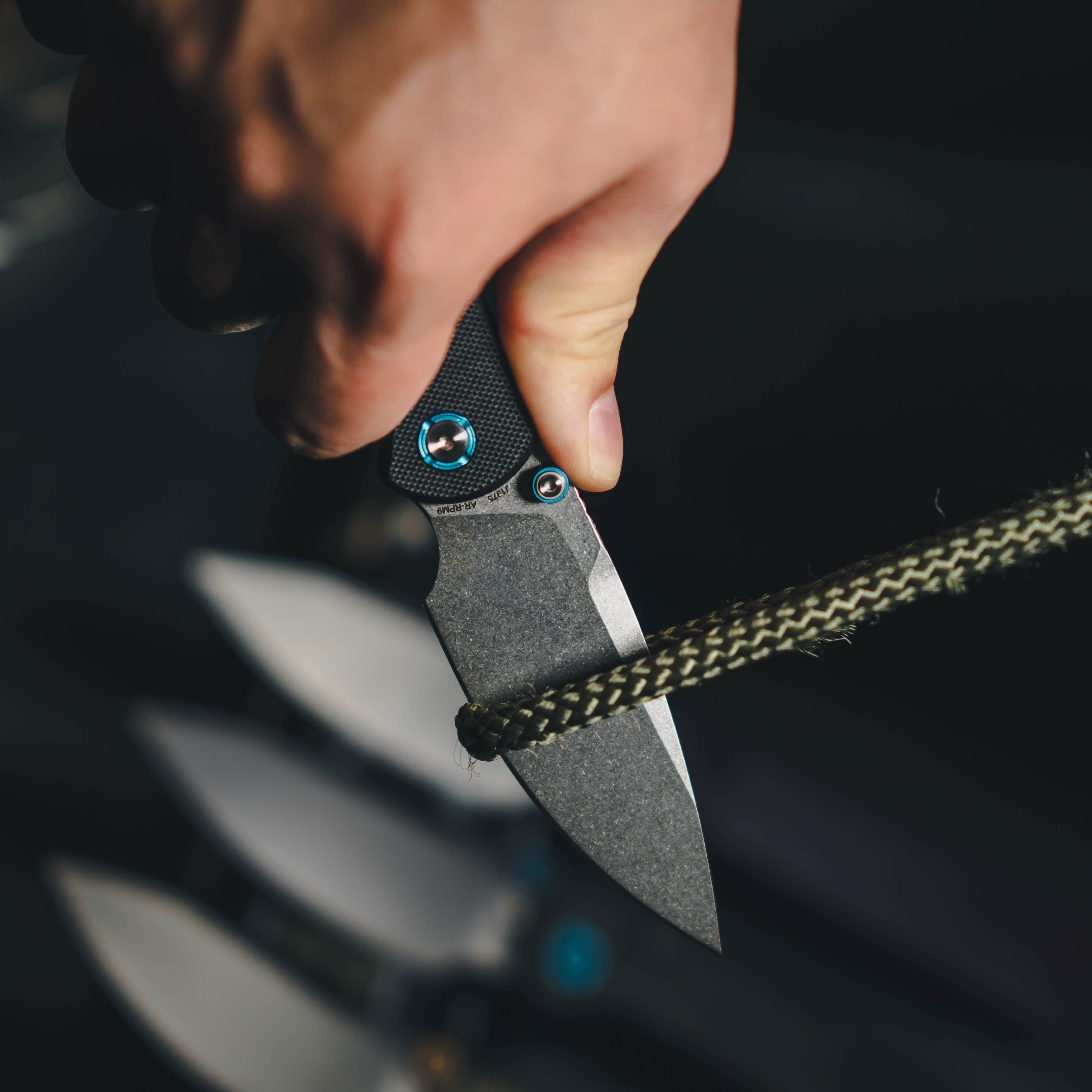
AR-RPM9 is a powder-metallurgy stainless steel that has become a fixture of Artisan Cutlery's mid-range lineup. It appears across the catalog — from the Ahab and Arroyo to the Beest, Cazador, Andromeda 1856P, and Holm 1875P — and it consistently delivers a balance that budget knife buyers want: good edge retention, easy sharpening, and solid corrosion resistance at an accessible price.
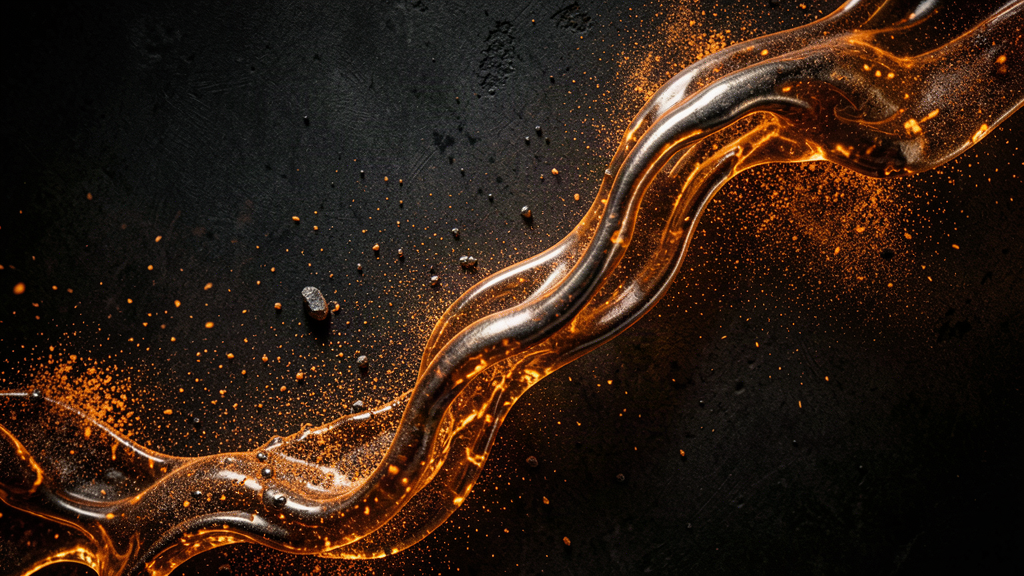
Powder-metallurgy grain structure concept
What Is AR-RPM9 Steel?
AR-RPM9 is a powder-metallurgy steel produced using a process where molten metal is atomized into fine powder and then consolidated under heat and pressure. That process — the same family of manufacturing behind premium steels like M390 and S90V — produces a finer, more uniform distribution of carbides than conventional casting. The steel is often described as a powder-metallurgy version of the 9Cr18MoV stainless family, with added vanadium for wear resistance. You can read more about the general manufacturing process in Wikipedia's article on powder metallurgy.
How Powder Metallurgy Improves Budget Steel
- Finer carbide structure means a cleaner edge and better edge stability
- More uniform steel reduces weak spots and surprises in heat treatment
- Powder steel can hold alloying elements that would separate in conventional ingots
- It sharpens predictably because the microstructure is consistent
AR-RPM9 in Artisan Knives
Artisan Cutlery heat treats its AR-RPM9 blades to HRC 59-61 and uses the steel across a wide slice of the lineup. Models that ship with AR-RPM9 include the Ahab, the Andromeda 1856P G10 version, the Arroyo, the Beest, the Cazador, the Holm 1875P, and the Orthodox 1817PS series. That spread is the tell: AR-RPM9 is the workhorse steel Artisan trusts for everyday folding knives across price points.
AR-RPM9 vs D2-Class Steels
| Property | AR-RPM9 | Typical budget tool steels (D2-class) |
|---|---|---|
| Corrosion resistance | Stainless — resists rust without coating | Semi-stainless — needs care and oil |
| Edge retention | Solid for the price class | Similar range |
| Ease of sharpening | Easy — responds well to stones and rods | Moderate |
| Microstructure | Fine, uniform powder-metallurgy carbides | Coarser conventional ingot carbides |
Sharpening AR-RPM9
AR-RPM9 sharpens without special equipment. A standard sharpening stone or guided system will raise a working edge quickly, and a strop keeps it fresh between sharpenings. Because the carbide structure is fine, the edge does not chip the way coarse-grained budget steels sometimes do. For more on how steel composition affects sharpening behavior, see Wikipedia's overview of knife steels.
Who Should Choose AR-RPM9?
If you want a stainless blade that takes abuse, sharpens easily, and does not cost premium money, AR-RPM9 is a strong pick. It suits first-time buyers, everyday carriers who use their knife hard, and anyone who would rather sharpen at home than chase the last few percent of edge retention. Browse the Artisan Cutlery folding knife collection to see AR-RPM9 in action across the current lineup.
Final Thoughts
AR-RPM9 is a smart answer to a classic question: how do you make a budget knife steel genuinely good? Powder metallurgy brings premium microstructure to an accessible price, and Artisan uses it across a lineup that proves the formula works for everyday carry.
Explore the Artisan Cutlery catalog — premium EDC knives built for reliable everyday carry.


Leave a comment
This site is protected by hCaptcha and the hCaptcha Privacy Policy and Terms of Service apply.