


How Handle Material Shapes Your Balisong Experience
The handle material of a butterfly knife — or balisong — is one of the most important factors determining how it flips, how long it lasts, and how it feels in your hand. Whether you are a competitive flipper, a collector, or someone who carries a balisong for everyday use, understanding the trade-offs between titanium, aluminum, G10, and steel handles helps you choose the right knife for your needs.

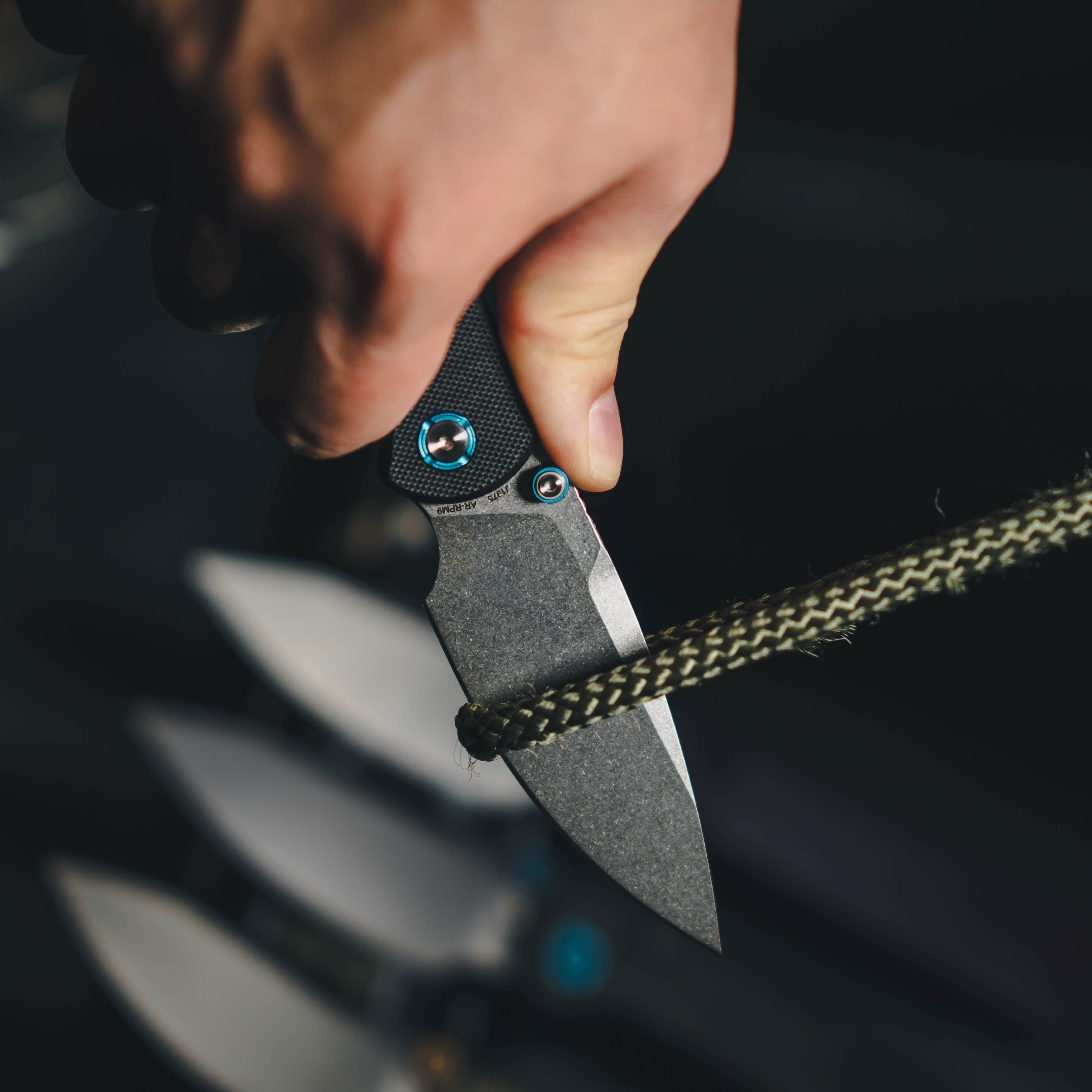
Balisong handle material options affect weight, balance, and flipping performance.
Each material brings a distinct combination of weight, strength, grip, and cost to the table. In this guide, we break down the four most common balisong handle materials and help you decide which one fits your style.
Titanium Handles: The Premium Standard
Titanium is widely regarded as the premier handle material for butterfly knives. Its combination of strength, light weight, and corrosion resistance makes it a favorite among serious flippers and collectors alike.
- Weight: Approximately 4.5 g/cm³ — lighter than steel but denser than aluminum
- Strength: Excellent strength-to-weight ratio, resists bending
- Corrosion resistance: Naturally resists rust and oxidation
- Feel: Solid, premium, warms to the hand quickly
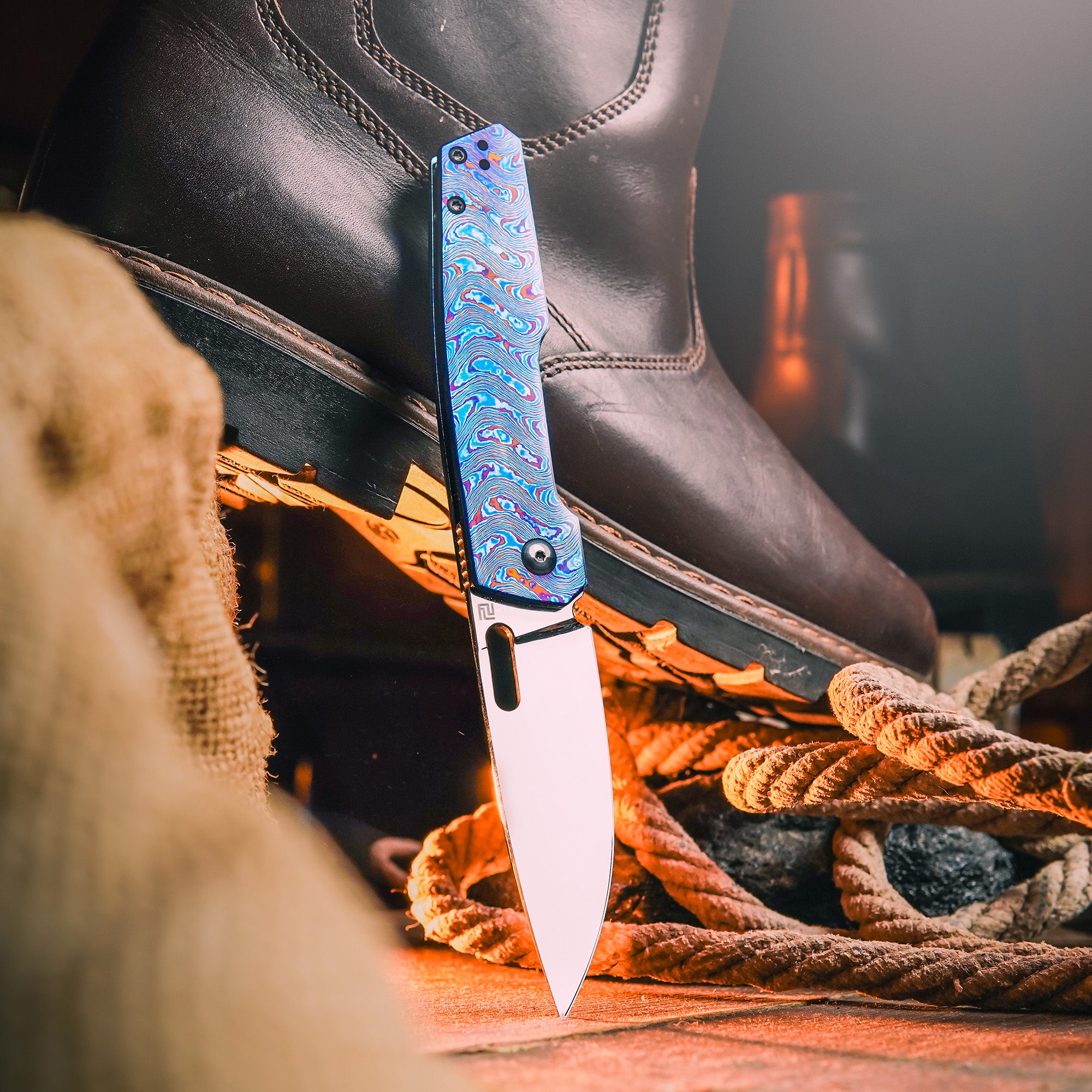
- Customization: Can be anodized in a wide range of colors
- Cost: Premium — typically the most expensive option
Titanium handles provide the ideal balance of weight and momentum for flipping. They are durable enough for years of use without developing play, and their natural corrosion resistance means they hold up well in humid environments. The ability to anodize titanium also allows for striking visual customization.
Aluminum Handles: Lightweight and Affordable
Aluminum is the most common handle material for production balisongs, particularly in the mid-range price tier. It offers a good balance of performance and value.
- Weight: Approximately 2.7 g/cm³ — the lightest common handle material
- Strength: Adequate for normal use; can dent or bend under heavy stress
- Corrosion resistance: Naturally forms a protective oxide layer
- Feel: Light, cool to the touch initially
- Customization: Can be anodized; available in many colors
- Cost: Moderate — widely affordable
Aluminum handles make balisongs exceptionally light, which can be an advantage for prolonged flipping sessions. However, the light weight means less momentum during aerials, and the material is more prone to denting than titanium or steel. Many entry-level and mid-range balisongs use 6061 aluminum handles.
G10 Handles: Maximum Grip and Lightness
G10 is a fiberglass-based laminate that brings a unique set of properties to butterfly knives. It is most commonly found on trainer balisongs and some production knives.
- Weight: Approximately 1.8 g/cm³ — lighter than aluminum
- Strength: Very strong in compression; can chip under impact
- Grip: Excellent texture; does not slip when wet
- Feel: Warm, textured, lightweight
- Corrosion resistance: Completely inert — no rust concerns
- Cost: Low to moderate
G10 offers the best grip of any common balisong handle material. Its textured surface provides excellent control during complex flipping routines. G10 does not conduct heat or cold like metals do, making it comfortable in any weather. The main trade-off is reduced durability against impacts — G10 can chip or crack if dropped on hard surfaces.
Steel Handles: Heavy, Durable, and Traditional
Steel handles represent the traditional construction of butterfly knives. They are less common in modern production models but remain popular with collectors and those who prefer a heavier flip.
- Weight: Approximately 7.8 g/cm³ — the heaviest common handle material
- Strength: Very high; resists bending and impact damage
- Grip: Smooth unless textured; can be slippery
- Feel: Heavy, cold, substantial
- Corrosion resistance: Requires maintenance; prone to rust
- Cost: Low to moderate
Steel handles provide maximum durability and heft. The extra weight creates momentum that some flippers prefer for aerials and rollovers. Stainless steel handles (such as 440C or 5Cr15MoV) offer better corrosion resistance than carbon steel versions but still require regular maintenance to stay rust-free.
Handle Material Comparison Table
| Property | Titanium | Aluminum | G10 | Steel |
|---|---|---|---|---|
| Density | 4.5 g/cm³ | 2.7 g/cm³ | ~1.8 g/cm³ | 7.8 g/cm³ |
| Strength | Excellent | Good | Good | Excellent |
| Grip | Moderate | Low-Moderate | Excellent | Low |
| Rust Resistance | Excellent | Good | Excellent | Poor |
| Customization | Anodizable | Anodizable | Color layers | Coating/plate |
| Cost | High | Low-Moderate | Low-Moderate | Low-Moderate |
Choosing the Right Handle Material
Your choice of balisong handle material depends on how you use the knife:
- For competitive flipping: Titanium offers the best all-around performance. Its weight provides good momentum without being overly heavy, and it stands up to frequent drops and hard landings.
- For budget-conscious buyers: Aluminum handles deliver a solid flipping experience at a fraction of the cost. Look for channel construction or thick slab designs for added durability.
- For training and practice: G10 trainers offer excellent grip and light weight, reducing fatigue during long practice sessions.
- For collectors: Steel handles provide traditional aesthetics and durability. Vintage and custom balisongs frequently use stainless or carbon steel handles.
No single handle material is best for everyone. The right choice balances weight, durability, grip, and budget against your personal flipping style and intended use.
Handle Construction Matters Too
Beyond the material itself, how the handles are constructed affects performance. Channel construction (machined from a single piece of material) offers maximum strength and clean aesthetics, while sandwich construction (two outer scales over a central liner) allows for adjustments and tuning.
For more on butterfly knife design and features, browse Artisan Cutlery's folding knife collection to see handle material choices in modern production knives.


Leave a comment
This site is protected by hCaptcha and the hCaptcha Privacy Policy and Terms of Service apply.