


Why Ergonomics Matter More Than Blade Steel
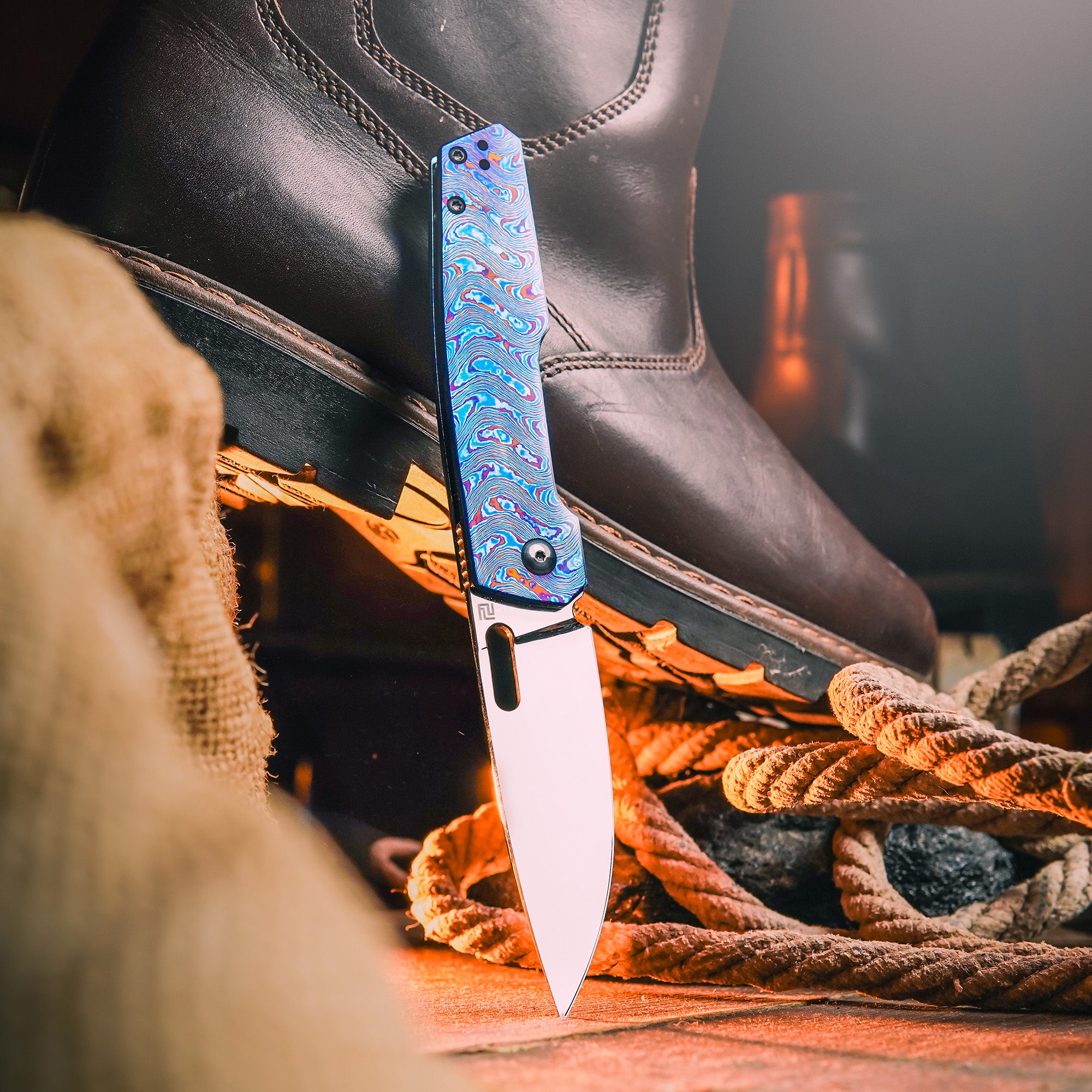
A knife with the best steel in the world is useless if it does not fit your hand comfortably. Ergonomics — how a knife's handle interacts with your hand during use — is arguably the most overlooked factor when choosing an everyday carry folder. A well-designed handle disappears in your hand, allowing you to work for extended periods without fatigue or hot spots.
Knife ergonomics — handle shape, choil placement, jimping texture, and finger grooves — determine comfort during extended use.
This guide breaks down the key ergonomic features that determine how a folding knife feels during real use: handle shape, choil design, jimping placement, and finger grooves.
Handle Shape: The Foundation of Comfort
The overall shape of a knife handle determines how naturally it sits in your hand. The most common handle profiles include:
- Straight/neutral handles: No curves or ergonomic contours; simple and functional. Best for basic cutting tasks and easy carry.
- Curved/ergonomic handles: Contoured to follow the natural curve of a closed fist. These fill the palm more completely and reduce hot spots during extended use.
- Flared butt: A slightly widened or upswept handle end that prevents the hand from sliding forward during push cuts. Common on tactical and hard-use knives.
The ideal handle shape depends on hand size and grip style. A handle that is too thin causes the hand to over-compress, leading to fatigue. A handle that is too thick reduces control and precision.
Handle Thickness and Length
Two critical dimensions that directly affect comfort:
| Dimension | Ideal Range | Why It Matters |
|---|---|---|
| Handle length | 4.0-4.5 inches | Should provide a full four-finger grip without the pinky hanging off |
| Handle thickness | 0.45-0.55 inches | Thin enough for comfortable pocket carry; thick enough for secure grip |
These dimensions are general guidelines. Hand size varies significantly between users, which is why holding a knife before purchasing is always recommended when possible.
The Choil: A Small Feature with Big Impact
The choil is a notch or indentation at the base of the blade, just ahead of the handle. It serves several ergonomic functions:
- Sharpening relief: Allows you to sharpen the entire cutting edge without running the abrasive into the handle
- Forward grip index point: Lets you choke up on the blade for detail work by placing your index finger in the choil
- Visual definition: Provides a clear visual separation between the blade edge and the handle
A well-designed choil makes a significant difference in precision cutting tasks. When you can choke up and place your index finger directly behind the cutting edge, you gain exceptional control for fine work like carving, whittling, or opening packages.
However, choils that are too small or poorly shaped can create a pinch point or fail to provide adequate finger purchase. A good choil should comfortably accommodate an index finger without sharp edges.
Jimping: Texture Where You Need It
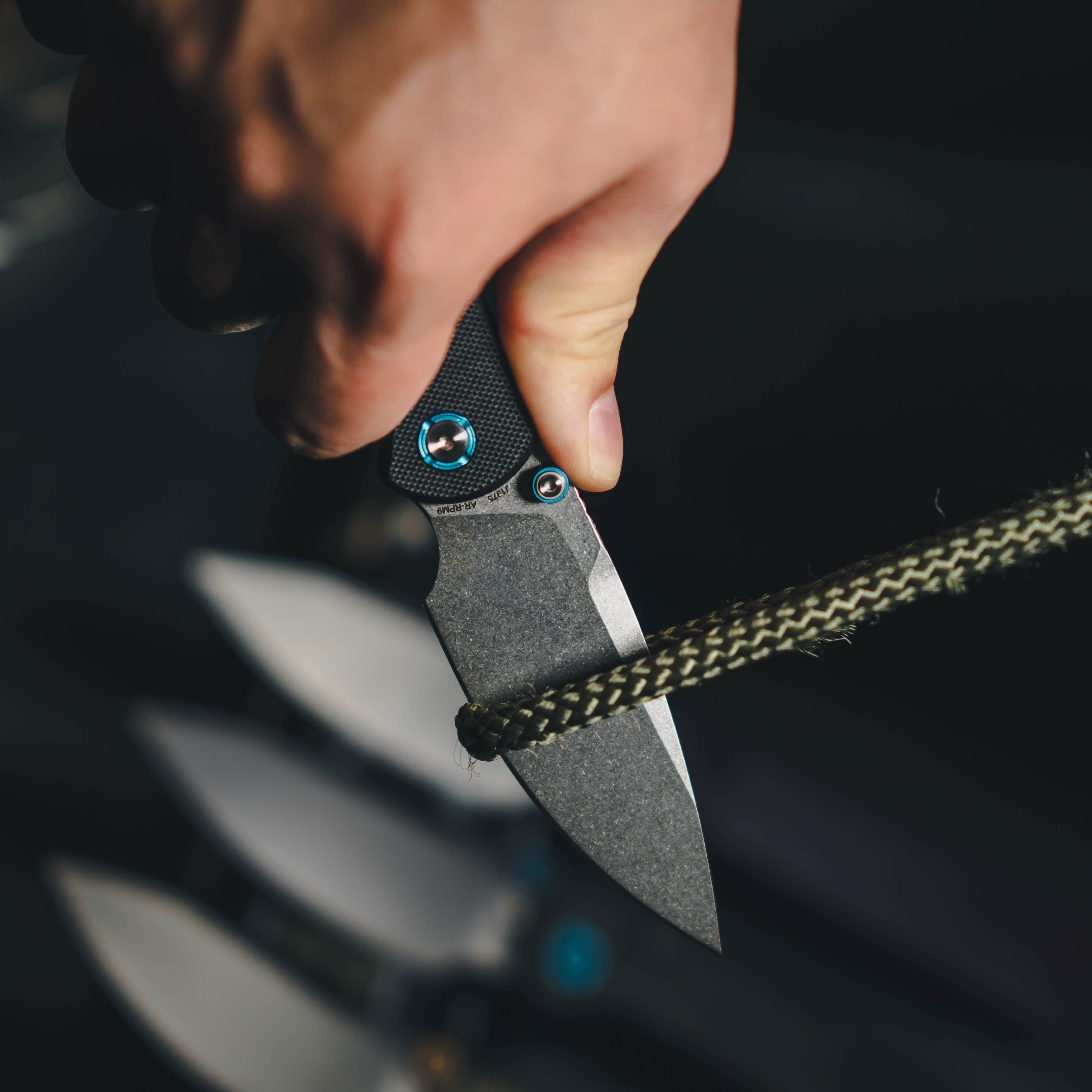
Jimping refers to small notches or serrations cut into the spine of the blade or the back of the handle. These provide traction for your thumb or index finger during use.
- Spine jimping: Located on the top of the blade near the handle. Provides thumb traction during push cuts and detailed work.
- Handle jimping: Found on the back of the handle, often near the pivot or at the butt. Provides traction for the index finger or palm.
- Choil jimping: Small serrations inside the choil area for the index finger when choking up.
The ideal jimping is aggressive enough to provide grip without being so sharp that it causes discomfort during extended use. Many premium knives strike this balance with carefully machined jimping that grips securely without abrading the skin.
Hand placement matters — jimping is most effective when positioned exactly where your thumb or finger naturally rests during use. Misplaced jimping is worse than no jimping at all.
Finger Grooves: Comfort or Constraint?
Finger grooves are contoured depressions on the handle surface designed to index individual fingers. While they can improve initial feel, they are controversial among knife enthusiasts:
- Pros: Provide immediate hand indexing, prevent forward slip, and feel comfortable for users whose fingers match the groove spacing.
- Cons: Rigid spacing that may not fit all hand sizes; can create hot spots during prolonged use; make the handle harder to re-position during different grip types.
In general, subtle contouring that follows the natural curve of a fist is preferable to deep, defined finger grooves. Knives that feature gentle palm swells and tapered handles tend to accommodate more hand shapes than those with aggressive finger indexing.
Handle Material and Texture
Ergonomics is not just about shape — the handle material and surface texture play a major role in how secure the grip feels:
- Titanium: Smooth but secure when textured or stonewashed; can be slippery when wet
- G10: Excellent grip; available in smooth or aggressive textures
- Micarta: Improves grip when wet; develops comfortable patina over time
- Carbon fiber: Lightweight; can be slippery depending on surface finish
For more on folding knife design and ergonomics, explore Artisan Cutlery's collection of folding knives to see how modern handle shapes and ergonomic features come together in production designs.



Leave a comment
This site is protected by hCaptcha and the hCaptcha Privacy Policy and Terms of Service apply.