


Best Knife for Camping: How to Choose One That Actually Works
The best camping knife is a fixed blade with a 3.5 to 5 inch drop-point blade, full tang construction, a tough stainless steel in the 57–60 HRC range, and a handle that stays grippy when your hands are wet. That single combination covers food prep, tinder and feather sticks, cordage, packaging and small repairs without being a burden to carry. If you are backpacking and counting grams, a 3 inch folding knife with a strong lock is the better trade — it does 80 percent of camp chores at a fraction of the weight.
Map the chores first: food, cordage and tinder pull toward different blade geometry than splitting wood does.
Everything past that first sentence is a series of trade-offs, and most "best camping knife" lists skip them. This guide works the other way: start from the jobs a camp knife actually does, then narrow the steel, shape, grind and handle to fit how you camp.
Start With the Job, Not the Knife
Camp knives fail for boring reasons — the handle gets slippery, the edge chips on a knot, the sheath lets the blade slide out in a pack. Match the tool to the task list and most of those failures disappear. The list below is built around ordinary camping chores, not survival scenarios.
| Camp task | What the knife needs | What it does not need |
|---|---|---|
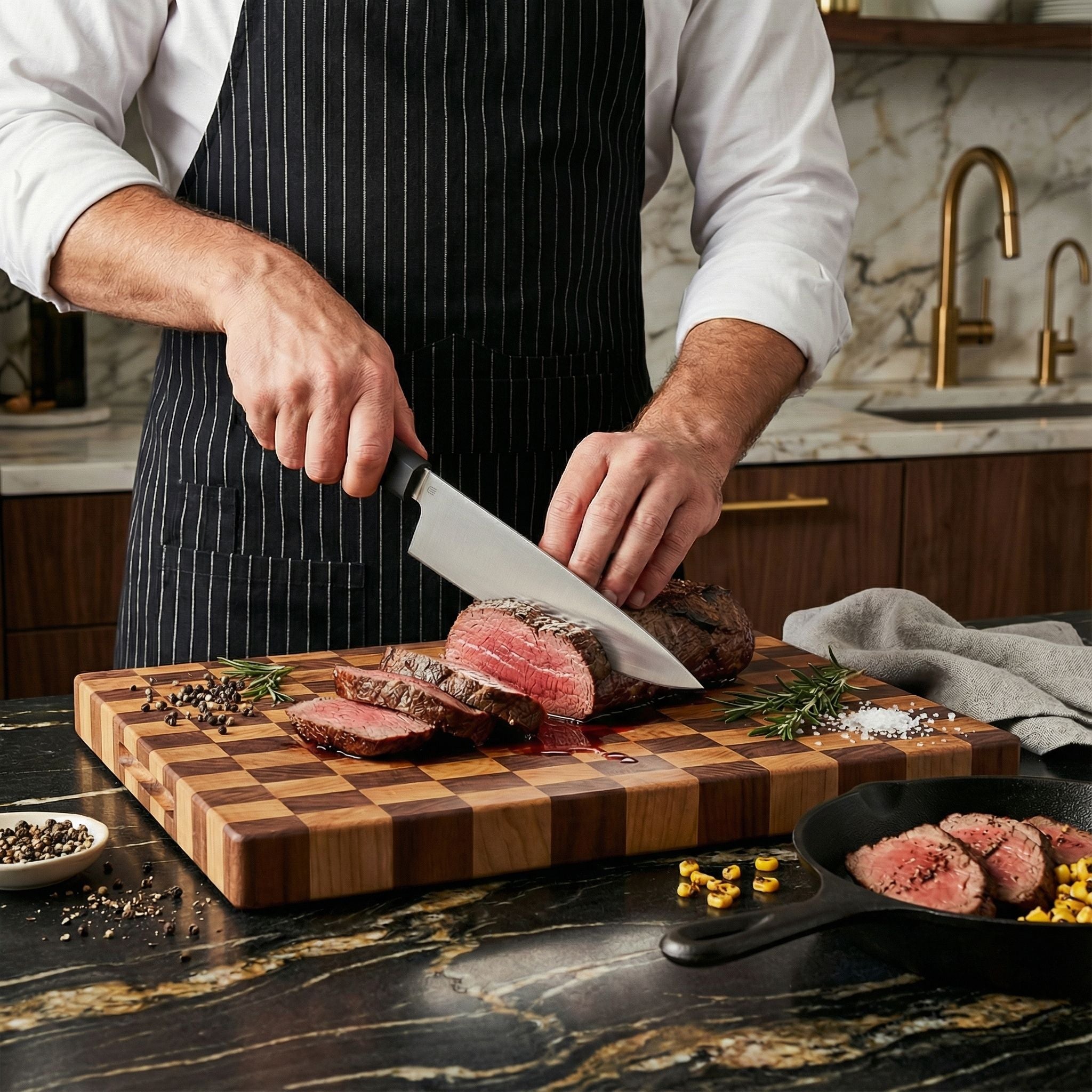
| Food prep | Thin edge geometry, 3–4 inch blade, easy to clean | Thick stock, complex grinds |
| Feather sticks and tinder | 90° spine for a ferro rod, comfortable thumb-forward grip | A chopping-length blade |
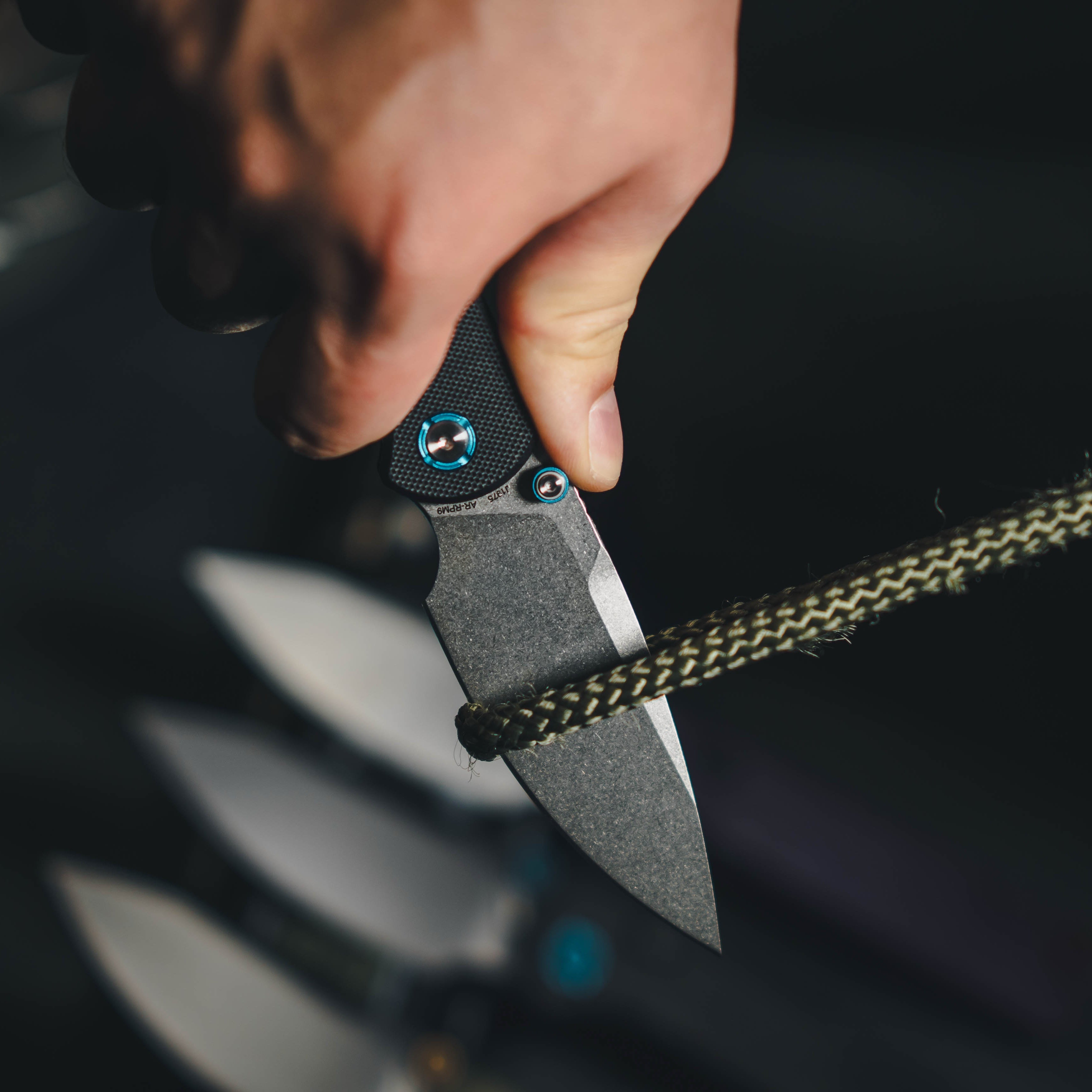
| Cordage and rope | Plain edge with a sharp heel, or a sheepsfoot profile | A serrated-only edge you cannot sharpen in the field |
| Packaging, tape, repairs | Anything sharp and accessible | Weight |
| Splitting small wood | Full tang, 1/8 inch or thicker stock, sturdy handle | A folding knife you would rather not stress |
Look at that list and you can see why a single knife rarely wins outright. The tasks pull toward two different tools: a thin, precise blade for food and cordage, and a stout one for wood. Pick which side of that line your trips fall on.
Fixed Blade vs Folding Knife for Camping
A fixed blade is the stronger choice for camp work. There is no pivot to loosen, no lock to rely on under load, and the handle can be shaped for a full four-finger grip. The fixed blade lineup covers everything from a 3 inch utility pattern to a full camp knife, and a fixed blade in the 4 inch range weighs 4 to 6 ounces with the sheath.
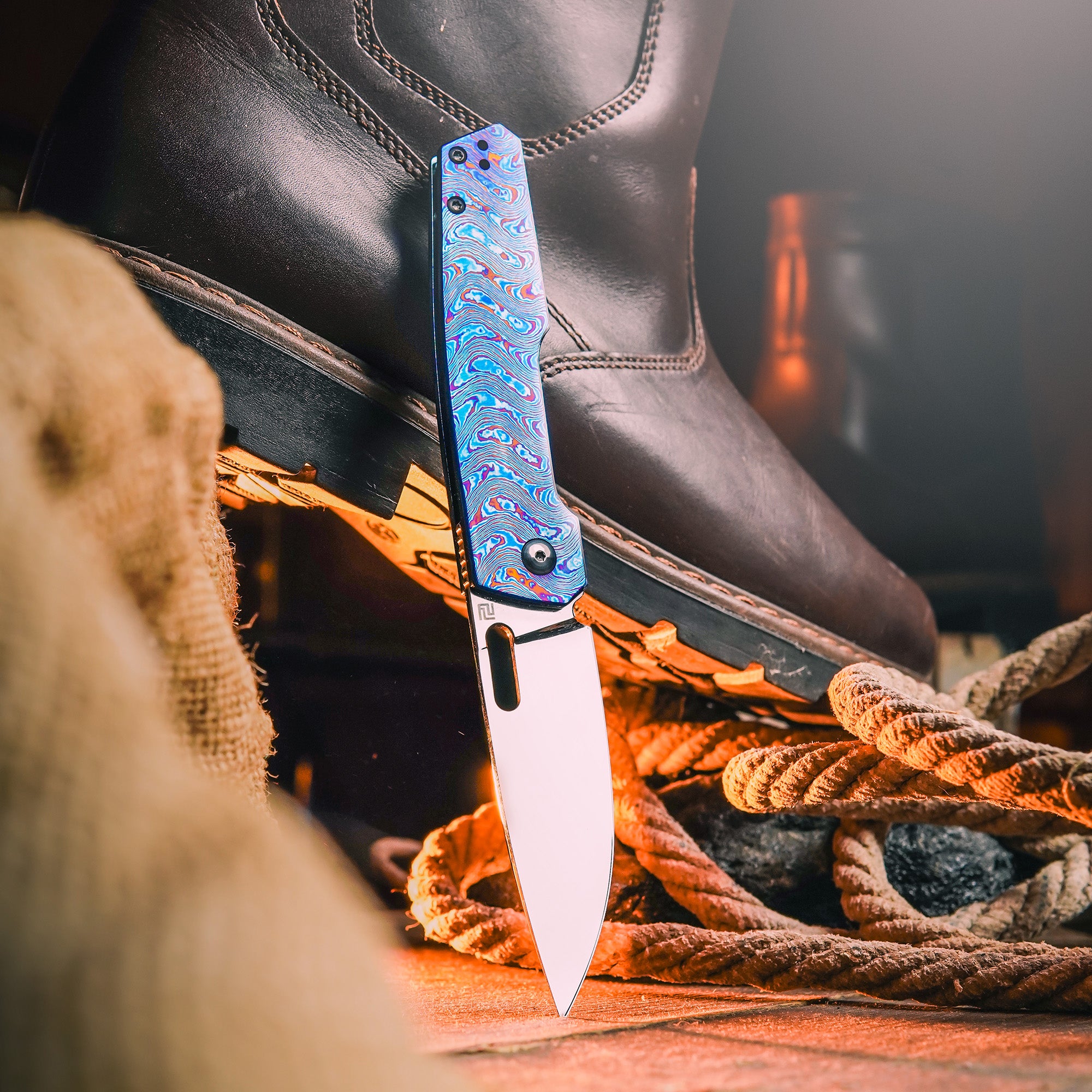
A folding knife earns its place when weight and packability matter more than brute strength. Modern locks — crossbar, button, frame — are reliable for cutting tasks, and a folder disappears into a pocket. For backpacking, canoe trips and travel where a long fixed blade is inconvenient, a folder is the sane answer. Browse folding knives with a 3 inch blade and a steel that resists rust.
The honest split: car camping and base camps reward a fixed blade; backpacking rewards a folder; canoe and wet-weather trips reward whichever one has the better corrosion resistance.
Blade Shape: Drop Point Is the Default for a Reason
A drop point puts the tip below the centerline, which gives you a strong, controllable point without a fragile tip. It is the least specialized shape and the easiest to use for everything from opening a bag of rice to drilling a starter hole in a fire board. The trade-offs below come down to blade geometry rather than brand.
- Drop point: general camp work. Best all-rounder.
- Clip point: more piercing ability, thinner tip. Useful for food and detail work, slightly weaker under lateral load.
- Sheepsfoot and wharncliffe: a straight edge with the tip dropped low. Excellent on rope, cordage and any pull cut; poor for piercing.
- Tanto: a reinforced point for hard materials. Overkill for camp chores and awkward for food.
Whatever the shape, look for a sharp heel — the section of edge nearest the handle. That is the part you use for controlled push cuts on tinder, and a lot of stylized blade profiles sacrifice it for looks.
Steel: What Actually Matters Outdoors
Camp is a wet, dirty, sometimes salty environment. Corrosion resistance matters more than it does in a drawer, and toughness matters more than raw edge retention because you will hit knots, sand and the occasional rock.
| Steel class | Typical hardness | Outdoor behavior |
|---|---|---|
| 12C27 / 14C28N | 56–60 HRC | Very stainless, tough, easy to sharpen on a pocket stone. The best value for camp use. |
| S35VN | 58–61 HRC | Balanced: good edge holding, decent toughness, fine corrosion resistance. A premium all-rounder. |
| M390-class powder steels | 59–61 HRC | Long edge life, high wear resistance. Slower to sharpen and less forgiving of abuse. |
| 1095 and similar carbon steels | 56–58 HRC | Tough, sharpens fast, throws sparks well. Rusts if you look at it wrong — needs oil. |
For a first camp knife, a Sandvik stainless in the 14C28N family is hard to beat: it shrugs off a wet sheath overnight, takes a keen edge on a small stone, and does not need a maintenance ritual. Move to a powder steel only if you are confident in your sharpening and you want to sharpen less often.
Skip anything with a very thick edge bevel and a very high hardness together. That combination is great for slicing cardboard in a warehouse and brittle against a knot in the woods.
Size, Stock Thickness and Weight
Blade length is the first number to fix. A 3 inch blade handles food and cordage well and is pleasant to carry; a 4 inch blade adds real wood-processing capability; a 5 inch blade is a camp knife that expects to be worked. Longer than that and you are carrying a tool for a job most campers do not have.
Stock thickness is the second number, and it matters more than most buyers realize. At 1/8 inch (about 3.2 mm) a full-tang blade is strong enough for batoning small wood and still slices reasonably. At 3/16 inch the knife becomes a splitter and starts wedging in food. At 0.1 inch it becomes a fine slicer that you should not pry with.
Grind follows: a flat grind is the most versatile, a scandi grind is excellent for wood and easy to sharpen in the field, and a convex grind is durable but harder to maintain without practice. For one knife that does everything, flat or a high scandi is the safe pick.
Handle and Sheath
The handle is where cheap knives reveal themselves. You want a shape that fills your palm without hot spots, a slight palm swell, and texture that survives soap, mud and sunscreen. Micarta and G10 both stay grippy when wet and do not swell or crack; wood looks better and needs more care; bare metal looks sharp and gets slippery the moment it is wet.
A guard matters more than people expect. Even a small finger guard or a deep finger groove keeps your hand from sliding forward during a push cut. On a fixed blade, check that the handle has no gap where it meets the tang — that gap collects water and starts rust.
For the sheath, retention is the whole test. Turn it upside down and shake it. If the knife moves, the sheath will eventually let it go inside your pack. Leather is quiet and traditional but holds moisture; Kydex-type synthetics shed water and hold retention better in wet conditions.
Decision Rules: Which One for Your Trip
| If you mostly… | Choose | Why |
|---|---|---|
| Car camp with a cooler and a stove | 4 inch fixed blade, stainless | Food prep and fire duty, weight is irrelevant |
| Backpack 5+ miles a day | 3 inch folder, 14C28N or S35VN | 2–4 oz saved matters more than batoning |
| Canoe or paddle in wet conditions | Fixed blade, very stainless, synthetic sheath | Everything you own will be wet by day two |
| Camp in freezing weather | Fixed blade with a generous handle | Gloves change your grip; thin handles become useless |
| Cook real meals at camp | Thin 3–4 inch blade, flat grind | Slicing geometry beats thickness every time |
| Want one knife for everything | 4 inch drop point, flat grind, S35VN | No single strength, no glaring weakness |
Keeping It Working at Camp
Wipe the blade dry before it goes back in the sheath — a wet blade in a wet sheath overnight is how most camp knives get their first rust spots. A drop of oil on the pivot of a folder and a thin film on a carbon steel blade covers almost all field maintenance.
Carry a small sharpener. A 400/1000 diamond pocket stone weighs almost nothing and will bring a dulled edge back in two minutes. Touch up the edge every evening rather than waiting for it to go completely dull; light maintenance is faster than repair.
Do not leave a knife in a hot car or on a rock in direct sun. Handle materials and adhesives do not enjoy either, and a knife that lives on a picnic table tends to get borrowed and lost.
If you want to compare shapes before you commit, the knife types breakdown sorts models by pattern, and the outdoor season collection groups the ones built for field use.
FAQ
What size knife is best for camping?
Four inches is the most useful all-round length: long enough to process small wood and prep food, short enough to carry comfortably. Backpackers usually downsize to 3 inches; base-camp cooks often go to 5.
Is a folding knife good enough for camping?
Yes, for cutting. A modern crossbar or button lock folder handles food, cordage, packaging and tinder without issue. It is the wrong tool for batoning or prying, so keep wood splitting to a fixed blade or an axe.
Stainless or carbon steel for a camp knife?
Stainless, unless you enjoy maintenance. Carbon steel is tougher and easier to sharpen, but camp is wet, and a carbon blade left in a sheath overnight will spot. Stainless in the 14C28N or S35VN family is the practical default.
Do I need a full tang knife?
For a fixed blade used on wood, yes. A full tang runs the steel the length of the handle and takes impact far better than a stick tang. For a light-use camp knife it is nice to have rather than essential.
Can I bring a camping knife when I travel?
Rules vary by country and by land manager, and they change. Check the specific rules for where you are going rather than assuming a camp knife travels the same way as a kitchen tool.


Leave a comment
This site is protected by hCaptcha and the hCaptcha Privacy Policy and Terms of Service apply.