

What the CJRB Prado J1936 Is
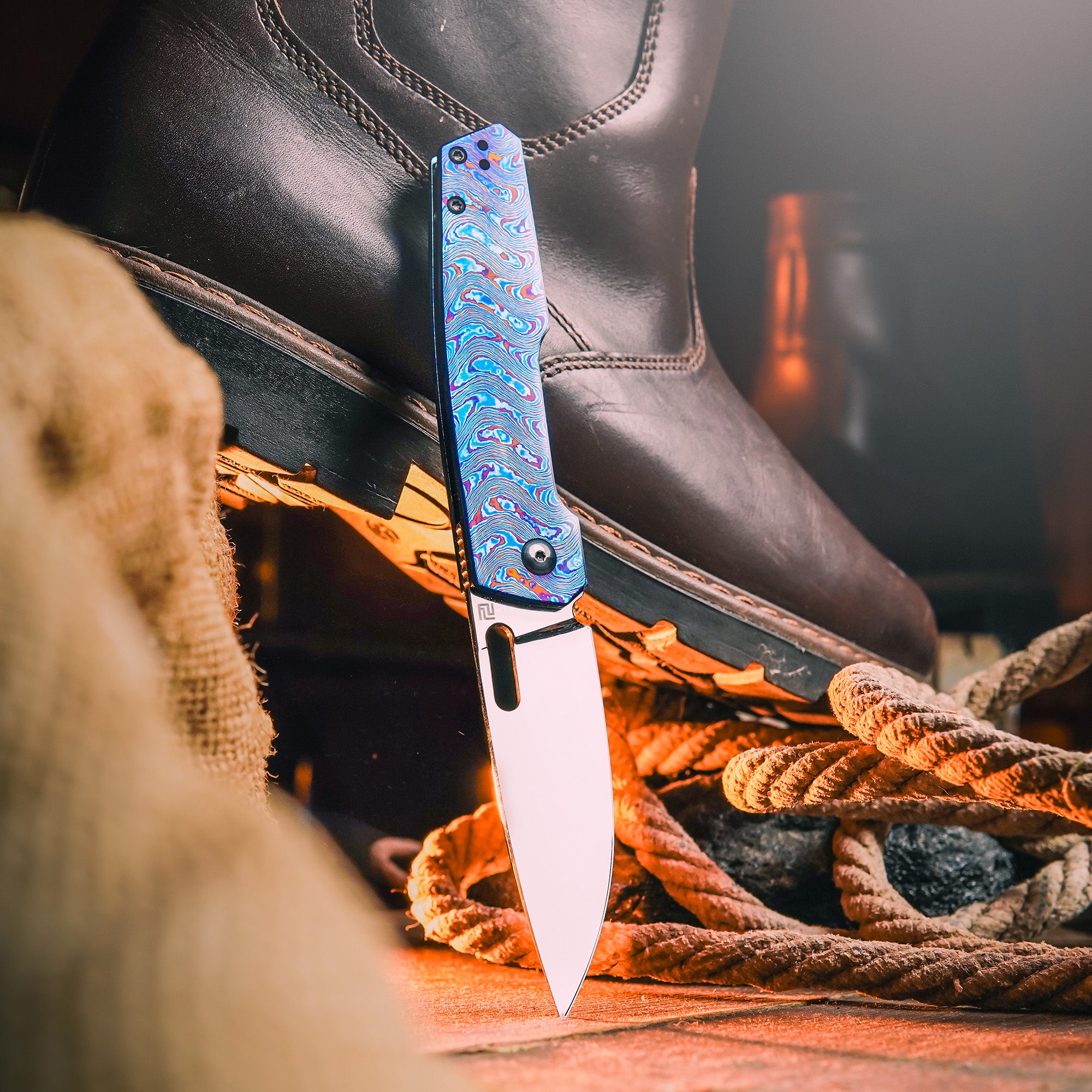
The CJRB Prado J1936 is a Ray Laconico design: a full-size, lightweight crossbar-lock folder that CJRB positions for dress-pants carry. The brand's own listing copy describes it as bringing Ray's signature clean style together with a super lightweight frame and a sturdy, durable crossbar lock. In practice that means a 3.76-inch clip point blade on a 3.42 oz frame, with a crossbar lock and a ceramic ball bearing pivot, at a price that sits below CJRB's titanium and carbon fiber tiers.
The Prado J1936 ships in three handle tiers - G10, wood and a micarta limited edition.
The Prado is also one of the few folders in the CJRB line where the upgrade path is a material change rather than a colour change. Five configurations are in stock today, built on three handle materials and two different steels, and the price spread runs from $57.00 to $99.99.
The Reference Spec Table
These are the published specifications for the G10 tier — the version most buyers land on, and the number set the rest of this guide compares against.
| Blade Length | 3.76 in (95.46 mm) |
| Blade Thickness | 0.09 in (2.3 mm) |
| Blade Style | Clip point |
| Blade Grind | Flat |
| Blade Finish | Sand polish |
| Blade Material | AR-RPM9 |
| Blade Hardness | HRC 59-61 |
| Handle Material | G10 |
| Lock Type | Crossbar lock |
| Pivot Assembly | Ceramic ball bearing |
| Clip Material | Steel |
| Overall Length | 8.49 in (215.76 mm) |
| Closed Length | 4.74 in (120.30 mm) |
| Weight | 97 g / 3.42 oz |
The blade length and closed length add up exactly to the published overall length (95.46 mm + 120.30 mm = 215.76 mm), which is the arithmetic check worth running on any spec sheet before you trust the rest of it.
Three Handle Tiers, Two Steels
Every in-stock Prado shares the same blade length, blade style, grind, pivot and steel-adjacent geometry. What changes between tiers is the handle material, the blade steel, and — in the limited edition — the stock thickness.
| Tier | SKU | Handle | Steel | Thickness | Hardness | Price | Availability |
|---|---|---|---|---|---|---|---|
| G10, Black | J1936-BK | G10 | AR-RPM9 | 0.09 in | HRC 59-61 | $57.00 | In stock |
| G10, Aqua Green | J1936-AG | G10 | AR-RPM9 | 0.09 in | HRC 59-61 | $57.00 | In stock |
| Wood, Ebony | J1936-EB | Ebony wood | AR-RPM9 | 0.09 in | HRC 59-61 | $57.00 | In stock |
| Wood, Rosewood | J1936-WD | Rosewood | AR-RPM9 | 0.09 in | HRC 59-61 | $57.00 | In stock |
| Limited Edition | J1936B-ODG | Micarta | AR-SFII | 0.13 in | HRC 60-62 | $99.99 | In stock |
The $57.00 tiers. Three of the four standard configurations are handle-material swaps on the same knife. The G10 versions weigh 97 g (3.42 oz); the ebony and rosewood versions list 90 g (3.17 oz), so the wood handles come in about 7 g lighter while using the identical AR-RPM9 blade. CJRB's copy frames the wood options as a way to add something a little more traditional to a modern crossbar design, and that is exactly how they read in hand: the same action and lock, a warmer surface.
The $99.99 Limited Edition. The J1936B-ODG moves up two variables at once — AR-SFII steel and a micarta handle — and it is the only Prado with a thicker blade stock listed (0.13 in against 0.09 in on the AR-RPM9 tiers). Where the standard Prado is a light, dress-friendly folder, the limited edition is the one to buy if you want the upgraded steel in the same silhouette.
See the full steel range in the AR-RPM9 collection and the AR-SFII collection.
AR-RPM9 or AR-SFII: What Actually Changes
Both steels are proprietary CJRB formulas, and the brand publishes a clear relationship between them.
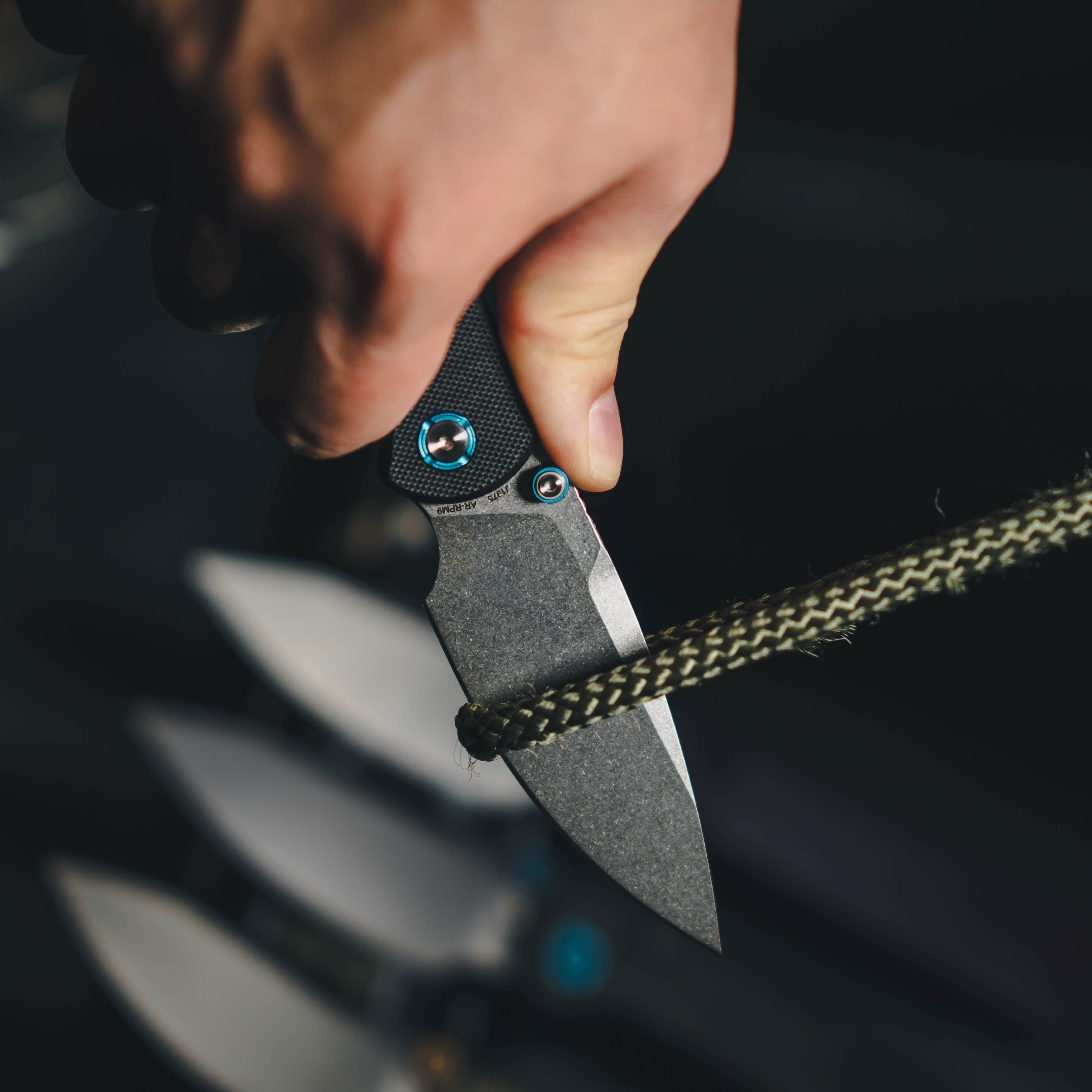
- AR-RPM9 is described by CJRB as a powder-form stainless steel with high hardness and superior toughness thanks to the powdering process, aimed squarely at daily-carry knives. The Prado runs it at HRC 59-61.
- AR-SFII uses the same proprietary spray-form method that produces an exceptionally fine grain structure, which CJRB says gives the steel additional toughness compared with other steels of similar formula, plus improved sharpenability. The stated development goal was to maintain the exceptional toughness of AR-RPM9 while increasing edge retention. The Prado Limited Edition runs it at HRC 60-62.
In plain terms: the AR-RPM9 tiers are the durable, easy-to-sharpen daily users, and the AR-SFII limited edition is the same knife pointed at edge holding. If you sharpen on a guided system and want the edge to last longer between sessions, that is the tier the extra $42.99 buys. For background on how hardness and carbide structure drive those trade-offs, see Knife steel on Wikipedia.
The Crossbar Lock on the Prado
The Prado's standard tiers use a crossbar lock — the sliding bar that spans the handle and is pulled back with the thumb and index finger, so the blade can be flicked closed without your fingers ever crossing the blade path. CJRB's copy calls it sturdy and durable, and the practical advantages are the same ones that make crossbar locks popular for hard-use folders:
- Ambidextrous. There is no left or right handed version, and no thumb stud to reach past.
- Symmetric closing bias. The bar loads the blade evenly, so the Prado closes straight rather than drifting to one side over time.
- A clear visual state. The bar position tells you the lock is engaged with a glance.
The pivot is a ceramic ball bearing assembly, which is the same setup CJRB uses across this tier — smooth, low-friction opening with no break-in period to speak of. If you want the mechanism compared against the alternatives, we cover that in the broader crossbar lock collection.
Weight, Length and Real Carry
At 3.76 inches of clip point and 97 g, the Prado is a full-size folder that does not feel like one in a pocket. The clip point's straight section handles draw cuts and detail work, while the slight belly near the tip gives you a usable curve for slicing; the flat grind keeps it thin behind the edge, which is why a 0.09-inch blade stock still cuts aggressively. Sand polish is the finish on all five configurations — a fine satin look that hides fingerprints better than a mirror polish and does not scuff as visibly as a bead blast.
Carry-wise the Prado is a smart-casual knife. Steel clip, 8.49 inches open, and a silhouette that CJRB explicitly designed to sit in dress pants. If you are used to a 60-70 g ultralight, the G10 Prado will feel substantial; if you are used to a 150 g work folder, it will feel like nothing.
Where the Prado Sits in CJRB's Crossbar Lineup
The Prado is not the only crossbar folder CJRB sells, and its price point is crowded. Every row below is an in-stock crossbar-lock CJRB folder, priced as listed today.
| Model | Blade | Blade style | Steel | Weight | Price |
|---|---|---|---|---|---|
| Lyrid J1953 | 3.15 in (80 mm) | Sheepsfoot | AR-RPM9 | 89 g | $49.99 |
| Hectare-Alt J1935A (carbon fiber) | 3.11 in (79 mm) | Wharncliffe | AR-RPM9 | 79 g | $49.99 |
| Mega Maximal J1954L | 3.43 in (87 mm) | Drop point | AR-RPM9 | 90 g | $54.99 |
| Bellona J1947 | 3.66 in (93 mm) | Tanto | AR-RPM9 | 100 g | $55.99 |
| Prado J1936 (G10 / wood) | 3.76 in (95.46 mm) | Clip point | AR-RPM9 | 90-97 g | $57.00 |
Two things stand out. First, the Prado has the longest blade in that group — 95.46 mm against 80-93 mm — while staying under 100 g. Second, it is the only one offering a wood handle, which is the reason to pick it over the cheaper Hectare-Alt or Lyrid if you care about how the knife looks out of a jacket pocket. The full range lives in the crossbar-lock collection.
Listing Notes Worth Knowing Before You Buy
Spec-sheet housekeeping, flagged for accuracy rather than marketing. Each of these is visible on the live listings themselves.
- The Limited Edition lock is described two ways. The J1936B-ODG product title and its blade listing text say crossbar lock, while its own specification table row reads Button Lock, and its tags include Button Lock as well. Both are ambidextrous bar-style locks, but the listing should say one thing.
- Blade thickness differs between tiers on the same model code. The AR-RPM9 tiers publish 0.09 in (2.3 mm); the AR-SFII limited edition publishes 0.13 in (3.2 mm) at the same 3.76-inch blade length. Different steel does not normally change stock thickness, so treat the limited edition figure as the one to confirm before ordering if blade stock matters to you.
- The limited edition weight row is mislabelled. It reads Weight(G10) at 90 g / 3.18 oz even though the handle material row for that SKU says Micarta.
- The prose blade length is rounded. The description narrative says 3.75 inches, the specification table says 3.76 in (95.46 mm). This guide uses the table.
CJRB Prado J1936 FAQ
Is the Prado a Ray Laconico design?
Yes. The Prado and the Kestrel J1962 are both credited to Ray Laconico on the CJRB listings, alongside CJRB collaborations with other designers such as Dirk Pinkerton.
What is the difference between the $57 Prado and the $99.99 Limited Edition?
Handle material (G10 or wood against micarta), blade steel (AR-RPM9 at HRC 59-61 against AR-SFII at HRC 60-62), and published blade thickness (0.09 in against 0.13 in). The limited edition is the edge-retention tier.
Is the Prado a good left-handed knife?
Yes. A crossbar lock is ambidextrous, and there is no thumb stud to reach past on either side. The steel clip is the only part you may want to reposition.
Which Prado should I buy for everyday carry?
The G10 Aqua Green or Black at $57.00 if you want the lightest-buying, hardest-wearing handle. The ebony or rosewood if you want a warm handle and about 7 g less weight. The limited edition if edge retention is the priority.
Explore every configuration, including the wood and limited edition tiers, in the CJRB Prado collection — or browse the full Artisan Cutlery and CJRB catalogue for more crossbar-lock folders built for reliable everyday carry.


Leave a comment
This site is protected by hCaptcha and the hCaptcha Privacy Policy and Terms of Service apply.