

A dagger knife is one of the oldest blade designs in human history — a fighting knife with a very sharp point and usually one or two sharp edges, designed or capable of being used as a cutting or thrusting weapon. When the conversation turns to self-defense, however, the dagger raises questions that go far beyond blade geometry: what it realistically offers, what it cannot do, and what the law says about carrying one. This guide breaks all three down.

Dagger design balances a sharp point and cutting edges — and carries serious legal weight.
What Makes a Knife a Dagger?
By the modern definition, a dagger has a short blade with a sharply tapered point, a central spine or fuller, and usually two cutting edges sharpened nearly the full length of the blade. Most daggers also include a full crossguard to keep the hand from sliding forward onto those sharpened edges. That double-edged profile is what separates a dagger from single-edge utility knives: the design is built around the point, with thrusting as its primary role.
The dagger has been used for close combat throughout human history. Roman legionaries carried the pugio, a double-edged iron thrusting dagger, as a last line of defense, and modern fighting daggers such as the Fairbairn-Sykes carried by British Commandos in World War II descend from the same idea. The core concept has barely changed in two thousand years.
What a Dagger Excels At
- Thrusting power: the tapered point concentrates force into a small area, which is exactly what a thrusting weapon needs.
- Close-quarters history: daggers were developed for extreme-close-proximity combat, where longer blades are useless.
- Edge access from any grip: with two edges, the blade cuts whether the hand is in a standard grip or a reverse grip.
These qualities made the dagger a legitimate weapon of last resort for soldiers for centuries. The question for civilian EDC is whether those qualities translate into a sensible everyday self-defense tool.
The Hard Truths About Dagger Self-Defense
Realistic self-defense analysis is less flattering to the dagger than its history suggests:
- Range is tiny. A dagger is a very close-quarters tool. An attacker who can reach you can usually control your blade arm — distance management matters more than blade design.
- Skill matters more than steel. Thrusting effectively under stress requires dedicated, ongoing training. Without it, a double-edged knife is no safer than any other knife — and in untrained hands it can be less safe.
- Retention is harder. A double edge cuts in both directions, and if the hand rides forward past the guard there is nowhere safe to hold it. This is precisely why most daggers have a crossguard.
- The legal gravity is real. In many jurisdictions, a knife classified as a weapon draws harsher scrutiny than a utility folder — and a double-edged dagger is far more likely to be classified that way.
Dagger Knives and the Law
The dagger occupies a special legal category in many places. California's criminal code defines a dagger as any knife or instrument capable of ready use as a stabbing weapon, and a Missouri court once applied a similarly broad dictionary definition to an ordinary pointed knife. Several US states' concealed-carry statutes specifically name dirks, stilettos, and double-edged knives. Internationally, many nations' criminal codes ban the carrying of daggers as prohibited weapons — Spain prohibits daggers of any type, and French law lists daggers among objects that can constitute dangerous weapons.
Dagger design balances a sharp point and cutting edges — and carries serious legal weight.
The practical takeaway: before carrying any knife for self-defense, check the law in your exact jurisdiction. Rules vary by state, city, and country, and they change over time. This article is general information, not legal advice — when in doubt, consult a qualified attorney or an official government source.
A More Practical Path
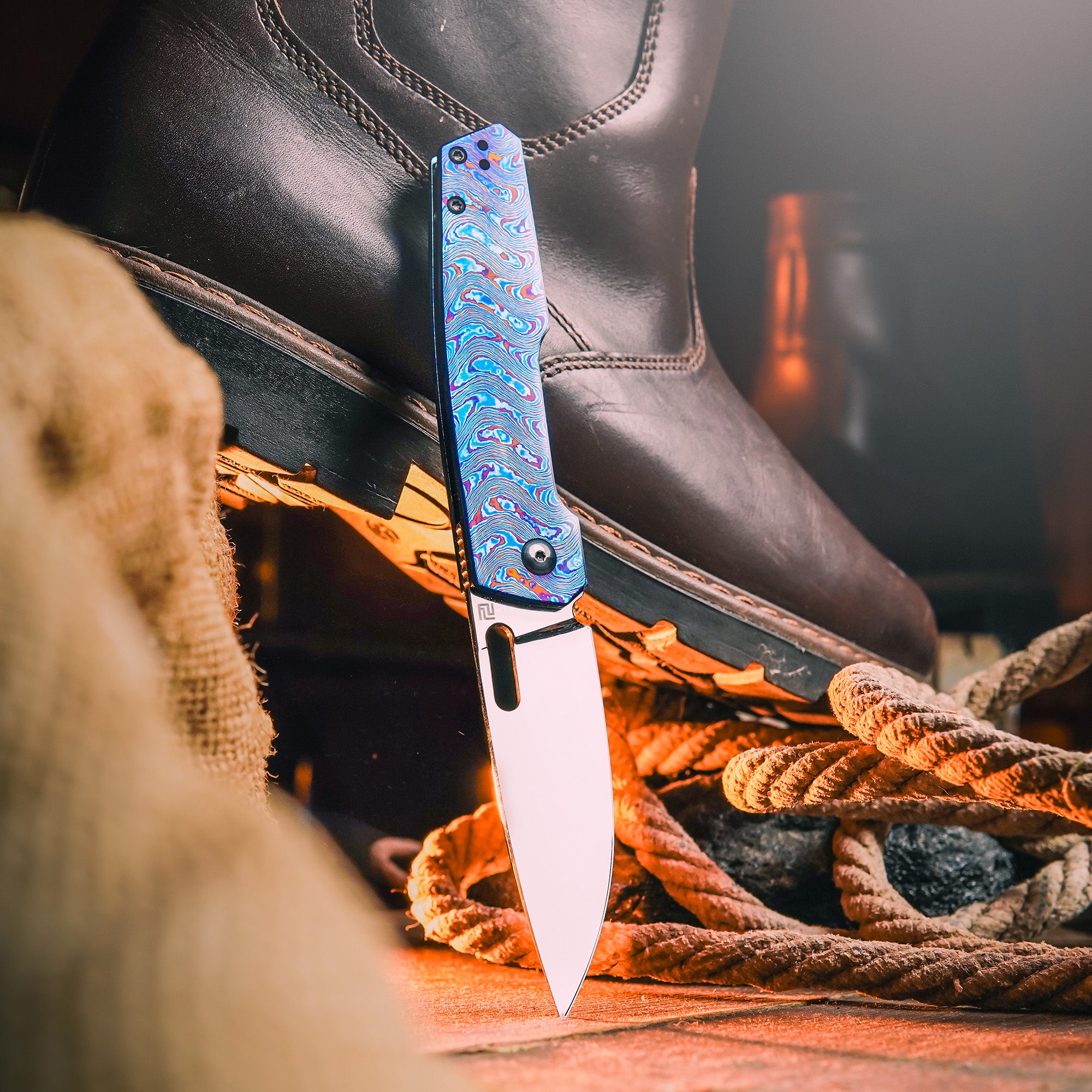
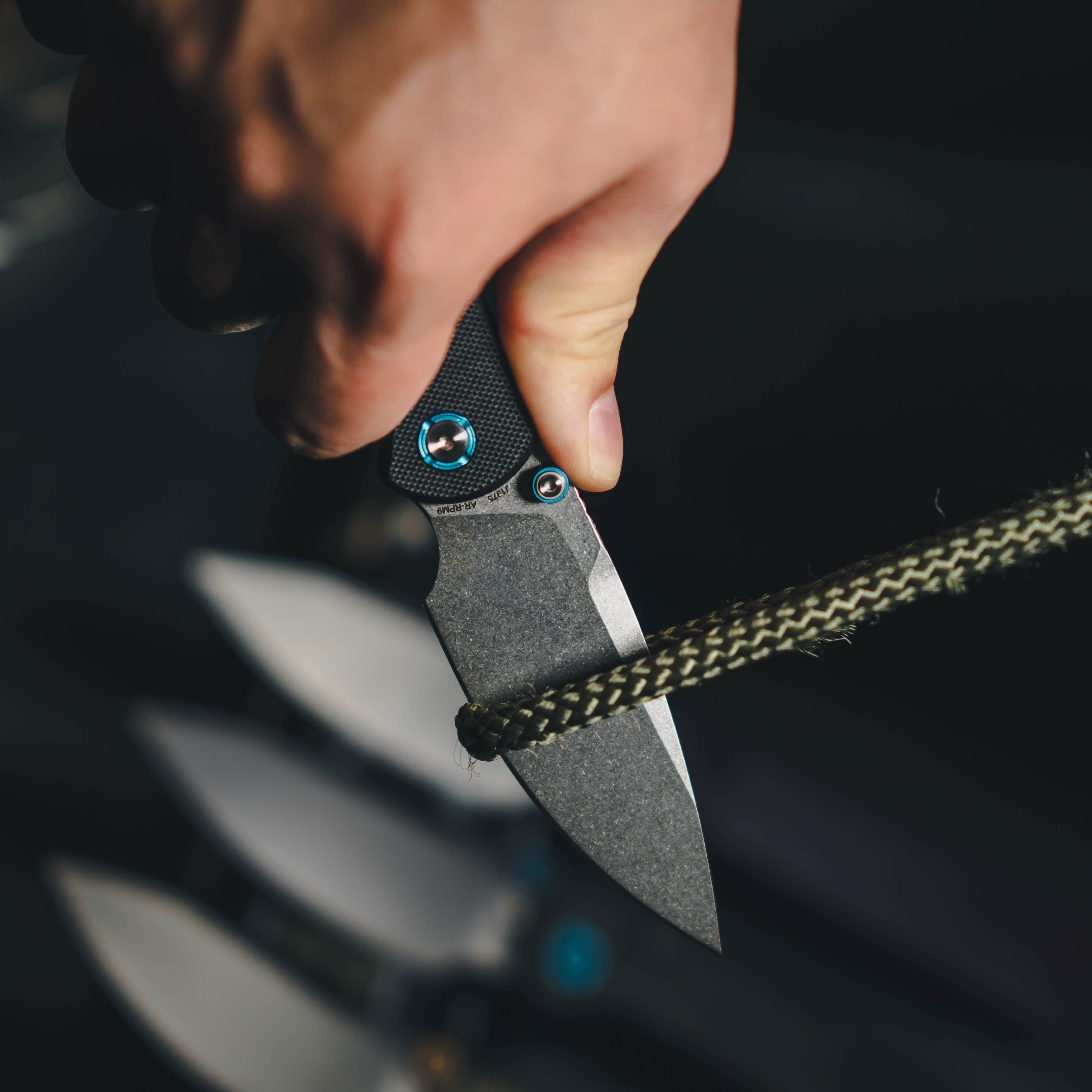
For everyday carry, a locking single-edge folding knife covers the overwhelming majority of real utility tasks — opening packages, cutting cord, food prep, and work — while attracting far less legal scrutiny. If personal protection is the goal, awareness, avoidance, and training remain the most reliable tools anyone can carry.
Learn more about the design trade-offs of double-edged blades in the history of the dagger, and review how different countries regulate knives in this overview of knife legislation.
Find your ideal everyday carry configuration — explore the Artisan Cutlery folding knife collection for premium EDC folders built for reliable everyday carry.


Leave a comment
This site is protected by hCaptcha and the hCaptcha Privacy Policy and Terms of Service apply.