

A dagger knife is defined by its blade first and its handle second, and that order of priorities is exactly what makes dagger handles so interesting. Because the blade is double-edged and usually symmetric, the handle has to be neutral in the hand — it must work the same whether the blade is held forward or reversed, and it has to keep your fingers away from a second sharpened edge. This guide breaks down the grip patterns, guards, and materials you will see on double-edge knives, and explains how to pick a handle that actually fits your hand.
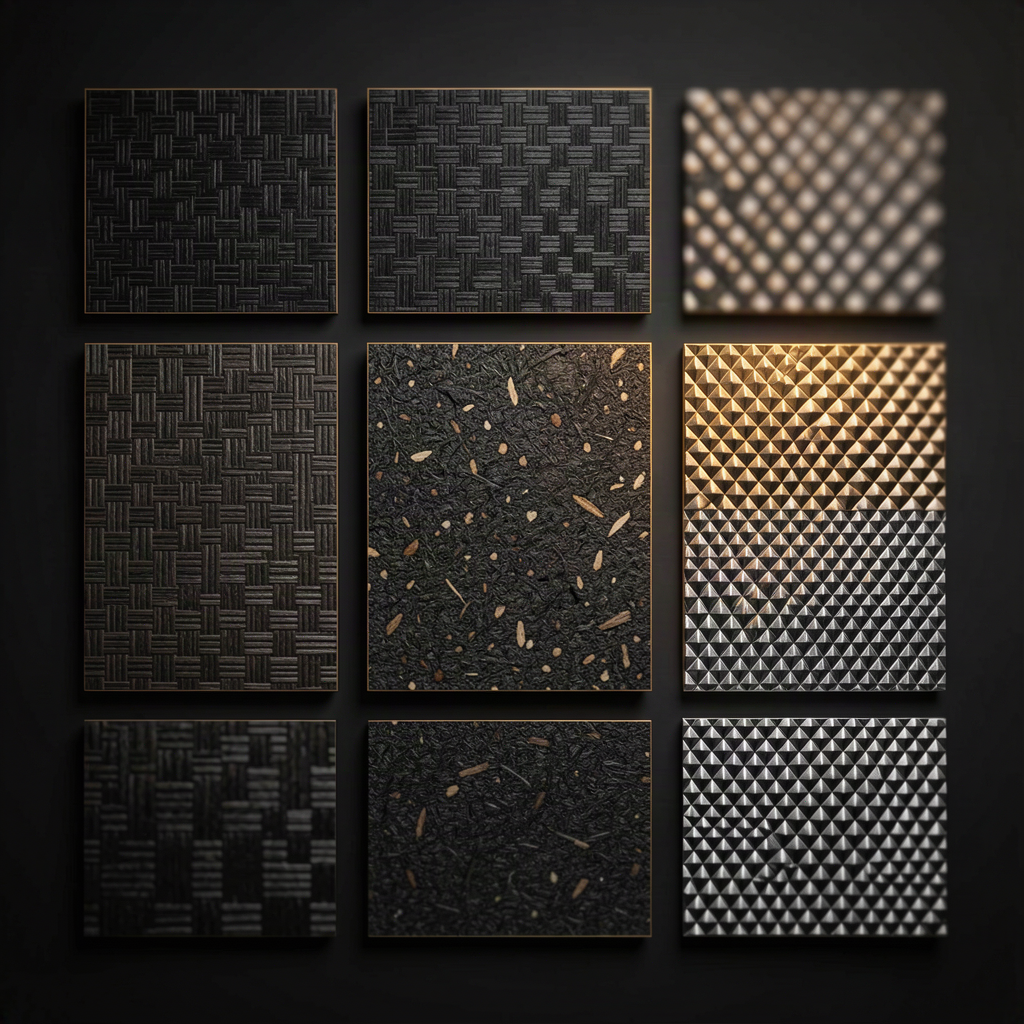
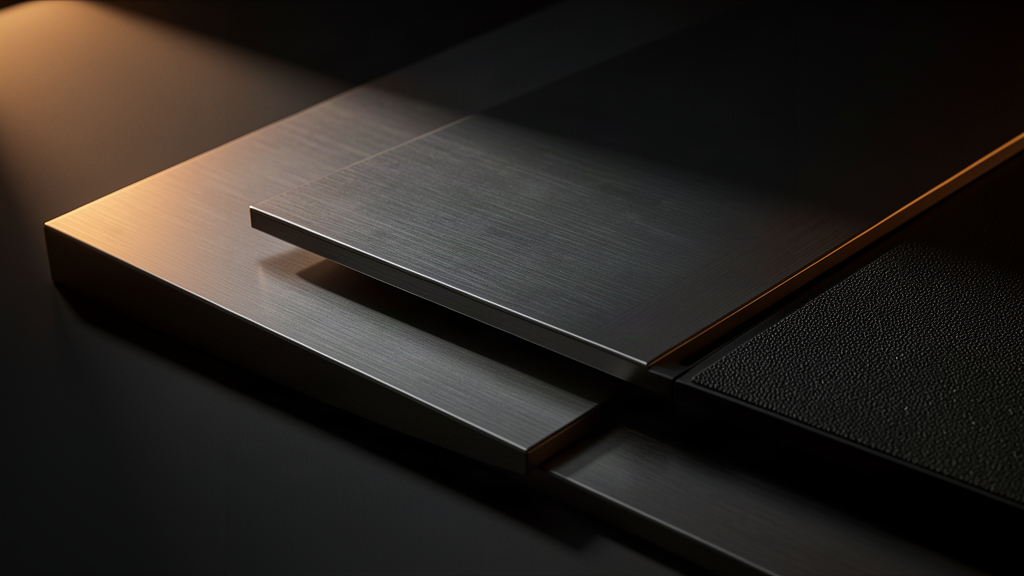
Handle material sets the grip: textured laminates stay planted, metal scales trade some traction for looks.
Why Dagger Knife Handles Are Different
On a folding knife with a single edge, the handle is a tool for one hold: edge out, thumb on the spine, index finger in the choil. On a dagger knife, the blade is typically ground on both sides, so the handle is expected to serve the blade in more than one orientation. That leads to three design consequences:
- Symmetric or near-symmetric profiles. Many dagger handles are built with a symmetrical cross-section so the knife does not feel "wrong" when rotated in the hand.
- A pronounced guard. Because there is no spine-side safety net, the guard or quillon does the work of stopping your hand from sliding forward onto an edge.
- Flatter scales. Bulky palm swells and exaggerated finger grooves can create hot spots during a reversed grip, so double-edge knives tend to use slimmer, less sculpted handles.
The Three Common Grip Patterns
Most dagger handles fall into one of three families. None is objectively best — each trades control against versatility.
| Pattern | Shape | Best For | Trade-off |
|---|---|---|---|
| Symmetric (straight) | Parallel sides, even taper, centered guard | Ambidextrous use, reversible grips, symmetry with the blade | Less indexing — your hand must learn where the edge is |
| Coffin / faceted | Rectangular body with chamfered corners and a tapered butt | Positive index without a palm swell; classic collector styling | Sharp facets can bite under heavy pressure |
| Tapered (teardrop) | Wide at the guard, narrowing to a slim butt | Quick orientation changes, lighter feel in hand | Less grip area for large hands |
If you only ever hold a knife one way, an asymmetric handle with a thumb ramp will always feel more locked in. Pick a symmetric pattern deliberately — because you want the same control from either side of the blade.
Guards and Quillons: The Safety Feature That Defines the Handle
The guard is the single most important part of a dagger handle, because a double-edge blade offers no unsharpened surface to press against. Common configurations:
- Double guard (cross guard). Extends on both sides of the ricasso and stops the hand from sliding forward in either orientation. The classic choice for a true dagger.
- Single guard or integral lower guard. A single finger shelf, often machined into the handle material. Lighter and less snag-prone, but it only protects one direction.
- Sub-hilt / finger groove behind the guard. Adds a second indexing point. Useful, but it locks the hand into one grip — it works against the ambidextrous logic of a dagger.
- No guard (slim boot-style handle). Favours concealment and a flat profile. You accept that the handle relies on friction and hand pressure alone.
As a rule, the wider and more aggressive the guard, the better the handle resists forward slide — and the more it catches on clothing when drawn.
Handle Materials Compared
Dagger handles are usually built from the same materials as modern folding knife handles, but the symmetry requirement pushes builders toward materials that can be machined consistently on both sides.
| Material | Grip Feel | Durability | Notes |
|---|---|---|---|
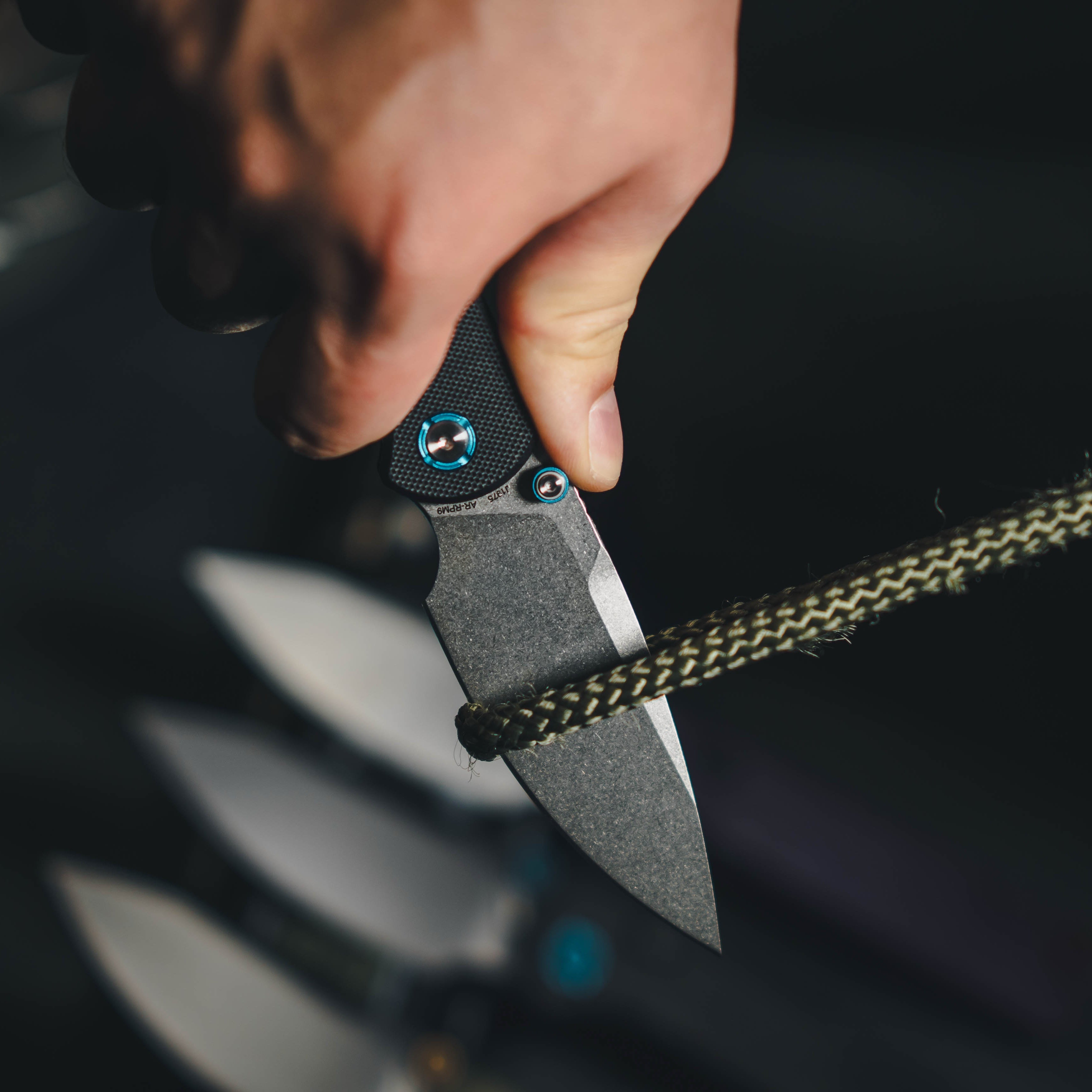
| G10 (fiberglass laminate) | Very positive, textured | Excellent | Moisture- and chemical-resistant; holds texture when wet |
| Micarta (phenolic laminate) | Warm, slightly grippy | Excellent | Darkens and develops patina with handling |
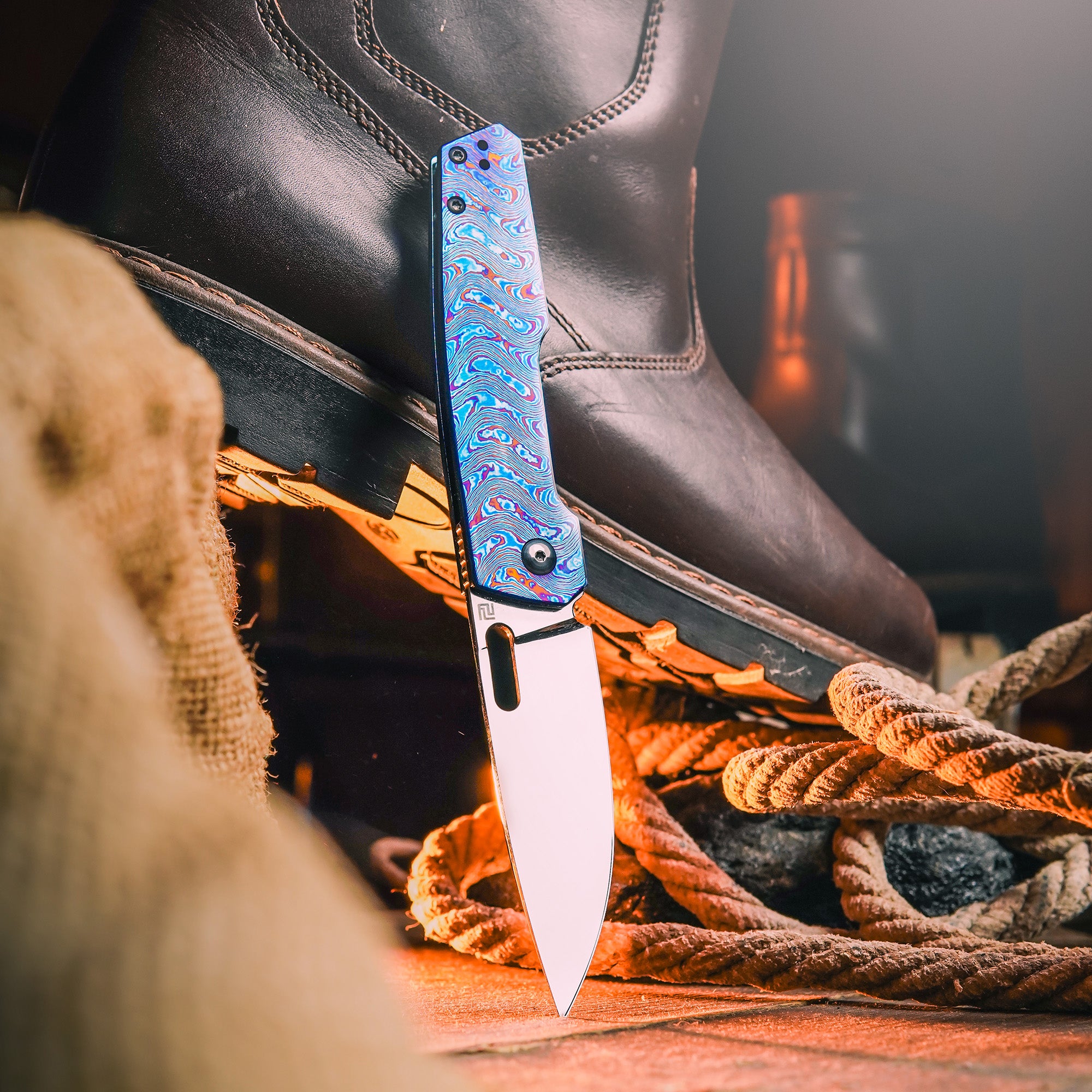
| Titanium | Smooth unless textured | Excellent | Can be anodized; heavier than laminate choices at equal volume |
| Bone / stag | Natural, mildly textured | Good, can chip | Traditional look; benefits from occasional oiling |
| Hardwood | Warm, smooth | Fair to good | Moves with humidity; needs sealing |
| FRN / polymer | Textured, economical | Good | Lighter and cheaper; less premium feel |
| Copper / brass | Smooth, heavy | Good | Develops patina; adds noticeable weight |
For a working knife, textured G10 or Micarta remains the most practical pairing with a double-edge blade: they stay grippy when wet, resist the solvents in cleaning agents, and can be machined symmetrically without visible seams. Metal handles look superb but provide less traction, which matters more on a dagger than on a single-edge folder. If you want the materials in more depth, see Micarta and general knife anatomy references.
Fit: Length, Circumference, and Hand Size
Handle length is measured from the front of the guard to the butt. A rough starting point:
- Under 100 mm (about 4 in): compact, best for gloves-free use and small to medium hands.
- 100–115 mm: the most common full-grip range; your whole hand should close without the butt digging into the heel of your palm.
- Over 120 mm: extended handles that allow a "pinky-off" relaxed hold, or room for gloved hands.
Check circumference as well as length. A handle that is long enough but too slim will rotate in the hand, which is the last thing you want with a double-edge blade. A handle that is thick enough but too short will force your pinky off the end and put the index finger uncomfortably close to the guard.
How Dagger Knives Are Carried
Carry method determines how much the handle geometry matters in practice:
- Leather sheath. Traditional, quiet, and forgiving of handle finish, but it holds moisture and needs occasional conditioning.
- Kydex sheath. Retains shape, drains well, and gives an audible, definite click. Harsher on metal finishes and handle edges.
- Nylon sheath. Light and cheap, but retention is inconsistent over time.
- Boot / ankle clips. Favour short, flat, guardless handle profiles and lightweight materials.
Whatever the sheath, confirm two things before committing: the handle must clear your clothing on the draw without snagging, and the sheath must not rely on the guard alone for retention.
Care Basics for Double-Edge Handle Materials
- Laminates (G10, Micarta): wipe with a damp cloth and mild soap; avoid prolonged solvent soaking. A drop of mineral oil restores the finish if it dries out.
- Titanium: clean with soapy water; anodized surfaces dislike abrasive pads, which scratch through the colour layer.
- Bone and wood: keep out of prolonged moisture, re-oil occasionally, and avoid rapid temperature swings that can cause checking.
- Copper and brass: patina is normal; if you want it bright, use a dedicated metal polish, then re-seal lightly.
- All handles: check guard and pin fasteners periodically. A guard that has started to loosen is a safety issue, not a cosmetic one.
What to Look For: A Buying Checklist
- Does the handle feel neutral when you rotate the blade 180 degrees in your grip?
- Does the guard stop forward slide without blocking your index finger?
- Is the material textured enough to stay planted with damp hands?
- Does your full hand close on the handle, or is your pinky hanging off the end?
- Are the pins and guard flush, with no step you can catch a fingernail on?
- Does the sheath retain the knife when inverted, and release cleanly when drawn?
If a double-edge knife is more of a display piece than a carry tool for you, handle feel matters less than styling — but a dagger knife is at its best when the handle quietly does the safety work the blade cannot.
If You Prefer an Edge You Can Fold
Not everyone wants to carry a fixed double-edge blade. A folding knife with a single edge, a locking mechanism, and a slim handle solves most everyday tasks with far less fuss, and it is easier to carry discreetly. Browse the folding pocket knives at Artisan Cutlery to compare blade shapes, handle materials, and lock types before you settle on a design.

Leave a comment
This site is protected by hCaptcha and the hCaptcha Privacy Policy and Terms of Service apply.