

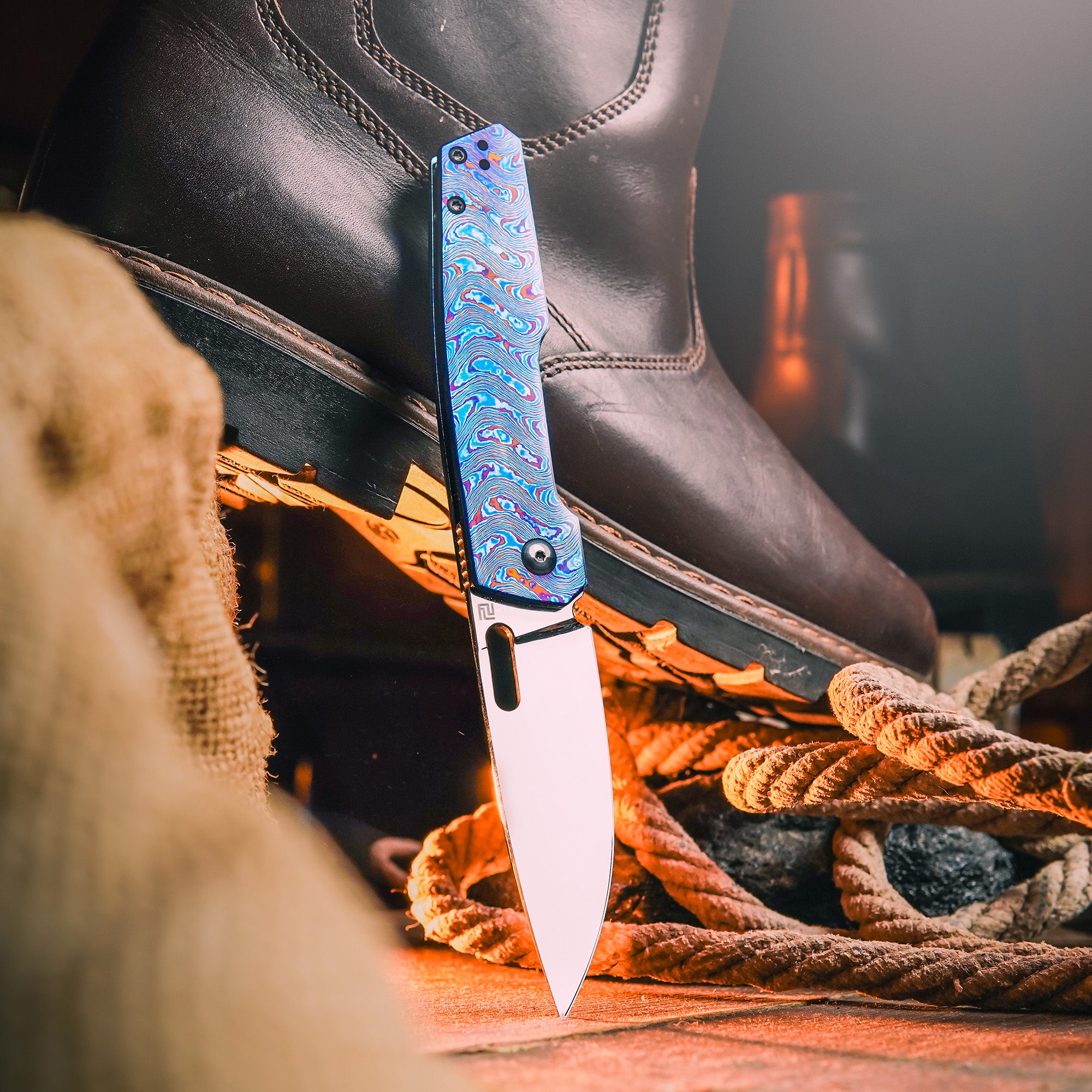
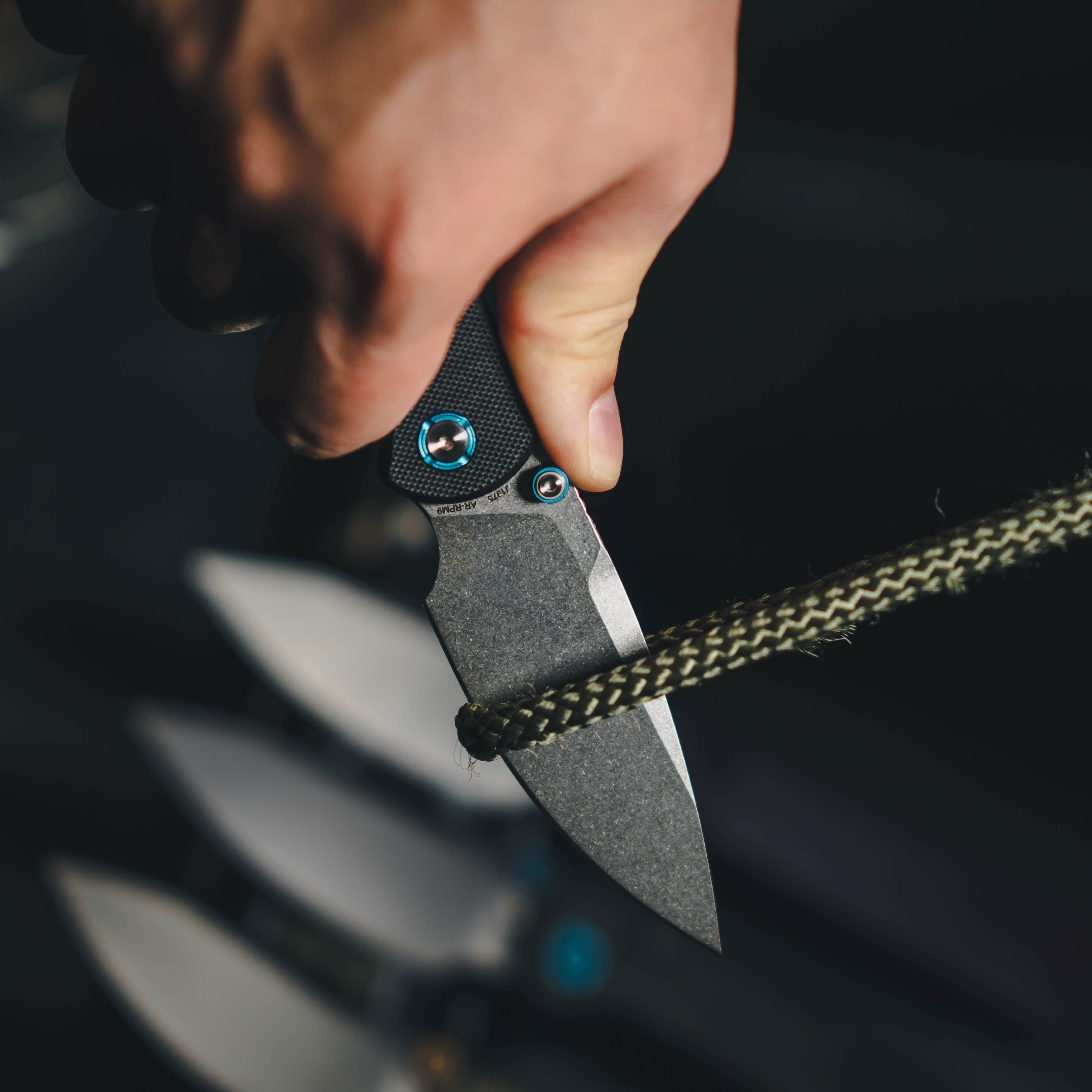

Dagger and karambit sit at opposite ends of the blade-design spectrum, yet both pull serious search interest from the EDC community. A dagger is built around a straight, double-edged point designed for thrusting, while the karambit is a small curved blade that resembles a claw, born in Southeast Asia and originally used as an agricultural tool. Choosing between them means deciding what your knife is for: precise push cuts or powerful hooking and slashing motion.

Straight, symmetrical geometry versus the curved claw: two very different blade philosophies.
What Is a Karambit?
The karambit (also spelled kerambit, kurambik, or karambiak) is a small curved knife resembling a claw, with origins in the Minangkabau culture of Indonesia. Historically it was a farming and utility tool, and it remains a signature weapon in pencak silat and Filipino martial arts. The classic grip holds the blade pointing down from the bottom of the fist, curving forward, which makes the knife excellent for hooking and slashing movements.
Many karambits include a finger ring at the rear of the handle. That ring serves two practical purposes: it makes the knife difficult to disarm, and it lets you maneuver the blade through your fingers without losing your grip. Some designs are used in a punching motion with the ring, others in a hammering motion, which gives the karambit unusual flexibility as a defensive tool.
What Is a Dagger?
A dagger is a knife with a sharp point and, typically, two cutting edges, designed primarily for thrusting. Where most EDC folders are single-edged cutting tools, the dagger's double-edge geometry is optimized for the point: symmetrical grind lines meet at a central tip that drives straight through the target of the thrust. Historically, daggers were carried as sidearms and personal defense weapons across many cultures.
Modern folding interpretations keep the double-edged blade profile while adding the convenience of a pocket-friendly folder. The trade-off is that a double-edge blade asks more of the user: both edges need maintenance, and in many jurisdictions double-edged blades are treated differently by the law than single-edge utility knives.
Key Differences at a Glance
| Feature | Dagger | Karambit |
|---|---|---|
| Blade shape | Straight, symmetrical, double-edged | Curved, claw-like, typically single-edged |
| Primary motion | Thrusting and pushing cuts | Hooking, slashing, and raking |
| Grip style | Standard forward grip | Blade-down grip, often with finger ring |
| Origins | Personal defense across many cultures | Southeast Asia, agricultural tool origin |
| Learning curve | Familiar to most knife users | More intuitive to hold, harder to master |
| Legal attention | Double-edge blades often restricted | Classified as weapons in some regions |
Which Blade Suits EDC Better?
For general everyday carry, the dagger's straight geometry earns its keep when you need a confident piercing point for opening boxes, scoring materials, or detail work in tight spaces. The symmetrical tip is easy to control and the double edge gives you two working edges in one blade. The karambit, by contrast, shines in defensive and martial-arts contexts; its curved blade and finger ring are optimized for retention and hooking motion rather than routine utility tasks.
If your carry leans toward practical work, a single-edge folder or a dagger-profile blade with a straight point will serve you more often. If you train in blade arts or want a compact, highly retainable design for self-defense study, the karambit is the more specialized choice. Many collectors end up with one of each.
Legality Notes
Before carrying either profile, check your local knife laws. Double-edged blades and curved claw-style knives are both treated as weapons in some jurisdictions, and carrying restrictions vary widely by region. When in doubt, treat any blade with a strong point or curved hook as a regulated item and confirm the rules where you live.
Find your ideal everyday carry configuration — explore the Artisan Cutlery folding knife collection for premium EDC folders built for reliable everyday carry.


Leave a comment
This site is protected by hCaptcha and the hCaptcha Privacy Policy and Terms of Service apply.