

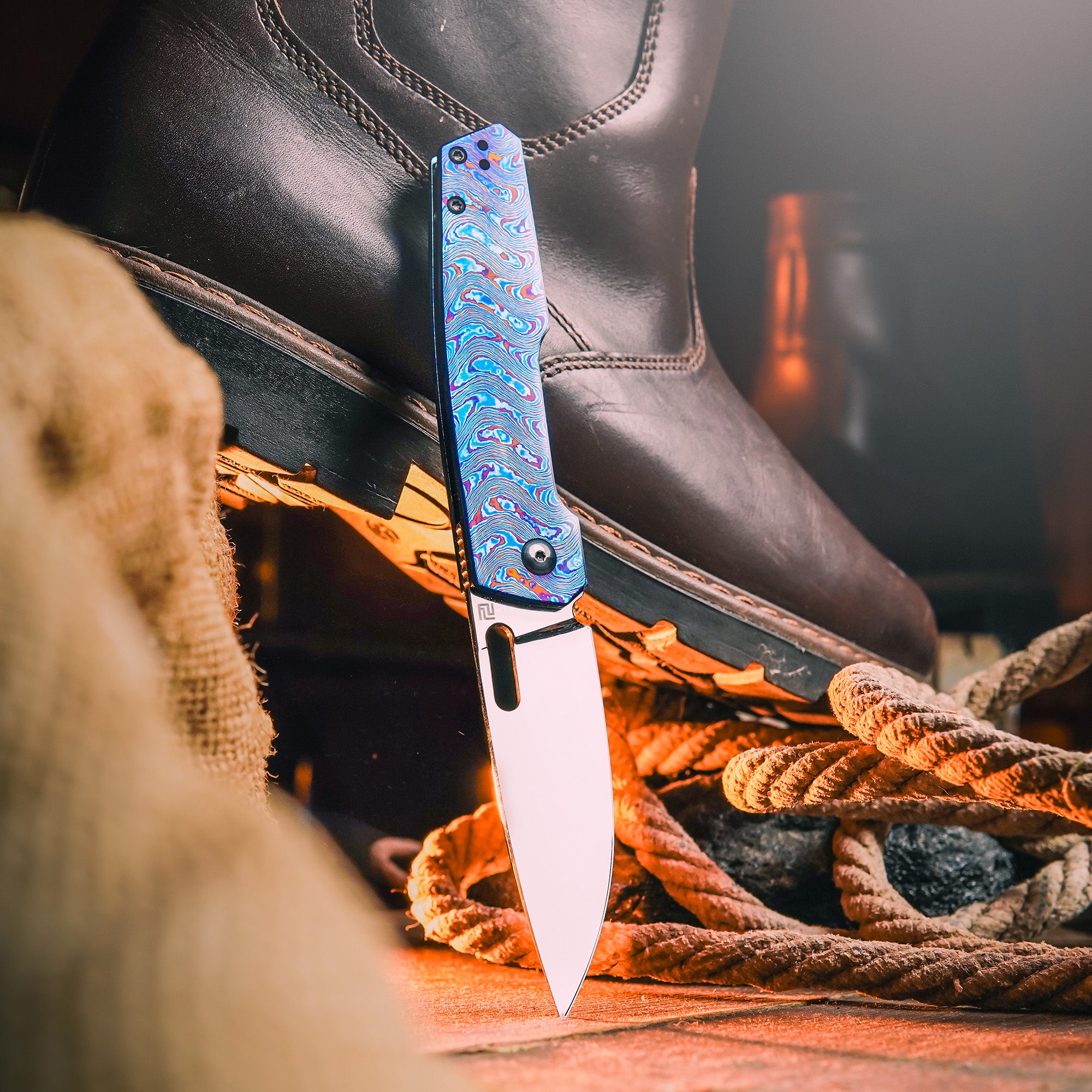
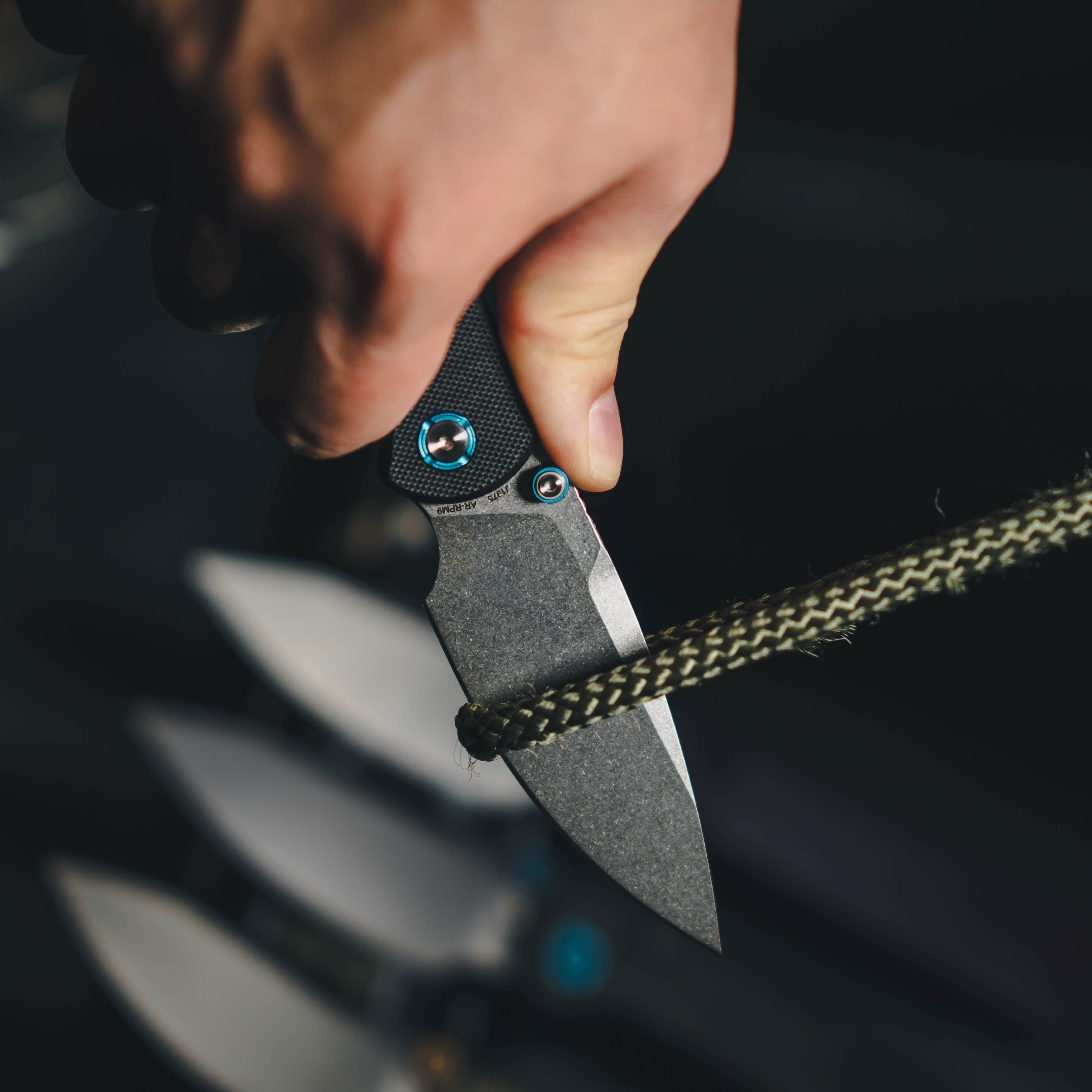
Automatic knives — commonly called switchblades — deploy their blade with a spring at the press of a button. Out-the-front (OTF) knives are the modern evolution of the idea, spitting the blade straight out of the handle and retracting it the same way. Both are fascinating mechanisms, both carry serious legal baggage, and neither is the obvious choice for everyday carry. Here is how they work, why they are regulated, and where they fit — or do not fit — in an EDC rotation.
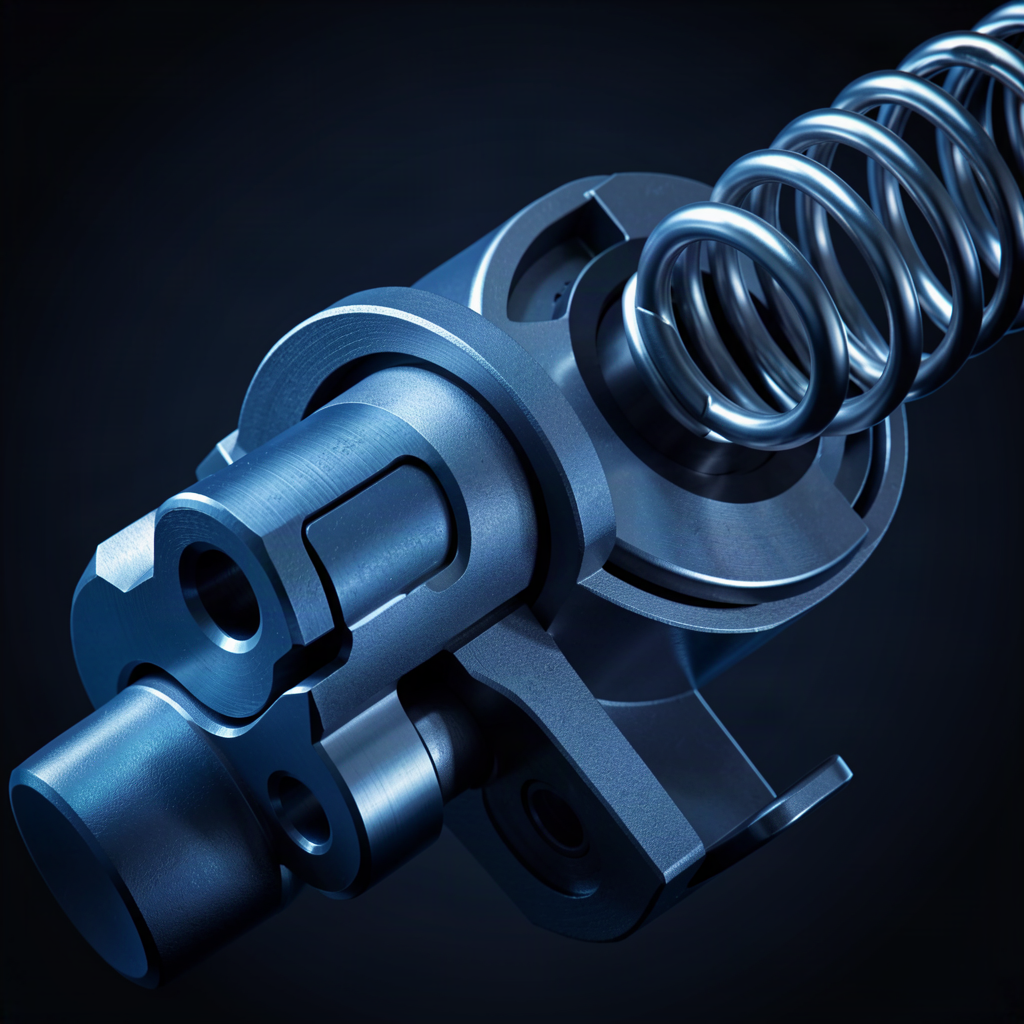
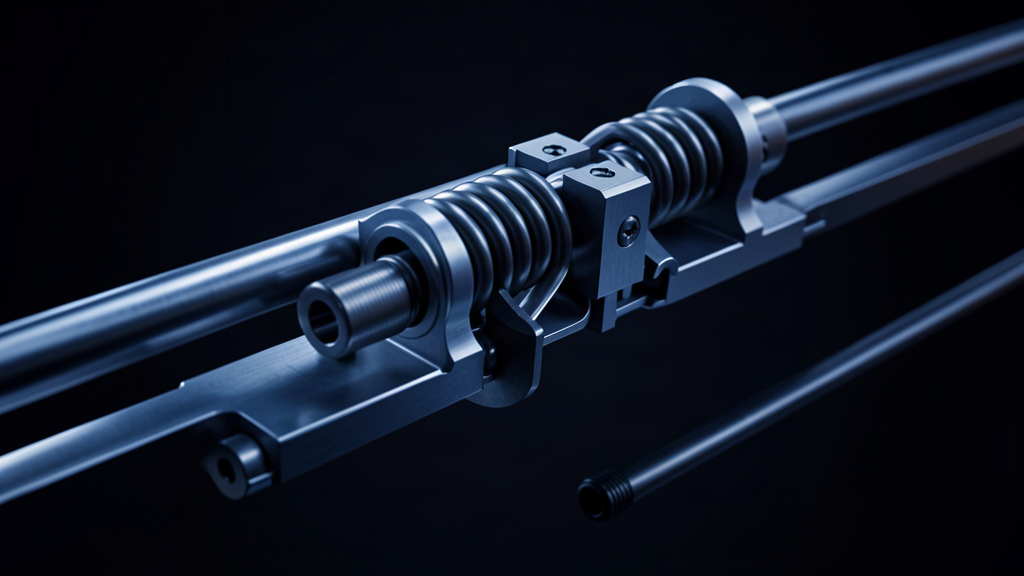
Springs, slides, and locking pins: the precision internals behind out-the-front deployment.
What Is an Automatic Knife?
A switchblade is a pocketknife with a sliding or pivoting blade contained in the handle, extended automatically by a spring when a button, lever, or switch on the handle or bolster is activated. Virtually all switchblades incorporate a locking blade — a mechanism that prevents the blade from closing accidentally while open — and an unlocking mechanism must be activated to close it for storage. That lock is the reason autos feel solid in use: the blade is either fully open and locked or fully closed, with no in-between.
Side-Opening vs Out-the-Front
The most common type of switchblade is the side-opening (OTS) knife, which resembles a traditional folding knife but uses a coil or leaf spring to power the blade out to the side when the button is pressed. Many side-opening designs include a safety mechanism that prevents accidental actuation of the blade release.
OTF knives are different: the blade emerges from the front of the handle, and a thumb stud can be moved forwards or backwards to extend or retract the blade respectively. In a double-action OTF, the same stud both fires and retracts the blade. Inside, a system of spring carriers, slides, and restraining pins builds tension, releases the blade, locks it in the extended position, and then reverses the whole sequence on the return stroke. It is precision engineering in a very small package.
A Short History of Switchblade Regulation
During the 1950s, American newspapers and tabloid press promoted the image of a violent crime wave caused by young male delinquents carrying switchblades — a narrative built largely on anecdotal evidence. In 1954, Democratic Representative James J. Delaney of New York authored the first bill submitted to the US Congress banning the manufacture and sale of switchblades, beginning a wave of legal restrictions worldwide and a subsequent decline in their popularity. Modern automatic-knife law is the direct descendant of that moral panic.
Federal Law in the United States
The federal Switchblade Knife Act of 1958 (Public Law 85-623, codified at 15 U.S.C. Sections 1241-1245) prohibits the manufacture, importation, distribution, transportation, and sale of switchblade knives in commercial transactions substantially affecting interstate commerce. It also prohibits possession on federal lands, Native American reservations, military bases, and federal maritime or territorial jurisdictions. The federal definition covers any knife that opens by hand pressure applied to a button or other device in the handle, any knife with a blade that opens automatically, and any knife that opens by operation of inertia or gravity.
Crucially, the federal act does not prohibit ownership or carrying of automatic knives within state lines while not on federal property, nor does it prohibit intrastate transactions. That leaves the real regulatory power with the states: many have relaxed their restrictions in recent years, but state law still governs what you can carry. Always check your state before buying an automatic knife.
International Status
Outside the US, automatic knives are broadly prohibited. In the UK, flick knives and switchblades are among the knives explicitly prohibited under UK law. Canada classifies automatic-opening knives — including switchblades and butterfly knives that open by button, spring, gravity, or centrifugal force — as prohibited weapons. Germany and France take similarly strict positions, banning automatic-opening knives outright in most circumstances. If you travel internationally, leave the automatic at home: the penalties are severe and the defenses are few.
Automatic vs Manual for EDC
| Factor | Automatic / OTF | Manual folder |
|---|---|---|
| Deployment speed | One-hand, one-motion, very fast | Fast with practice (flick, thumb, flipper) |
| Legal friction | Restricted or banned in many places | Legal almost everywhere |
| Mechanism | Spring + locking internals, more parts | Simpler pivot and lock |
| Maintenance | Internal springs and slides to service | Simple pivot care |
| Fidget factor | Strong | Strong (flippers, thumb holes) |
| Everyday suitability | Great where legal, risky where not | Universal |
The Verdict
Automatic and OTF knives are superb pieces of engineering and a genuine joy to operate — where they are legal. But for everyday carry, a quality manual folder wins on the two things that matter most: it is legal in the places you actually go, and its simpler mechanism asks less of you over years of use. If you want one-hand speed, a flipper or thumb-hole folder covers 95 percent of the use case without the legal headache.
Find your ideal everyday carry configuration — explore the Artisan Cutlery folding knife collection for premium EDC folders built for reliable everyday carry.



Leave a comment
This site is protected by hCaptcha and the hCaptcha Privacy Policy and Terms of Service apply.