

If you are weighing dagger vs karambit, you are comparing two of the most distinctive blade designs in the knife world — and two completely different philosophies about what a knife is for. A dagger is symmetrical, double-edged and built to thrust. A karambit is curved, claw-like and built to hook and pull. Both have devoted followings, both have deep history, and both make people stop and look.
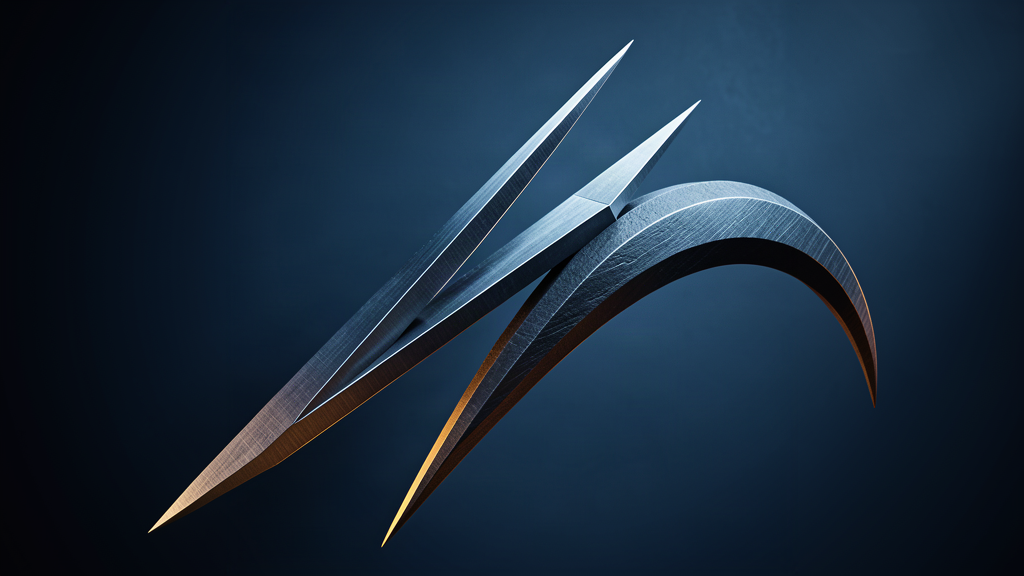
Straight edge vs curved claw: two very different blade philosophies.
What Is a Dagger?
A dagger is a double-edged blade with a central point, designed primarily for thrusting. The classic definition is a knife with two cutting edges that taper symmetrically to a point. Because both edges are sharp, a dagger cuts on both the push and the draw, and the symmetrical geometry keeps the point in line with the handle for direct, powerful piercing. The dagger appears in nearly every blade culture: the Roman pugio, the medieval rondel and the Scottish dirk are all dagger types. Today, dagger-style pocket knives blend that symmetrical double-edge geometry into a folding format.
What Is a Karambit?
The karambit is a curved, claw-shaped blade that originated in Southeast Asia, most famously associated with Sumatra in modern-day Indonesia. Its design is often traced to the curved claws of large cats, and traditional versions were used in agriculture as well as combat. The defining features are the deep belly curve and the finger ring at the rear of the handle, which locks the grip in place even during hard, pulling cuts. Modern folding karambits bring that geometry to a pocketable format.
Dagger vs Karambit: Key Differences at a Glance
| Feature | Dagger | Karambit |
|---|---|---|
| Blade shape | Straight, symmetrical, double-edged | Curved, claw-like, usually single-edged |
| Primary action | Thrusting and piercing | Slashing, hooking and pulling |
| Grip | Conventional, versatile | Finger ring for retention |
| Cutting edge | Both edges sharp | Mostly the curved inner edge |
| Carry profile | Long and slender | Compact and curved |
| Legal profile | Heavily restricted in many areas | Restricted in some jurisdictions |
Dagger Strengths and Weaknesses
- Strength: the double edge means a cut works in every direction of the blade.
- Strength: symmetrical geometry makes the point extremely effective for piercing tough materials.
- Weakness: double-edged blades are illegal or restricted in many states and countries — a major barrier for everyday carry.
- Weakness: two edges mean twice the sharpening work and more risk of accidental contact.
Karambit Strengths and Weaknesses
- Strength: the curve gives excellent slicing leverage and lets the blade hook and pull materials like straps and cordage.
- Strength: the finger ring offers outstanding grip retention in the hand.
- Weakness: the unusual grip and curved edge take practice to use effectively for everyday tasks.
- Weakness: the curved belly is harder to sharpen on a flat stone.
Which Should You Carry for EDC?
For general everyday carry — opening boxes, cutting tape, slicing fruit, trimming cord — a conventional single-edge folder is usually more practical than either design. But if you are drawn to this category, the choice comes down to intent: the dagger is a thrust-oriented double-edge design that is heavily restricted in many places, while the karambit is a curved, hooking blade with a steeper learning curve but fewer legal barriers in most regions.
Many carriers who like the karambit silhouette choose a folding karambit with a conventional pocket clip so it carries like a normal pocket knife. Enthusiasts who appreciate dagger geometry often look for folding dagger-style knives that keep the double-edge look in a legal, pocketable format.
Legal Considerations
Double-edged knives face the strictest rules in knife law. Many US states restrict or ban concealed carry of daggers and double-edge blades, and several countries ban them outright. Karambits are generally treated as regular knives in most places, but a few jurisdictions restrict them — and because karambit training is associated with martial arts, local interpretation can vary. Always check the laws in your state or country before carrying either design.
The Bottom Line
The dagger vs karambit question is really a question of blade philosophy. Choose a dagger-style design if you value symmetrical double-edge geometry and understand the legal restrictions. Choose a karambit if you want a curved, hooking blade with strong grip retention. For most EDC jobs, though, a well-made single-edge folder remains the most versatile companion of all.
Prefer a more conventional daily carrier? Explore the Artisan Cutlery folding knife collection for premium EDC folders built for reliable everyday carry.


Leave a comment
This site is protected by hCaptcha and the hCaptcha Privacy Policy and Terms of Service apply.