
Every hobby has its own vocabulary, and knives have more than most. Whether you are shopping for your first EDC folder or trying to follow along with a collector's conversation, these 50 essential knife terms will get you up to speed — covering blade anatomy, blade shapes, steel, locks, handle materials and action.
From choil to crossbar lock, knowing the vocabulary helps you choose better.
Blade Anatomy
- Blade: the cutting part of the knife, from the tip to the tang.
- Edge: the sharpened cutting surface of the blade.
- Spine: the unsharpened back of the blade, opposite the edge.
- Tip: the point of the blade where the edge and spine meet.
- Belly: the curved, forward section of the cutting edge.
- Choil: the unsharpened notch or gap at the base of the edge, often used as a finger rest.
- Tang: the part of the blade that extends into the handle and carries the pivot and lock.
- Ricasso: the flat, unsharpened area of the blade just ahead of the handle.
- Jimping: the small grooves cut into the spine or handle for extra grip.
- Fuller: a groove cut along the blade to reduce weight (often mislabeled a blood groove).
- Swedge: a bevel ground into the spine near the tip to lighten the blade or create a false edge.
- Bevel: the ground, angled surface that leads to the cutting edge.
Blade Shapes
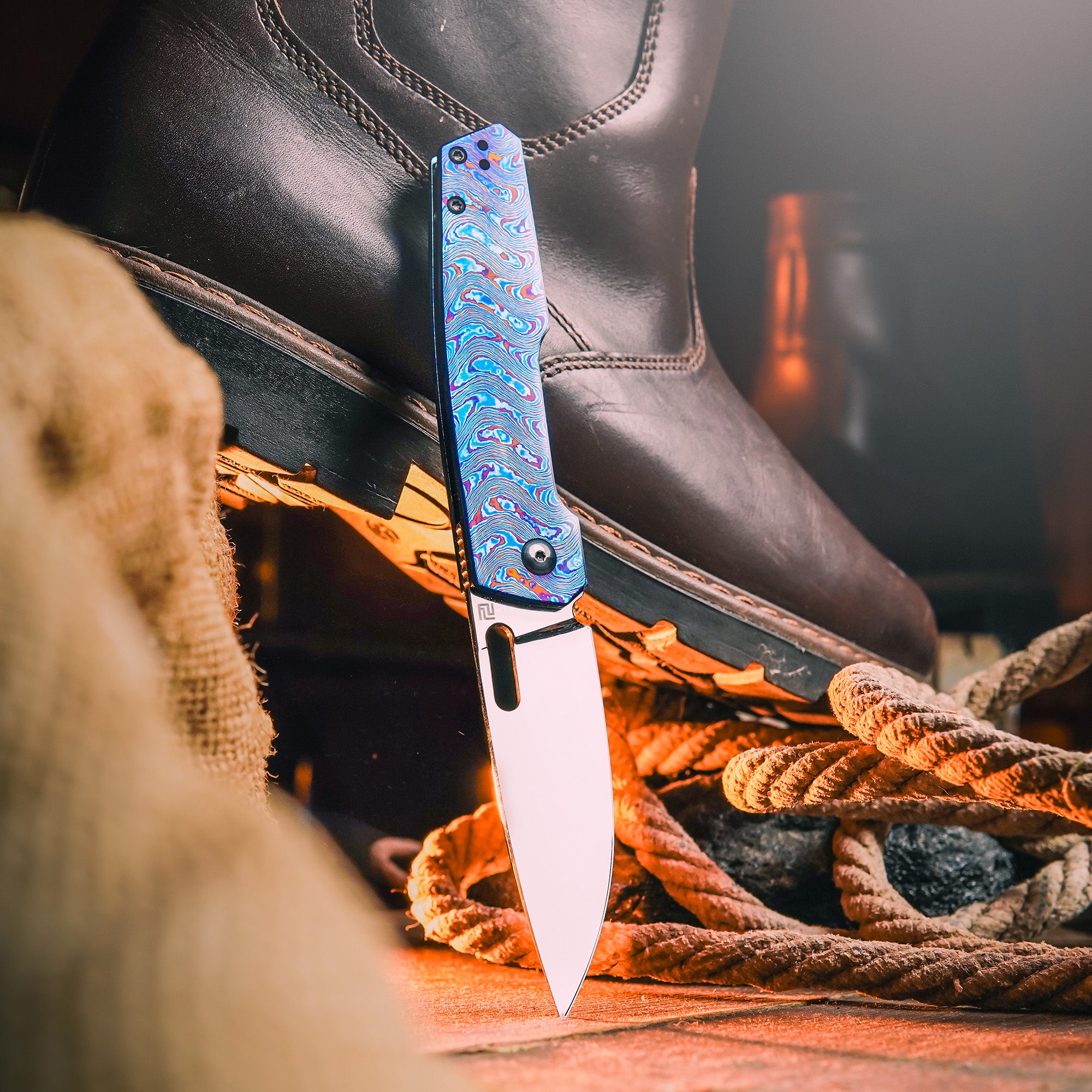
- Drop point: a curved spine that lowers toward the tip for controlled cutting — the classic all-around EDC profile.
- Clip point: a concave section near the tip on the spine side, giving a thinner, more precise point.
- Tanto: a blade with a flat edge and an angular, chisel-like tip designed for piercing.
- Wharncliffe: a straight edge that curves only at the tip, excellent for precise slicing work.
- Sheepsfoot: a straight edge with a blunt, rounded spine tip — a favorite among safety-conscious carriers.
- Spear point: a symmetrical point centered on the blade, often used on double-edge designs.
Steel and Performance
- HRC: Rockwell Hardness scale — the standard measure of steel hardness; most knife blades fall in the 58–62 range.
- Heat treatment: the heating and cooling process that sets a blade's hardness and toughness.
- Edge retention: how long an edge stays sharp under normal use.
- Toughness: a steel's resistance to chipping and breaking under impact.
- Corrosion resistance: a steel's ability to resist rust and staining.
- Stainless steel: steel alloyed with chromium (usually 13% or more) for corrosion resistance.
- Carbon steel: steel with little or no chromium — it takes a keen edge but rusts easily.
- Powder metallurgy: a manufacturing process that produces a fine, uniform steel structure for high-performance alloys.
- D2: a high-carbon, high-chromium tool steel known for strong edge retention and modest corrosion resistance.
- M390: a premium powder stainless steel prized for its balance of edge retention, toughness and corrosion resistance.
- S35VN: a popular premium stainless steel known for toughness and easy sharpening.
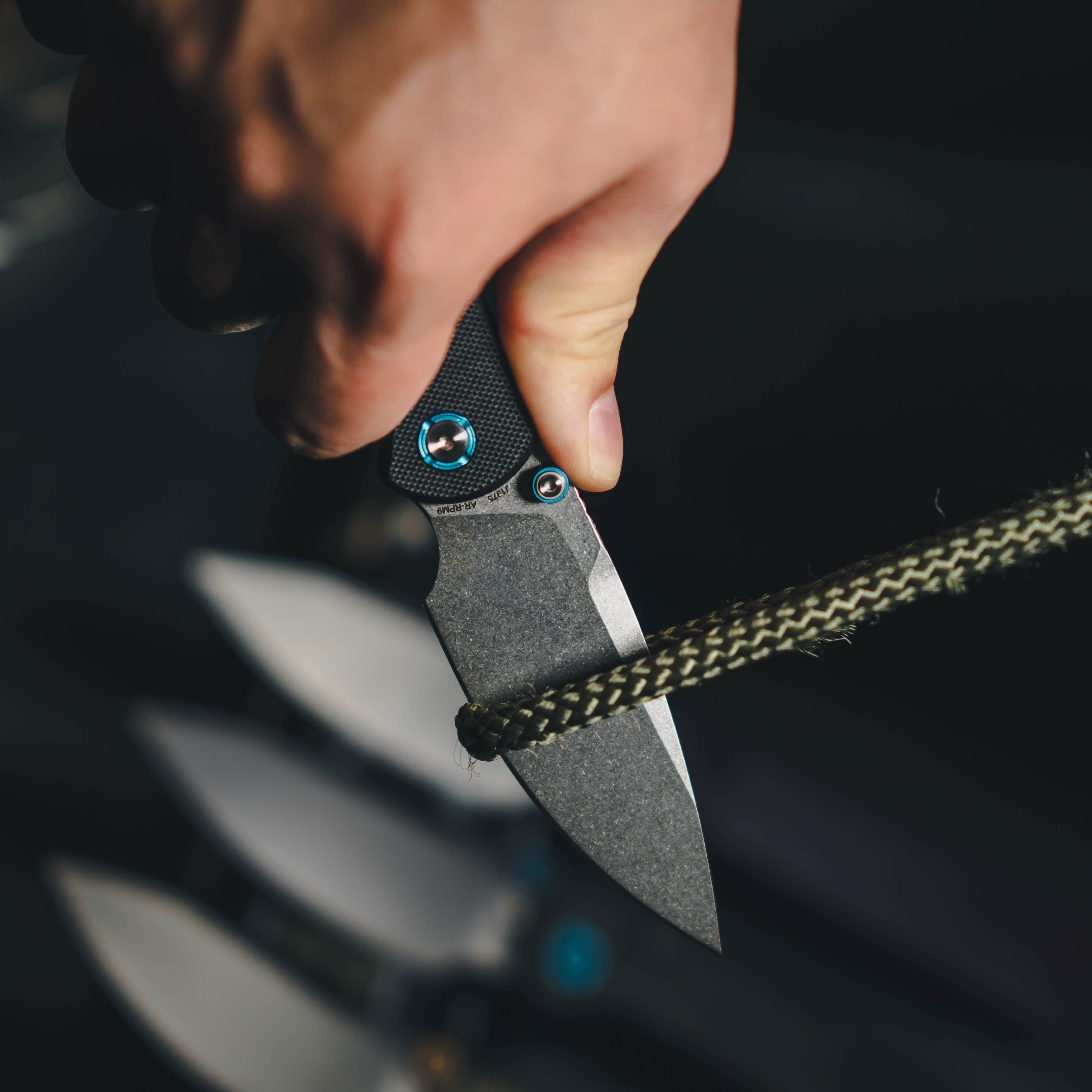
- AR-RPM9: a budget powder steel that punches above its price for edge retention and toughness.
Locks and Mechanism
- Liner lock: a lock where a springy metal liner snaps behind the blade tang when opened.
- Frame lock: like a liner lock, but a cut-out section of the handle itself does the locking.
- Button lock: a push-button release commonly found on automatic and button-lock folders.
- Crossbar lock: a spring-loaded bar that slides between the blade and handle to lock the knife.
- Back lock: a lock with a notched blade tang and a spring bar along the spine, released by pressing a tab.
- Slip joint: a non-locking design where spring tension holds the blade open.
- Detent: the spring tension that holds the blade closed before the lock engages.
Handle and Materials
- Scales: the handle panels attached to the liners or frame.
- Liners: the metal plates inside the handle that support the scales and house the lock.
- Pivot: the screw or pin that the blade rotates around.
- Bearings: small balls that carry the blade's rotation for ultra-smooth action.
- Washers: flat discs (brass, bronze or plastic) that support the blade at the pivot.
- G10: a tough glass-fiber laminate used for lightweight, textured handle scales.
- Micarta: a linen or canvas composite handle material that gains character as it ages.
- Titanium: a light, strong metal used for premium frames and scales, often anodized.
- Carbon fiber: a light, stiff composite material with a distinctive woven look.
Action
- Flipper: a tab on the blade tang that flicks the blade open with a push.
- Thumb stud: a small post on the blade that opens the knife with a thumb push.
- Thumb hole: a round opening in the blade that serves the same purpose as a stud.
- Drop shut: action where the blade falls closed under its own weight once the lock is released.
Putting It Together
Now you can read a spec sheet the way a collector does: blade shape for cutting style, steel for performance, lock for security, and handle material for feel and weight. The next time you compare two knives, run through these terms — you will know exactly what you are looking at, and exactly what you are paying for.
Put the vocabulary to work: explore the Artisan Cutlery catalog and pick a premium EDC knife built for reliable everyday carry.


Leave a comment
This site is protected by hCaptcha and the hCaptcha Privacy Policy and Terms of Service apply.