

Few things stop a knife lover mid-conversation like a damascus blade. The flowing, water-like grain looks expensive because it is: pattern-welded steel is one of the most labor-intensive blade materials in the industry. And when that steel is folded into a pocket knife, you get a folding knife that performs like a modern tool while carrying a craft tradition that stretches back over two thousand years. If you are shopping for a damascus folding knife, here is what you actually need to know.

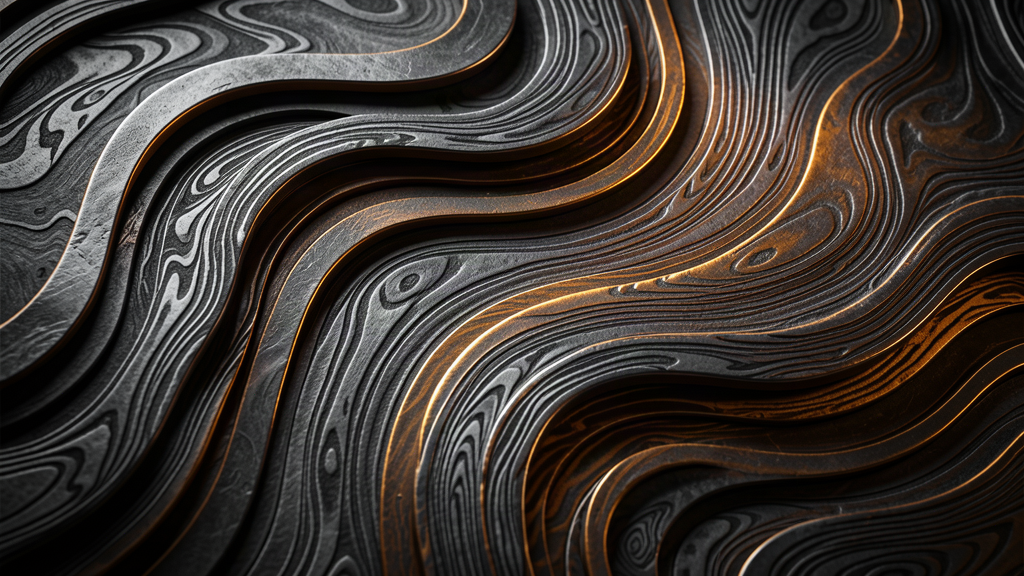
Pattern-welded steel reveals its grain when etched — no two blades look alike.
What Is a Damascus Folding Knife?
A damascus folding knife is simply a folding knife whose blade is made from pattern-welded steel — two or more different steels forge-welded together and folded or twisted so that their layers form a visible pattern. When the blade is etched in acid, the different steels react at different rates and the pattern emerges in contrasting tones. The result is a blade with the same cutting geometry as a monosteel knife but with a one-of-a-kind surface. The history of these blades is covered in depth on the Damascus steel article, which also explains the difference between true pattern welding and the legendary crucible wootz steel of antiquity.
How Pattern-Welded Blades Are Made
Modern pattern welding starts with a stack of alternating steel types — often a high-carbon steel for edge retention paired with a steel that etches differently for contrast. The billet is forge-welded, then drawn out, folded, twisted, or stacked again and again. Each manipulation multiplies the layer count and creates a different visual result. The process is described in detail on the pattern welding article. After forging, the blade is ground to shape and acid-etched to bring out the pattern.
Common Damascus Patterns
| Pattern | How it is made | Look |
|---|---|---|
| Random | Folded and forged without a fixed sequence | Organic, swirling grain |
| Ladder | Billet is cut and flattened in steps | Repeating rung-like stripes |
| Raindrop | Round punches compress the billet before forging | Rows of teardrop shapes |
| Twist | Billet is twisted before flattening | Tight diagonal rope twist |
Damascus vs Monosteel Performance
The honest truth: pattern-welded steel is not automatically sharper or tougher than a well-made monosteel blade. The cutting edge is a mix of the two layered steels, so performance depends on the specific steels in the billet and the heat treatment — exactly the same factors that decide how any knife performs. What damascus reliably delivers is character: no two blades etch alike, and a damaged or heavily used damascus blade can be re-etched to refresh its pattern. Buy damascus because you love the look and the craft, not because it will out-cut an equivalent monosteel blade.
Titanium Damascus Handles
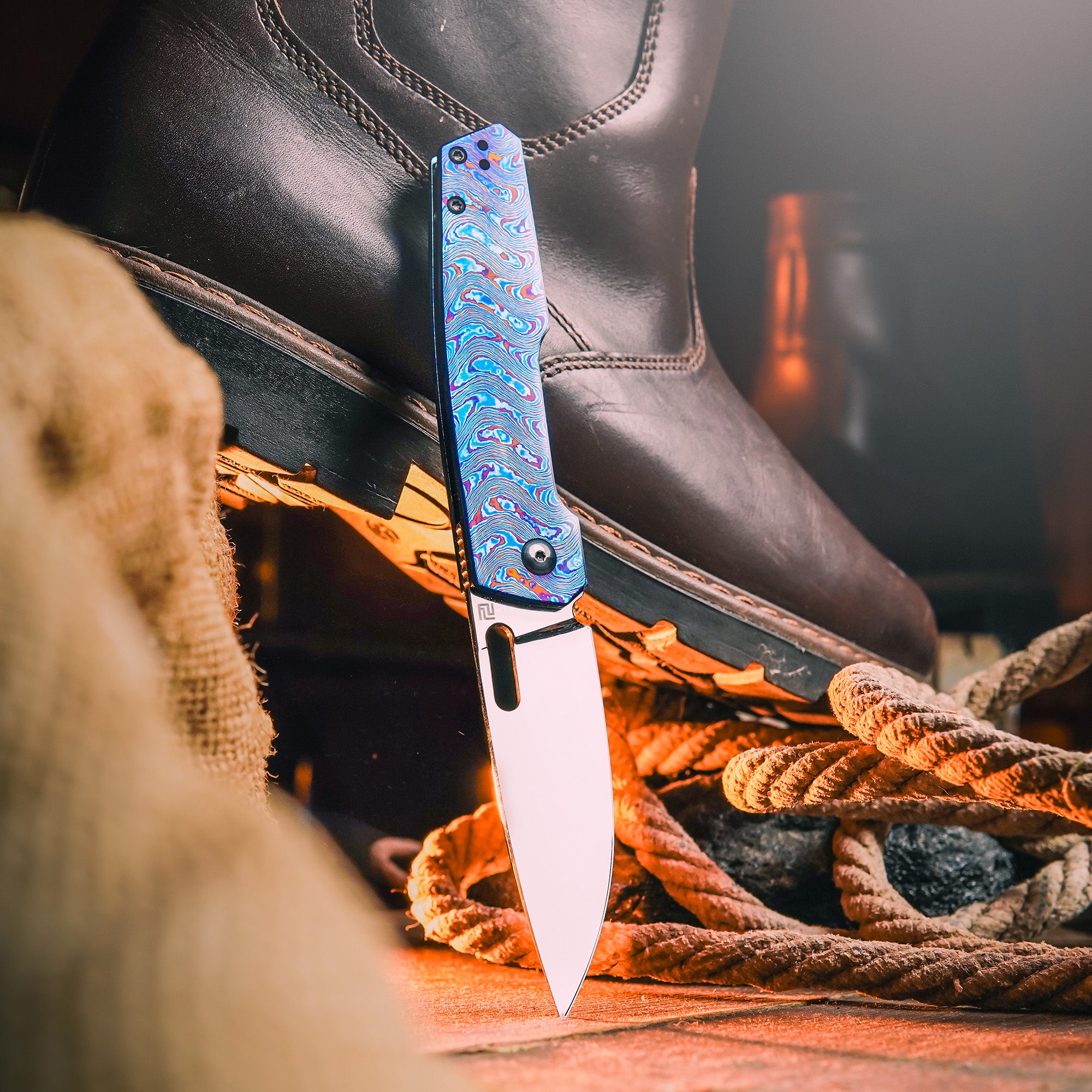
Damascus is not only for blades. Titanium damascus — layered and patterned titanium alloys — is used for premium handles, backspacers, and pivot collars. It brings the same flowing grain to the handle with far less weight than steel, and because it is titanium it is corrosion-resistant and can be anodized. Several Artisan Cutlery limited editions pair a patterned blade with titanium damascus handles for a full-dress look.
Artisan Cutlery Damascus Models
Artisan Cutlery builds pattern-welded blades across much of its lineup, from budget-friendly D2-era classics to full titanium damascus limited editions:
| Model | Price | Highlights |
|---|---|---|
| Tacit (ATZ-1838GD) | $186.41 | Dirk Pinkerton design; 3.42" damascus blade, HRC 58-60 |
| Tomahawk (ATZ-1815GD) | $187.49 | 3.94" damascus blade, HRC 60-62, titanium handle |
| Shark (ATZ-1707GD) | $187.49 | Lean, minimal profile on titanium TC4 |
| Blowback (ATZ-1822GD) | $208.32 | First Artisan model with the Recoil-Lock |
| Eterno (ATZ-1818GD) | $199.49 | 3.54" modified sheepsfoot on titanium |
| Orthodox (ATZ-1817GD) | $199.49 | Slim straight-razor profile on titanium |
| Centauri (ATZ-1839GD) | $199.99 | Ray Laconico front flipper, carbon fiber and titanium |
| Arion (ATZ-1843GD) | $399.75 | Cerberus Knives design on titanium |
| Hyperion (ATZ-1834GSD) | $183.30 | 3" damascus blade, titanium and carbon fiber |
| Proponent Ti-Damascus | $598.50 | Full titanium damascus handle, Dirk Pinkerton |
| Crusoe Ti-Damascus | $609.00 | Nick Rogers desert-island design in titanium damascus |
| Tacit Ti-Damascus | $645.00 | Damascus blade plus titanium damascus handle |
What to Look For When Buying
- Pattern consistency. Check that the grain is even across both sides of the blade and runs cleanly through the grind.
- Etch quality. A good etch has strong contrast without pitting or a grainy, corroded surface.
- Heat treatment. Look for a stated hardness range — premium damascus blades are heat-treated like any good steel, typically in the HRC 58-62 range.
- Edge behavior. Pattern-welded edges sharpen and perform based on the steel mix; choose a maker who specifies the layer composition.
- Handle materials. Damascus blades deserve quality handles — titanium, carbon fiber, and micarta are the common premium choices.
A damascus folding knife is the easiest way to carry a piece of knife history in your pocket. Understand the craft, choose a maker with proper heat treatment, and the pattern on your blade will still be turning heads years from now.
Ready to pick your pattern? Browse the Artisan Cutlery folding knife collection — including damascus and titanium damascus editions built for reliable everyday carry.

Leave a comment
This site is protected by hCaptcha and the hCaptcha Privacy Policy and Terms of Service apply.