

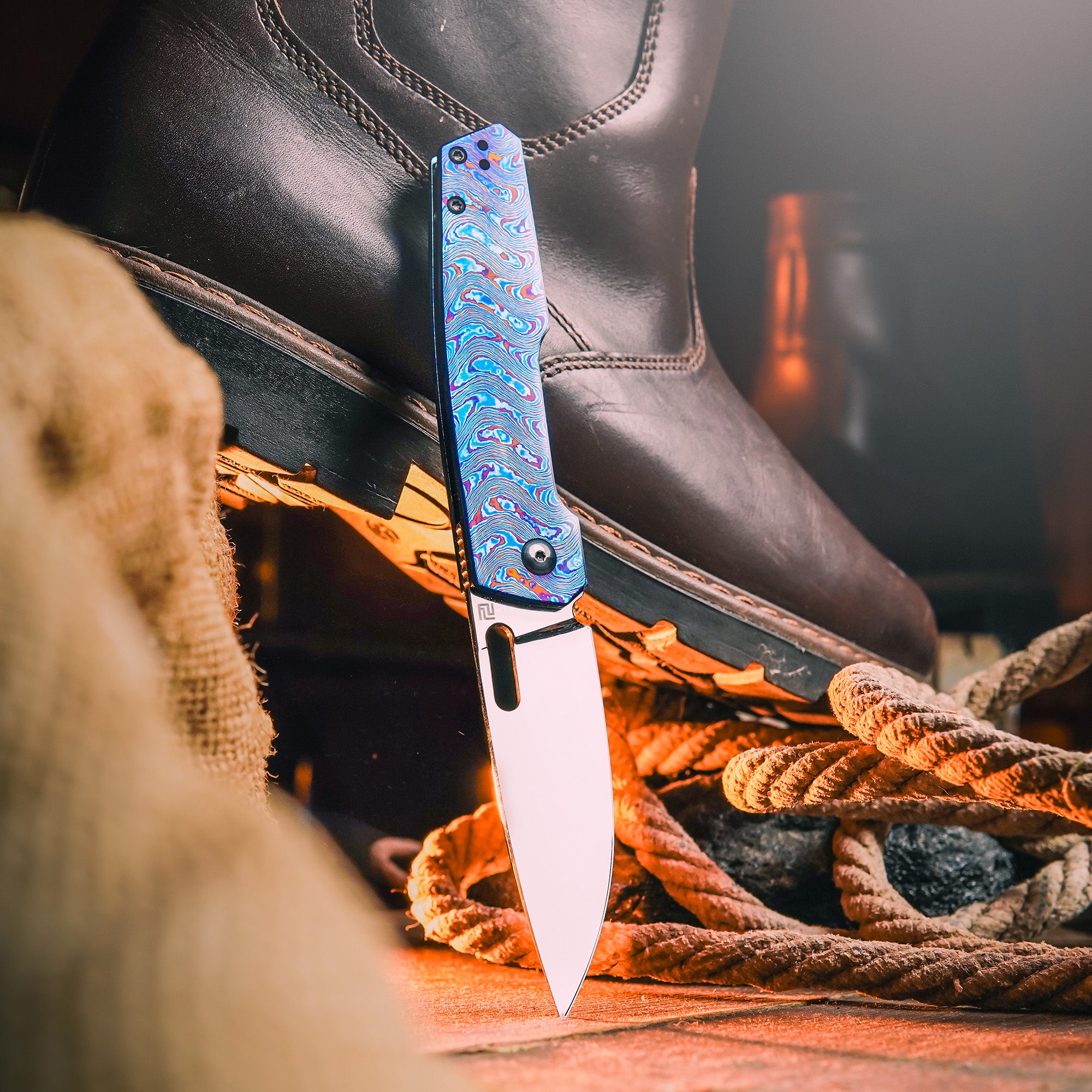
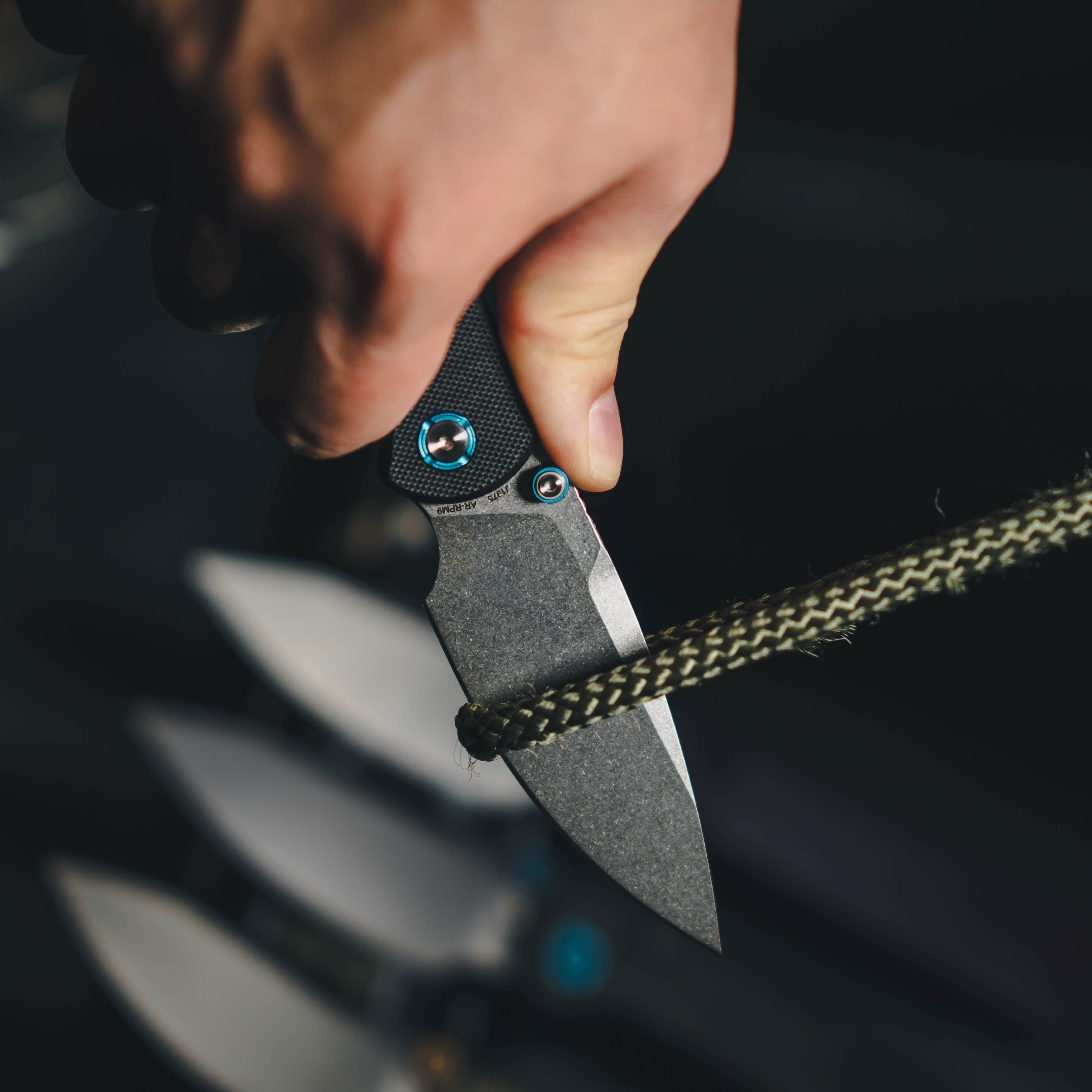

The action of a folding knife — how it opens and closes — is one of the most discussed and debated topics in the EDC community. Enthusiasts describe actions as drop-shut, hydraulic, or snappy, and these terms carry specific meaning about pivot tuning, detent strength, and bearing type. Understanding folding knife action is essential whether you are buying your first quality folder or refining your preferences as a seasoned collector.

Folding knife action profiles: drop-shut, hydraulic, and snappy deployment characteristics.
This guide explains the three primary action profiles, what creates them, and how to choose the action style that suits your use case.
What Determines Knife Action?
Before comparing action types, it helps to understand the mechanical factors that influence how a folding knife deploys and closes:
- Pivot system: Washers (brass or phosphor bronze) versus bearings (caged ceramic or steel). Bearings generally provide smoother action but can feel different depending on their design.
- Detent strength: The ball-detent mechanism that holds the blade closed. A stronger detent requires more force to overcome during deployment but prevents accidental opening.
- Pivot tension: How tightly the pivot screw is adjusted. This interacts with the detent and pivot system to determine overall action feel.
- Blade weight and geometry: Heavier blades carry more momentum during deployment and closing, which affects how drop-shut or snappy the action feels.
- Lock mechanism: Frame locks, liner locks, button locks, and crossbar locks all have different friction characteristics during closing.
For a broader overview of folding knife mechanisms, see our guide to folding knife lock types and pivot systems.
Drop-Shut Action
Drop-shut action refers to a blade that falls completely closed under its own weight when the lock is disengaged — no wrist flick or gravity assistance needed beyond a slight tilt. This is widely considered the most satisfying action for fidget-friendly knives.
What creates drop-shut action:
- Low pivot tension with very little friction in the pivot system.
- High-quality bearings (usually ceramic) that minimize rotational resistance.
- A blade with sufficient weight to overcome any residual friction.
- Precise detent tuning — strong enough to hold the blade closed but not so strong that it creates excessive friction during closing.
Drop-shut action is most commonly found on premium bearing flippers from manufacturers that prioritize action refinement. It is a popular profile among collectors because it showcases the quality of pivot machining and assembly. However, very loose drop-shut actions can sometimes result in blade play if the pivot is too loose.
Hydraulic Action
Hydraulic action describes a smooth, controlled, deliberate closing motion — often compared to the resistance of a hydraulic piston. The blade closes smoothly under its own weight but with visible resistance throughout the travel, creating a "swooping" or "oily" feel.
What creates hydraulic action:
- Phosphor bronze or nylon washers instead of bearings. The surface contact between washers and blade tang creates natural friction.
- Heavier pivot lubricant (thicker oil or grease) that creates viscous resistance.
- Tighter pivot tolerance that allows smooth rotation without lateral play.
- Blade and handle geometry that creates a consistent friction profile throughout the closing arc.
Hydraulic action is often preferred by users who want a refined, controlled feel over a rapid drop-shut. Knives with hydraulic action feel deliberate and precise. As noted on Science of Sharp, pivot lubrication plays a significant role in achieving hydraulics — thicker oils increase damping while thinner oils reduce it.
Snappy Deployment
Snappy deployment refers to the opening action — a crisp, fast, authoritative deployment when the detent is overcome. A knife can have snappy deployment and either drop-shut or hydraulic closing. Snappiness is primarily about detent strength and blade momentum.
What creates snappy deployment:
- Strong detent tension that holds the blade firmly closed until intentionally deployed.
- A flipper tab or thumb stud positioned to give mechanical advantage against the detent.
- Light pivot friction that allows the blade to accelerate quickly once the detent is overcome.
- Appropriate blade weight to carry momentum through the full opening arc.
Snappy deployment is almost universally desired — even enthusiasts who prefer hydraulic closing want a crisp, authoritative opening. A knife with weak, mushy deployment is generally considered poorly tuned regardless of its closing profile.
Action Profile Comparison
| Characteristic | Drop-Shut | Hydraulic | Snappy (Opening) |
|---|---|---|---|
| Closing feel | Free-falling, fast | Controlled, resistant | Varies |
| Pivot system | Bearings | Washers | Either |
| Detent | Medium-strong | Medium-firm | Strong |
| Fidget factor | High | Moderate | High |
| Blade play risk | Higher if too loose | Low | Low if well-tuned |
| Common in | Premium bearing folders | Washer-based traditions | Most quality folders |
How Pivot Bearings Affect Action
The pivot system is the single most influential component in determining your knife's action profile. Bearings reduce friction to near-zero, enabling drop-shut action and rapid deployment. Washers provide more surface contact and natural damping, which enables hydraulic action and smoother lock-up over time.
- Caged ceramic bearings: Smooth, quiet, and long-lasting. Provide the lowest friction of any pivot system, enabling extreme drop-shut action.
- Open ceramic bearings: Even lower friction than caged bearings but more sensitive to dirt and alignment.
- Phosphor bronze washers: Traditional pivot system with natural lubrication properties. Breaks in over time and develops hydraulic characteristics.
- Nylon/Teflon washers: Very low friction for washers but less durable than bronze. Common in budget knives.
Finding Your Preferred Action
There is no objectively "best" folding knife action — preference is deeply personal and often evolves as you handle more knives. Here is a practical starting point:
- If you fidget frequently: A bearing pivot with drop-shut action and snappy deployment maximizes the tactile experience.
- If you use your knife for heavy cutting: A washer pivot with hydraulic action offers more control and lock security during extended use.
- If you are new to quality knives: Start with a bearing pivot with medium detent — it gives you the broadest exposure to action feel.
- If you prefer traditions: Washer-based knives with hydraulic action connect you to the classic folding knife experience.
Explore the range of folding knife action profiles available in the Artisan Cutlery collection, which features models spanning bearings, washers, flippers, and thumb stud deployment systems.
Ultimately, the best action is the one that makes you want to carry and use your knife every day. Whether that is a glassy drop-shut bearing flipper or a buttery hydraulic washer folder, understanding these profiles helps you articulate what you are looking for and find the knife that matches your preferences.


Leave a comment
This site is protected by hCaptcha and the hCaptcha Privacy Policy and Terms of Service apply.