


Starting Your EDC Knife Journey
Every knife collection begins with a single knife. Whether you're drawn to the precision engineering, the variety of materials, or the practicality of everyday carry, building a curated collection is a rewarding journey. This guide helps new collectors avoid common mistakes, make smart early purchases, and develop a collection they'll enjoy for years.

Building a curated EDC knife collection starts with understanding your carry needs and budget.
Step 1: Define Your Carry Philosophy
Before buying anything, ask yourself: what role will this knife serve? A collection built around practical daily carry looks different from one focused on rare limited editions or artistic pieces. Most successful collectors start with utility — knives they actually carry and use — then branch into special pieces as their taste evolves.
Step 2: Set a Budget Framework
Quality matters more than quantity in knife collecting. A single well-made $100 knife will outperform and outlast five $20 knives. Consider this budget structure for your first year:
| Tier | Price Range | What You Get |
|---|---|---|
| Entry | $30–$75 | Good steel (D2, 14C28N), basic handle materials, functional design |
| Mid-range | $75–$200 | Premium steel (S35VN, Nitro-V), titanium or carbon fiber, refined action |
| Premium | $200+ | High-end steel (M390, 20CV), full titanium or exotic materials, collector appeal |
Step 3: Identify Your Carry Style
Your knife should suit how you actually carry. Consider these dimensions:
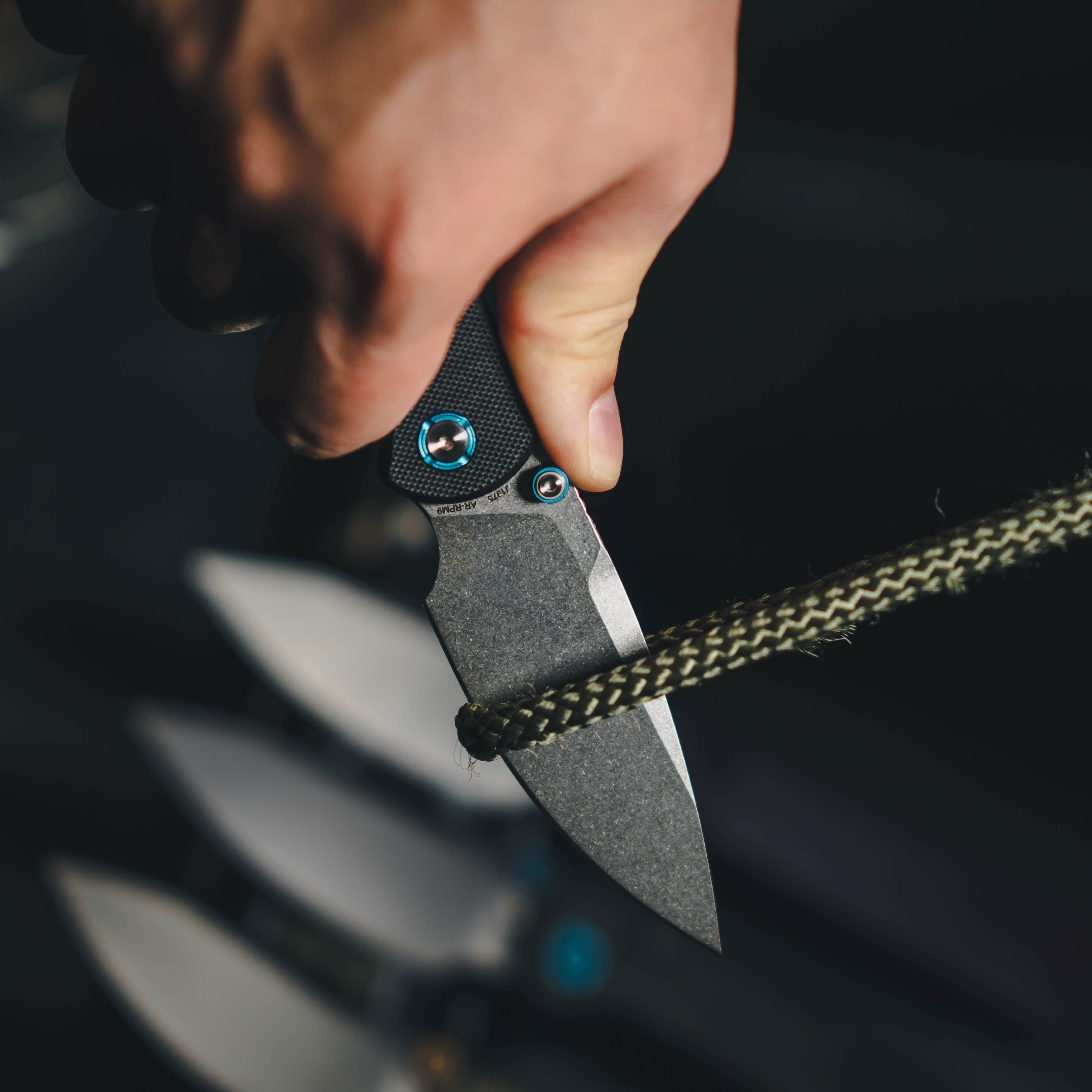
- Size: Sub-3-inch blades for office/urban carry; 3–3.5 inches for all-purpose EDC; 3.5+ inches for outdoor or hard use
- Weight: Under 3 oz for lightweight carry; 3–5 oz for standard EDC; over 5 oz for substantial feel
- Deployment: Flipper tab for deliberate opening; thumb stud for ambidextrous use; button lock for quick action
- Lock type: Liner lock for simplicity; frame lock for strength; button lock for fidget-friendly use; crossbar lock for ambidextrous operation
Step 4: Build Your First Three Knives
A well-rounded starter collection includes three distinct knives that cover different carry scenarios:
- Your daily beater: A durable, affordable knife you don't worry about using hard. D2 steel with G10 handles in the $40–$70 range
- Your premium EDC: A step up in materials and refinement. S35VN blade with titanium or carbon fiber handles, $100–$180
- Your dress carry: A slim, elegant knife for formal or professional settings. Thin profile, refined materials, understated design
Step 5: Learn What Matters (and What Doesn't)
New collectors often obsess over steel type and blade geometry while overlooking factors that matter more for daily use: handle ergonomics, pocket clip position, detent strength, and overall carry comfort. A knife with "average" steel but excellent ergonomics is more useful than one with premium steel that doesn't fit your hand well.
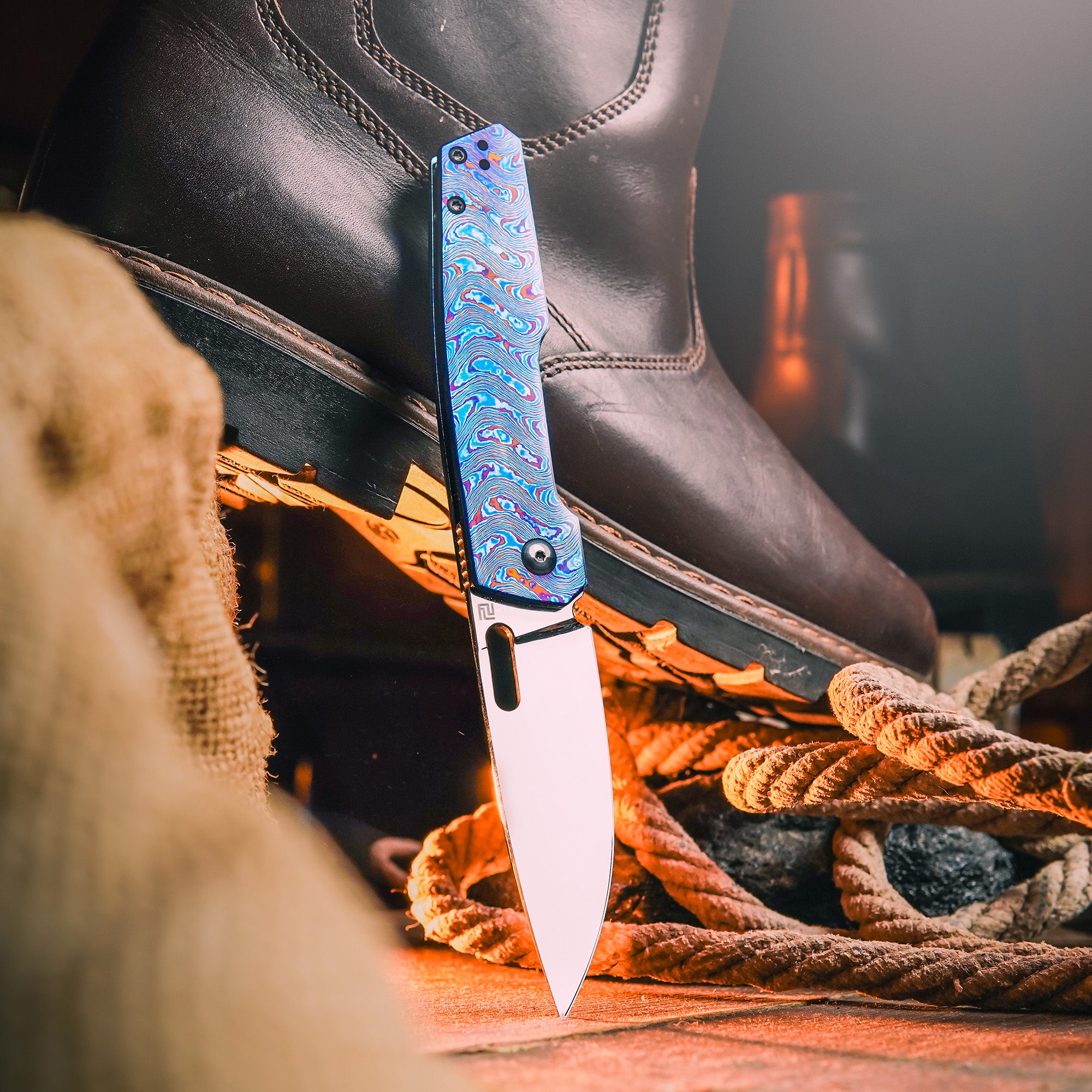
Pay attention to Artisan Cutlery's folding knife collection to see how designers balance materials, ergonomics, and aesthetics in real production knives.
Step 6: Develop Your Collector's Eye
As your collection grows, you'll naturally develop preferences for certain design languages, maker signatures, and material combinations. Keep a record of what you own — make, model, blade steel, handle material, purchase date, and price. This helps you track your collection's evolution and makes informed decisions about future purchases. It also helps if you ever decide to sell or trade pieces to fund higher-tier acquisitions.
Common Beginner Mistakes to Avoid
- Buying too many budget knives: Five $30 knives don't equal one well-made $150 knife
- Ignoring ergonomics: A knife that looks great but hurts your hand after 10 minutes of use is a disappointment
- Chasing every steel hype: Premium steel matters less than proper heat treatment and geometry
- Skipping the pocket clip: An uncomfortable or poorly positioned clip makes any knife unpleasant to carry
- Rushing into limited editions: Understand what you like before chasing exclusives
For a deeper look at collection strategy and what experienced carriers actually gravitate toward, BladeHQ's blog offers frequent articles on knife collecting and new releases.


Leave a comment
This site is protected by hCaptcha and the hCaptcha Privacy Policy and Terms of Service apply.