

A hunting knife is not just a knife you happen to carry while hunting. Field dressing and skinning put specific demands on a blade: the tip has to be controllable around organs, the edge needs enough belly to separate hide from meat efficiently, and the handle has to stay locked in your hand when it is cold, wet, or slick. This guide covers the blade shapes, grinds, handle features and steels that do that work well — and the ones that fight you.
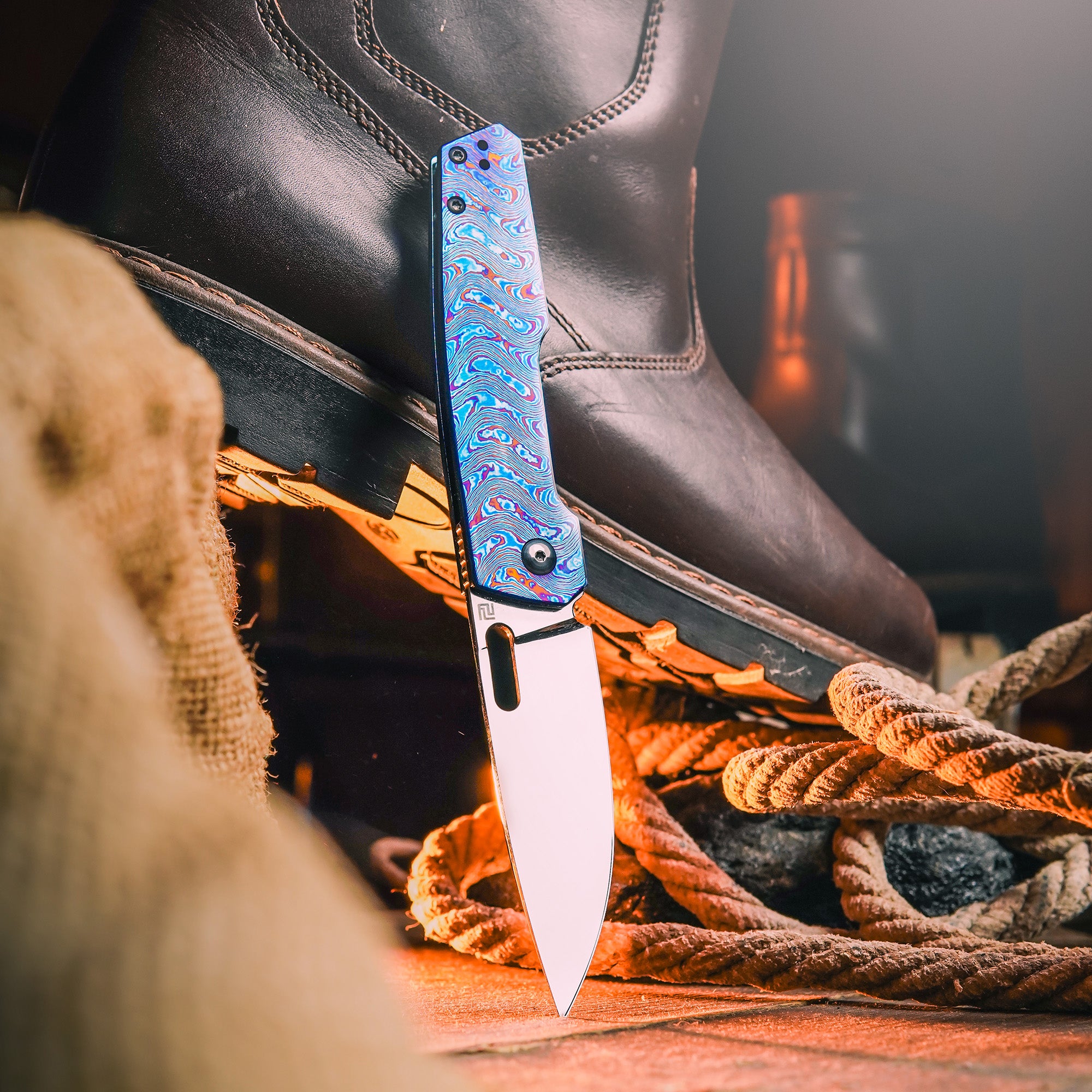
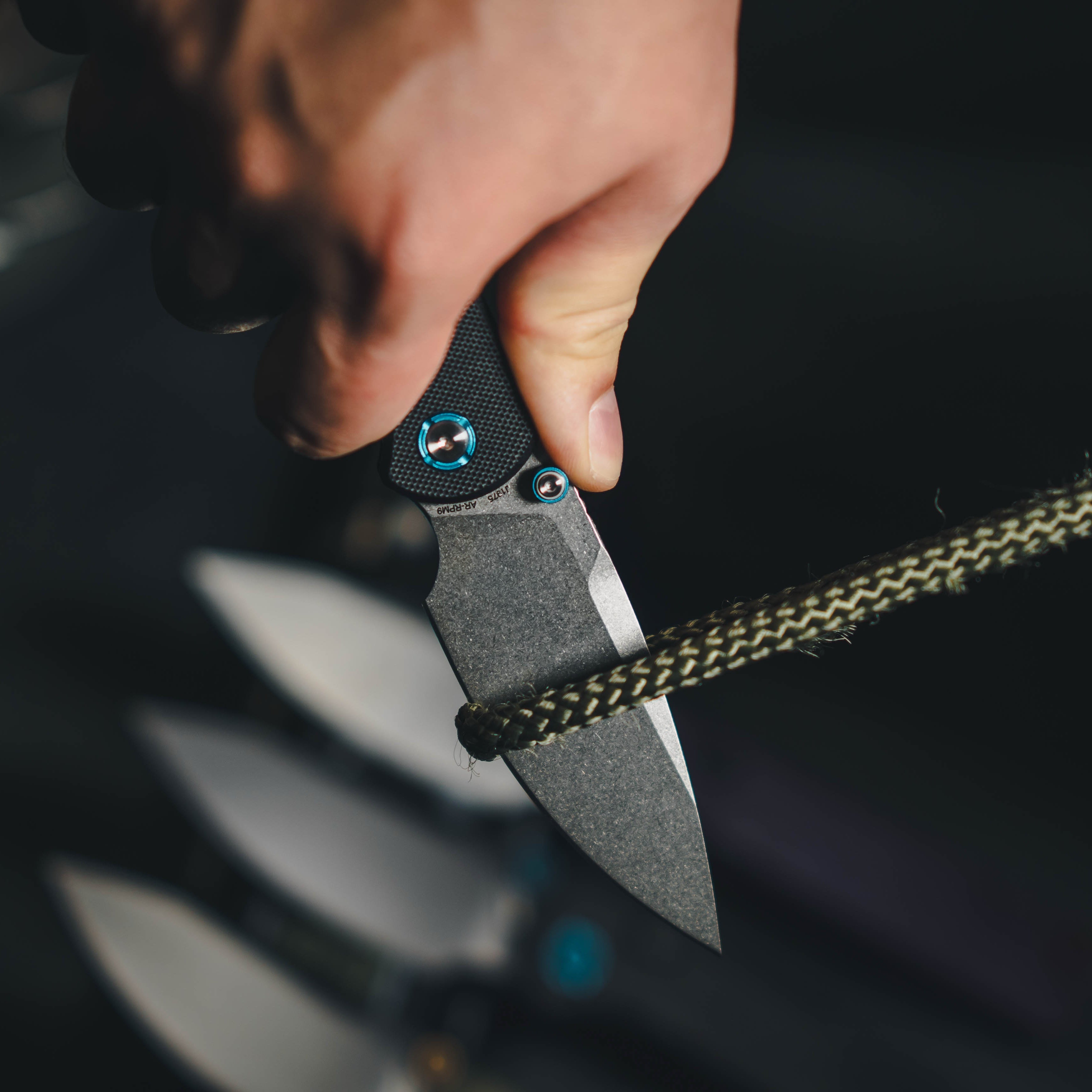
Field-ready geometry: a controllable point, generous belly, and a textured grip matter more than any spec sheet number.
Start With Blade Shape: Drop Point Is the Default for a Reason
Outdoor writers have been recommending the drop point for field dressing for decades, and the reason is geometry rather than tradition. A drop point runs a continuous curve from heel to tip, with the point sitting low, in line with the center of the blade. That combination gives you two things at once:
- Control: because the spine drops toward the point, you always know exactly where the tip is, even with your hand inside a chest cavity.
- Belly: the long, sweeping curve gives you a wide cutting surface, which is what makes skinning strokes efficient instead of laborious.
Clip points work as well, with a slightly more aggressive point for piercing and starting cuts. Where hunters get into trouble is with shapes that put the point above the spine (trailing points are awkward to track when you cannot see the blade), or shapes with almost no belly, such as Wharncliffe and sheepsfoot blades, which slice cleanly but struggle on hide.
A gut hook is a niche tool rather than a blade shape. Milled into the spine, it opens hide in one controlled pull without risking the organs underneath — useful on deer-sized game, unnecessary on smaller animals.
Grind and Stock Thickness Decide How the Knife Cuts
| Grind | Field behavior | Best for |
|---|---|---|
| Full flat grind | Slices meat and connective tissue with little effort | Field dressing and skinning, especially on thin stock |
| High saber grind | More steel behind the edge; still a capable slicer if stock is thin | All-round hunting and camp duties |
| Scandi / convex | Strong, easy to maintain in the field, less efficient in meat | Woodcraft, shelter building, batoning |
| Hollow grind | Very thin at the edge, weak behind it for hard prying | Precision skinning and capping |
Stock thickness matters as much as grind. Hunting knives benefit from thin steel — around 1/8 inch or less — paired with a full flat grind, because the resulting blade passes through meat and tendons like a kitchen knife. Thick, sabre-ground stock is built for wood and prying, not for opening a body cavity.
The Handle Is Half the Knife
You will use a hunting knife with bloody or wet hands, often in cold weather, usually while crouching over an animal. That makes handle design a safety feature, not a style choice.
- Indexing: a forward finger groove or jimping on the spine lets you choke up for precise cuts and tells you where the edge is without looking.
- Guard or finger choil: anything that keeps your hand from sliding forward onto the edge during a pull cut.
- Grip texture: G10, micarta and checkered synthetic handles stay grippy when wet. Smooth wood and polished metal do not.
- Lanyard hole: a simple way to keep the knife attached to you while working near water or steep ground.
Choosing a Steel for Field Work
Hunting knives cut soft material: hide, muscle, connective tissue and occasional bone contact. That shifts the priorities away from abrasive wear resistance and toward edge stability, toughness and field maintenance.
| Steel family | Toughness | Edge retention | Field maintenance |
|---|---|---|---|
| 12C27 / 14C28N (Sandvik stainless) | High for a stainless | Moderate | Very easy — strops or steels back quickly |
| AR-RPM9 (powder budget steel) | Good | Moderate to good | Easy, holds a toothy working edge |
| D2 (semi-stainless tool steel) | Good, but not stainless | High | Wants oil and attention; slower to sharpen |
| S35VN / S90V (powder stainless) | Moderate | High to very high | Needs diamond or ceramic to touch up |
Head-to-head ratings of toughness, edge retention and corrosion resistance for these grades are published by Knife Steel Nerds. The practical rule: if you process one or two animals a season, a tough stainless that sharpens in thirty seconds beats a super steel that needs a diamond plate. If you butcher regularly, a premium powder steel earns its price.
Fixed Blade or Folding?
A fixed blade is the conventional choice for field work. There is no lock to clean out, no pivot to gum up with blood and fat, and no chance of a blade closing under a twisting cut. A folding knife still makes sense as a second knife: it lives in your pocket for the walk in, handles rope and packaging, and serves as an emergency backup if the fixed blade is left in the truck. Many hunters carry both.
Whatever you carry, check your local regulations for blade length and carry restrictions before the season, and confirm the rules for the state or country you are travelling to.
Field Maintenance That Keeps an Edge Working
- Rinse and dry the blade after processing, then apply a light oil film. Blood is acidic and salty — it will stain a carbon steel and pit a stainless one left dirty in a sheath.
- Carry a compact touch-up tool: a fine ceramic rod, a diamond hone, or a leather strop with compound. A few strokes every other animal is far faster than re-sharpening a fully dulled edge.
- Wipe the blade clean before it goes back in the sheath; grit trapped against the edge is what rolls tips.
- Store the knife dry and out of the sheath for long-term storage. Sheaths hold moisture, and moisture is what corrodes.
Hunting Knife Buying Checklist
- Blade shape: drop point or clip point, 3 to 4.5 inches of blade for deer-sized game
- Grind and stock: full flat grind, 1/8 inch or thinner
- Handle: textured, with a finger groove or jimping and a guard or choil
- Steel: tough stainless you can sharpen in the field, or a premium powder steel if you process game regularly
- Sheath: secure, with the blade fully covered and a retention method you trust
- Weight: light enough that you actually carry it on every trip
See our outdoor season collection for fixed blades built around these priorities, and browse the full fixed blade collection if you want a dedicated field knife alongside your everyday carry folder.
Further Reading
- Outdoor Life: the ultimate guide to hunting knives
- Outdoor Life: best knives for field dressing
- Hunting knife on Wikipedia

Leave a comment
This site is protected by hCaptcha and the hCaptcha Privacy Policy and Terms of Service apply.