


Understanding Knife Lock Types
The locking mechanism is one of the most important features of a folding knife. A reliable lock keeps the blade securely open during use and prevents accidental closure. Among modern folding knives, four lock types dominate the market: liner locks, frame locks, button locks, and crossbar locks. Each has its own strengths, and the right choice depends on your preferences for strength, ease of use, and maintenance.

Common folding knife lock types: liner lock, frame lock, button lock, and crossbar lock.
Liner Lock
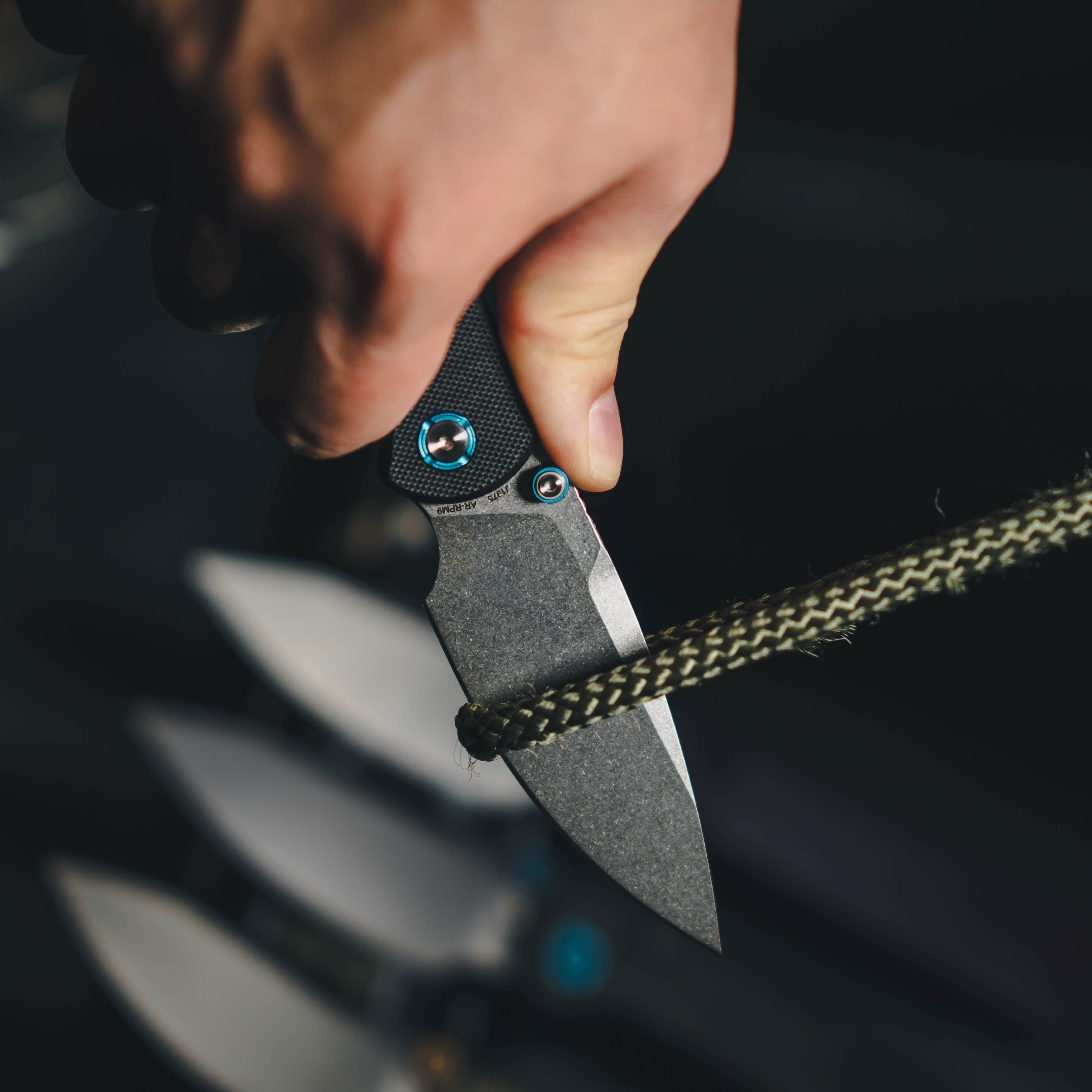
The liner lock is one of the most common and time-tested lock types. It works through a spring-loaded side plate (the liner) inside the handle that snaps into position behind the blade when opened. To disengage, you push the liner to the side, allowing the blade to close.
The liner lock is lightweight, easy to operate with one hand, and proven over decades of use. It is a standard feature on countless EDC knives and is well-suited for most everyday tasks. Artisan Cutlery's Liner Lock collection features a wide range of designs using this reliable mechanism.
Frame Lock
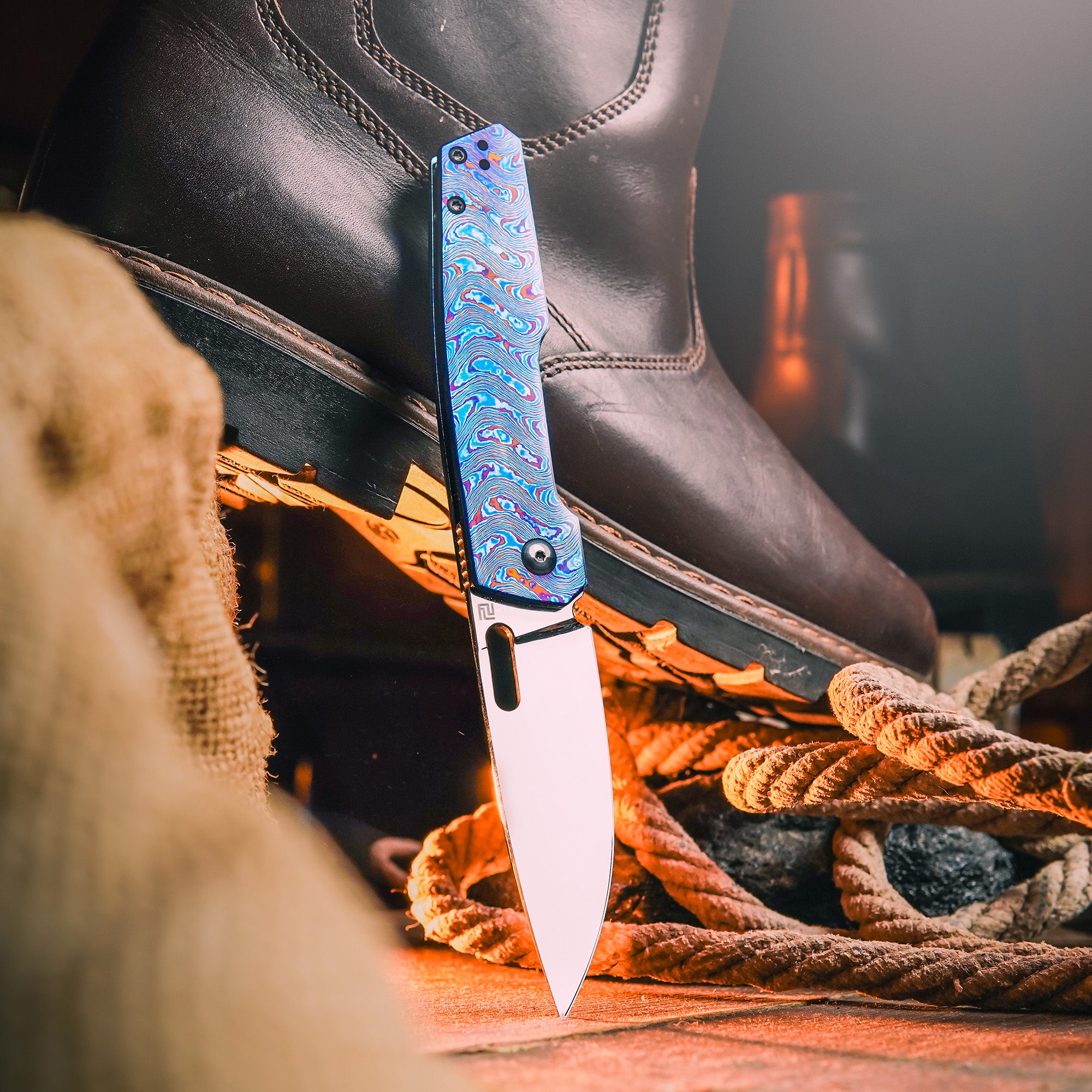
The frame lock is essentially a liner lock integrated into the handle frame itself. Instead of a separate liner, a portion of the metal handle scales (typically titanium or stainless steel) is cut out and acts as the locking bar. This design provides additional strength because the lock bar is thicker and more robust than a separate liner.
Frame locks are favored in premium knives and are especially common with titanium handles, where the natural springiness of titanium creates a durable, long-lasting lockup. Browse the Frame Lock collection at Artisan Cutlery for examples of this robust lock type.
Button Lock
The button lock uses a spring-loaded plunger that engages with a notch in the blade tang. Pressing the button retracts the plunger, releasing the blade for closure. The button lock can be configured for compression-style action or as a simple push-button release.
Button locks offer smooth, ambidextrous operation and a satisfying mechanical feel. They are increasingly popular in modern EDC knives thanks to their fidget-friendly action and reliable lockup. See the Button Lock collection for models featuring this mechanism.
Crossbar Lock
The crossbar lock (also known as a sliding bar lock) uses a spring-loaded bar that moves horizontally across the blade's path. The bar engages with a notch in the blade tang when the knife is opened. To close, you pull the bar back on either side, allowing the blade to fall shut.
Crossbar locks are fully ambidextrous — equally easy to operate with left or right hand — and the design isolates the lock mechanism from handle flex. The Crossbar Lock collection at Artisan Cutlery includes several models with this smooth-action system.
Comparison Table
| Feature | Liner Lock | Frame Lock | Button Lock | Crossbar Lock |
|---|---|---|---|---|
| Strength | Good | Very Good | Good | Very Good |
| Ambidextrous | Partial | No | Yes | Yes |
| One-hand close | Yes | Yes | Yes | Yes |
| Fidget-friendly | Moderate | Moderate | High | High |
| Maintenance | Easy | Easy | Moderate | Moderate |
Choosing Your Lock
For a first EDC knife, a liner lock or frame lock offers proven reliability and intuitive operation. If fidget factor and ambidextrous use matter, the button lock and crossbar lock are excellent modern choices. For heavy-duty tasks where maximum lock strength is a priority, a frame lock with a thick steel lock bar insert provides the most robust solution.
Discover the full selection of folding knives at Artisan Cutlery's Folding Pocket Knives collection and find the locking mechanism that suits your carry style.


Leave a comment
This site is protected by hCaptcha and the hCaptcha Privacy Policy and Terms of Service apply.