


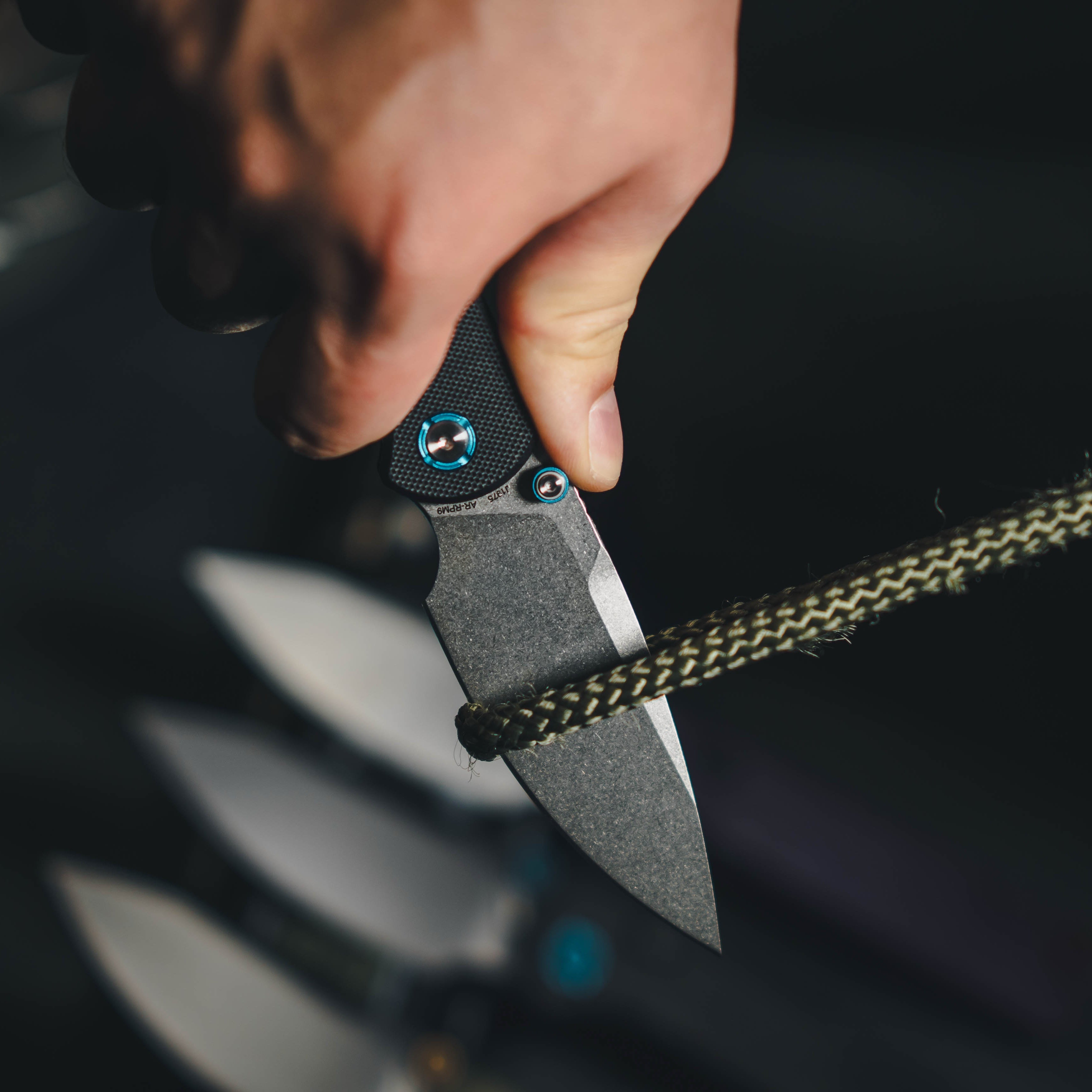
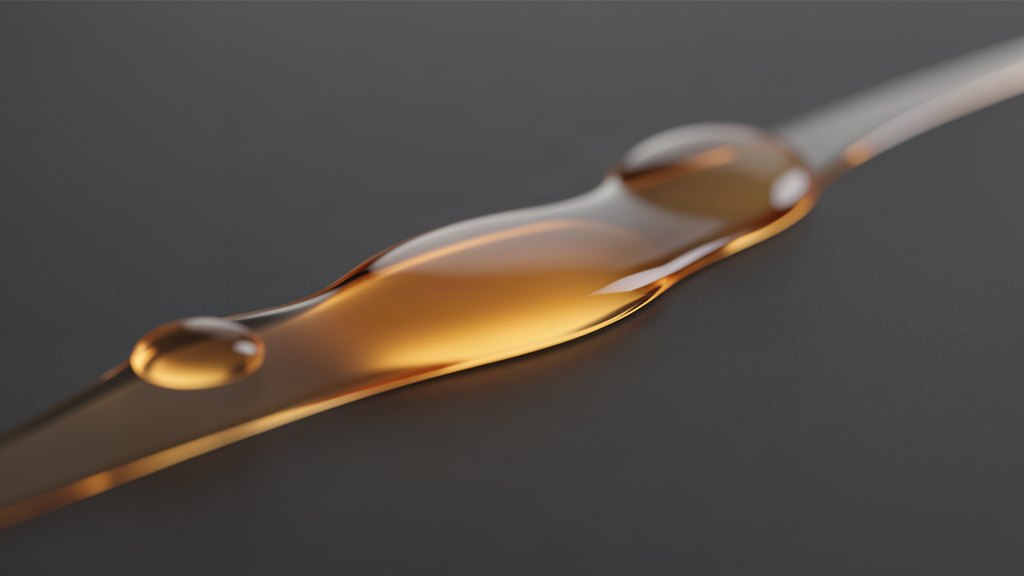
Use a food-grade mineral oil or a purpose-made knife oil. Put one or two drops in the pivot, wipe a thin film across the blade if it is carbon steel, and leave the rest of the knife dry. The oils that cause problems are the ones from the kitchen: vegetable, olive and sunflower oil polymerise into a sticky varnish that eventually seizes a pivot instead of protecting it.
A thin film protects; a pool of oil only collects grit.
That is the short answer. The rest of this guide is about which oils are worth keeping on the shelf, how much to use, and why oiling alone will not stop a knife from rusting.
What knife oil actually does
Oil does three separate jobs on a folding knife, and it is worth keeping them apart because one product rarely does all three well.
- It is a moisture barrier. A continuous film keeps water and humid air off steel. This matters most on non-stainless blades, but stainless steel is not rust-proof, only rust-resistant.
- It is a lubricant. In the pivot, a trace of oil reduces metal-on-metal wear between the blade tang and the washers, and keeps a washer from running dry.
- It displaces water. After a wet day, an oil that creeps into the pivot pushes moisture out of the places a cloth cannot reach.
No oil is a rust cure. A knife stored damp in a leather sheath will corrode under a film of oil, because the moisture is trapped against the steel from the other side. Drying first is not optional.
The short list that works
These are the choices that hold up in practice, in rough order of how often they are the right answer.
Food-grade mineral oil
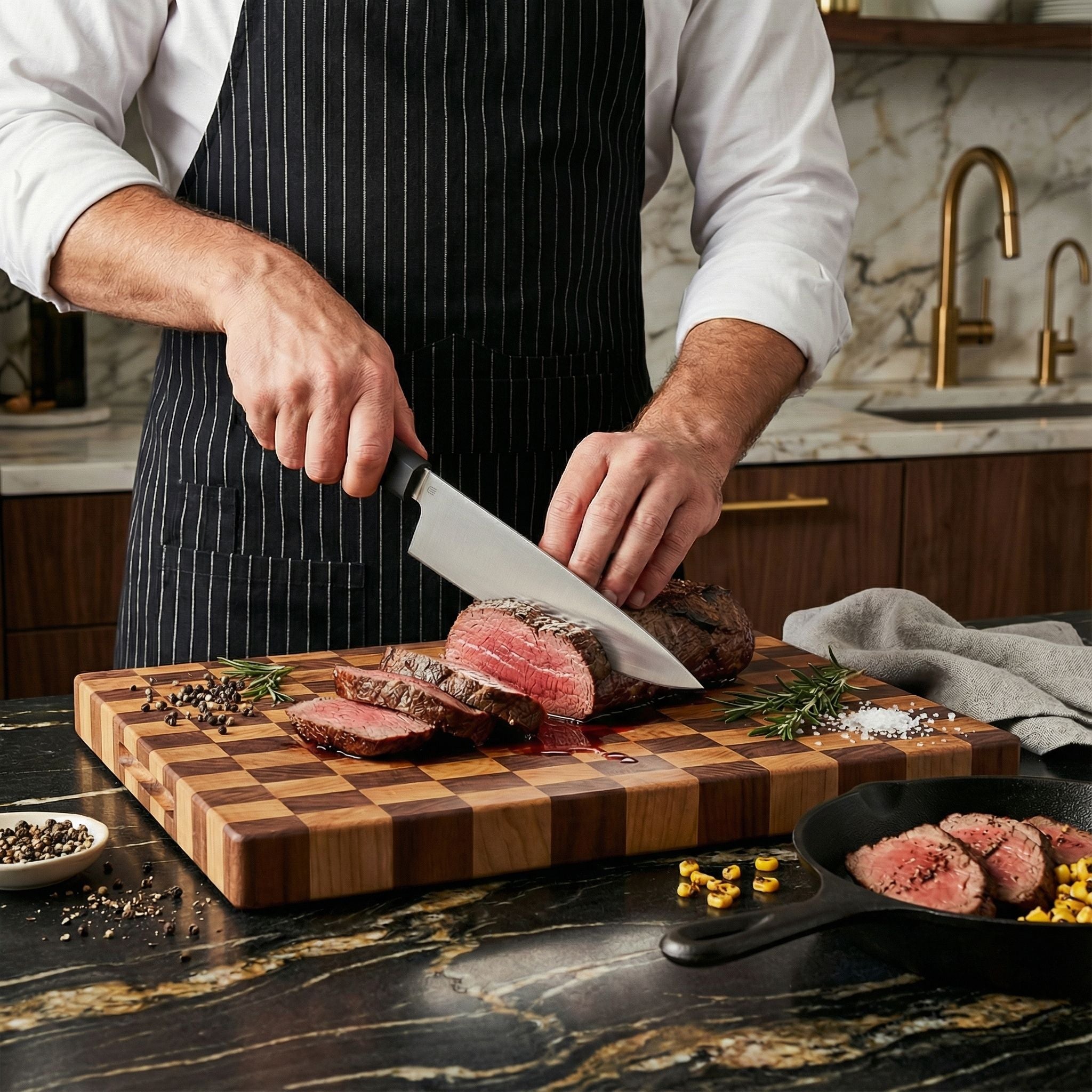
Cheap, odourless, tasteless and safe on a knife that touches food. It is the standard for kitchen knives, wooden handles and cutting boards, and it is perfectly serviceable as a blade film on a folding knife. It is a mediocre pivot lubricant because it is thin and migrates, but for protecting steel it does the job at a fraction of the price of anything marketed as knife oil.
Mineral oil is a refined petroleum product with a long history of use where a non-reactive, food-safe lubricant is needed. Look for the food-grade or pharmaceutical grade label rather than an unspecified "white oil".
Purpose-made knife and gun oils
Formulations sold for knives and firearms are usually light synthetic oils with additives for corrosion inhibition. They creep well, they stay put longer than mineral oil, and they are the right choice for a pivot that sees daily opening and closing. Many are labelled food-safe; check, because the ones that are not should stay away from a blade you cut an apple with.
Camellia oil
The traditional Japanese choice for carbon steel kitchen knives and tools. It is light, it does not go rancid quickly, and it is food safe. It is expensive and it is not a pivot lubricant, but on a carbon blade it is a pleasure to use.
Synthetic grease for pivots and washers
A small amount of light synthetic grease on the washers of a hard-use folder holds up better than oil under load and does not migrate as fast. Use it sparingly: grease traps grit, and a gritty pivot wears faster than a dry one.
What to avoid, and why
The failures are predictable enough that they are worth naming.
Cooking oils
Vegetable, olive, canola, sunflower and coconut oil all oxidise and polymerise. They turn sticky, then tacky, then hard, and the residue is difficult to remove without disassembly. On a blade they can go rancid and smell. On a pivot they are how a smooth folder becomes a stiff one over a summer.
WD-40 as a long-term lubricant
It is an excellent water displacer and a poor long-term lubricant. The solvent carrier evaporates and leaves a thin film that does not hold up under load, and it will dissolve and carry away whatever proper lubricant was already in the pivot. Use it to drive water out after a soaking, then apply actual oil.
Motor oil and general-purpose machine oil
Detergent additives, anti-wear chemistry and a smell that lingers. Nothing about a knife needs them, and none of it belongs on a blade that touches food.
Too much of anything
Over-oiling is its own failure mode. Excess oil runs out of the pivot, collects pocket lint and grit, and turns into an abrasive paste. A knife that leaves an oil stain on your trousers every time you sit down has roughly ten times the oil it needs.
The trade-offs at a glance
| Product | Best use | Food safe | Main weakness |
|---|---|---|---|
| Food-grade mineral oil | Blade film, handles, boards | Yes | Thin, migrates off the pivot |
| Knife or gun oil | Pivot lubrication | Often, check label | Cost, smell on some formulas |
| Camellia oil | Carbon steel blades | Yes | Price, poor pivot lubricant |
| Synthetic grease | Washers under heavy use | Varies | Traps grit if over-applied |
| Cooking oil | Nothing on a knife | Yes, but | Polymerises, goes rancid |
| WD-40 | Displacing water only | No | Evaporates, washes out real lube |
How much, and where
Quantity is where most people get this wrong, and the fix is simple arithmetic.
The blade
Two or three drops on a paper towel, wiped across the steel so the surface looks faintly sheened rather than wet. A carbon blade that will sit for weeks can take a slightly heavier film; a stainless blade in daily use needs almost nothing. Wipe off the excess. Oil that beads on the surface is not protecting anything that a thinner film would not.
The pivot
One drop at the junction between blade and handle, then open and close the knife ten or fifteen times to work it in, then blot whatever comes out with a cloth. If the knife has washers you can reach, a single drop on each side is plenty. Repeat only when the action stiffens, not on a calendar.
What to leave alone
The lock interface needs very little. A liner lock or frame lock works by friction between the lock face and the tang; a wet lock face can make the lock feel vague and can attract grit into the one place you least want it. A trace is enough, and many makers recommend none at all. Springs, backspacers and screws do not need oil either.
Handles
Wood and natural materials benefit from oil; G10, micarta, titanium and aluminium do not need it and can look greasy with it. Use the oil the handle material calls for rather than whatever is in the pivot.
How often, and how climate changes the answer
A knife carried daily in a humid climate, near the coast, or through a wet season needs a fresh film far more often than one that lives in a drawer in a dry room. A practical schedule:
- After any wet use: dry it, then oil it. Same day, not next week.
- Weekly in a humid climate or coastal air: a light blade film and a check on the pivot.
- Monthly in dry conditions: inspect, wipe, refresh if the steel looks dull or dry.
- Before storage: clean, dry completely, oil, and store outside the sheath if the sheath can hold moisture.
- After sharpening: wipe the swarf off, then re-oil. Metal dust left on a blade holds moisture.
Salt is the exception that overrides all of this. A knife that has been near salt water should be rinsed in fresh water, dried thoroughly, and oiled immediately. Salt left in a pivot will pit the steel inside a week, and by the time the action feels rough the damage is done.
Oil is one part of a routine
Oil slows corrosion; it does not prevent it on its own. The habits that matter more are unglamorous: dry the knife before it goes back in a pocket, do not store a knife in a damp sheath, keep the pivot free of grit, and check the blade every few weeks rather than discovering rust after a season. A cheap silica packet in the drawer does more for a stored collection than an expensive oil.
For the knives themselves, the folding knives collection is where pivot care matters most, since every one of them has an action to keep smooth. Blade steel affects how much attention a knife needs, and blade material explains the difference between the steels that shrug off a wet day and the ones that will spot if you leave them damp. If you are setting up a care kit rather than maintaining one knife, start with the models you actually carry from best sellers, and keep a fixed blade in the fixed blade range for the work that gets a knife wet in the first place.
Bottom line
One bottle of food-grade mineral oil and one small bottle of proper knife oil will cover almost everything: the mineral oil for blades, handles and anything that touches food, the knife oil for pivots. Use drops rather than pools, dry the knife before you oil it, and reapply after wet use instead of on a schedule. The oil you already own, used sparingly, beats the specialist product applied by the teaspoon.


Leave a comment
This site is protected by hCaptcha and the hCaptcha Privacy Policy and Terms of Service apply.