
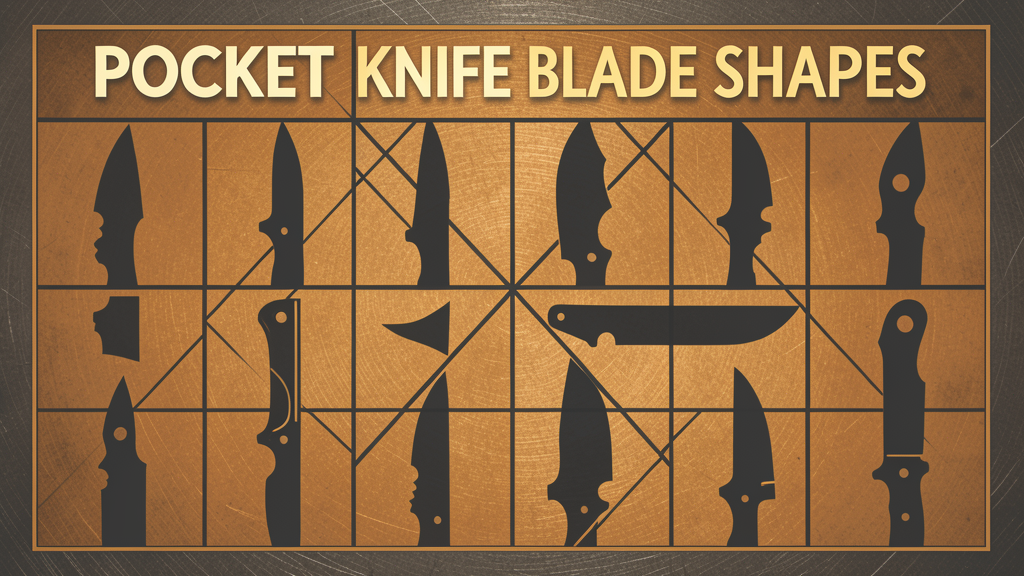
Understanding Blade Shapes
The shape of a knife blade is one of the most defining characteristics of any pocket knife. Different blade shapes are optimized for different cutting tasks, and understanding the strengths of each helps you choose the right tool for your everyday carry needs.
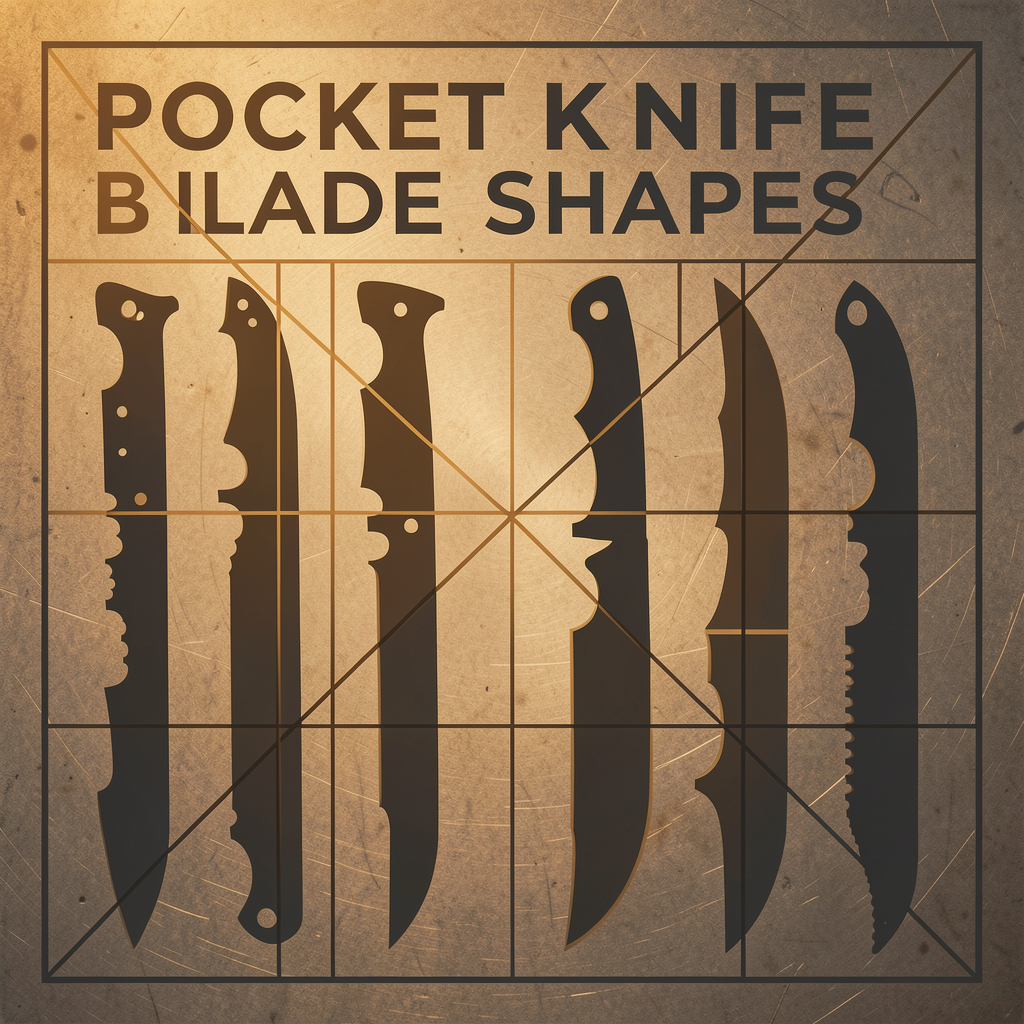
Abstract silhouette profiles representing different pocket knife blade shapes arranged in a comparison grid
While blade steel, handle material, and locking mechanism all matter, the blade shape ultimately determines how the knife performs in real-world use — from piercing and slicing to scraping and prying.
Abstract silhouette profiles representing different pocket knife blade shapes arranged in a comparison grid.
Drop Point Blade
The drop point is one of the most popular and versatile blade shapes in modern pocket knives. Its defining feature is a convex spine that curves downward to meet the blade's edge at a moderately low tip. This design gives the drop point a strong, controllable tip that is less likely to break during heavy use.
Best for: General everyday cutting, hunting, skinning, and utility work.
Strengths: Strong tip, excellent slicing performance, versatile. The lowered tip provides more control during precision cuts.
Clip Point Blade
The clip point blade features a concave "clip" cut into the spine near the tip, creating a narrower, sharper point. This is one of the most traditional blade shapes, famously associated with the Bowie knife. The clipped portion may be sharpened (creating a false edge) or left unsharpened.
Best for: Piercing, detail work, and tasks requiring a fine tip.
Strengths: Excellent piercing ability, very sharp and controllable tip, classic aesthetic. The clip point excels at tasks where the tip does most of the work.
Tanto Blade
The tanto blade shape originated from traditional Japanese swords and was adapted for modern folding knives. It features a flat grind with an angular transition point where the blade changes direction toward the tip. This creates a very strong, reinforced tip geometry.
Best for: Hard use, piercing tough materials, tactical applications.
Strengths: Extremely strong tip — arguably the strongest of any folding knife blade shape. The tanto's reinforced tip can withstand prying and piercing forces that would snap other blade shapes.
Other Common Blade Shapes
- Spear Point — Symmetrical profile with the tip centered. Excellent for piercing. Often found on daggers and double-edged knives.
- Wharncliffe — Straight edge with a spine that curves down to meet it near the tip. Superior for utility cutting and slicing with the blade's heel.
- Sheepsfoot — Straight edge with a completely flat spine that curves down bluntly to the tip. Originally designed for trimming sheep hooves. Excellent for controlled cuts and box opening.
- Reverse Tanto — A modern hybrid combining a drop-point-style belly with a tanto-style angular tip. Offers a good balance of slicing and tip strength.
For more about blade geometry and design principles, the referenced resources provide thorough explanations of edge angles and profile considerations.
Choosing the Right Blade Shape for Your EDC
| Blade Shape | Tip Strength | Slicing | Piercing | Best Use Case |
|---|---|---|---|---|
| Drop Point | High | Excellent | Good | All-purpose EDC |
| Clip Point | Moderate | Good | Excellent | Detail work, piercing |
| Tanto | Very High | Moderate | Excellent | Hard use, tactical |
| Wharncliffe | High | Good | Moderate | Utility, cutting straps |
| Sheepsfoot | High | Good | Low | Box opening, rope cutting |
Ultimately, the best blade shape depends on your specific needs. Many EDC enthusiasts own knives with different blade shapes for different tasks — a drop point for general use, a tanto for heavy work, and a wharncliffe for precise utility cutting. Explore the Artisan Cutlery folding knife collection to see a variety of blade shapes available in modern pocket knife designs.



Leave a comment
This site is protected by hCaptcha and the hCaptcha Privacy Policy and Terms of Service apply.