

Why Lock Types Matter in Pocket Knives
The locking mechanism is one of the most important features of any folding pocket knife. A reliable lock ensures that the blade stays securely open during use and folds safely when closed. Understanding the different lock types helps you choose the right knife for your needs, whether you use it for everyday carry, work, or outdoor activities.
Abstract mechanical interlocking patterns representing different pocket knife locking mechanisms
Modern folding knives employ several distinct lock designs, each with its own strengths, operating feel, and ideal use cases. This guide covers the most common locking mechanisms found in contemporary EDC knives.
Abstract mechanical interlocking patterns representing different pocket knife locking mechanisms.
Frame Lock
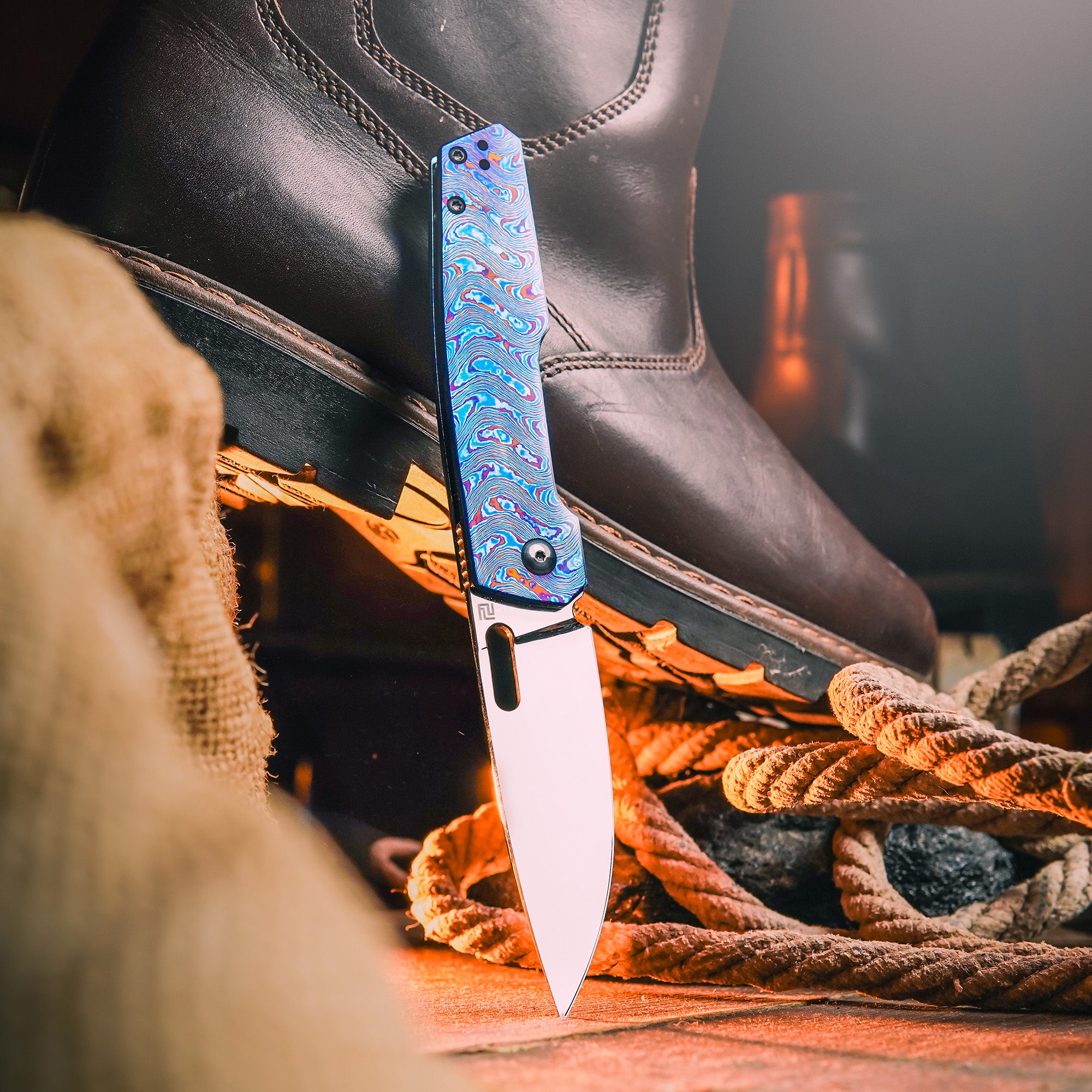
The frame lock is one of the most popular locking mechanisms on premium folding knives. In this design, a portion of the handle itself — typically the titanium or steel side scale — is cut out and spring-tensioned to press against the blade tang when the knife is open. The lock bar acts as an integral part of the handle.
Strengths: Very strong, simple construction (fewer moving parts), excellent longevity, and works well with titanium handles.
Considerations: Requires the handle material to be a metal or durable composite; may be stiff on new knives.
Browse the Artisan Cutlery frame lock collection for models featuring this robust mechanism.
Liner Lock
The liner lock is arguably the most common locking mechanism in folding knives. A spring-tensioned metal liner inside the handle engages with the blade tang to lock it open. When closed, the liner is pushed aside by the blade, springing back into place once the blade reaches full open.
Strengths: Proven reliability, easy to operate with one hand, compatible with a wide range of handle materials (G10, micarta, carbon fiber, etc.).
Considerations: The liner can wear over time; quality knives use hardened steel lock bar inserts to prevent this.
Explore the Artisan Cutlery liner lock collection for a wide selection of everyday carry options.
Button Lock
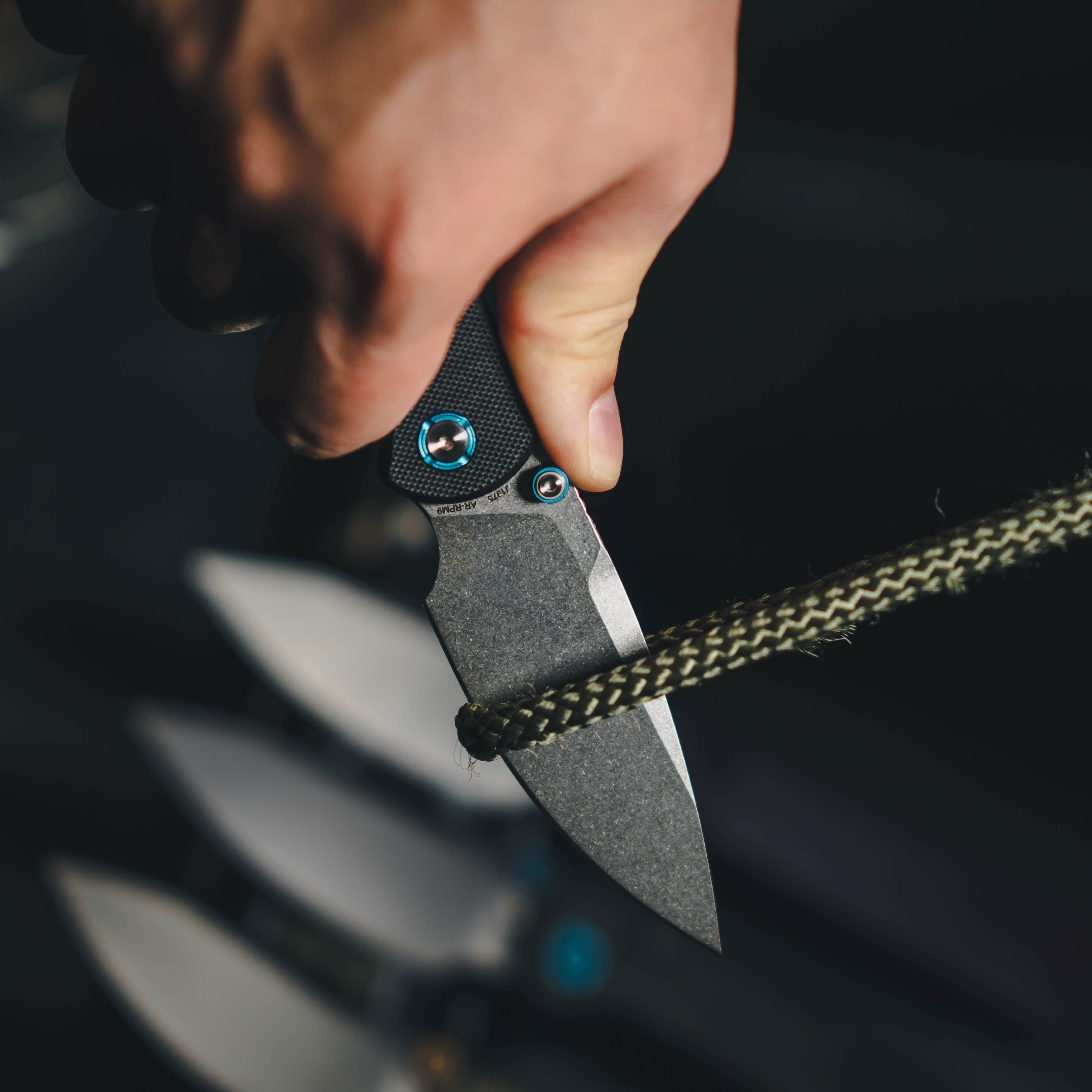
The button lock uses a spring-loaded plunger that engages with a notch in the blade tang. Pressing the button disengages the lock, allowing the blade to close. This mechanism offers smooth, ambidextrous operation and is often paired with flipper tabs or thumb studs for easy deployment.
Strengths: Ambidextrous, smooth action, intuitive operation, strong lockup when properly constructed.
Considerations: More moving parts than frame or liner locks; requires quality manufacturing for reliable engagement.
Check the Artisan Cutlery button lock collection for knives featuring this modern locking system.
Other Lock Types
While frame, liner, and button locks are the most common, several other designs are worth knowing:
- Back Lock (Lockback) — A rocking bar on the spine of the handle engages with a notch in the blade tang. The user presses a release on the spine to unlock. Classic, simple, and very strong.
- Compression Lock — A patented Spyderco design where the lock bar compresses rather than flexes, offering exceptional strength and safe one-handed closing.
- Axis Lock / Crossbar Lock — A spring-loaded bar slides across the blade tang. Ambidextrous, very strong, and allows the blade to flick open.
- Slip Joint — Not actually a lock but a spring-tensioned mechanism that holds the blade open without a true locking engagement. Traditional for classic pocket knives.
For more background on the evolution of the modern pocket knife and its mechanisms, historical references provide useful context.
Which Lock Type Is Right for You?
| Lock Type | Strength | One-Handed Close | Ambidextrous | Best For |
|---|---|---|---|---|
| Frame Lock | Very High | Yes | Partial | Heavy use, premium EDC |
| Liner Lock | High | Yes | Partial | Versatile everyday carry |
| Button Lock | High | Yes | Yes | Fidget-friendly, ambi use |
| Back Lock | Very High | No | No | Outdoor/heavy duty |
| Crossbar Lock | High | Yes | Yes | All-purpose |
For further reading on knife mechanics and edge geometry, Science of Sharp provides detailed analyses of blade and lock performance.


Leave a comment
This site is protected by hCaptcha and the hCaptcha Privacy Policy and Terms of Service apply.