

Stock the edge your customer actually uses, not the one the catalog page leads with. For most knife counters that means plain edge as the default and serrated as a deliberate, minority allocation tied to a named customer group — not a fifty-fifty split that leaves you with the slow half of both.
This is the retail side of a blade decision buyers usually make from a spec sheet: what each edge does differently, what serrated costs you in support and returns, how to allocate an opening assortment, and where our own line sits on that spectrum.
What the two edges do differently
A plain edge is one continuous apex. It cuts by concentrating force along a straight line, which makes it the better tool for push cuts — shaving, slicing cleanly, cutting paper, wood, cardboard and leather. It is also the edge almost every customer can maintain with the stone or rod they already own.
A serrated edge is a row of scallops whose points meet the material first. Each point concentrates pressure, so the blade starts a cut in rope, cord, webbing, strapping and bread with far less force than a plain edge needs, and the protected inner curves keep cutting after the outer points have dulled. That second property is the one that matters commercially: a serrated knife stays useful in its dull state, which is why it survives in kitchens, boats, gardens and warehouse aisles where nobody sharpens anything.
The trade is real. A serrated edge cannot push-cut cleanly — it tears where a plain edge would slice — and it is considerably harder to restore. Different edge, different customer, different after-sale obligation.
| Property | Plain edge | Serrated edge | Combo edge |
|---|---|---|---|
| Cuts best | Clean push and slice cuts; paper, wood, cardboard, food | Fibrous and slick material; rope, webbing, straps, bread | Neither, adequately |
| When dull | Stops cutting cleanly, fails visibly | Keeps cutting fibrous material long after it looks dull | Serrated section keeps going, plain section does not |
| Sharpening | Any flat stone or rod | Tapered rod or diamond file, one scallop at a time | Two tools, two techniques on one blade |
| Typical return reason | "It doesn't hold an edge" — usually a maintenance problem | "It tears / I can't sharpen it" | Confusion about which section does what |
| Support burden | Low | High if staff cannot demonstrate maintenance | Highest per unit sold |
| Assortment role | The default and the bulk of the open stock | A targeted add for a named customer group | A tactical and military shelf, not a general one |
The sharpening liability nobody budgets for
The most expensive part of a serrated sale is not the knife, it is the second visit. A customer who cannot restore the edge either blames the steel or stops using the knife, and both outcomes cost you more than the margin on the unit. The failure is designed into the geometry: scallops require a tapered rod or a diamond file worked one notch at a time, and the average buyer has a flat stone and no idea.
That is manageable, not disqualifying — but only if you handle it deliberately. Three things make serrated stock safe to carry:
- Sell the maintenance tool with the knife. A tapered rod is a small ticket that converts a future complaint into a future purchase, and it visibly raises the competence of the counter.
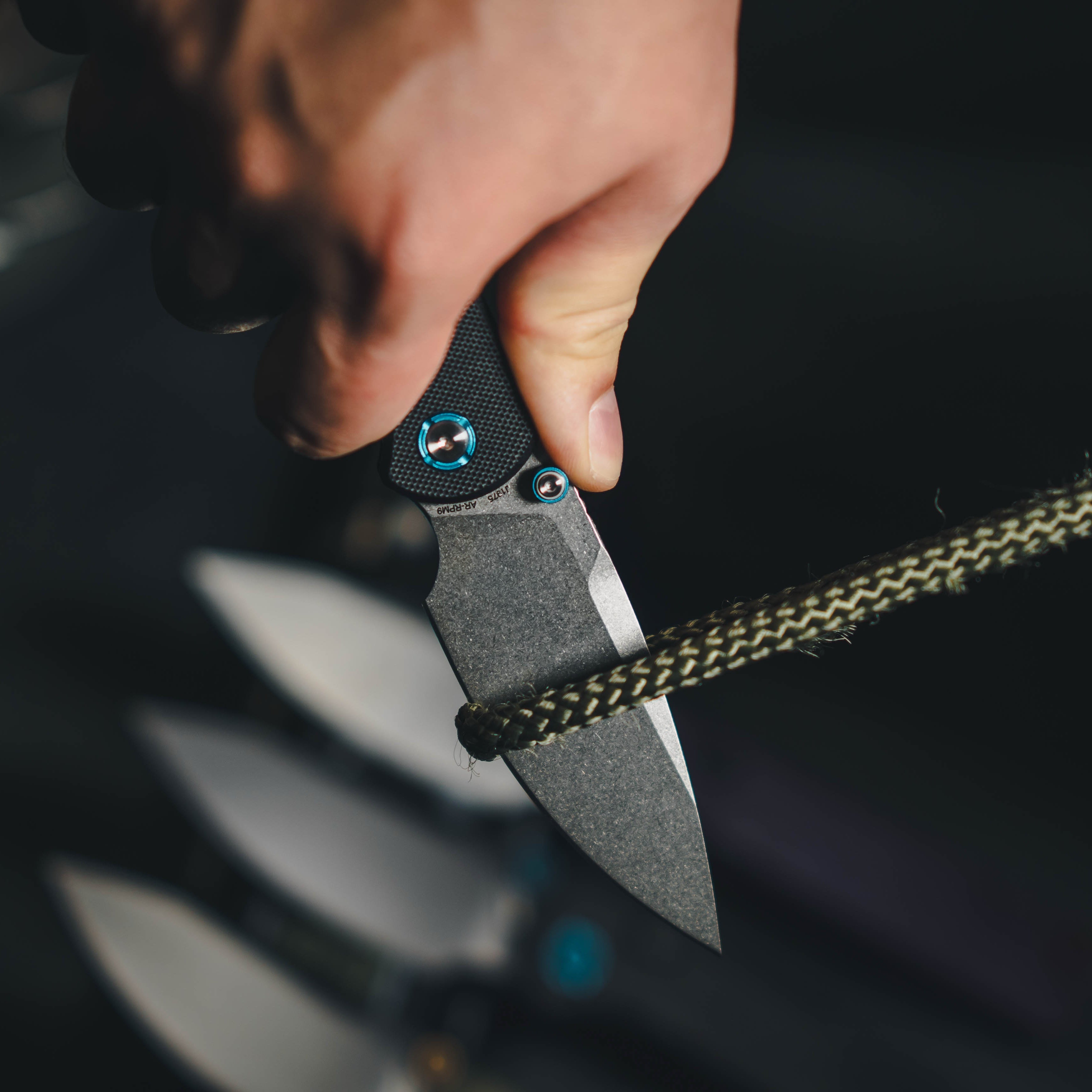
- Demonstrate at the point of sale. Two minutes with a rod on a scrap of rope is worth more than any packaging copy, and it is the reason a serrated knife leaves the store as a working tool rather than an ornament.
- Say what it will not do. Tell the buyer it will tear paper and it will not shave kindling cleanly. Customers who were warned do not return knives; customers who were oversold do.
Match the edge to the customer, not to the model
Edge type is an attribute of a use case. When a buyer asks for a serrated knife, they are usually describing a material rather than a preference, and that material tells you who they are.
- Marine, dock and outdoor counters. Rope, line and wet webbing. Serrated earns its place here, and corrosion resistance matters as much as the edge — a nitrogen stainless like 14C28N is easier to defend in a salt-air conversation than a high-carbon tool steel.
- Rescue, EMS and public safety. Seatbelt webbing and clothing. Serrated is standard, and it is usually sold as part of a program with a spec sheet rather than as an impulse item.
- Warehouse, farm and landscape supply. Banding, twine, feed sacks, hose. Serrated sells well to a crew that cuts the same material all day and never sharpens anything.
- Food service and housewares. Bread and produce. This is a serrated category with its own fixtures, and a folding knife is usually the wrong form factor for it.
- General EDC and gift counters. Paper, tape, packaging, string. Plain edge, overwhelmingly, and the customer will say so with their wallet.
What our own line looks like on this spectrum
The entire folding line we publish today is plain edge. That is a deliberate reading of where our volume sits — general-purpose EDC, gift and sporting retail, where plain edge is the default purchase and the maintenance story is simple. It also means the honest answer to "do you have serrated" is a program conversation rather than a catalog search, and it is better for you to know that before you build a plan around it.
What the line does offer is a spread of blade profiles and price tiers that let you place a customer without leaving the plain-edge side of the decision:
| Model | Blade / handle | Retail | Customer it wins with |
|---|---|---|---|
| CJRB Barranca J1909 | D2, 3.72in, wharncliffe, G10, liner lock | $39.84 | Trade and warehouse buyers who cut boxes and banding |
| Artisan Wren ATZ-1825P | D2, 3.54in, G10, liner lock | $59.24 | Utility-first buyers who want a curved working edge |
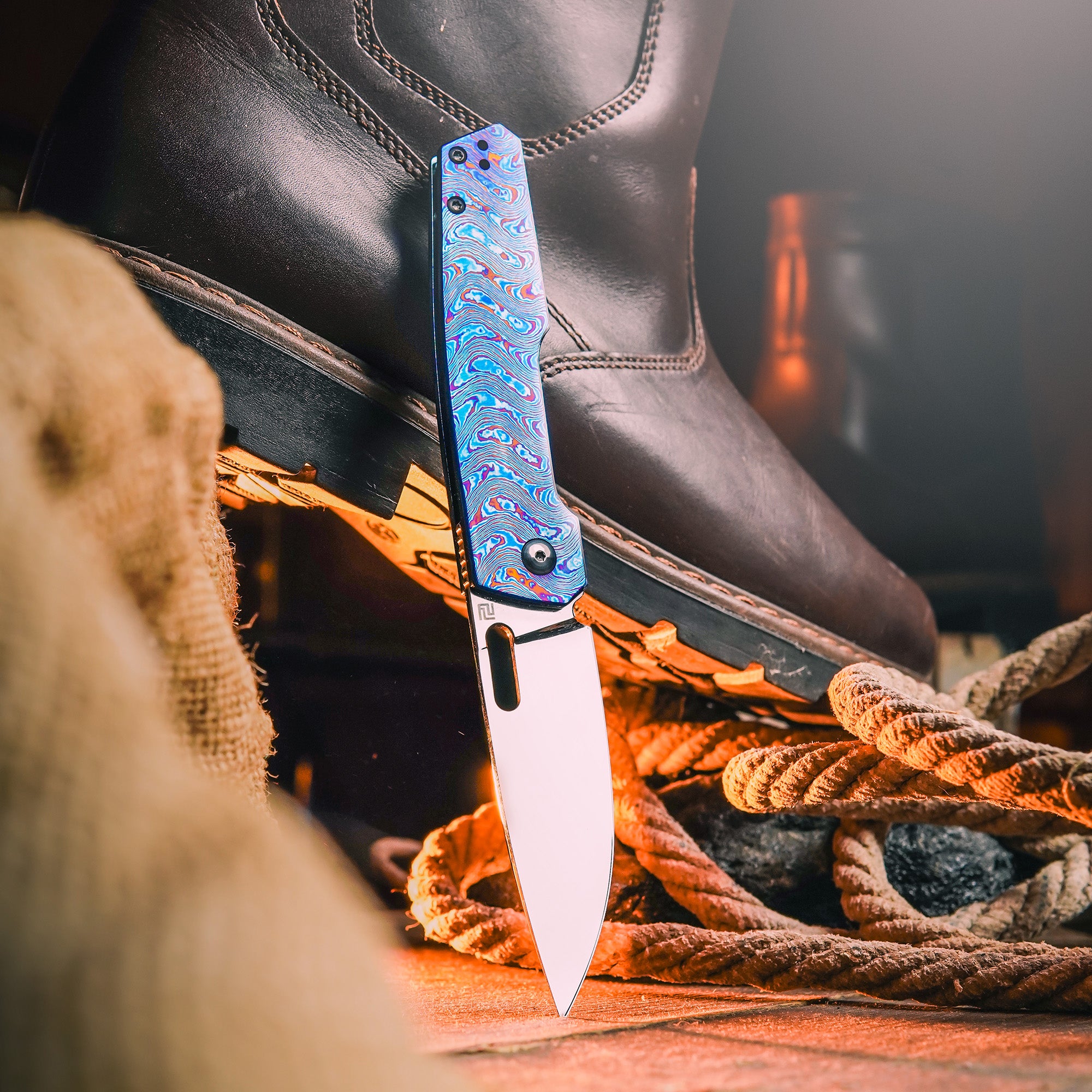
| CJRB Bowie Pyrite J1942X-NM | 14C28N, 3.35in, clip point, micarta, top liner lock | $59.99 | Damp and coastal counters where corrosion resistance sells |
| Tradition V2 1702M | CPM S35VN, 3.58in, drop point, G10, liner lock | $89.99 | Gift and upgrade buyers trading up from a first folder |
| Artisan Classic ATZ-1802G | S35VN, 3.94in, drop point, G10, liner lock | $124.49 | Buyers who want a full-size folder rather than a compact |
Allocating the opening order
There is no correct ratio, but there is a correct process: name the customer for every serrated unit before you buy it. If you cannot name one — a marine account, a rescue program, a landscape supplier, an in-store demonstration that converts — then the serrated units are speculation, and speculation in a category with a high support burden is how a good assortment gets a reputation for being dead stock.
A workable structure for most general knife counters looks like this: plain edge carries the assortment and the price ladder; serrated occupies a single, visible, well-merchandised section tied to one or two customer groups; combo edge exists only if you have a tactical or military buyer who asks for it by name. Depth on the plain-edge side, presence on the serrated side. That is a merchandising rule, not a rule about our terms — the actual quantities, of course, depend on your own sell-through.
Merchandise the difference or lose the sale
Most customers cannot articulate the difference between the two edges, and a spec sheet will not teach them. Physical demonstration will. Put one plain and one serrated knife on the counter with a length of rope and a sheet of paper, and let the customer make both cuts. The serrated knife wins the rope instantly and loses the paper instantly, and in that thirty seconds the customer has chosen their own knife — and told you which customer group they belong to.
Train the counter to ask one question: "What are you cutting most?" The answer routes the sale. Rope, line, webbing and banding go to serrated. Paper, tape, cardboard, food and wood go to plain. Nobody needs a lecture on edge geometry to make that decision.
Track edge type as an attribute, or you will not see the pattern
Edge type is invisible in most retail reporting because it is buried in a product description instead of being a field. Tag it as an attribute in your point-of-sale and inventory records, and two things become visible that are otherwise guessed at: which edge actually sells through, and which edge generates returns. Once edge type is a dimension in the report, the assortment question answers itself within a quarter or two, and the answer is usually more lopsided than the plan assumed.
If your market does skew serrated — marine, rescue, industrial — that is a sourcing conversation rather than a catalog filter, because edge configuration is decided when a model is specified. Wholesale pricing, MOQ and lead time are quoted per program, so the useful first step is telling us which customer group you are trying to serve and what they cut.
Retail prices and specifications in the table are taken from the published product pages linked above. Edge-geometry behaviour is described as general cutting practice, not as a performance guarantee for any specific model. Wholesale pricing, MOQ and lead time are quoted per program.


Leave a comment
This site is protected by hCaptcha and the hCaptcha Privacy Policy and Terms of Service apply.