

What Is a Dagger Knife?
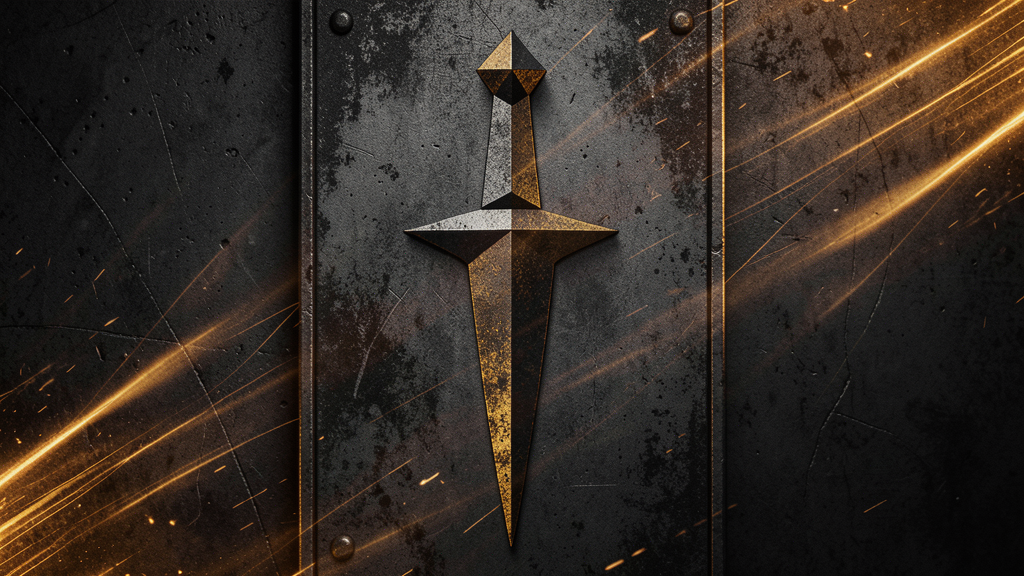
A dagger is a double-edged knife designed primarily for thrusting. Unlike most pocket knives and fixed-blade knives, daggers feature a symmetrical blade with two sharpened edges that meet at a central point. This design has been used for centuries across cultures, from the medieval European dagger to the Indian katar and the Japanese tanto. Today, dagger-style blades remain popular in both historical reproductions and modern tactical folders.
Dagger blade geometry emphasizes symmetrical double-edged design optimized for thrusting.
Key Features of Dagger Knives
- Double-edged blade — Both sides are sharpened, making the dagger purely a thrusting weapon rather than a slicing tool.
- Symmetrical profile — The blade is centered on the handle, providing balanced handling during forward thrusts.
- Point-centric design — The needle-sharp point is the primary functional feature, optimized for penetration.
- Full tang construction — Most quality daggers use a full tang where the blade steel extends through the entire handle.
Dagger vs. Standard Knife Blades
| Feature | Dagger Blade | Standard Knife Blade |
|---|---|---|
| Edges | Double-edged | Single-edged |
| Primary use | Thrusting / piercing | Slicing / cutting |
| Spine strength | No spine — both sides are edges | Thick spine for batoning and prying |
| Legal status | Restricted in many jurisdictions | Widely legal for EDC carry |
| EDC practicality | Limited — specialized use | High — versatile daily use |
Modern Dagger Knives: Folders and Fixed Blades
Modern knife makers produce dagger-style blades in both folding and fixed-blade configurations. Folding dagger knives often use a liner lock or frame lock mechanism to secure the blade, while fixed-blade daggers are built with a full tang and often include a guard to protect the hand. Many modern interpretations use a modified dagger grind — a true double edge that meets at the center but with a slightly thicker cross-section for improved durability.
Steels Used in Dagger Blades
Quality daggers are made from high-performance steels capable of holding a fine edge. Common choices include D2 tool steel for its excellent edge retention, 14C28N for its fine grain structure and toughness, and 9Cr18MoV for its corrosion resistance. The double-edged geometry places unique demands on the steel — it must be both tough enough to resist chipping at a thin point and hard enough to maintain a sharp edge.
Are Dagger Knives Legal to Carry?
Dagger knives face stricter legal restrictions than single-edged knives in many regions. In some states and countries, carrying a double-edged blade is prohibited or requires a special permit. Always check local knife laws before purchasing or carrying a dagger. Many collectors display daggers as part of a knife collection or use them for historical reenactment rather than everyday carry.
Choosing the Right Dagger Knife
- Purpose — Is this for collection, tactical use, or historical reenactment? This determines whether you want a faithful reproduction or a modern interpretation with updated materials.
- Blade length — Most daggers range from 3 to 12 inches. Shorter blades are easier to carry but offer less reach.
- Handle material — G10, Micarta, and textured stainless steel are common choices that provide a secure grip.
- Sheath quality — For fixed-blade daggers, a quality sheath with positive retention is essential for safe carry.


Leave a comment
This site is protected by hCaptcha and the hCaptcha Privacy Policy and Terms of Service apply.