

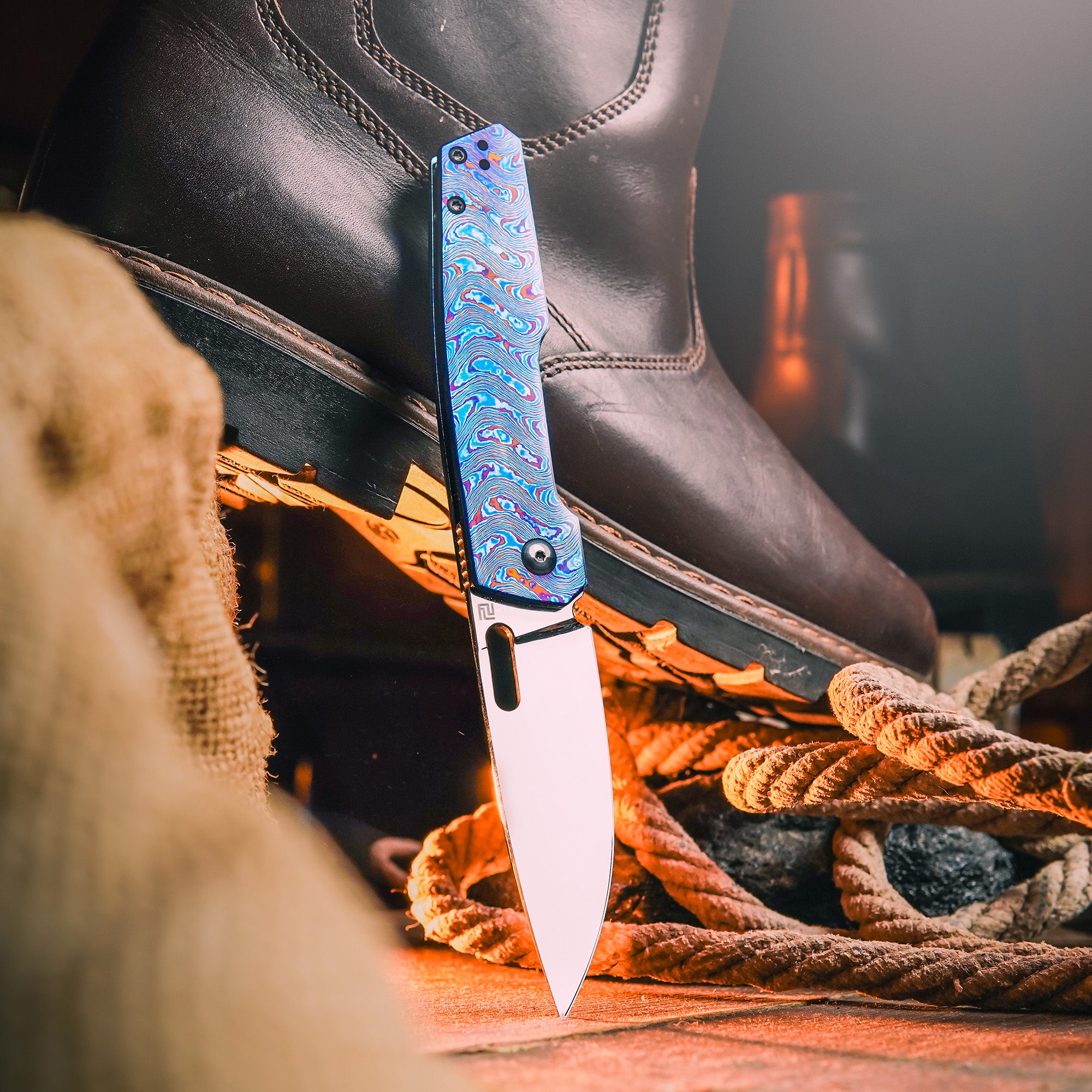
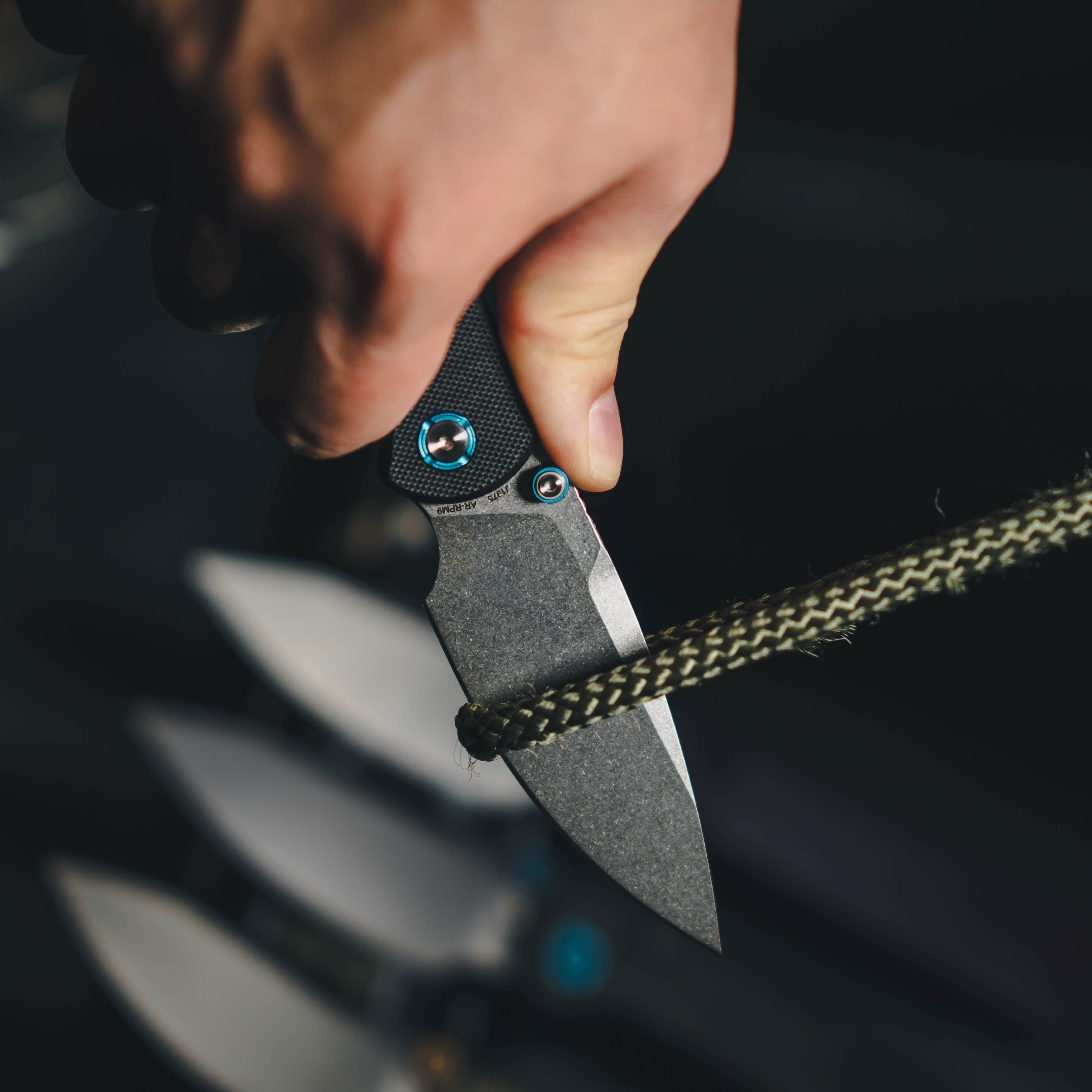

Dagger-blade pocket knives offer a distinct combination of geometry, carry versatility, and aesthetic appeal. While daggers have a long history stretching back centuries, modern folding dagger designs have adapted this iconic blade shape for practical everyday carry. Understanding the types of daggers available in folding form factors helps you choose the right EDC companion.

Folding daggers blend traditional blade geometry with modern EDC practicality.
What Defines a Dagger Blade in a Folding Knife?
A true dagger blade features a symmetrical, double-edged or pseudo-double-edged grind centered on a central spine. In folding knives, the second edge is often a swedge or false edge rather than a fully sharpened second bevel, due to legal restrictions on double-edged carry in many jurisdictions. This design gives the dagger profile its distinctive pointed silhouette and piercing geometry.
- Symmetrical grind — both sides mirror each other, creating a balanced point
- Central spine — provides structural rigidity and distinct visual line
- False edge or swedge — visual dagger shape without legality concerns
- Narrow profile — excellent for slicing and piercing tasks
Common Types of Folding Dagger Designs
Stiletto-Style Folding Daggers
The stiletto dagger features a long, narrow, needle-like blade with a high, acute point. Historically associated with Italian stilettos, modern folding versions offer this aggressive geometry in a pocket-friendly package. Stiletto daggers excel at piercing but have thinner edges requiring careful use.
Tapered-Grind Daggers
A tapered-grind folding dagger incorporates a gradual distal taper from the pivot to the tip. This creates a blade that feels agile in hand while maintaining structural strength near the lock. Tapered designs often balance piercing ability with everyday cutting utility better than pure stilettos.
Spear-Point Daggers
Spear-point daggers blend a dagger's symmetrical grind with a slightly wider belly and a point aligned with the blade's center. This creates a more versatile cutting profile — the extra belly improves slicing performance on typical EDC materials like cardboard, tape, and cordage.
Dagger vs Other Blade Shapes for EDC
| Blade Shape | Piercing | Slicing | Tip Strength | Legal Friendly |
|---|---|---|---|---|
| Dagger | Excellent | Moderate | Moderate | Varies (false edge helps) |
| Drop Point | Good | Excellent | Strong | Yes |
| Clip Point | Very Good | Very Good | Moderate | Yes |
| Tanto | Excellent | Moderate | Very Strong | Yes |
| Wharncliffe | Good | Excellent (straight edge) | Strong | Yes |
Carry Considerations for Folding Daggers
When carrying a folding dagger for EDC, several factors matter beyond blade geometry. The pocket clip positioning, handle texture, and overall weight distribution all affect how the knife carries in daily use.
- Check local laws — some jurisdictions restrict dagger-type blades even in folding form
- False edges matter — a swedge or unsharpened false edge keeps the dagger profile without legal complications
- Deployment method — thumb studs and flipper tabs work well with dagger profiles
- Handle design — symmetrical handles often complement the dagger aesthetic
Dagger Steel Selection
The steel backing a dagger blade matters for edge stability and tip strength. Because dagger blades have narrow points, a steel with good toughness-to-hardness balance helps prevent tip breakage during prying or piercing tasks. Many folding daggers use D2, 14C28N, or premium options like S35VN and M390 — the choice depends on your edge retention and corrosion resistance priorities.
Dagger Maintenance Tips
Folding daggers require attention at the pivot, where the symmetrical blade geometry can make centering adjustments more noticeable. Regular pivot cleaning, proper lubrication, and occasional lock-bar inspection keep the knife performing smoothly. The narrow tip benefits from careful sharpening — maintaining the correct angle on both sides preserves the symmetry that defines the dagger profile.
Explore the full range of folding pocket knives at Artisan Cutlery to see how dagger designs fit into a complete EDC collection.
For deeper reading on blade geometry and design, Wikipedia's dagger entry covers historical context, and Knife Steel Nerds offers detailed metallurgical analysis of blade steels used in modern folding knives.


Leave a comment
This site is protected by hCaptcha and the hCaptcha Privacy Policy and Terms of Service apply.