


The United Kingdom has some of the strictest knife legislation in the world, and it is a patchwork: England and Wales, Scotland, and Northern Ireland are three separate legal jurisdictions. This guide explains the rules that matter most for everyday carriers — the 3-inch non-locking rule, the good-reason requirement, age limits and penalties — based on the Knife legislation overview on Wikipedia and official GOV.UK guidance. It is general information, not legal advice: knife law changes, and you should check current official guidance before carrying.

Balanced light and shadow — a nod to weighing the rules before you carry
The core rule: no blade in public without good reason
Under the Criminal Justice Act 1988 (Section 139), it is an offence to carry in a public place any article with a blade or sharp point. The Prevention of Crime Act 1953 separately prohibits possessing an offensive weapon in public without lawful authority or reasonable excuse — where an offensive weapon is defined as any article made, adapted, or intended for causing injury.
Two consequences follow that surprise many carriers:
- Carrying a knife for self-defence is not a valid reason. In practice, admitting self-defence intent is treated as admitting the knife is an offensive weapon.
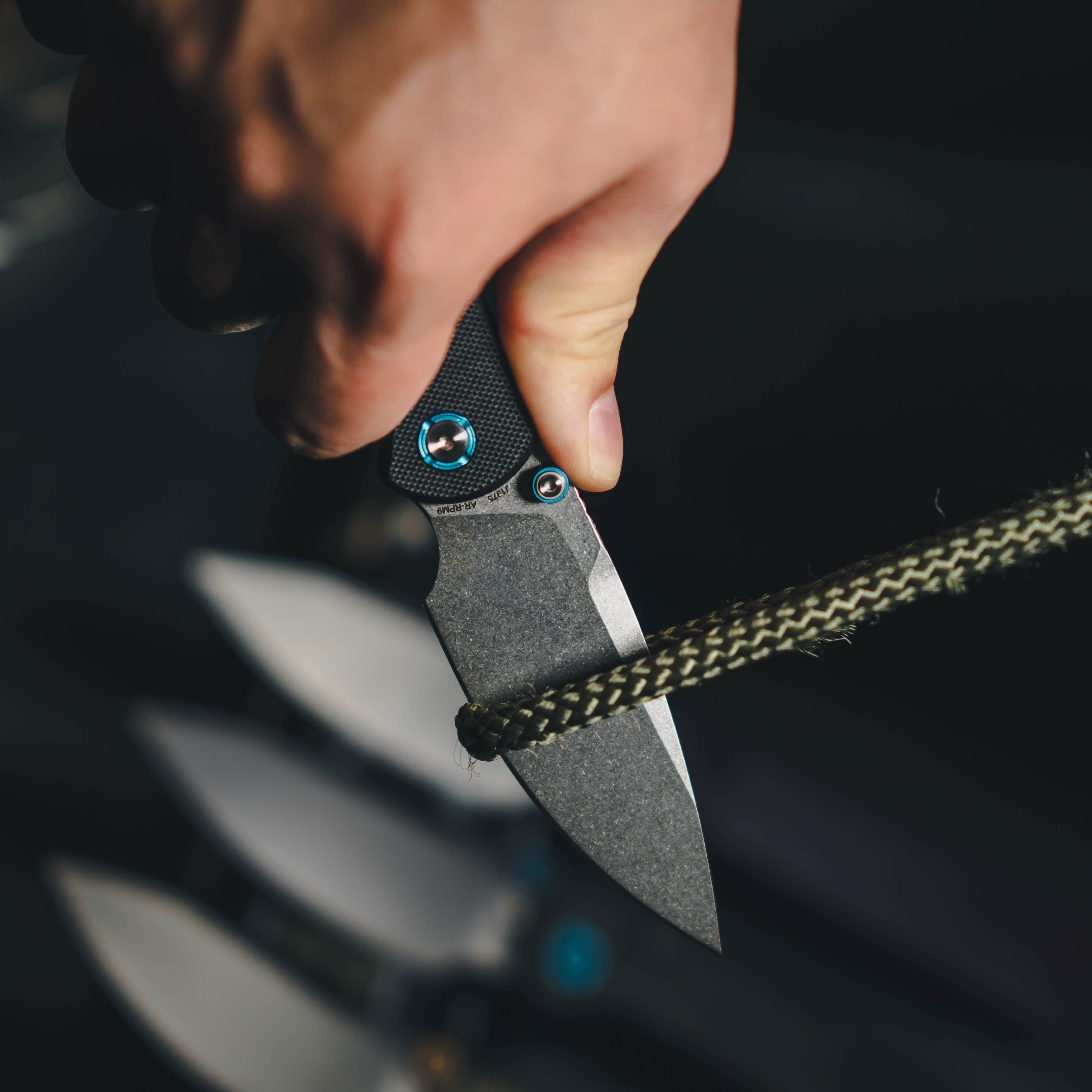
- Marketing matters. The Knives Act 1997 bans the sale of combat knives and restricts marketing knives as offensive weapons — a knife marketed as 'tactical' or 'military' can carry extra legal liability even if it is otherwise legal to own.
The definition of a public place is broad: anywhere the public have or are permitted access, whether or not you pay to be there.
The 3-inch non-locking exception
The key exemption for everyday carry is a folding pocketknife whose cutting edge does not exceed 3 inches (7.6 cm). Two conditions must both hold:
- The blade's cutting edge must be 3 inches or less.
- The knife must be non-locking. Case law (Harris v DPP in 1992 and R v Deegan in 1998) established that 'folding' in the Act means non-locking — so a locking folder, even one under 3 inches, does not qualify for the general exemption.
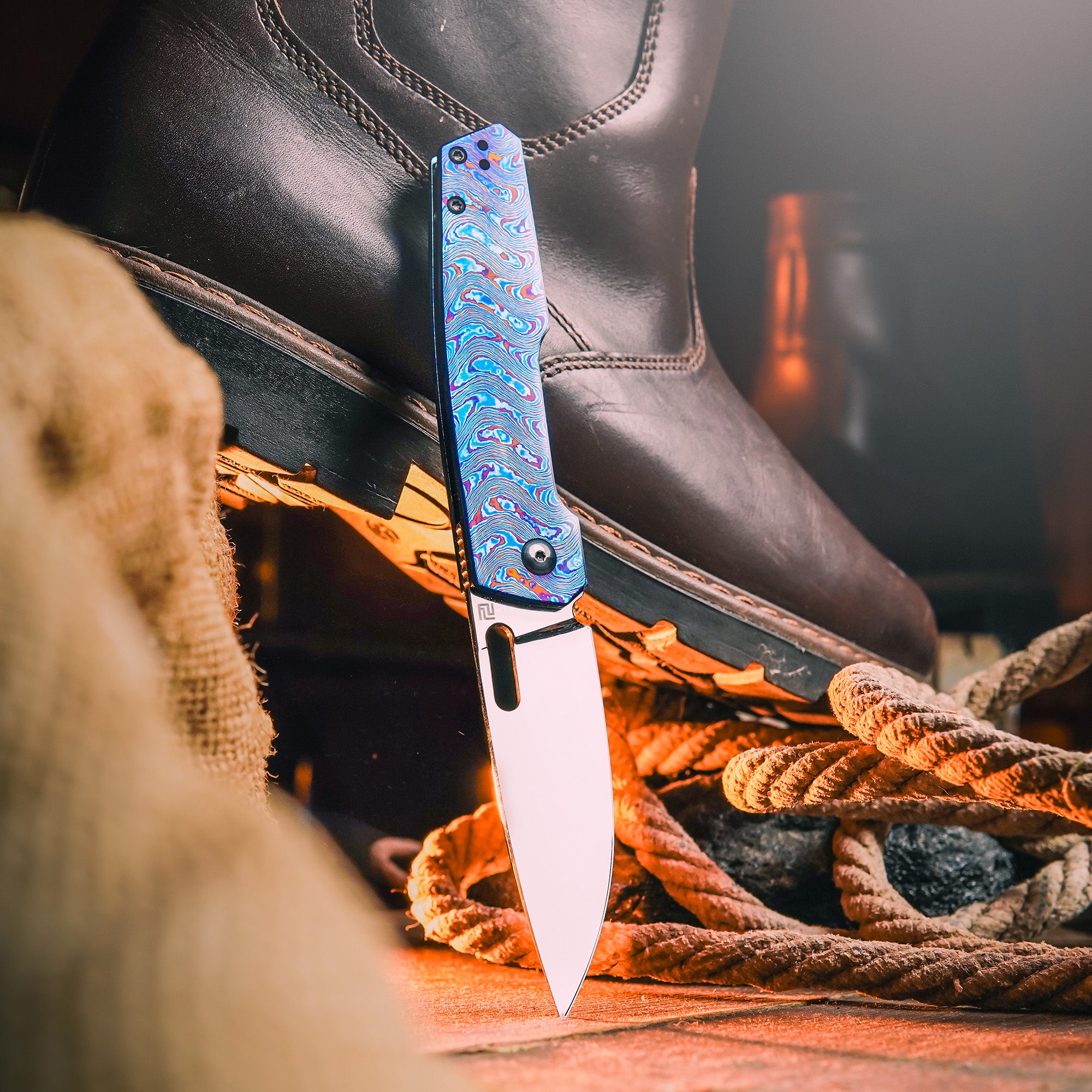
In practice this means the classic sub-3-inch slip joint — like the Artisan Cutlery Biome, a 2.82-inch non-locking slip joint folder — fits the shape of the exemption, while any knife with a lock (liner lock, frame lock, button lock, crossbar lock) requires a good reason to be carried in public.
Buying knives and age limits
Under GOV.UK rules it is illegal to sell most knives or weapons to anyone under 18, and it is illegal to carry most knives in public without a good reason. Online purchases are covered too: sellers must use age-verification processes, and knives cannot simply be left for collection without checks. Some categories are banned outright from sale, including combat knives under the Knives Act 1997, plus items like flick knives, gravity knives and disguised knives.
Penalties
The consequences for breaking the rules are severe:
- The maximum penalty for an adult carrying a knife or weapon illegally is 4 years in prison, an unlimited fine, or both.
- Anyone convicted of carrying a knife or weapon illegally more than once faces a mandatory prison sentence.
- Using any knife in a threatening way is itself an offence.
Statistics from the Office for National Statistics cited in the Wikipedia overview recorded 50,510 knife-related offences in England and Wales in the year ending March 2024, up 78% over the previous decade — which helps explain the enforcement focus on knife carry.
Scotland and Northern Ireland
The UK's three jurisdictions each have their own knife rules. Scotland and Northern Ireland maintain similarly strict approaches, with their own statutes and guidance; what is lawful in England and Wales is not automatically lawful elsewhere in the UK. Before carrying in a different part of the UK, check the local rules rather than assuming the 3-inch rule transfers.
Practical tips for lawful carry
- For general pocket carry in England and Wales, choose a sub-3-inch non-locking folder such as a slip joint.
- Have a genuine reason for carrying anything larger or locking: work requirements, outdoor activities like camping or fishing, or transporting it to and from a place of use.
- Never carry for self-defence — it is legally treated as offensive intent.
- Keep purchases and receipts sensible: avoid 'tactical' or 'military' branding if you want to stay clearly on the right side of the marketing rules.
- Re-check official guidance before travelling, since laws change and airport and border rules differ.
More reading
For the authoritative current position, read GOV.UK: Selling, buying and carrying knives. For the historical and legal background across jurisdictions, the Knife legislation article on Wikipedia covers the statutes and case law in detail.
Find your ideal everyday carry configuration — explore the Artisan Cutlery folding knife collection for premium EDC folders built for reliable everyday carry.



Leave a comment
This site is protected by hCaptcha and the hCaptcha Privacy Policy and Terms of Service apply.