

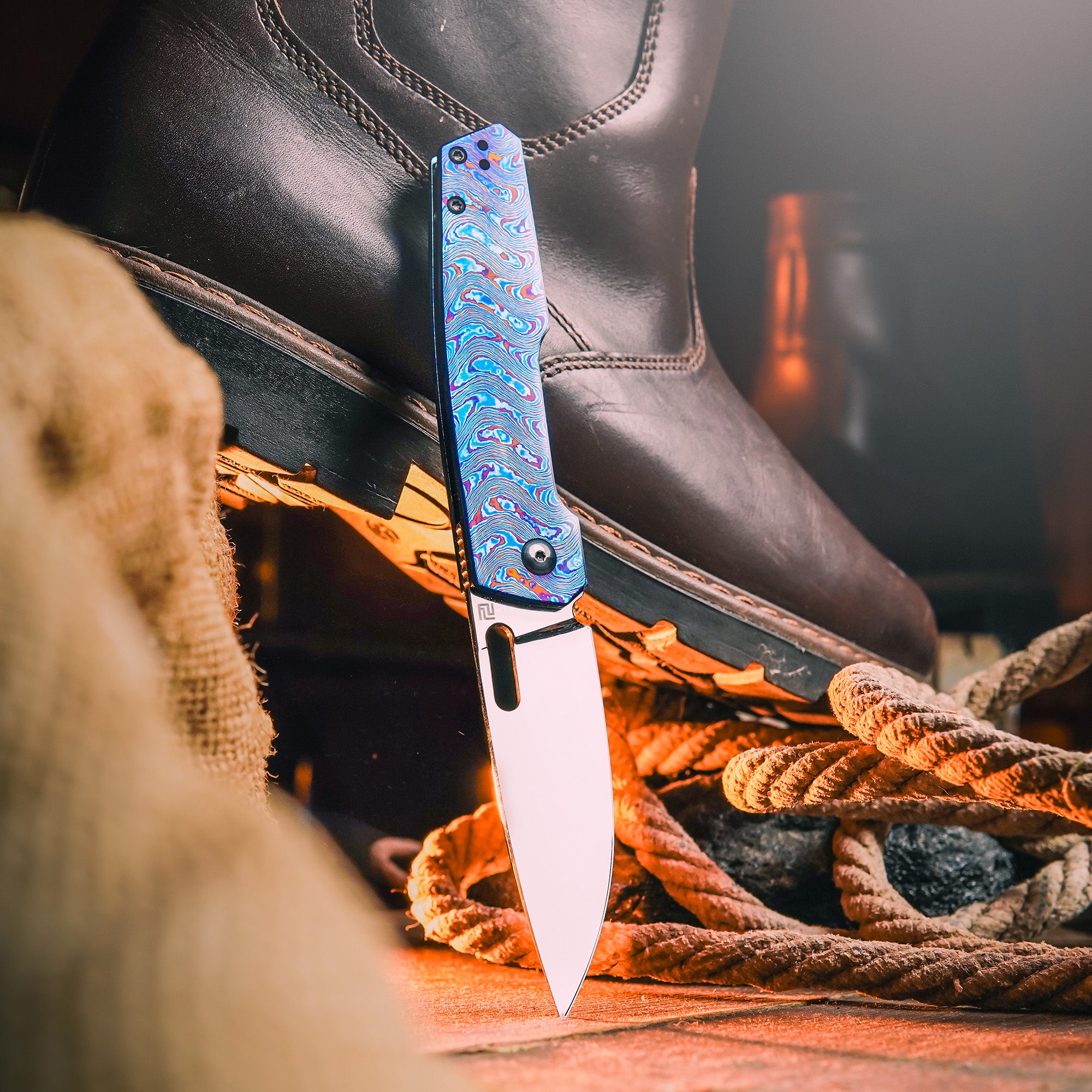
The Artisan Cutlery Satyr is one of the brand's most anticipated collaborations in recent memory: a design by Chris Ortiz of Cerberus Knives, refined over time and released across a small family of premium frame locks. Every Satyr shares the same compact 3.35-inch drop-point platform, but the family spans five live editions and two very different steels, from an accessible AR-RPM9 build at $89.99 to sand-polished, sand-blasted and black-coated S90V editions at $199.99. If you want to understand how one clean knife design scales from value titanium to edge-retention flagship, the Satyr family is a compact, readable case study.
The Satyr family spans two steels and five finishes on one titanium frame-lock platform.
Why the Satyr Platform Stands Out
Chris Ortiz has spent years building a reputation for refined, detail-obsessed designs at Cerberus Knives, and the Satyr is the result of that process applied to a production folder. Artisan's own catalog copy calls the Satyr one of its most highly anticipated collaborations, and notes that Ortiz took the time to refine the original version of the design before release, turning it into what the brand describes as a refined, clean profile built for premium performance. That background matters for buyers: this is not a rushed badge-engineering exercise but a design that was already developed and then reworked for a wider release.
The Satyr reads exactly as Ortiz intended: a flat-ground drop point, thin titanium scales with a machined micro-texture for grip, and a snappy action on ceramic ball bearings. Artisan describes the knife as combining artistry, design and functionality in a pocket-friendly package, and the spec sheet backs that up. Every Satyr edition uses the same verified geometry:
- Blade: 3.35 in (85 mm) drop point, 0.13 in (3.2 mm) stock, flat grind
- Overall length: 7.76 in (197 mm); closed length 4.41 in (112 mm)
- Lock: frame lock on every edition
- Pivot: ceramic ball bearing assembly
- Weight: 109 g (3.85 oz) on the S90V editions; 117 g (4.13 oz) on the AR-RPM9 edition
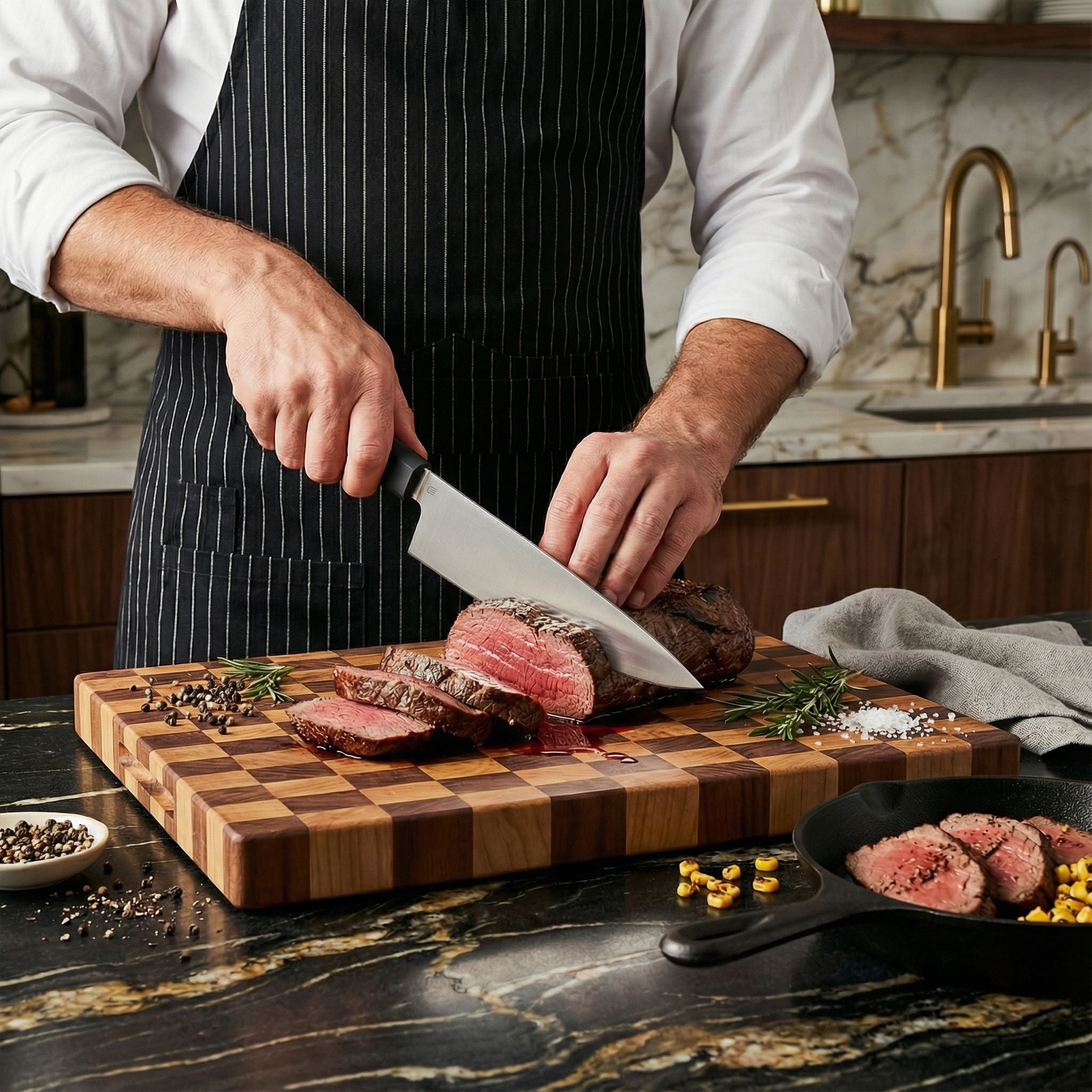
A 3.35-inch drop point is the classic everyday-carry sweet spot: long enough for food prep, package opening, rope and cardboard work, short enough that the knife disappears into a pocket at a 4.41-inch closed length. Drop-point geometry gives you a strong tip with a useful belly for slicing, which is why it remains the most popular blade profile in the EDC world. Because the platform never changes across the Satyr lineup, the family is an unusually clean comparison of steel and handle choices. Pick the AR-RPM9 edition and you get the same blade geometry, the same frame lock and the same bearing pivot as the S90V flagships, at less than half the price. That kind of material-ladder transparency is exactly what makes a family guide useful.
A Frame Lock on Every Edition
Every Satyr uses a frame lock, the mechanism where one side of the titanium handle flexes inward to lock the blade tang into place. The frame lock has been a staple of premium titanium folders for decades because it is strong, simple, has few moving parts to fail, and keeps the handle clean on the show side. Artisan pairs it here with a ceramic ball bearing pivot, which is what gives the Satyr its smooth, snappy opening action. On the S90V editions the clip is titanium to match the frame; on the AR-RPM9 edition Artisan fits a steel clip, a small but sensible cost saving that does not change the carry experience.
For a full explanation of how frame locks compare with liner locks, button locks and crossbar-style mechanisms, our lock strength comparison is a good starting point, and the mechanism itself is documented in depth on Wikipedia. The practical takeaway for the Satyr is that the lock choice is consistent across the whole family, so the differences between editions come down to steel, finish and handle texture rather than mechanism.
The Satyr Steel Ladder: AR-RPM9 and S90V
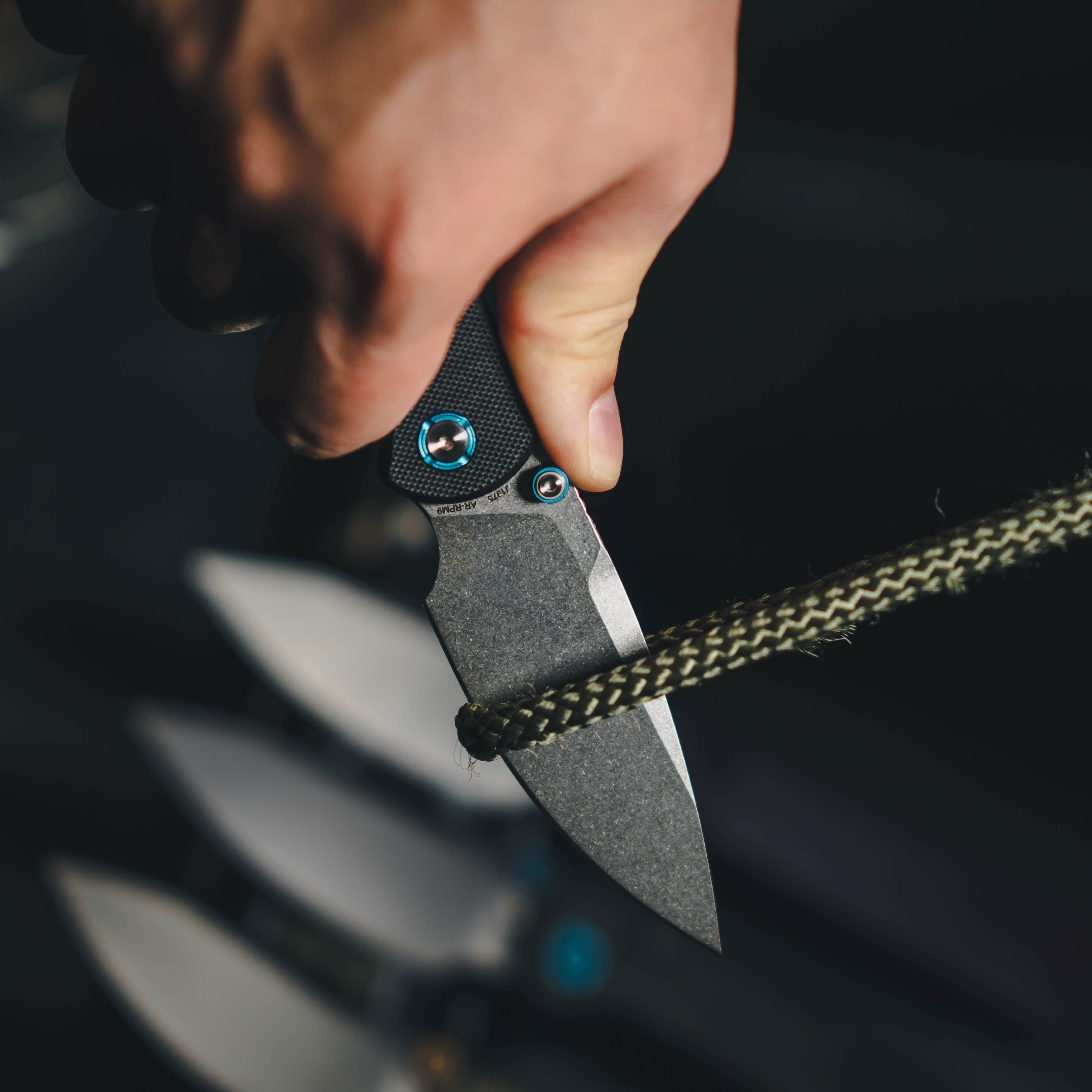
The two Satyr steels sit at opposite ends of Artisan's own material spectrum. AR-RPM9 is Artisan's in-house powder metallurgy stainless, formulated for a balance of edge retention, toughness and corrosion resistance at an approachable price, and it is the steel behind most of the brand's budget-to-mid G10 and titanium lines. On the Satyr it runs at HRC 59-61. The other side of the family uses Crucible's CPM S90V, a high-vanadium powder steel famous for extreme edge retention, heat treated here to HRC 60-62. Our AR-RPM9 steel explainer and our S90V guide break down both alloys in detail, including composition and sharpenability.
In practice the choice is a trade-off between value and ultimate edge life. The AR-RPM9 Satyr is easier to sharpen, tough enough for hard daily use, and costs $89.99, while the S90V editions hold an edge dramatically longer and reward a careful touch on the stones. S90V is produced by Crucible Industries, the powder metallurgy specialist behind most of the super-steels in this class, and it appears across the premium end of the Artisan Cutlery catalog, from titanium frame locks to limited editions. The flip side of S90V's huge edge-retention numbers is that it asks more of your sharpening setup when the edge finally dulls; a guided system or diamond abrasives make the job manageable, a subject covered in detail on Science of Sharp.
Corrosion behavior is a smaller differentiator here than between stainless and non-stainless steels, because both AR-RPM9 and S90V are stainless alloys. Either Satyr is a reasonable choice for humid climates or sweaty-pocket summer carry, though no steel is maintenance-free, and a light oil film after hard use is always good practice.
Every Satyr Edition at a Glance
The five editions below are the complete active Satyr lineup, with prices pulled from the live catalog:
| Edition | Blade | Handle and clip | Weight | Price |
|---|---|---|---|---|
| 1852T-AR | AR-RPM9, HRC 59-61, sand-polished drop point | Titanium, steel clip | 117 g / 4.13 oz | $89.99 |
| 1852G-GY | S90V, HRC 60-62, sand-polished drop point | Textured titanium, titanium clip | 109 g / 3.85 oz | $199.99 |
| 1852G-ODG | S90V, HRC 60-62, sand-polished drop point | OD green micarta and titanium, titanium clip | 109 g / 3.85 oz | $199.99 |
| 1852G-BGY | S90V, HRC 60-62, sand-blasted drop point | Titanium, titanium clip | 109 g / 3.85 oz | $199.99 |
| 1852G-BBO | S90V, HRC 60-62, black-coated stonewash drop point | Titanium, titanium clip | 109 g / 3.85 oz | $199.99 |
Availability shifts quickly on small-batch releases, but at the time of writing the 1852T-AR, 1852G-ODG and 1852G-BBO were in stock while the sand-polished and sand-blasted titanium S90V editions were sold out. The S90V editions carry a $266.66 reference price in the catalog, which puts the $199.99 ask in context for a titanium frame lock in this steel class. Watch the individual product pages if a specific finish matters to you, because the sold-out editions tend to return in batches.
Which Satyr Should You Carry?
The right Satyr depends mostly on budget and how much edge life you need:
- If you want the full Satyr design at minimum cost, the 1852T-AR is the entry point: a real titanium frame lock with the same geometry, ceramic bearings and drop point for $89.99.
- If edge retention is everything, any S90V edition wins, and the machined-texture titanium of the 1852G-GY is the most distinctive of the group.
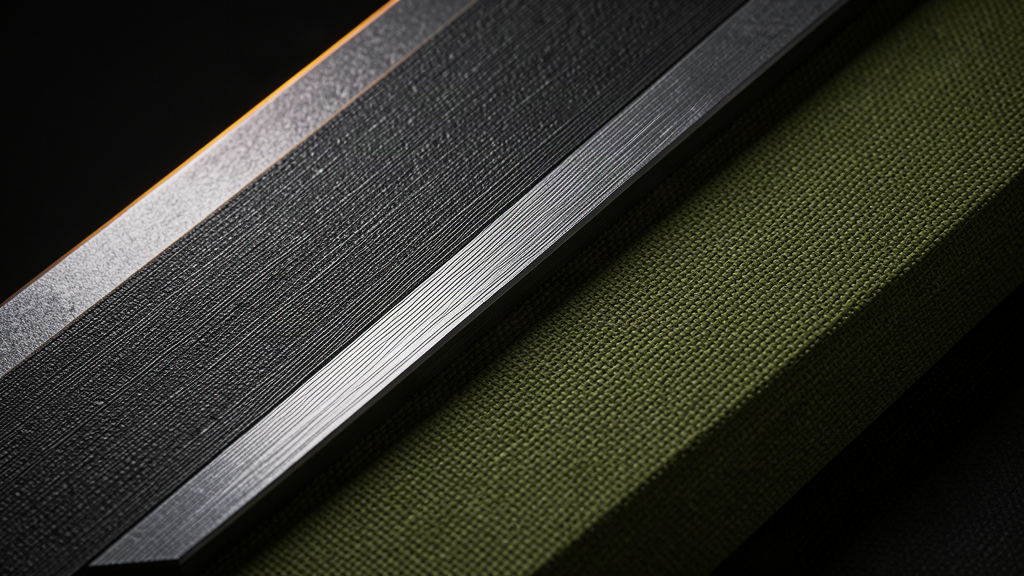
- If you prefer warmer, grippier handle material, the 1852G-ODG pairs S90V with OD green micarta and titanium, and micarta develops character with age as we cover in our micarta handle guide.
- If you want a low-glare, hard-use look, the 1852G-BBO carries a black-coated stonewash blade that hides wear and reflections well.
- If you are a collector chasing the full set, the sand-blasted 1852G-BGY rounds out the finish range alongside the sand-polish and black-coated options.
All five Satyrs are titanium-handled frame locks, so the lock-up character and the carry feel are consistent across the family; what changes is steel, finish and handle texture. That makes the Satyr one of the easiest Artisan families to choose from once you have settled on a budget. If you are weighing the Satyr against other premium titanium folders in the Artisan catalog, our roundup of the best Artisan Cutlery titanium folding knives places it in context against the Sirius, Tomahawk and Proponent lines.
Satyr Care Notes
Titanium frames are corrosion-resistant and need little more than a wipe down, while the S90V blades benefit from light oiling after use near salt or moisture. If you carry the micarta edition, expect the canvas scales to darken and take on a lived-in patina over months of pocket time; that is normal and part of the appeal. The black-coated stonewash blade of the 1852G-BBO is the most forgiving finish of the family when it comes to visible scratches, while the sand-polished and sand-blasted S90V blades will pick up a honest working patina of fine marks over time. None of that affects function, and it is the kind of wear that gives a well-carried knife its story. One note for first-time titanium owners: the frame lock will settle in over the first few hundred openings, and if the action ever feels gritty, a drop of light pivot oil and a few dozen open-close cycles usually restore that factory-smooth ceramic bearing feel without any disassembly.
Explore the full lineup of premium folders — including the Satyr 1852 family — in the Artisan Cutlery folding knife collection, built for reliable everyday carry.

Leave a comment
This site is protected by hCaptcha and the hCaptcha Privacy Policy and Terms of Service apply.