

Why Lock Strength Matters for Your EDC Knife
The locking mechanism is arguably the most important safety feature on a folding knife. It keeps the blade securely open during use and prevents accidental closure that could cause injury. But not all locks are created equal — different designs offer different levels of strength, reliability, and real-world performance.

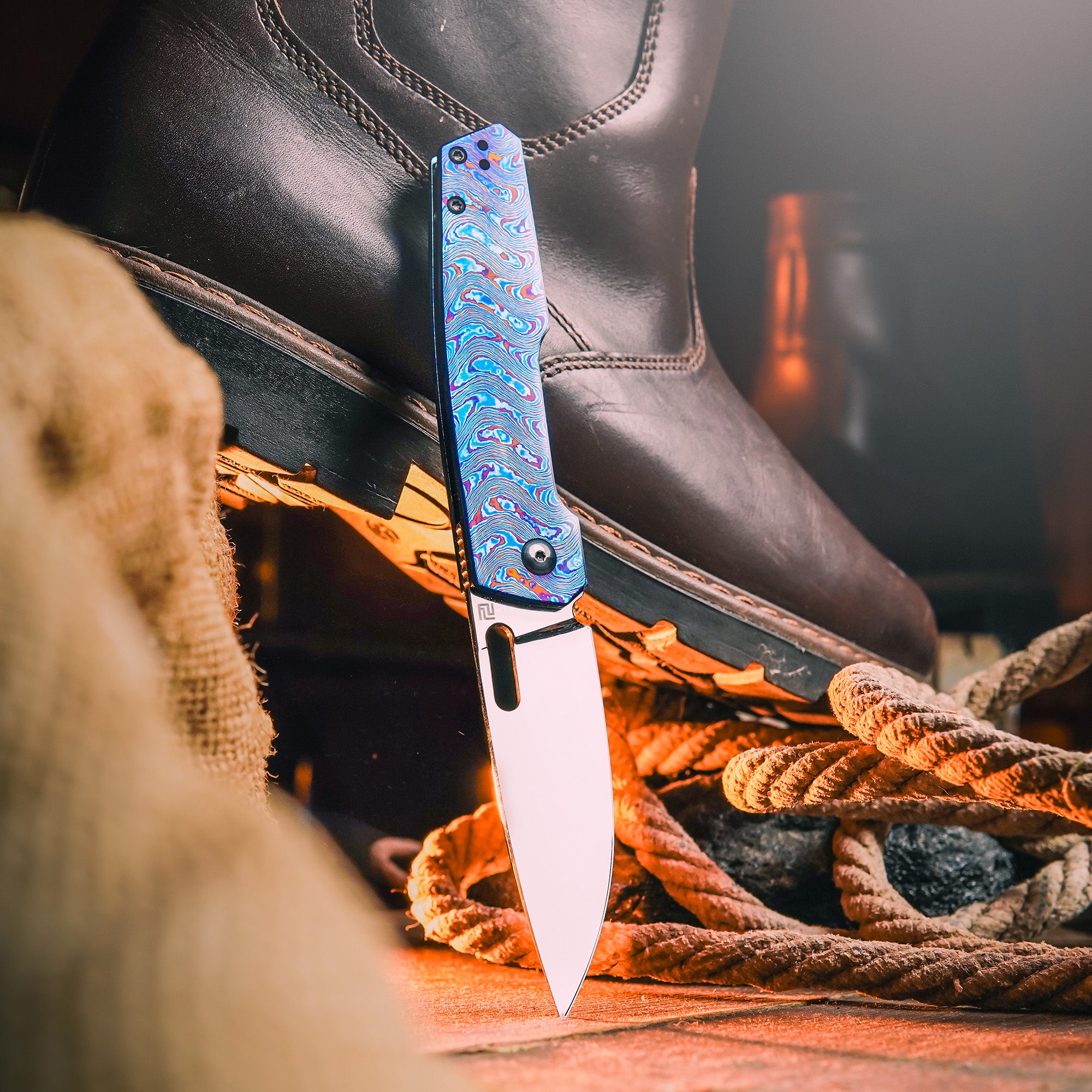
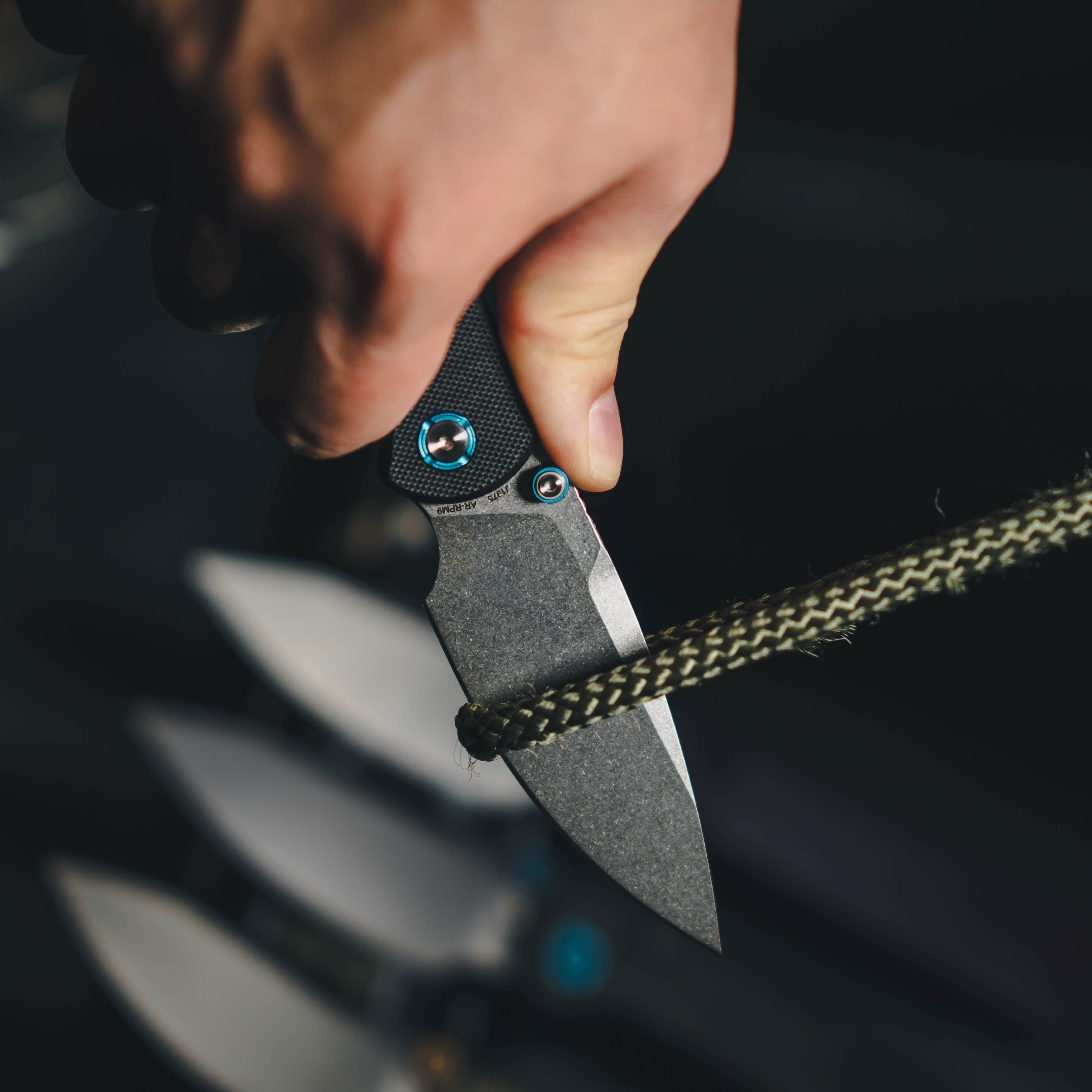
Folding knife lock mechanisms vary in strength — frame locks, button locks, and crossbar locks each have different performance characteristics.
In this comparison, we break down the strength characteristics of the five most common folding knife lock types: liner locks, frame locks, button locks, crossbar locks (often called Axis-style locks), and lock back mechanisms.
Frame Lock (Integral Lock)
The frame lock is a one-piece design where a cutout section of the handle itself — typically titanium or stainless steel — presses against the blade tang to lock it open.
- Strength: Excellent. The lock bar is part of the handle structure, providing robust engagement.
- Durability: Very high. Few moving parts means fewer failure points.
- Wear resistance: Steel lock bar inserts (steel lock face insert) improve longevity on titanium frame locks.
- Common on: Premium knives with titanium handles
Frame locks are among the strongest commercially available lock types. When designed with a hardened steel insert at the contact point, a titanium frame lock can withstand substantial lateral force without failing.
Button Lock
The button lock uses a spring-loaded plunger that engages with the blade tang. Pressing the button retracts the plunger, releasing the blade.
- Strength: Very good. The plunger engages with a deep cutout in the tang for positive lock-up.
- Durability: High. Simple mechanism with few components.
- Action: Smooth and intuitive; allows one-handed closing
- Common on: Modern EDC knives, especially China-made production knives
Button locks have gained significant popularity in recent years. When well-executed, the lock face geometry provides strong engagement. The main consideration is spring quality — a weak spring reduces engagement force over time.
Crossbar Lock (Ambidextrous Lock)
Popularized by Benchmade's Axis lock, the crossbar lock uses a spring-loaded bar that slides back and forth across the blade tang. Pulling the bar back releases the blade.
- Strength: Very good to excellent. The bar engages with two omega springs and locks on both sides of the tang.
- Durability: Good. Omega springs can break over time but are user-replaceable.
- Ambidexterity: Excellent. Fully ambidextrous by design.
- Common on: Production and mid-range knives
The crossbar lock's dual-sided engagement distributes force evenly, making it one of the strongest lock types. The primary failure mode is spring breakage, which renders the knife inoperable until replaced.
Liner Lock
The liner lock is the most common folding knife lock. A thin metal liner inside the handle pivots against the blade tang to hold it open.
- Strength: Good. Adequate for most EDC tasks but less robust than frame or button locks.
- Durability: Moderate. The thin liner can be over-extended if forced.
- Action: Simple and reliable when properly tuned
- Common on: The most widely used lock across all price ranges
Liner lock strength depends heavily on liner thickness and material. A 0.050-inch steel liner provides adequate strength for normal cutting tasks. Thicker liners (0.060-inch and up) offer additional safety margin.
Lock Back (Spine Lock)
The lock back mechanism uses a notched bar (rocker bar) along the spine of the handle that engages with a notch in the blade tang. A release button at the handle's spine disengages the lock.
- Strength: Excellent. The locking bar is thick and engages deeply into the tang.
- Durability: Very high. Simple, robust mechanism with few parts.
- Action: Requires pinching the release; one-handed closing is more difficult.
- Common on: Traditional and outdoor folding knives
Lock back mechanisms are among the strongest ever made. The deep engagement and robust construction make them resistant to failure under heavy use. The trade-off is that closing requires both hands on most designs.
Lock Strength Comparison Table
| Lock Type | Relative Strength | One-Handed Close | Ambidextrous | Common Failure |
|---|---|---|---|---|
| Frame Lock | ★★★★★ | Yes | Partially | Lock stick, bar wear |
| Lock Back | ★★★★★ | Challenging | Yes | Rocker bar notch wear |
| Button Lock | ★★★★ | Yes | Yes | Spring wear |
| Crossbar Lock | ★★★★ | Yes | Yes | Omega spring breakage |
| Liner Lock | ★★★ | Yes | Partially | Over-extension, wear |
Choosing the Right Lock for Your Needs
For most everyday carry cutting tasks, any of these locks provides adequate strength. The choice comes down to how you prioritize different factors:
- Maximum strength: A frame lock with a steel insert or a lock back mechanism offers the highest level of structural integrity.
- Fidget factor and ease of use: Button locks and crossbar locks are the most satisfying for one-handed operation and quick deployment.
- Ambidexterity: Crossbar locks and button locks offer the best experience for left-handed users.
- Simplicity and reliability: Liner locks are the easiest to maintain and repair if something goes wrong.
For a look at knives featuring various lock types, visit Artisan Cutlery's folding knife collection to explore modern locking mechanisms in action.



Leave a comment
This site is protected by hCaptcha and the hCaptcha Privacy Policy and Terms of Service apply.