

Understanding Butterfly Knife Construction
The butterfly knife, known properly as a balisong, is one of the most mechanically distinctive folding knife designs. Unlike conventional folding knives that rely on a spring or detent to stay closed, the balisong uses a unique two-handle pivoting system that rotates around the blade tang. Understanding butterfly knife anatomy is essential for anyone who owns, maintains, or collects these iconic knives. This guide breaks down every component — from tang pins to pivot bushings — and explains how they work together.

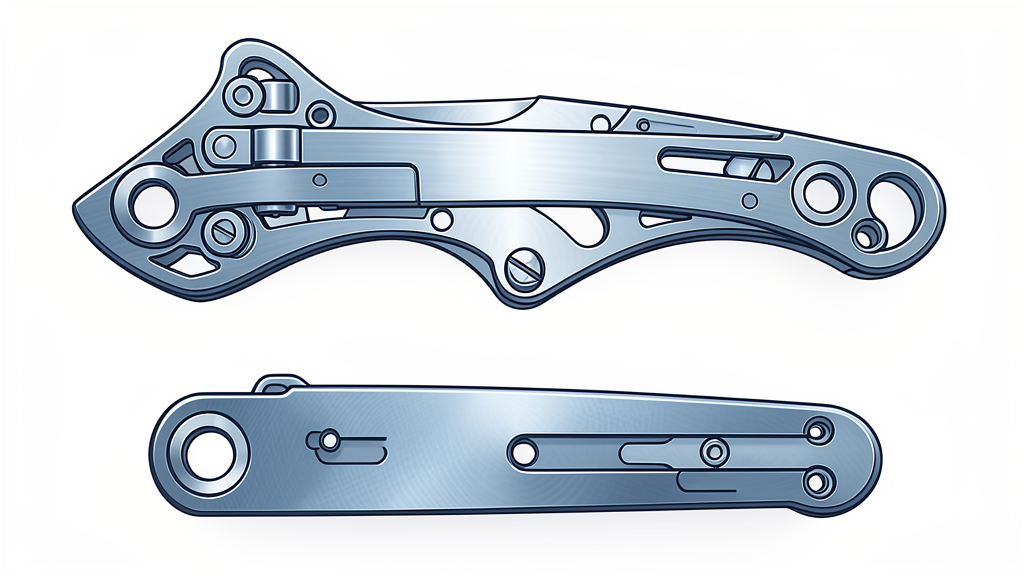
Balisong tang pins and zen pins serve as the stopping mechanism in butterfly knives.
Blade: The Core Component
The blade of a balisong is fundamentally different from standard folding knife blades. It features a tang — the unsharpened portion that extends into the handles — with specific cutouts and pin locations that control the knife's opening and closing action. Tang shapes vary between manufacturers and affect how the knife flips. Common tang styles include:
- Full tang: The tang spans the full width between the handles, offering maximum strength but heavier weight.
- Skeletonized tang: Cutouts in the tang reduce weight without sacrificing critical structure.
- Crown tang: A decorative scalloped or curved tang profile often found on higher-end balisongs.
The blade tang is where the pivot pin sits and where tang pins (or zen pins) make contact during opening and closing. The spine of the blade — the unsharpened top edge — may include a swedge (a decorative false edge) or jimping for traction.
Handles: Channel vs. Sandwich Construction
Balisong handles come in two primary construction styles, each with distinct characteristics:
| Feature | Channel Construction | Sandwich Construction |
|---|---|---|
| Construction | Single piece of metal milled into a channel shape | Two flat slabs held together by standoffs or pins |
| Strength | More rigid, less flex | Can flex under heavy use |
| Weight | Heavier | Lighter, can be skeletonized |
| Maintenance | Harder to clean internally | Easier to disassemble and clean |
| Flip feel | Solid, predictable | Lighter, faster |
Handle materials range from stainless steel and titanium to aluminum and G10. Titanium handles are prized in premium balisongs for their strength-to-weight ratio and the ability to be anodized in custom colors.
Pivots: The Mechanical Heart
The pivot system determines how smoothly a balisong opens and closes. Three main pivot types exist in butterfly knives:
- Normal pin pivots: A screw or pin through the tang around which the handles rotate. Simple and durable but can loosen over time without threadlocker.
- Bushing pivots: A precision bronze or steel bushing sits between the blade and the handles, creating a consistent gap. Bushing balisongs offer the best combination of smooth action and minimal blade play, which is why they are preferred by serious flippers.
- Bearing pivots: Caged ceramic or steel bearings sit in a race around the pivot. Bearing balisongs are exceptionally smooth but require more maintenance to keep debris out of the bearings.
Tang Pins and Zen Pins: Stopping Mechanisms
A critical distinction in butterfly knife anatomy is how the knife's open and closed positions are secured. Two systems exist:
Tang pins are pins permanently pressed into the blade tang. When the handles rotate to the open position, the tang pins contact the handles, stopping rotation and locking the blade into alignment. In the closed position, the tang pins rest between the handles. Tang pin systems are durable and simple but require precise pin placement during manufacturing.
Zen pins (also called hidden pins) are pins mounted in the handles themselves rather than the blade. When open, the zen pins contact the blade tang to stop rotation. Zen pin balisongs often have cleaner tang lines since the tang itself has no protruding pins. However, if a zen pin breaks, it requires handle disassembly to replace.
Latch Types: Keeping It Closed
The latch is what holds a balisong closed when not in use. Common latch designs include:
- Spring latch: Uses a spring-loaded rotating or sliding mechanism. Convenient for one-hand closing but can wear out or rattle.
- Channel latch: A simple flat piece of metal that rotates between the handles. More traditional and less prone to failure.
- Latchless: No dedicated latch system. The knife relies on handle tension or magnetic closure. Popular with experienced flippers who prefer the cleanest flipping feel.
Handle Liners and Spacers
In sandwich-construction balisongs, liners sit between the handle slabs to create the channel for the blade. Spacers or standoffs maintain the gap between handles. These small components significantly affect the knife's balance point and flipping characteristics. Titanium and brass spacers are common in premium models, while aluminum and G10 are found in budget-friendly options.
The position and weight of spacers determine whether a balisong is handle-heavy (easier to flip) or blade-heavy (faster, more momentum-based). Most production balisongs aim for neutral or slightly handle-heavy balance.
Understanding Your Balisong's Anatomy
Being familiar with your butterfly knife's construction helps you maintain it properly and choose future purchases wisely. Whether you prefer the solid feel of channel construction, the smooth action of bushing pivots, or the simplicity of tang pins, knowing what each component does makes you a more informed owner.
For a general overview of knife mechanics and blade design, Wikipedia provides solid reference material on knife anatomy and the history of folding knife mechanisms.



Leave a comment
This site is protected by hCaptcha and the hCaptcha Privacy Policy and Terms of Service apply.