



A balisong — commonly called a butterfly knife — is one of the most distinctive folding knife designs in the world. Its two rotating handles that conceal the blade when closed set it apart from every other folding mechanism. But with dozens of models ranging from $20 trainers to $500 premium knives, knowing what to look for in your first balisong can be overwhelming. This buying guide breaks down the essential factors: handle materials, blade steel, pivot construction, and what separates a beginner-friendly balisong from an advanced flipper.

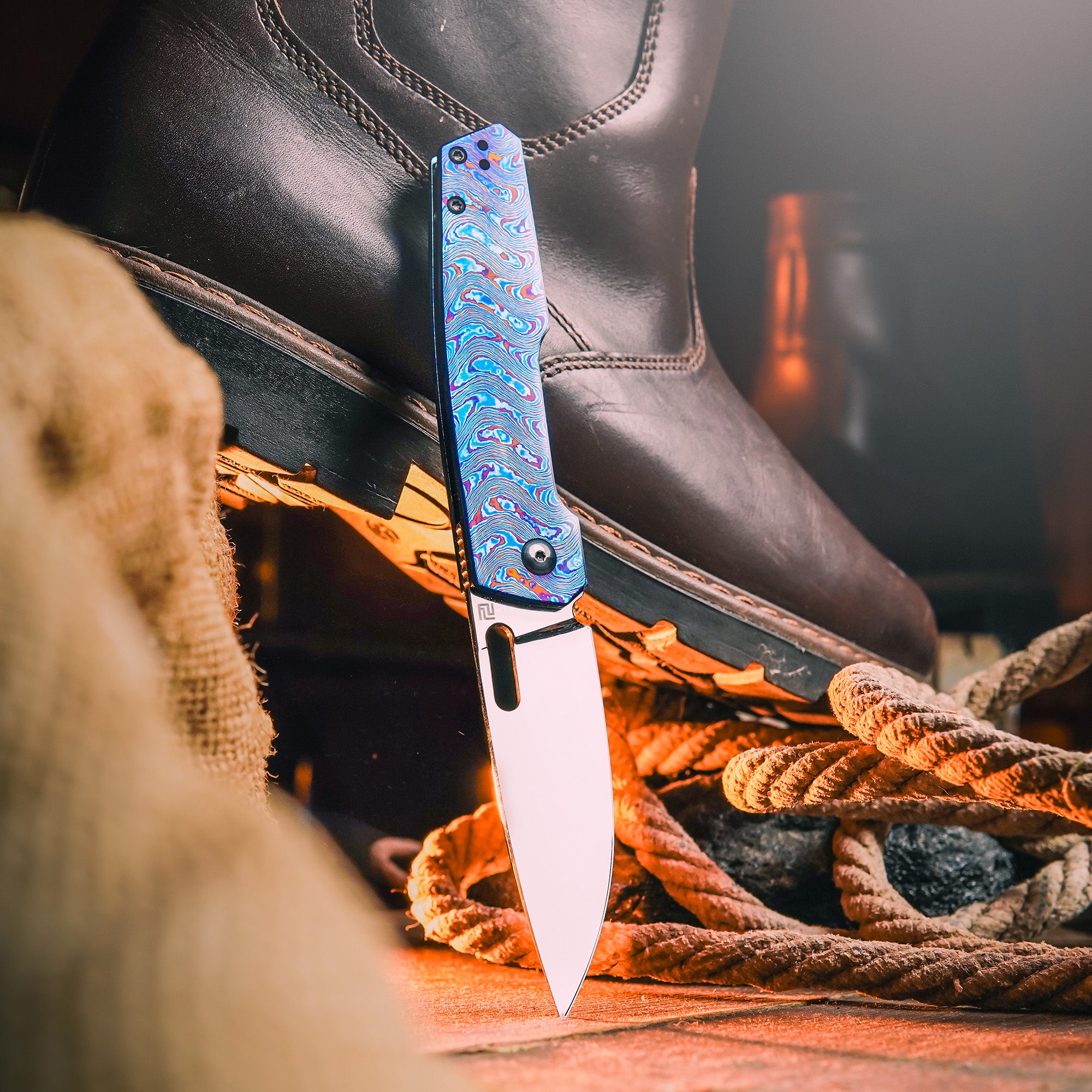
Quality handle materials and adjustable pivot systems separate premium balisongs from budget models
Trainer vs Live Blade: Where to Start
Every balisong journey should begin with a trainer. Trainer balisongs feature an unsharpened blade profile — usually with visible holes or a distinct shape that makes it clear the blade is not live. This allows new flippers to practice opening and closing maneuvers, learn basic aerials, and build muscle memory without risk of injury. Most experienced flippers recommend spending at least one to two months on a trainer before graduating to a live blade. A quality trainer costs between $30 and $80 and can save you from painful mistakes during the learning phase. Budget for both a trainer and a live blade if you plan to progress beyond basic opens.
Handle Material Comparison
| Material | Weight | Grip | Durability | Price Range |
|---|---|---|---|---|
| Titanium | Light (2-3 oz) | Moderate | Excellent | $100-$500+ |
| Aluminum | Very light (1.5-2.5 oz) | Good | Good | $50-$200 |
| G10 | Light (2-3 oz) | Excellent textured | Very good | $40-$150 |
| Stainless Steel | Heavy (4-6 oz) | Good | Excellent | $30-$100 |
Titanium handles offer the best all-around performance for serious flippers — light enough for extended practice sessions, durable enough for drops, and they accept anodizing for customization. Beginners often prefer aluminum or G10 for their lighter weight and lower cost, while stainless steel provides the most affordable entry point at the cost of additional weight.
Pivot Quality and Action
The pivot system is arguably the most important mechanical component of a balisong. Cheap balisongs use fixed pivots that cannot be adjusted, leading to blade rub and inconsistent action. Quality balisongs feature adjustable pivot screws with bearings or phosphor bronze washers that allow fine-tuning of handle tension. Look for models with stainless steel or titanium pivot hardware — budget models often use soft hardware that strips easily. A properly tuned balisong should swing freely with no blade play, allowing smooth opens and predictable flips.
Blade Steel Considerations
For trainers, blade steel matters less — the blade is unsharpened and primarily functions as a weight. For live blades, however, steel choice affects both performance and maintenance. Entry-level balisongs typically use 440C or 8Cr13MoV stainless steel — adequate for occasional use but requiring more frequent sharpening. Mid-range models step up to D2 or 14C28N for better edge retention. Premium balisongs use S35VN, M390, or similar high-end steels that hold an edge far longer and resist corrosion better. Your choice should align with your intended use: occasional pocket carry versus dedicated flipping practice.
Latch and Safety Features
Balisongs use a latch mechanism to keep the handles closed when the knife is stowed. The two main types are spring latches (which automatically engage when closed) and tang pins (which use friction). Spring latches are more secure for pocket carry but can interfere with flipping techniques. Many serious flippers remove or replace their latch for improved balance. Some modern balisongs also include a safety lock that prevents blade deployment when engaged — worth considering if you plan to carry your balisong daily rather than using it exclusively for flipping practice.
Legal Considerations Before Buying
Before purchasing a balisong, check your local knife laws carefully. Many states and municipalities restrict or prohibit possession and carry of butterfly knives. Some jurisdictions distinguish between trainer and live blade models, while others ban both. States like California, Hawaii, and New York have specific restrictions on butterfly knife carry. Always verify current local regulations before making a purchase, especially if you plan to carry the knife rather than use it solely as a flipping trainer at home.
Find your first balisong and explore premium folding knives at the Artisan Cutlery collection, built for reliable everyday carry.


Leave a comment
This site is protected by hCaptcha and the hCaptcha Privacy Policy and Terms of Service apply.