



Few blade designs are as instantly recognizable as the butterfly knife and the karambit. One flips open with a rolling motion of the handles; the other curves around the fist like an extended claw. Both have devoted followings, both are surrounded by myths, and both divide opinion on whether they belong in an everyday carry rotation. Here is a straight comparison of the butterfly knife vs karambit — history, deployment, carry, and legality — so you can decide which iconic design suits you.
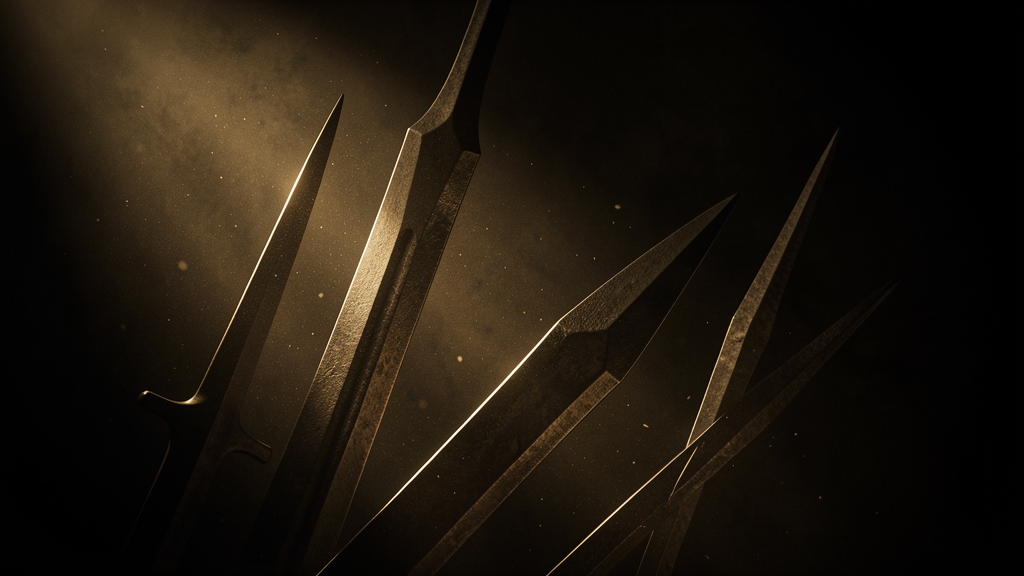
Two contrasting blade philosophies: straight and balanced, curved and hooked
What Is a Butterfly Knife?
A butterfly knife — or balisong — is a folding knife with two handles that rotate around the blade in opposite directions. When closed, the blade is fully concealed between the handles; when open, the handles align to form a single grip. The design is believed to have originated in the Philippines, where it developed as a compact, one-hand-openable tool. See the karambit entry on Wikipedia for the other side of this comparison, and note that the butterfly knife's appeal is as much about the opening action itself as about cutting.
- Two handles that pivot around the blade
- Opens with a practiced flipping motion
- Fully enclosed blade when closed — nothing exposed in the pocket
What Is a Karambit?
The karambit is a curved, claw-like blade inspired by Southeast Asian agricultural and fighting knives. Its defining features are the pronounced forward curve and the finger ring at the rear of the handle, which locks the hand into a natural grip. The curved edge is designed for hooking and slashing motions, and the blade shape makes it a formidable close-quarters design. Unlike the butterfly knife, a karambit typically deploys with a simple thumb or finger flick, and it can be carried in either a folded or fixed-blade format.
- Strongly curved, claw-like blade profile
- Finger ring secures the grip
- Hooking and slashing emphasis rather than straight cutting
Deployment and Carry: Two Very Different Styles
The practical differences show up the moment you reach for either knife:
| Factor | Butterfly Knife | Karambit |
|---|---|---|
| Opening action | Two-handle flip — takes practice | Simple thumb or finger deployment |
| Blade geometry | Straight, dagger-like edge | Strong forward curve, hooking edge |
| Cutting style | Standard push and draw cuts | Slicing and hooking motions |
| Closed profile | Slender, fully enclosed | Compact, ring adds a distinctive tail |
| Learning curve | Steep for smooth flipping | Moderate for grip and technique |
Which Design Fits Your Everyday Carry?
Choose a butterfly knife if you enjoy the action itself — the flip, the balance, the skill — and want a knife that stores its blade completely away when closed. It rewards practice and is a favorite of collectors who treat the knife as a tactile instrument. Choose a karambit if you want an instantly deployable blade with a secure finger-ring grip and a cutting style optimized for curved, hooking strokes. It is also the more common choice for a defensive-oriented carry because of its natural retention in the hand.
Both designs, of course, sit on the more specialized end of the knife spectrum. For most utility tasks — opening boxes, breaking down packaging, general daily cutting — a conventional folding knife with a straight edge remains the most practical everyday tool.
Legality: Check Before You Carry
Laws vary significantly by region. Butterfly knives are restricted or banned outright in several jurisdictions because of their flip-open action, while karambits are generally treated like other knives but can face scrutiny where curved or claw-like blades are regulated. Always verify local knife laws before carrying either design — this is one comparison where the legal answer matters more than the technical one.
If a conventional everyday folder is more your style, explore the Artisan Cutlery folding knife collection for dependable blades built for reliable everyday carry.


Leave a comment
This site is protected by hCaptcha and the hCaptcha Privacy Policy and Terms of Service apply.