

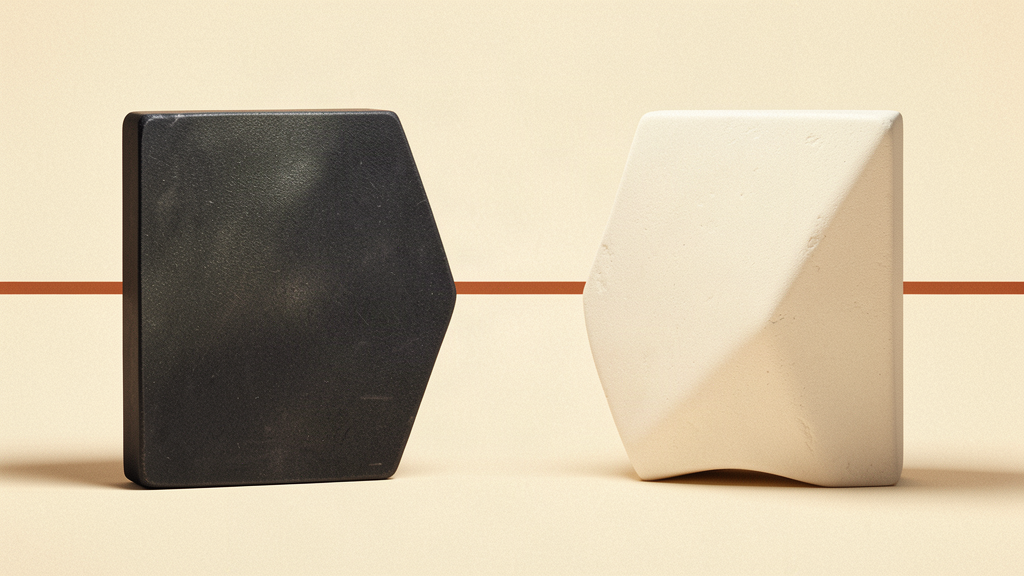
A ceramic blade holds a usable edge far longer than steel when you are slicing boneless food, and it will never rust or leave a metallic taste on a tomato. It also chips instead of bending, and a chip cannot be honed out at home. That one trade-off settles most of the argument: ceramic is a specialist kitchen blade, steel is the general-purpose answer for every kitchen task and for every folding knife you actually carry.
Hardness buys edge life; toughness buys repairability. Almost every knife decision is a trade between the two.
What each material actually is
Ceramic kitchen blades are made from zirconium oxide powder, pressed into a blade shape and fired at high temperature until the particles fuse into one solid piece. There is no grain structure to harden and no temper to protect. The result is harder than any hardened knife steel, completely non-magnetic, and chemically inert, which is why a ceramic blade does not care about lemon juice, salt, or a wet sink.
Steel blades are an iron alloy with carbon, chromium, and often vanadium or molybdenum, hardened and then tempered to trade a little peak hardness for toughness. That word is the whole story. Steel bends and springs back. Ceramic does not bend at all, so the energy that would deform a steel edge has to go somewhere else, and in ceramic it goes into a crack.
Both materials cut the same way at the apex: two planes meeting at an angle measured in microns. The difference is what happens to that apex after fifty meals.
Sharpness is not the same as durability
A steel edge dulls gradually. Abrasive wear rounds the apex, micro-rolling bends it to one side, and corrosion nibbles at the thinnest metal. Because the failure is gradual, a steel knife gives you warning: it starts sliding on tomato skin before it fails on anything. It also responds to a honing rod in thirty seconds, which is why a steel knife can feel sharp for years on almost no maintenance.
A ceramic edge dulls differently. It stays frighteningly sharp for a long stretch and then fails in one event — a micro-chip at the apex, usually from a board that was harder than expected, a twist, or a knock against the sink. You do not get the slow slide into dullness. You get a blade that was excellent last week and now snags.
What that means in practice
If you cook carefully and mostly slice soft things, ceramic's long plateau between sharpenings is a real advantage. If your kitchen is loud — bones, squash, frozen stock, a crowded draining board — the plateau ends early and abruptly.
Ceramic vs steel, side by side
| Property | Ceramic (zirconia) | Steel (stainless) |
|---|---|---|
| Edge life, light slicing | Long, often months of home use | Weeks to months, depending on steel and board |
| How it dulls | Micro-chipping, then sudden failure | Slow wear, rolling, corrosion at the apex |
| Response to impact | Chips or cracks, no recovery | Rolls or dents, usually recoverable |
| Home repair | Diamond abrasives only; chips shorten the blade | Steel, stones, strops, honing rods |
| Corrosion | None | Stain-resistant, not stain-proof |
| Acids and acids in food | No reaction, no taste transfer | Can stain or patina, especially carbon steels |
| Best tasks | Boneless protein, produce, citrus, herbs | Everything, including bone and crust |
| Worst tasks | Bones, frozen food, crusty bread, prying, twisting | Nothing structural; only corrosion and neglect |
| Folding knife use | Rare and fragile | Standard |
Where ceramic genuinely wins
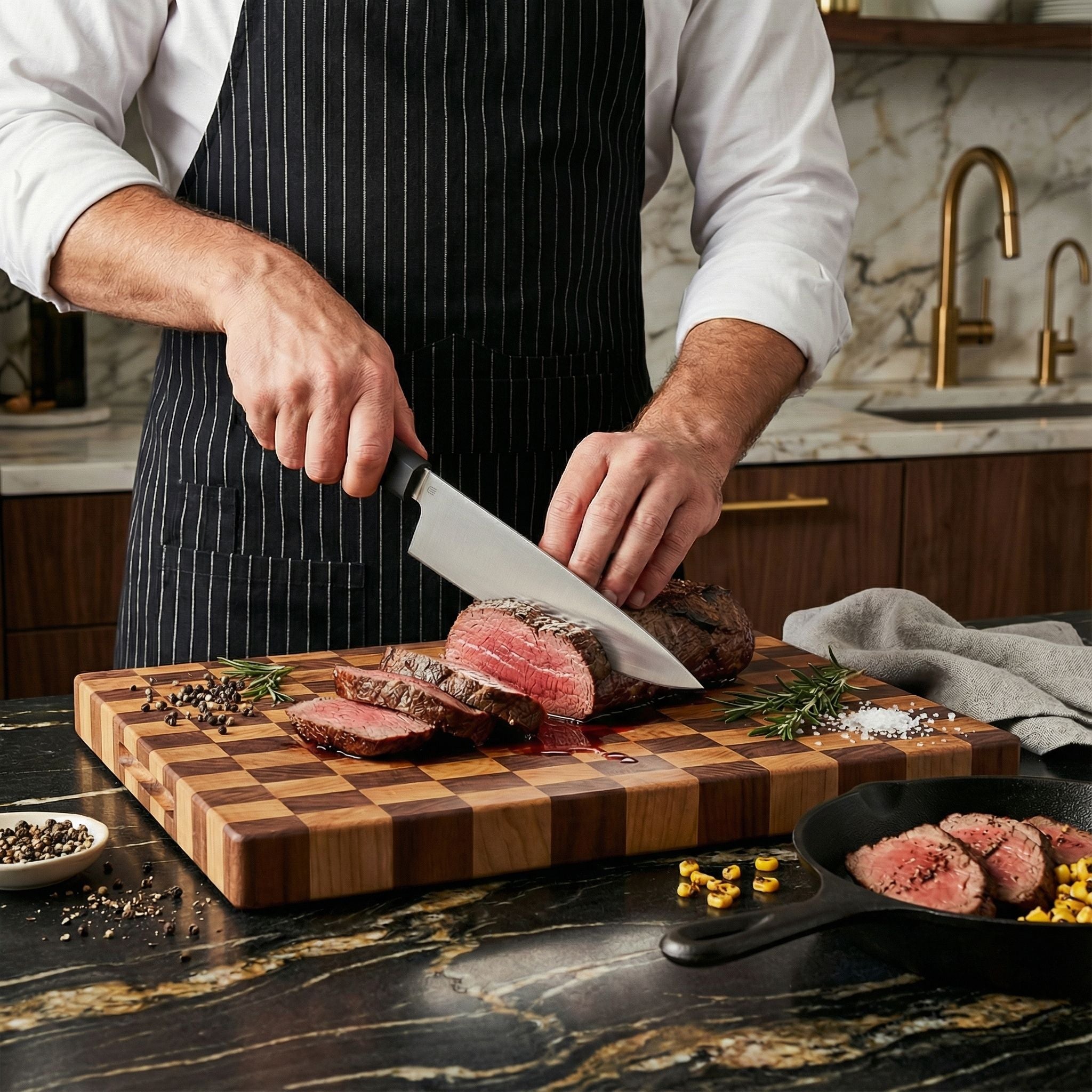
Ceramic is at its best doing the job it was invented for: thin, clean slices of boneless protein and soft produce. It glides through tomatoes and citrus without the acid dulling or staining anything, it does not transfer taste, and it can sit on a board while you cook without a care about moisture. In a household where nobody wants to sharpen anything, a ceramic paring or utility blade will outlast a cheap steel one by a wide margin and still look new.
It is also a good fit for anyone who keeps a knife in a humid kitchen drawer, or who has watched a carbon steel blade spot after one night in the sink.
Cost of ownership over five years
The purchase price of a ceramic blade is usually higher than a comparable steel one, and that gap narrows or flips once you count what happens afterwards. A steel knife needs a stone, a strop, and eventually a professional sharpening if you never learn. A ceramic knife needs almost nothing until it chips, and then it needs a service that costs real money because diamond tooling is the only way to remove material.
So the honest accounting is this: careful cook, no chips, ceramic is cheaper to own. Normal cook, one dropped blade or one bone, and steel pulls ahead because you can fix it yourself for the price of an evening. That is not a knock on ceramic, it is just the shape of the risk.
Ceramic coating is not a ceramic blade
A lot of "ceramic" knives sold online are steel blades with a thin ceramic or titanium-ceramic coating on the surface. The coating is there to reduce friction and staining, and it does neither job for long once the edge is sharpened, because sharpening removes the coating along the bevel. Judge those knives as steel knives with a cosmetic layer, not as ceramic blades, and expect to maintain them with a stone like any other stainless.
Honing versus sharpening on steel
The reason steel feels low-maintenance is that most of what people call dullness is not dullness at all. It is a rolled apex that a honing rod fixes in seconds. Actual sharpening, where steel is removed to form a fresh apex, happens a few times a year in a home kitchen. Ceramic skips the first stage entirely and goes straight from fine to damaged, which is why the two materials feel so different to live with even when both are technically sharp.
Where steel wins, and it wins most of the time
Anything that loads the edge sideways favors steel. Boning a chicken, breaking down squash, cutting crusty bread, chopping chocolate, crushing garlic, or scraping a board all put force into the blade that ceramic cannot absorb. Frozen food is the classic ceramic killer: the blade has to be forced, the edge catches, and a chip appears at the worst possible place, usually mid-blade where you use it most.
Steel also wins on repair. A rolled edge comes back in a minute with a honing rod. A small chip grinds out on a coarse stone in ten minutes. Neither is possible on ceramic at home, and that asymmetry matters more than the theoretical hardness advantage.
For the full range of folding patterns that see this kind of everyday load, see our folding knives collection.
The repair problem, in detail
Ceramic cannot be honed. A honing rod works by pushing a rolled steel apex back into line, and ceramic does not roll, so the rod does nothing except risk chipping the edge. Sharpening requires diamond abrasives, either a diamond plate or a powered diamond wheel, and the removal rate is slow because the material is so hard.
Chips are the harder problem. Removing one means grinding the entire edge back past the deepest damage, which shortens the blade along its whole length, not just at the chip. A single deep chip near the tip can cost a visible amount of blade. Many ceramic makers offer a factory service for exactly this reason; it is usually the right call unless you already own diamond tooling and are comfortable reprofiling a whole bevel.
If you are setting up to maintain steel blades properly, a stone and a strop are the whole kit, and our knife accessories section covers the basics.
Why folding knives are almost never ceramic
A folding knife lives a harder life than a kitchen blade. It gets dropped on tile, used to open a package with a twist, pushed sideways through tape and cardboard, and folded against a pivot that concentrates load at the tang. A thin ceramic blade in that role is a crack waiting for a reason.
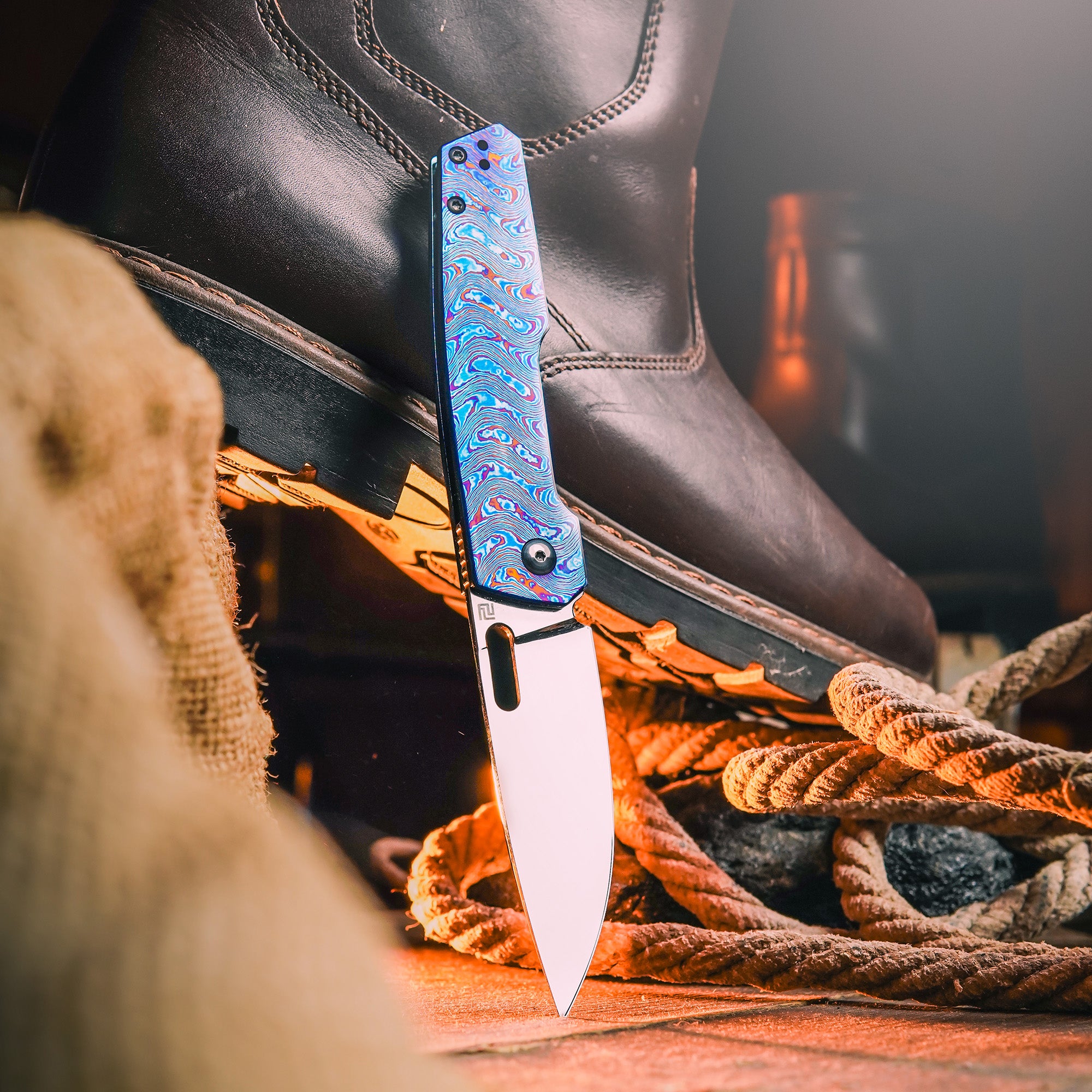
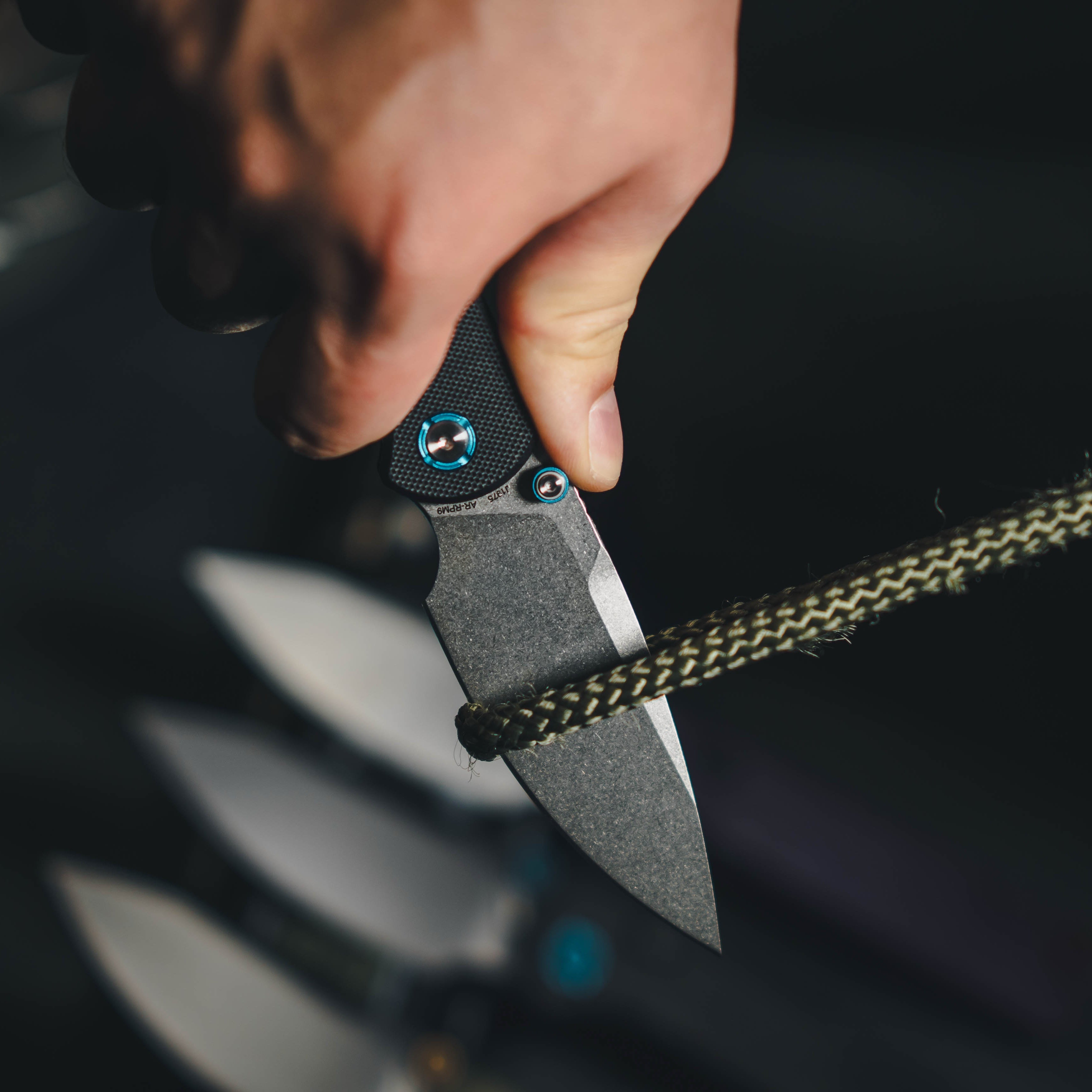
That is why the practical stainless steels dominate folding knives: 12C27 and 14C28N for tough, easy-to-maintain budget blades, S35VN and the M390 family for high wear resistance with enough toughness to survive real use. They are not as hard as ceramic, but they bend, they sharpen, and they forgive a bad afternoon.
How to choose
- Buy ceramic if you slice boneless protein and produce, you want zero maintenance, and you never cut bone, frozen food, or crusty bread.
- Buy steel if you want one knife to do everything, or you plan to sharpen it yourself.
- Do not buy ceramic for a folding knife. The load paths are wrong and the repair cost is high.
- Do buy ceramic as a second blade if you already have a steel chef's knife and want a dedicated tomato and fish slicer.
- Treat ceramic as a cutting tool, not a lever. No prying, no twisting, no scraping the board with the edge.
If your kitchen work runs toward cleavers and heavier prep, the Butcherling is a steel answer to a job ceramic should never be asked to do.
The bottom line
Ceramic holds an edge longer in the narrow band of tasks it is good at, and steel wins everywhere else because it fails softly and repairs cheaply. For a kitchen with one knife and real cooking, buy steel. If you are weighing blade shapes and materials across the whole lineup, our knife types overview is the faster route. For a kitchen with a steel workhorse and a taste for clean tomato slices, ceramic earns its place as the second blade. Background on the material is well covered on Wikipedia's ceramic knife entry, and for what actually happens at the apex during sharpening, Science of Sharp has the microscope work.


Leave a comment
This site is protected by hCaptcha and the hCaptcha Privacy Policy and Terms of Service apply.