
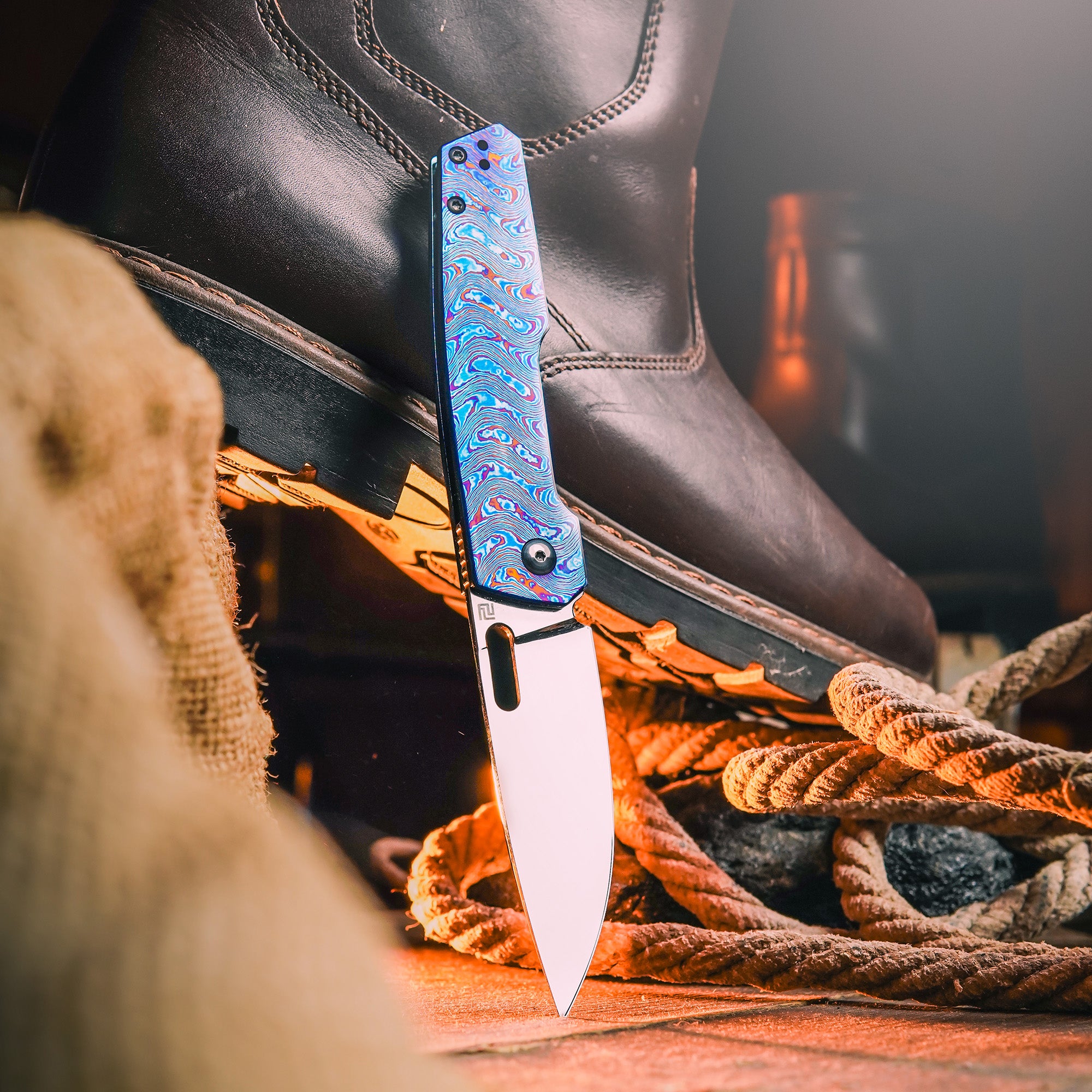
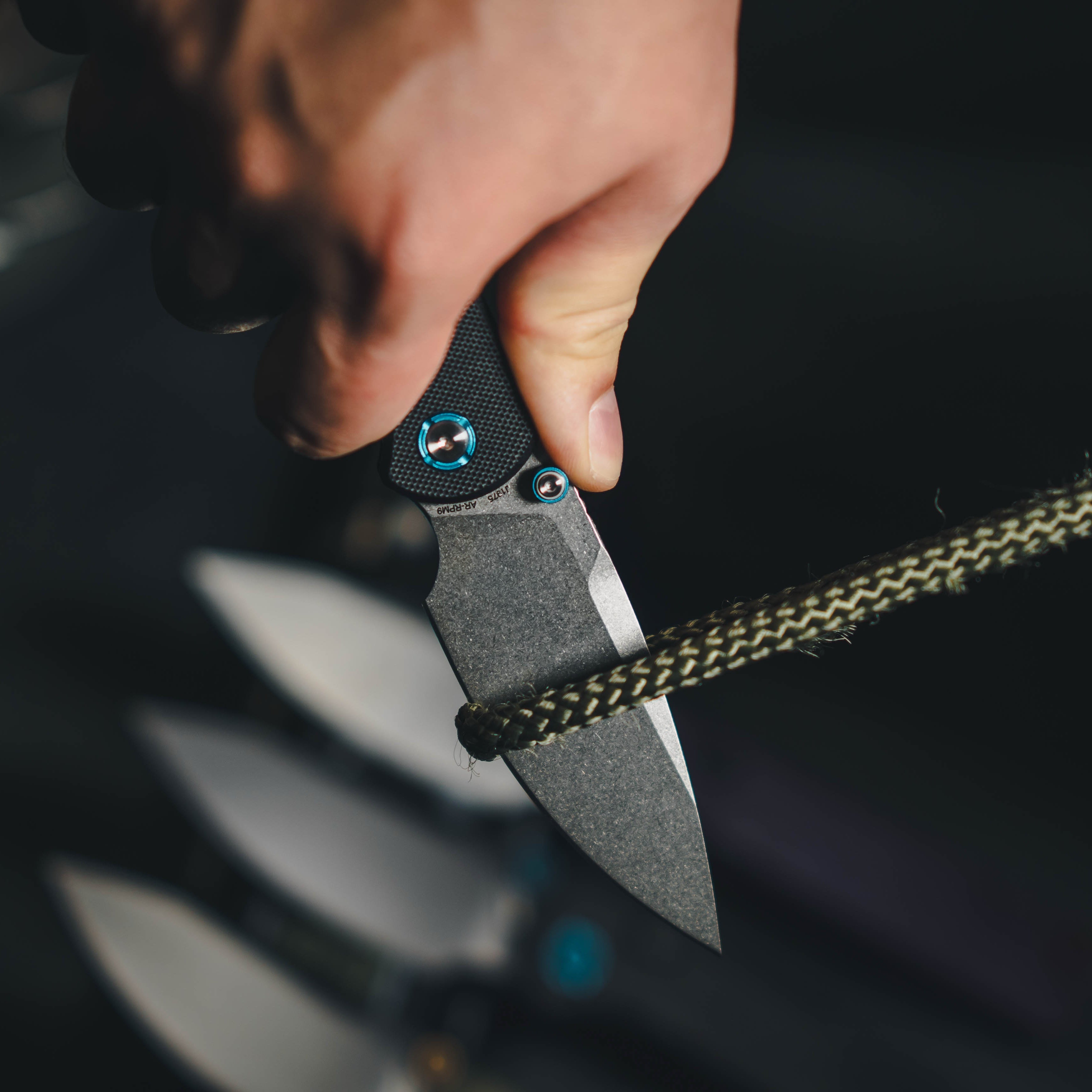
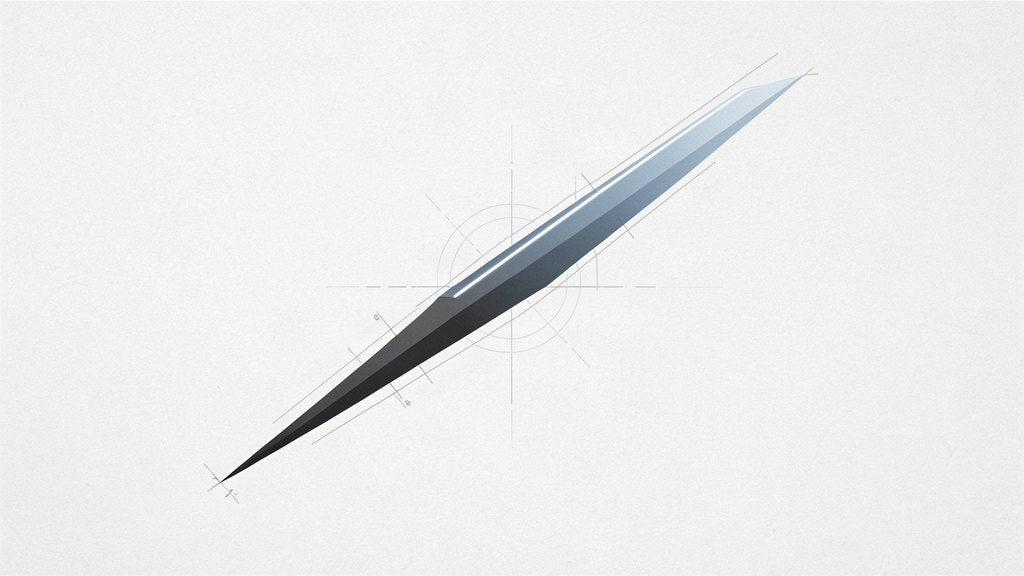
The spine of a knife is the thickest part of the blade, the unsharpened back edge opposite the cutting edge on a single-edged knife. It is the structural backbone of the blade: the part that sets stiffness, gives your thumb a place to rest, and tells you how the grind was cut. On a double-edged blade there is no true back, so the spine sits closer to the middle of the cross-section.
Spine thickness and grind work as a pair: the wedge above the edge sets how a blade behaves.
Most people never think about the spine until they try to press their thumb down on it and find a sharp chamfer, or until a knife that looks sturdy flexes in a deep cut. Here is what the spine actually does, how the common profiles differ, and how to judge one before you buy.
Where the spine sits in the blade
A blade cross-section is a wedge. The edge is the thin end, the spine is the thick end, and the grind is the taper between them. On a flat-ground blade the steel runs from a thick spine down to the edge in a straight or slightly convex line, so the whole blade is a long, thin triangle. On a hollow-ground blade the taper is concave, which makes a thinner edge with a wider bevel but leaves less steel behind the edge.
That geometry explains most of what people call "feel." A thick spine with a shallow grind gives you a blade that will push through dense material without deflecting. A thin spine with a high grind gives you a blade that slices cleanly but flexes under side load. Neither is better; they are answers to different questions.
The four spine profiles you will actually meet
| Profile | What it looks like | Best for | Trade-off |
|---|---|---|---|
| Flat spine | Square, unbroken top edge | Utility work, striking a ferro rod, scraping | Sharp corners dig into the thumb over long sessions |
| Chamfered spine | Angled cuts on the top corners | Comfort, thumb-forward grips | Slightly less bite for striking tasks |
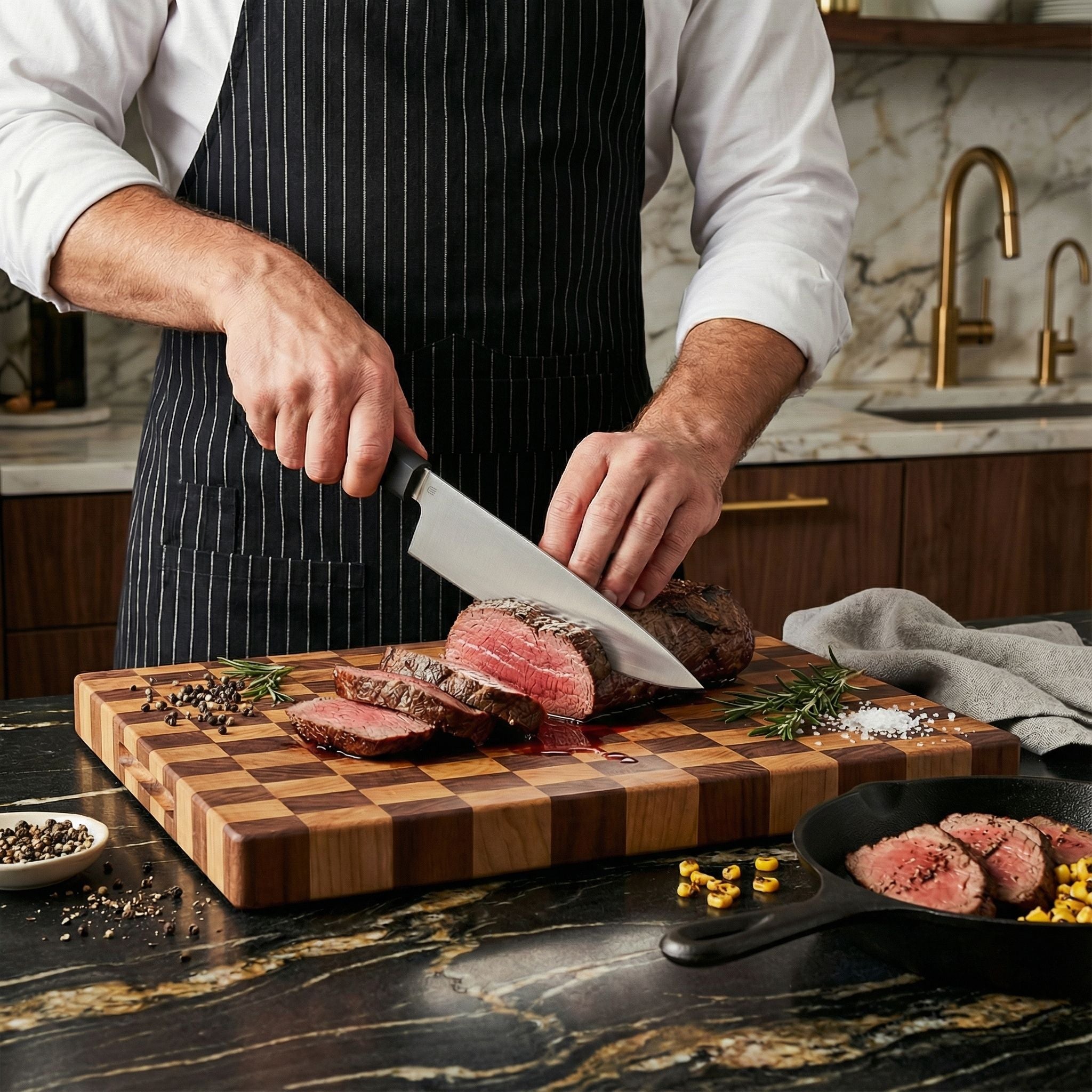
| Rounded (crowned) spine | Convex, polished top edge | Kitchen knives, long slicing sessions | No purchase for striking; can slip under a wet thumb |
| Swedged spine | A false edge or tapered drop near the tip | Piercing cuts, lighter tips, finer point work | Thinner tip, less lateral strength near the point |
A swedge is worth understanding because it is the one spine feature that changes the blade's behavior rather than just its comfort. It removes steel from the top of the blade near the tip, which lightens the front of the knife and gives a finer point. The cost is strength exactly where a thin tip is already weakest, which is why heavy-use blades usually keep a full-thickness spine all the way to the point.
What the spine does for you
It sets stiffness
Stiffness comes from the steel behind the edge, and the spine is where that steel lives. If you are cutting hard material, prying, or working at an angle, a thicker spine keeps the blade from flexing and wandering. If you are slicing soft material, a thin spine cuts with less resistance. This is also why blade thickness at the spine is one of the numbers worth checking before you buy a knife you intend to use hard.
It gives your thumb a home
Most controlled grips put the thumb on the spine, near the base of the blade, where it can push down and act as a depth stop. A flat or chamfered spine with jimping gives you a positive place to put pressure. A polished round spine does not, which is why kitchen knives usually pair a crowned spine with a pinch grip on the blade flats instead.
It is a reference surface
When you lay a knife on a board or a stone, the spine is what keeps the blade at a consistent angle. A straight, square spine also makes it easy to check that a blade is not bent: sight down the spine from the handle and any curve shows up immediately. On a folding knife, the spine line near the pivot also tells you how the blade sits when open, which is a quick way to spot a knife that has been dropped or abused.
It takes tasks the edge should not
Scraping bark, striking a ferro rod, and pushing material aside are all jobs for the back of the blade. Doing them with the edge dulls it fast and rolls the bevel. A square spine is the right tool for them; a thin, sharpened spine is not, which is one reason a sharpened back edge is a poor choice on a working knife.
Spine thickness: what the number means
Spine thickness is measured across the back of the blade, usually at the thickest point near the handle, and it is normally given in millimeters or fractions of an inch. It is not the same as blade width (spine to edge) or stock thickness at the tang, though manufacturers sometimes blur the terms.
As a working rule, thicker spines belong on knives that will see impact and side load, and thinner spines belong on knives that will see slicing. Kitchen knives run thin because the material is soft and the cuts are shallow. Hard-use fixed blades run thick because the loads are not. A folding knife sits in the middle: thick enough to resist flex across the cutout for the lock, thin enough to carry.
If a spec sheet lists a spine thickness that sounds enormous for the blade length, look at the grind before believing it. A 4 mm spine with a high flat grind can cut better than a 3 mm spine with a shallow sabre grind, because the thickness behind the edge is what the material actually feels.
Spine and edge geometry work as a pair
You cannot judge a spine without looking at the grind under it. Three common pairings:
- Thick spine, shallow grind. Strong, splits rather than slices, best on wood and tough material.
- Thick spine, high flat grind. A good all-rounder: stiff enough not to flex, thin enough behind the edge to cut.
- Thin spine, high grind. A slicer. Excellent in the kitchen and on soft material, poor at anything that loads the blade sideways.
This is also where a blade steel choice interacts with geometry. A steel that holds a thin edge well lets you run a thinner spine without losing durability. A tougher steel lets you run a thicker one without making the knife a wedge. Our guides to M390 and S35VN cover how those alloys behave at thin geometry.
Checking a spine before you buy
- Sight down it. Hold the knife edge-down and look along the spine from the handle. Any wave or bend shows up as a wobble in the line.
- Run a thumb along it. A sharp corner is fine for striking and rough for long sessions. A chamfer should be even on both sides.
- Press a straightedge across it. On a fixed blade, a steel rule laid across the spine near the tip should sit flat. If it rocks, the spine is not straight.
- Check the tip taper. A swedge should be symmetrical. An uneven swedge is a sign of rushed grinding and often comes with an off-center tip.
- Look at the plunge line. Where the grind starts near the handle, the spine should still be full thickness. If it thins out there, the blade will flex right where your hand loads it.
Spine care and the burr problem
The spine rarely needs maintenance, but it does collect two things: burrs and rust. A burr on the spine comes from scraping or striking, and it is easy to feel with a thumbnail. Knock it down with a few light strokes of a fine stone laid flat along the spine, keeping the stone square so you do not round the corners.
Rust on the spine is more common than rust on the edge because the spine is often the last place people wipe. On a carbon steel blade, dry the spine first and oil it with the rest of the blade. If you store knives in a sheath, check the spine side of the sheath for trapped moisture; that is where spotting usually starts.
One caution about sharpening: if you sharpen on a guided system that clamps the spine, check the clamp pressure. Over-tightening marks the spine, and deep clamp marks are stress risers on a thin blade. A strip of tape on the spine costs nothing and prevents it.
Matching the spine to the job
For everyday carry, a flat or lightly chamfered spine on a 3 mm-class blade is the most versatile combination. It gives you a thumb rest, a striking surface if you need one, and enough stiffness for utility work without making the knife a pry bar. For kitchen use, a crowned spine with a thin grind is the comfortable choice. For hard outdoor use, a thick full-thickness spine that runs all the way to the point is worth the extra weight.
If you are choosing between two knives with similar blades, the spine is often the tiebreaker. Compare it the same way you would compare the edge: look at the profile, check it for straightness, and ask what the shape is actually for. Our knife type guides cover how spine profile changes across blade shapes, and Wikipedia's knife anatomy overview is a useful reference for the terminology used here.
Frequently asked questions
What is the spine of a knife called?
It is usually just called the spine, or the back of the blade. On double-edged blades the term is less precise because there is no back edge, so the spine is the thickest ridge near the middle of the cross-section.
Is a thick spine better?
Only for tasks that load the blade. A thick spine resists flex and impact, and a thin one slices better. Judge it against the grind and the job, not on its own.
Can you sharpen the spine?
You can, and some knives come with a sharpened or serrated section on the back. It is a poor idea on a working knife because it removes your thumb rest and your striking surface, and it puts an edge where your hand expects a safe, flat surface.

Leave a comment
This site is protected by hCaptcha and the hCaptcha Privacy Policy and Terms of Service apply.