

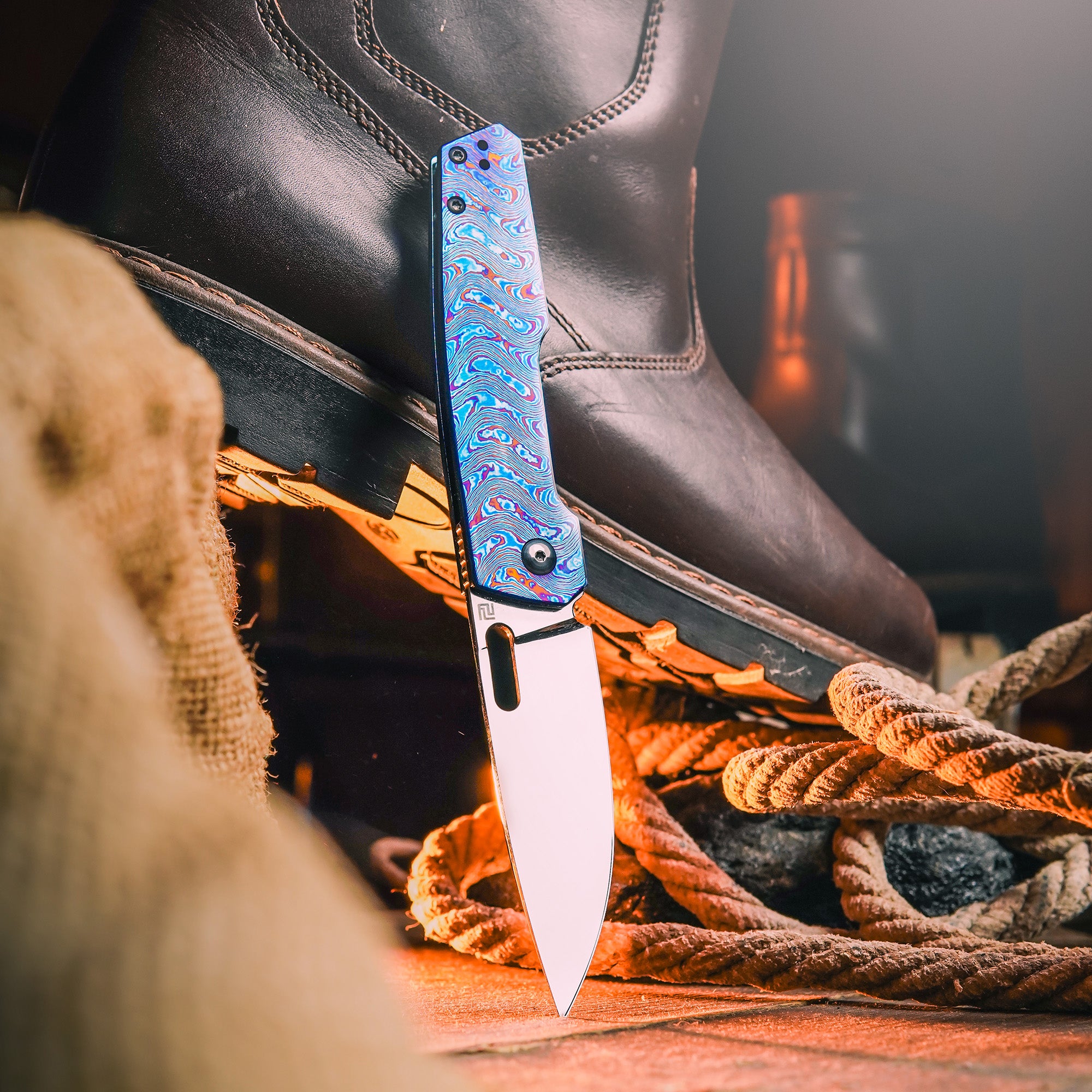
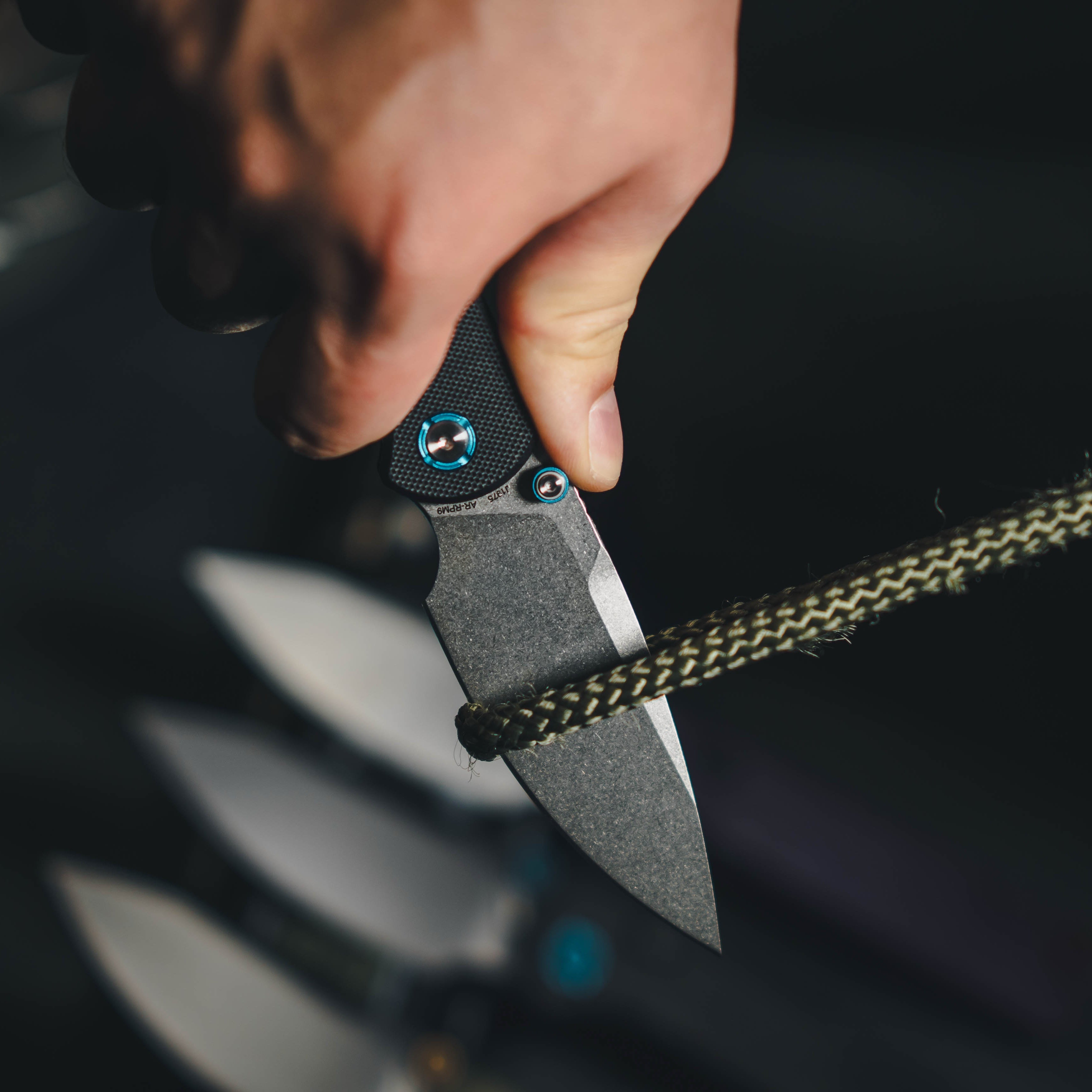
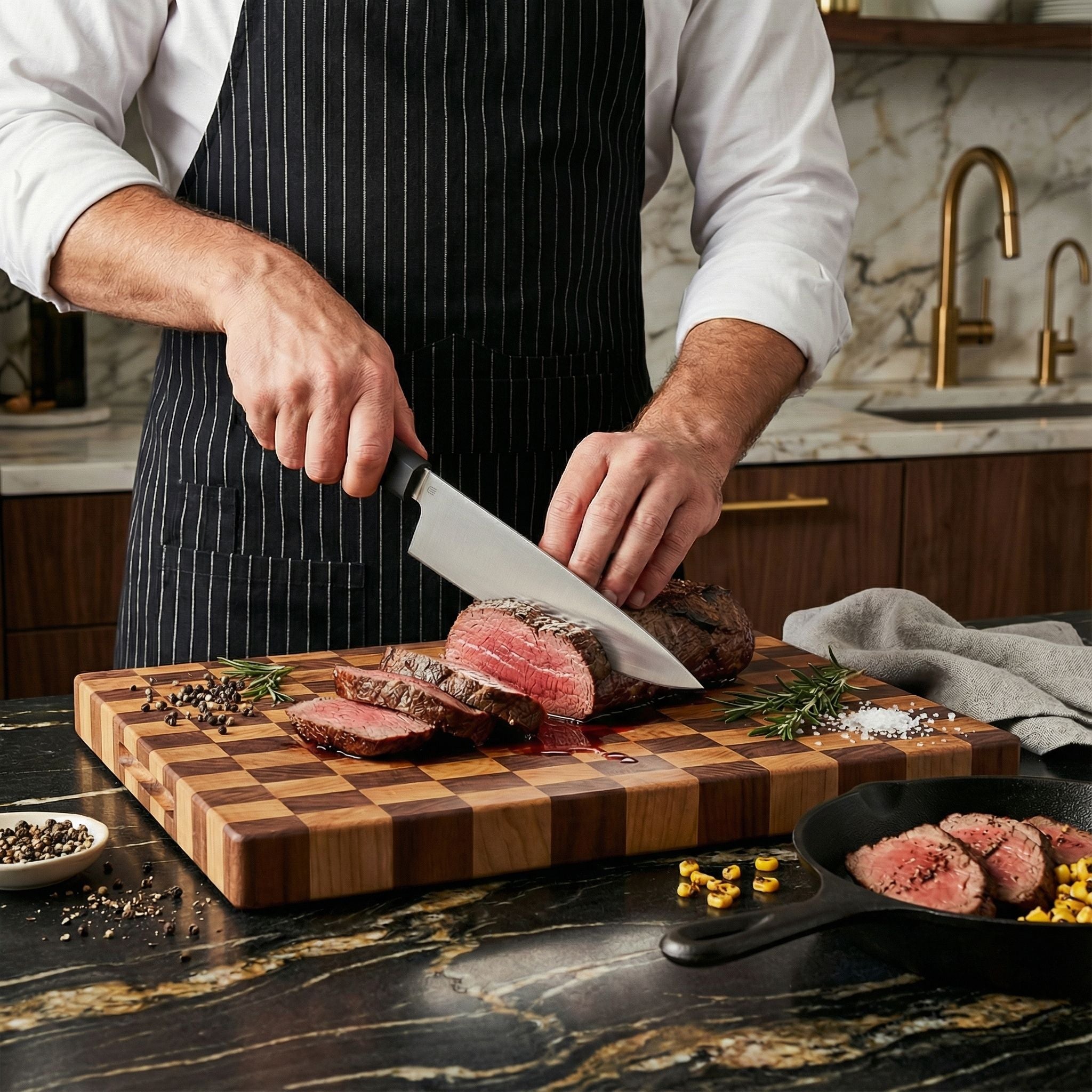
Not every EDC knife needs to look like a work boot. The CJRB Ria J1917 is the other kind of folder — a slim, low-profile gentleman’s knife that carries like a pen and still cuts like a real pocket knife. It is also one of the CJRB models that has quietly grown into a small family of builds, spanning two different blade steels and four handle materials.
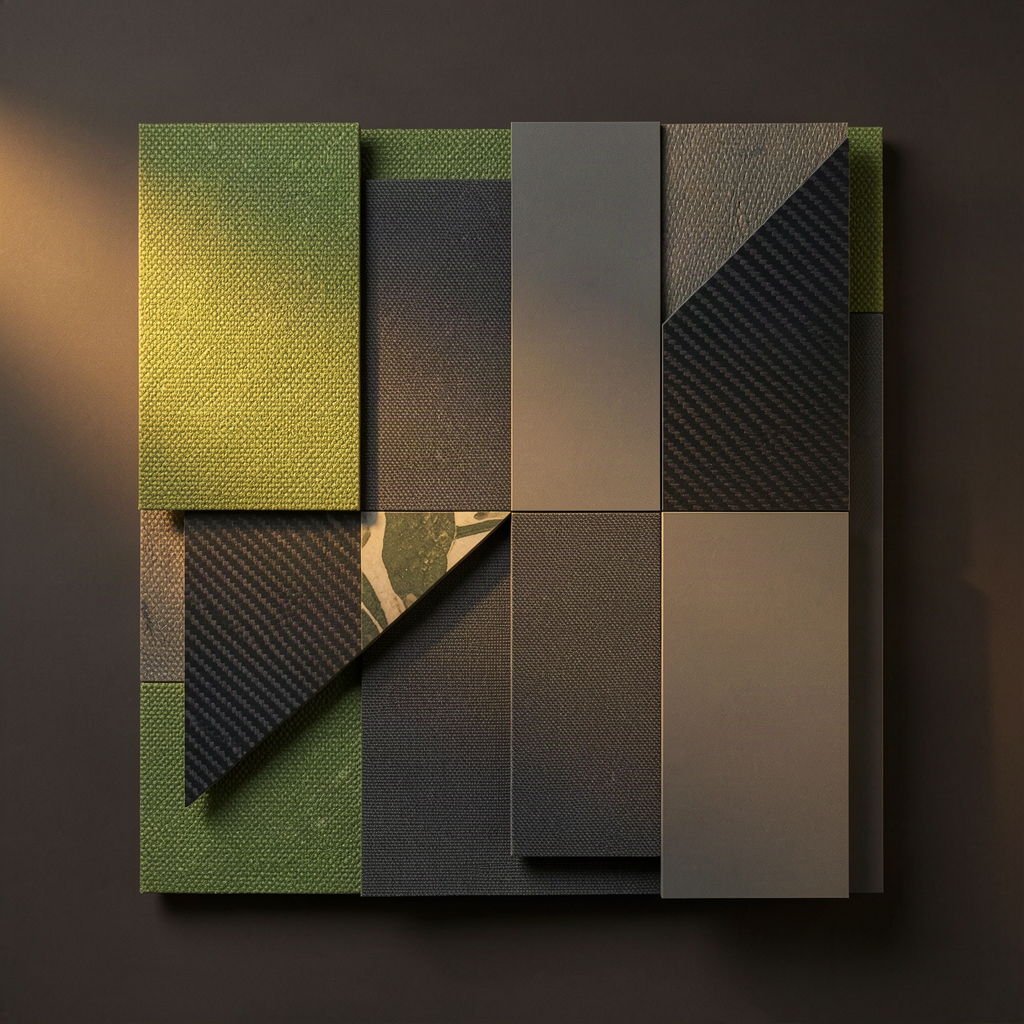
The CJRB Ria J1917: a 2.95-inch gentleman folder in four build configurations.
This guide breaks down every Ria J1917 currently listed in the catalog, what stays the same across the family, and which build makes sense for which carrier. All specs below come from the product listings themselves.
What Is the CJRB Ria J1917?
CJRB describes the Ria as “a sleek and elegant gentleman folder that provides a ton of class and carry ability without sacrificing true functionality and ease of use.” In practice that translates into a set of deliberate choices:
- A small, slicey blade. 2.95 inches (74.91 mm) of full-flat-ground drop point at 0.1 inch (2.5 mm) stock — thin enough to slice cleanly, stout enough to work.
- A liner lock, the classic mechanism for slim folders because the lock lives inside the frame instead of adding bulk.
- Ceramic ball bearing pivot, which gives the Ria a smooth, consistent action well above what its price tier usually suggests.
- A slim, deep-carry stainless pocket clip that CJRB says “disappears in any pants pocket.”
- A free-spinning lanyard pin — a discreet detail for carriers who add a lanyard without wanting it to bind on the scales.
The result is a 2.12 oz (60 g) folder with a 6.86-inch (174.35 mm) overall length and a 3.9-inch (99.44 mm) closed length. It is a knife that reads as jewelry in the hand and disappears in the pocket — until you actually need to cut something.
The Ria J1917 Line-Up at a Glance
| Build | Blade Steel | Handle | Listed Price |
|---|---|---|---|
| Ria J1917 — G10 | 12C27 | G10 | $32.98 |
| Ria J1917 — Carbon Fiber | 12C27 | Carbon Fiber | $32.98 |
| Ria J1917 — Micarta | AR-RPM9 | Micarta | $54.41 |
| Ria J1917 — Marbled Carbon Fiber | AR-RPM9 | Marbled Carbon Fiber | $59.99 |
Two blade steels, four handle materials, a roughly $27 spread from bottom to top. Availability varies by build and colourway, so check the collection page for what is in stock today.
Build by Build
12C27 Blade + G10 Handle — the value pick
The entry Ria pairs a 12C27 stainless blade with G10 scales. G10 is the industry-standard fibreglass-reinforced laminate: light, dimensionally stable, and effectively indifferent to moisture and temperature. It is also the most colour-flexible option, which is why this is the build where you find the widest range of finishes.
12C27 is a Sandvik-family (now Alleima) martensitic stainless, heat treated by CJRB to HRC 59–61. It is a low-carbide, fine-grained stainless: it takes a very keen edge, touches up quickly on a basic stone, and resists rust well in pocket duty. For a knife this size — doing envelopes, packages, zip ties and fruit — it is more steel than the job requires.
12C27 Blade + Carbon Fiber Handle — the sleeper
Swap G10 for carbon fibre at the same $32.98 and the Ria becomes a considerably more refined object. Carbon fibre brings a tight woven pattern, a subtle sheen that reads instantly as “upmarket” in a professional setting, and low weight. Everything else is unchanged: same blade, same liner lock, same deep-carry clip.
If you want the Ria’s gentleman-folder look without paying gentleman-folder money, this is the build to look at first.
AR-RPM9 Blade + Micarta Handle — the workhorse premium
At $54.41 the Micarta build steps up in both steel and character. AR-RPM9 is CJRB’s own powder-metallurgy stainless, which the listing describes as blending edge retention, corrosion resistance, and ease of sharpening — and which CJRB also rates at HRC 59–61.
Micarta is the other half of the upgrade. It is a resin-and-fabric laminate that darkens with hand oils, develops a soft, grippy surface over time, and picks up a genuine patina with use. For a knife that lives in a pocket, that patina is the difference between “a knife you own” and “a knife you carry.”
AR-RPM9 Blade + Marbled Carbon Fiber — the flagship
The top of the line pairs the AR-RPM9 blade with marbled carbon fibre — the swirling, non-linear variant of the material, where the weave clouds through the resin instead of sitting in a straight grid. At $59.99 it is the most visually distinct Ria, and the one that leans hardest into the gentleman-folder brief.
Mechanically it is identical to the other three builds. You are paying for steel and surface, not for a different knife.
What Stays the Same Across Every Ria J1917
| Spec | Ria J1917 (all builds) |
|---|---|
| Blade length | 2.95 in (74.91 mm) |
| Blade thickness | 0.1 in (2.5 mm) |
| Blade style | Drop point |
| Blade grind | Flat |
| Blade finish | Sand polish |
| Blade hardness | HRC 59–61 |
| Overall length | 6.86 in (174.35 mm) |
| Closed length | 3.9 in (99.44 mm) |
| Weight | 2.12 oz (60 g) |
| Lock type | Liner lock |
| Pivot assembly | Ceramic ball bearing |
| Clip material | Stainless steel |
That table is the real argument for the Ria. Four different looks and two different steels, but one consistent 60-gram platform — so however you configure it, you know exactly what lands in your pocket.
12C27 or AR-RPM9: Which Ria Blade?
Both blade options are rated by CJRB at HRC 59–61, and both are fine-grained stainless steels built to take a keen edge rather than to survive abuse. The choice comes down to what you are buying the knife for:
- Choose 12C27 if you want the lowest price, the fastest touch-ups on a stone, and a classic stainless that behaves predictably. It is the right steel for a knife that opens mail and breaks down boxes.
- Choose AR-RPM9 if you want more edge retention between sharpenings and prefer a powder-metallurgy steel. It is CJRB’s own formula, and the Micarta and marbled carbon builds that carry it are the premium configurations.
- Choose by handle first. Because the mechanics are identical across the family, the honest decision is usually about scales: G10 for price and colour, carbon fibre for a refined look, micarta for grip and patina.
If you want the deeper metallurgy behind 12C27, its composition and heat-treatment window are published in the Alleima material datasheet.
Who the Ria J1917 Is For
- Office and urban carriers who want a genuinely pocketable knife that does not look tactical on a desk.
- First-time buyers of a “nice” folder who want carbon fibre or micarta without jumping to a $150 price bracket.
- Collectors of small knives — the four-build spread is exactly the kind of configuration ladder that makes a model worth chasing.
- Anyone whose knife laws or workplace rules favour a sub-3-inch blade.
If you want something larger or more work-focused, browse the full folding pocket knives range and the wider CJRB Cutlery catalogue — the Ria is the small end of a very deep bench.
Frequently Asked Questions
Is the CJRB Ria a good EDC knife?
Yes, for light-to-medium daily tasks. A 2.95-inch full-flat drop point in a 60-gram package with ceramic bearings and a liner lock is a well-balanced everyday carry — it is simply designed for slicing rather than prying.
What is the difference between the Ria J1917 builds?
Only the blade steel and the handle material. The 12C27 builds use G10 or carbon fibre at $32.98; the AR-RPM9 builds use micarta or marbled carbon fibre at $54.41 and $59.99. Dimensions, lock, pivot and weight are identical.
What steel is the CJRB Ria made of?
Depending on the build, either 12C27 stainless or CJRB’s AR-RPM9 powder steel. Both are listed at HRC 59–61.
Does the Ria have a deep-carry clip?
Yes. CJRB specifies a slim, deep-carry stainless steel pocket clip, plus a free-spinning lanyard pin.


Leave a comment
This site is protected by hCaptcha and the hCaptcha Privacy Policy and Terms of Service apply.