

If you have spent any time comparing budget knife steels, you have run into the same two names: 12C27 and 14C28N. Both come from the same Swedish mill (Sandvik, now Alleima), both are martensitic stainless steels built for knives, and both sit in the affordable tier of the market. So why do makers pick one over the other — and which one should you actually carry?
12C27 and 14C28N are fine-grained stainless steels built for thin, keen edges.
This guide walks through what each steel is, how their chemistry differs, where they show up in real knives (including this catalog), and how to choose. All composition data below comes from the manufacturer's own published datasheets, linked at the bottom.
What Is 12C27 Steel?
Alleima (formerly Sandvik Materials Technology) describes 12C27 as a “martensitic stainless chromium steel with an optimized analysis for high quality professional knife applications.” After heat treatment, the datasheet says the carbon and chromium balance delivers very high hardness, good corrosion resistance, and very high wear resistance.
It has been a knife steel for decades. The name is a mill shorthand: roughly 0.6% carbon and 13.5% chromium — the “12” refers to the carbon content in tenths of a percent, and the “27” is a mill-internal designation, not a chromium figure. Its nominal composition:
| Element | 12C27 (nominal %) |
|---|---|
| Carbon (C) | 0.6 |
| Silicon (Si) | 0.4 |
| Manganese (Mn) | 0.4 |
| Chromium (Cr) | 13.5 |
| Phosphorus (P) | 0.025 |
| Sulfur (S) | 0.010 |
That composition lands it near ASTM 420/440A and UNS S42000 — a classic razor-and-cutlery stainless family. Alleima lists hunting and fishing knives, pocket knives, skate blades, and ice drills as typical uses. Notice the pattern: tools that need a keen, thin, corrosion-resistant edge and get used hard in wet conditions.
Heat treatment is the other half of the story. Alleima's datasheet specifies a hardening temperature of 1080 °C (1975 °F) with a five-minute hold and an oil quench, and warns that brittleness sets in if you temper above 450 °C (840 °F). In plain English: 12C27 is a steel that rewards a maker who knows what they are doing, and punishes one who pushes it too far.
What Is 14C28N Steel?
14C28N is Alleima's more recent knife-focused stainless, and the letter at the end gives away the upgrade: N is for nitrogen. Alleima describes it as a martensitic stainless chromium steel “with a chemistry optimized for high quality professional knife applications,” delivering excellent edge performance, very high hardness, and good corrosion resistance, and recommends it for knife applications that put “very high demands on edge performance.”
| Element | 14C28N (nominal %) |
|---|---|
| Carbon (C) | 0.62 |
| Silicon (Si) | 0.2 |
| Manganese (Mn) | 0.6 |
| Chromium (Cr) | 14 |
| Nitrogen (N) | 0.11 |
| Phosphorus (P) | 0.025 |
| Sulfur (S) | 0.010 |
Compare it to 12C27 and the changes are small but deliberate: a hair more carbon (0.62 vs 0.6), half a point more chromium (14 vs 13.5), less silicon, more manganese, and 0.11% nitrogen where 12C27 has none. Nitrogen is the interesting part. In stainless steels, dissolved nitrogen behaves a little like carbon for hardness while helping resist corrosion, and it is a well-established alloying addition for stainless grades. It is also why 14C28N can hit high hardness without leaning entirely on carbon.
Alleima's hardening window is slightly cooler — 1050 °C (1922 °F), five minutes, oil quench — and the datasheet explicitly frames the grade around edge performance rather than raw wear resistance.
12C27 vs 14C28N: Head to Head
| Property | 12C27 | 14C28N |
|---|---|---|
| Carbon | 0.6% | 0.62% |
| Chromium | 13.5% | 14% |
| Nitrogen | None listed | 0.11% |
| Manganese | 0.4% | 0.6% |
| Hardening temp | 1080 °C (1975 °F) | 1050 °C (1922 °F) |
| Maker's headline claims | Very high hardness, good corrosion resistance, very high wear resistance | Excellent edge performance, very high hardness, good corrosion resistance |
| Typical role | Budget stainless for affordable folders | Step-up stainless for edge-focused folders |
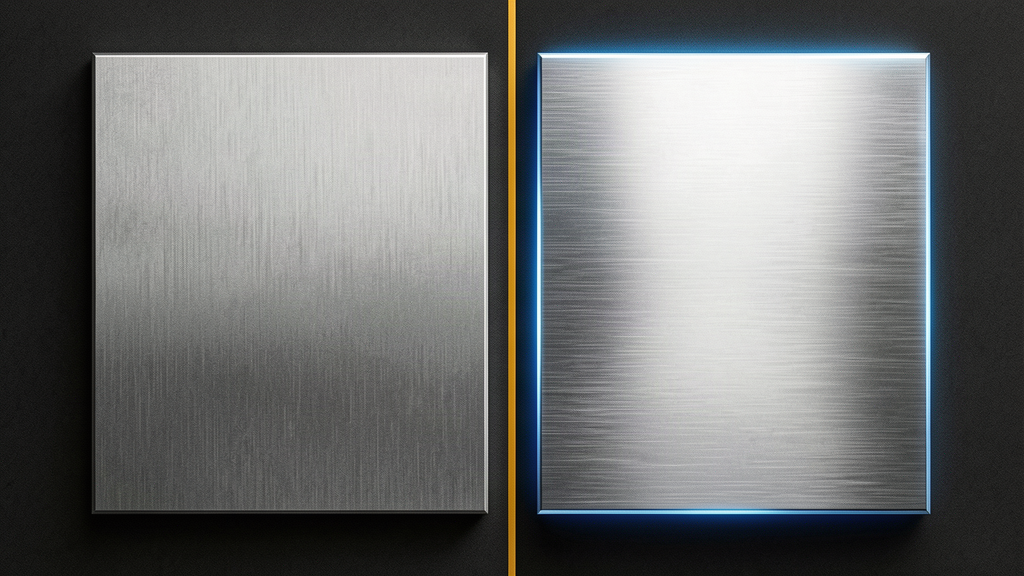
Reading the datasheets side by side, the differences are of degree, not category. Both are fine-grained, low-carbide stainless steels designed to take a thin, keen edge rather than to saw through abrasive material for hours. Neither is a supersteel, and neither pretends to be — which is exactly why both are cheap to buy and easy to live with.
Three practical takeaways:
- Corrosion resistance is close, with a lean to 14C28N. More chromium plus nitrogen gives 14C28N a slight edge in a humid pocket or a sweaty summer. 12C27 is still a stainless steel with 13.5% chromium — it is not a rust-prone carbon steel.
- Edge performance is 14C28N's stated design goal. Alleima markets it specifically for knives that demand a lot from the edge.
- Sharpenability favors 12C27, slightly. Lower alloy content generally means a steel that responds quickly to a stone. Both are friendly on a basic guided sharpener.
Where Each Steel Shows Up in Real Knives
Here is the part that matters if you are shopping rather than metallurgizing. Walk the Artisan Cutlery / CJRB catalog and you will find 12C27 doing real work in exactly the role the datasheet predicts: affordable, slim, slicey folders.
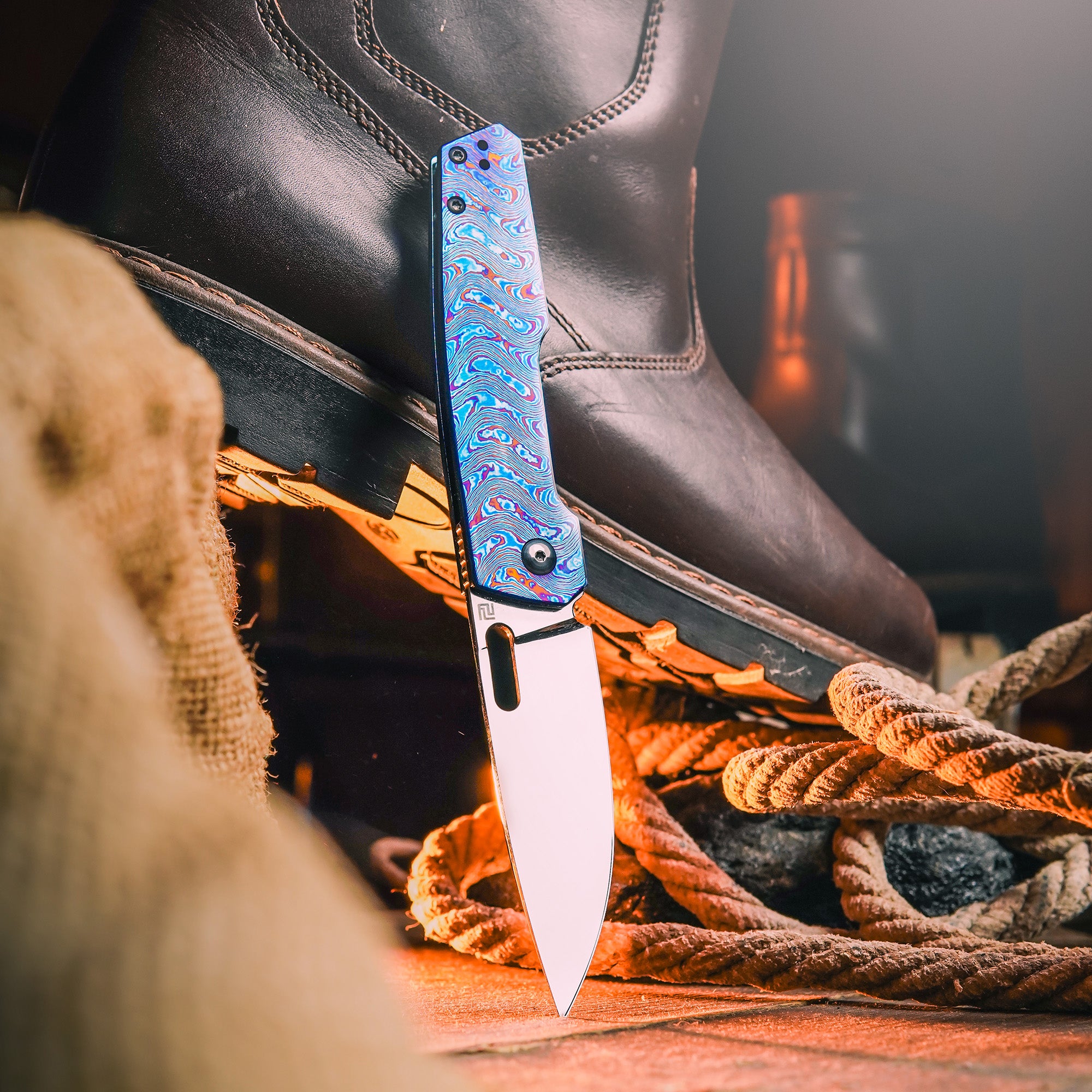
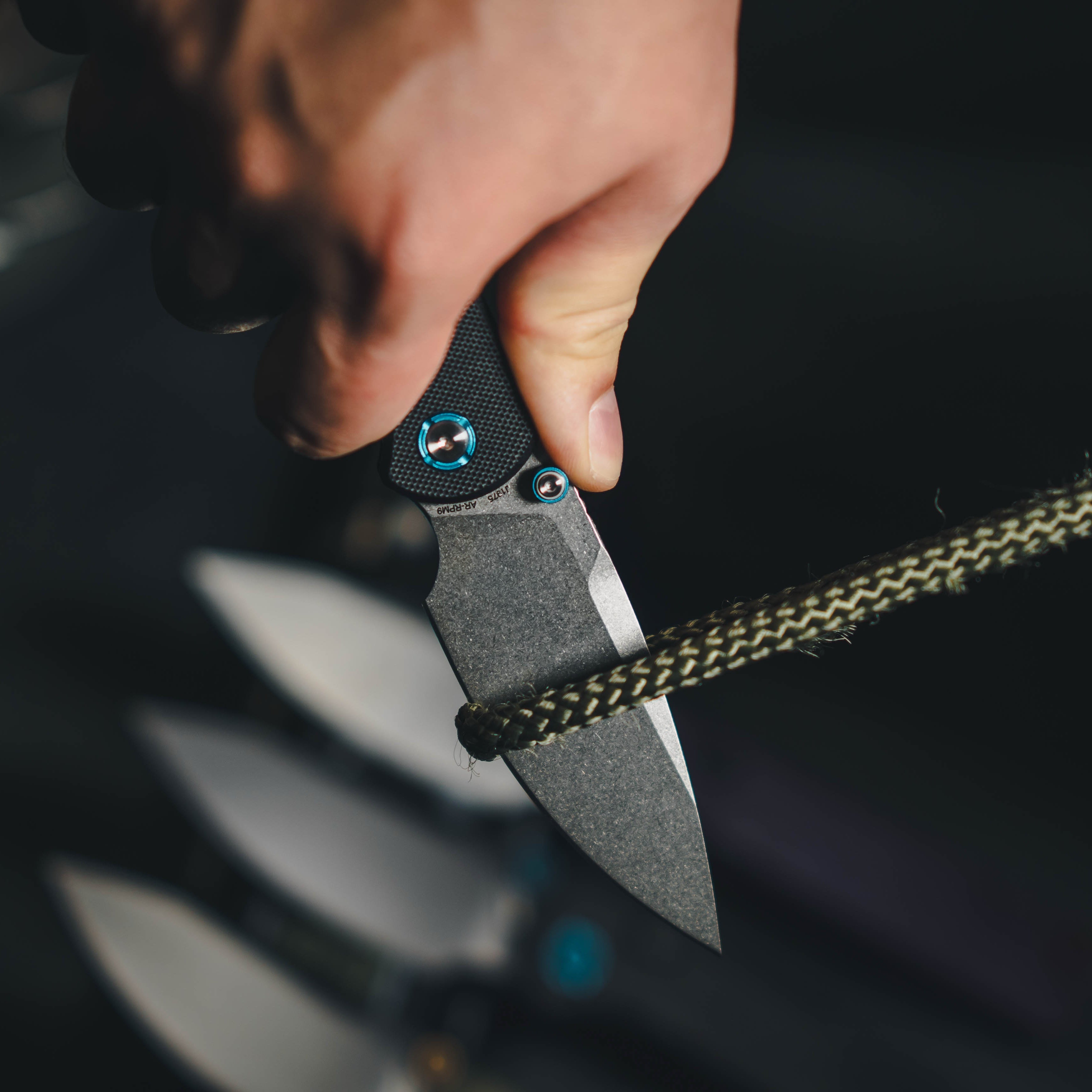
A perfect example is the CJRB Ria J1917, a 2.95-inch gentleman folder available with a 12C27 blade and either G10 scales or a carbon fiber handle at the entry price point — the same knife CJRB also offers with its in-house AR-RPM9 powder steel. Same 2.95-inch full-flat drop point, same liner lock, same 2.12 oz build; the steel is the variable.
That is the honest picture of this catalog: the budget Sandvik stainless you will actually meet here is 12C27, sitting below AR-RPM9, D2, and the premium S35VN / M390 / S90V tiers. 14C28N is a great steel, but it is not the one you will trip over on this shelf — so if you are choosing between the two in the abstract, know that 12C27 is the one you can buy today in a $33 folder.
Which One Should You Carry?
Use case first, steel second:
- You want the cheapest good stainless in a slim folder. Take 12C27. It sharpens fast, resists rust, and the price gap pays for itself in the rest of the knife — better scales, a better clip, a better action.
- You chase maximum edge performance at a mid-tier price. Take 14C28N. Its nitrogen-bearing chemistry is aimed precisely at holding a keen edge longer.
- You work in a wet or salty environment. Lean 14C28N for the extra chromium and nitrogen, and keep the pivot clean either way.
- You sharpen by hand and hate spending time on a stone. 12C27's lower alloy load makes touch-ups quick.
Sharpening Both Steels
Low-carbide stainless steels like 12C27 and 14C28N are the easy end of the sharpening spectrum. They respond to standard guided systems and to a simple progression of stones, they do not demand diamond abrasives, and they are forgiving of a slightly high angle. The one thing to respect is geometry: on a thin full-flat blade, a shallower angle cuts noticeably better but needs more care to avoid rolling the edge in hard use.
Those general rules apply to any fine-grained stainless; if you want the full method, see our guide to sharpening an EDC knife and matching a stone to the steel.
Frequently Asked Questions
Is 12C27 the same as 14C28N?
No. They come from the same mill and belong to the same stainless family, but 14C28N adds 0.11% nitrogen, slightly more carbon and chromium, and is engineered around edge performance. 12C27 is the simpler, cheaper, older grade.
Is 12C27 a low-end steel?
It is a budget steel, not a bad one. Alleima positions it for professional knife applications, and its combination of high hardness, good corrosion resistance, and high wear resistance is a sensible mix for a light-to-medium-use folder.
Will 12C27 rust?
It is a stainless steel with 13.5% chromium, so it resists rust well in normal pocket carry. Prolonged saltwater exposure without rinsing is the case where any stainless eventually shows spotting.
Which holds an edge longer, 12C27 or 14C28N?
By composition and by the maker's own positioning, 14C28N is the edge-performance grade. The practical difference in day-to-day pocket knife use is modest — both are easy to bring back on a stone.
Sources
- Alleima 12C27 material datasheet
- Alleima 14C28N material datasheet
- Wikipedia: Stainless steel
- Wikipedia: Nitrogen

Leave a comment
This site is protected by hCaptcha and the hCaptcha Privacy Policy and Terms of Service apply.