


Dagger blade pocket knives — with their symmetrical double-edged design and aggressive profile — occupy a unique position in the EDC world. They offer distinctive aesthetics and functional advantages, but they also come with more legal restrictions than single-edged folding knives. Understanding these restrictions, choosing the right carry method, and knowing when a dagger blade makes practical sense are essential for any knife enthusiast.

Understanding legality and carry methods is essential before choosing a dagger-style EDC knife.
Before purchasing or carrying a dagger-style pocket knife, consider the legal landscape, practical carry considerations, and how the blade geometry affects everyday tasks.
Dagger Blade Legality by Region
The most critical factor with dagger blades is that many jurisdictions specifically regulate double-edged knives. Unlike single-edged blades, which are generally legal to carry with length restrictions, double-edged knives can be classified differently or outright prohibited in some areas.
| Region | Dagger Blade Status | Key Law |
|---|---|---|
| California | Legal (with permit) | Concealed carry of dirks/daggers requires a CCW permit; open carry of folding daggers may be legal |
| Texas | Legal (most counties) | Knife law reform (SB 179) removed blade-type restrictions; location restrictions still apply |
| New York | Restricted | Gravity knives and certain daggers may violate state laws; NYC has additional restrictions |
| United Kingdom | Prohibited | Double-edged knives are illegal to carry in public without good reason |
| Canada | Prohibited | Dagger blades are considered prohibited weapons if designed as such |
| Australia | Varies by state | Most states require a reasonable excuse to carry any knife in public |
Note: Laws change frequently. Always verify current regulations with local authorities before carrying any knife.
Key Legal Distinctions
Several legal distinctions affect how dagger blades are regulated:
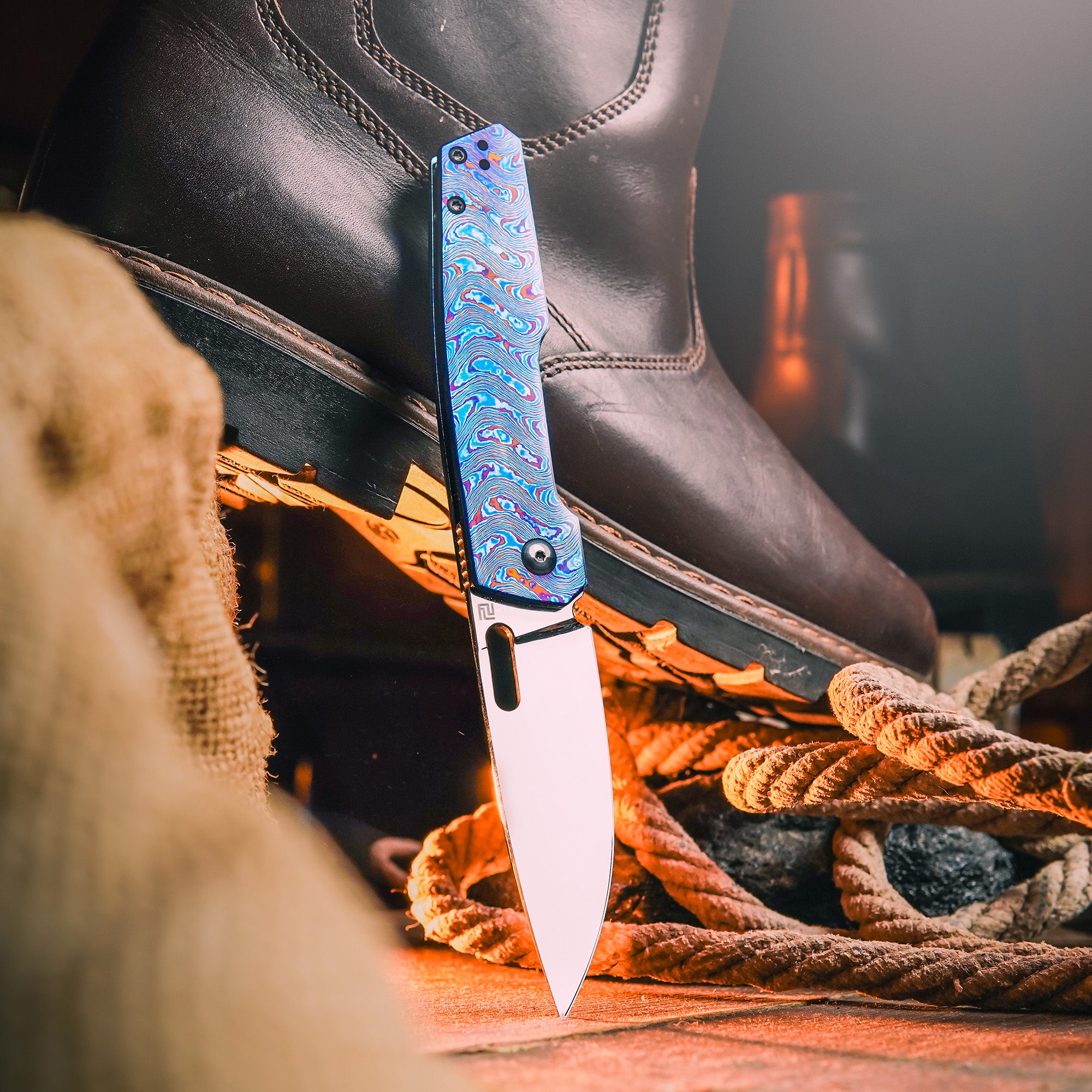
- Folding vs fixed dagger — Folding dagger-style knives (like the Artisan Cutlery Tomahawk) are often treated differently than fixed-blade daggers because they require two hands or deliberate action to deploy
- False edge vs true double edge — Some knives have a swedge (unsharpened second edge) that looks like a dagger but isn't legally a double-edged blade
- Blade length restrictions — Even where daggers are legal, blade length limits (typically 3 to 4 inches) still apply in many jurisdictions
- Concealed vs open carry — Some states allow open carry of daggers but prohibit concealed carry without permit
Carry Methods for Dagger-Style Folding Knives
Carrying a dagger-styled pocket knife presents unique considerations compared to standard single-edged folders:
- Pocket clip carry (tip-up) — Most folding knives with dagger profiles can be carried tip-up for rapid deployment. Ensure the clip is on the correct side for your dominant hand.
- Pocket clip carry (tip-down) — Less common for dagger profiles, but some users prefer this for a specific grip when opening.
- Deep carry clip — Minimizes visible knife profile, reducing unwanted attention in areas where knife carry may raise questions.
- Belt sheath — For larger dagger folders, a horizontal or vertical belt sheath can distribute weight better than pocket carry.
Practical EDC Use of Dagger Blades
Dagger blade profiles offer specific practical advantages and disadvantages for everyday carry:
Advantages
- Symmetrical cutting geometry — The double grind creates a thinner edge, excellent for piercing and push cuts
- Distinctive aesthetics — The symmetrical profile is visually striking and sets the knife apart from standard drop-point designs
- Piercing capability — The symmetrical tip geometry provides excellent penetration for opening packaging or scoring materials
Disadvantages
- Weaker tip — The acute symmetry of a dagger grind can be more prone to tip breakage under lateral stress
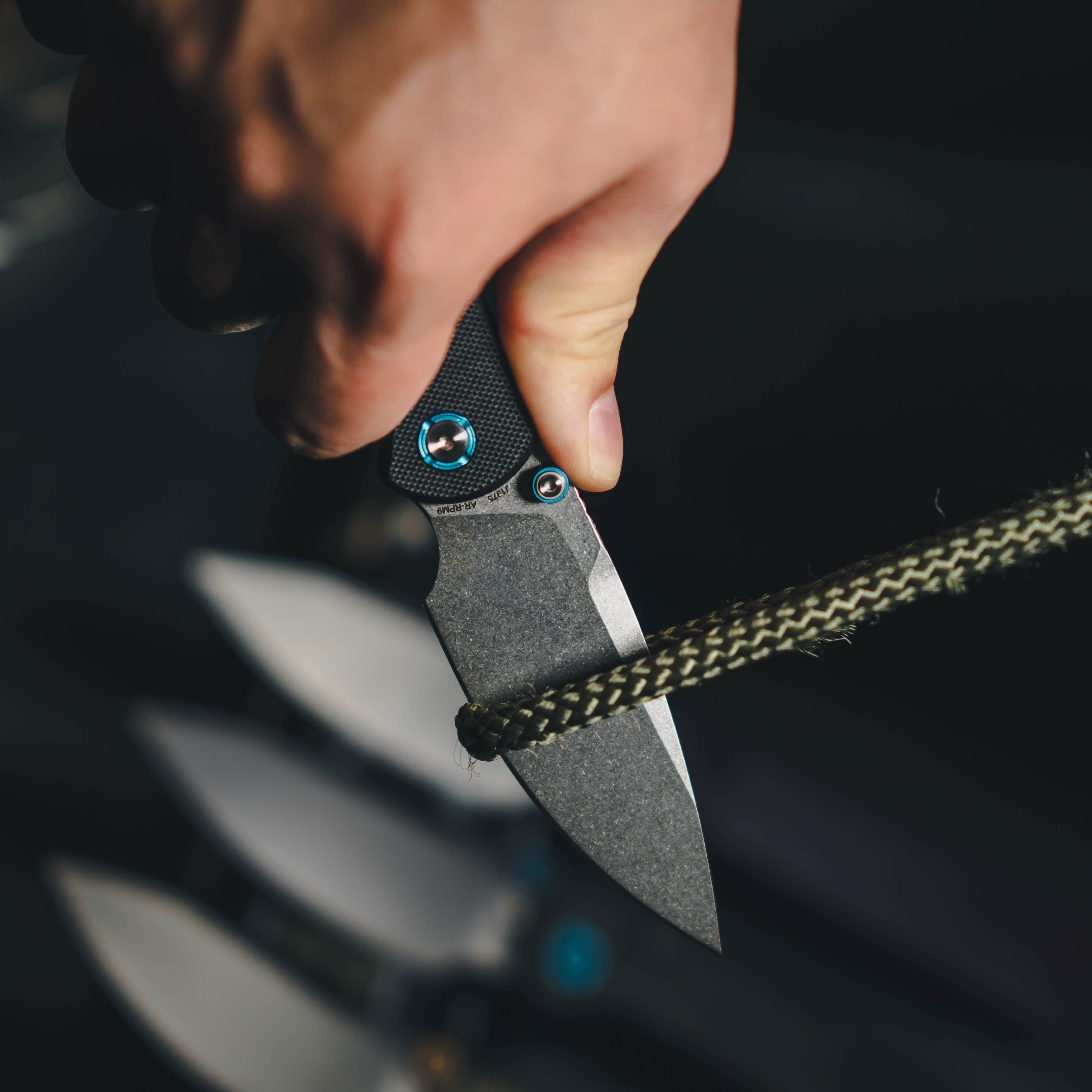
- Less slicing efficiency — The symmetrical grind doesn't slice as efficiently as a drop-point or clip-point blade for tasks like cutting rope or cardboard
- Sharpening complexity — Maintaining the symmetrical double bevel requires more skill than sharpening a single-edged blade
Legal but Unwanted Attention
Even where legally permitted, a dagger-profile knife can attract unwanted attention. The aggressive silhouette may alarm people unfamiliar with knives, even if the blade is never removed from the pocket. Consider your environment: a dagger folder might be perfectly at home on a hiking trail but draw stares at an office desk. Many experienced EDC carriers choose a less aggressive blade profile for urban environments and reserve dagger-style knives for outdoor or recreational carry.
For those who appreciate the aesthetics and piercing capability of a dagger profile in a legal, practical folding package, consider models like the Artisan Cutlery Tomahawk series, which combines a spear-point dagger profile with D2 steel in a user-friendly folding design.



Leave a comment
This site is protected by hCaptcha and the hCaptcha Privacy Policy and Terms of Service apply.