

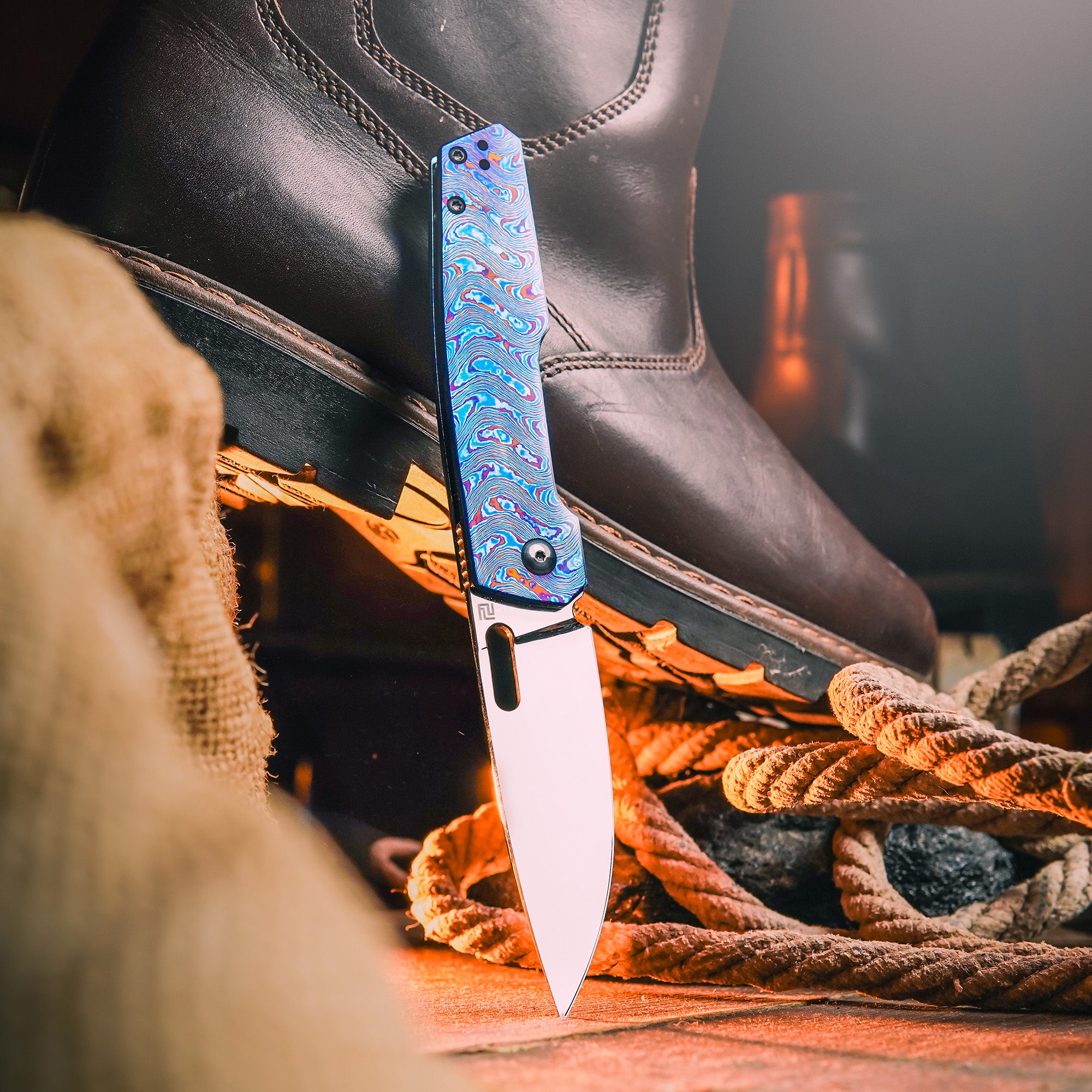
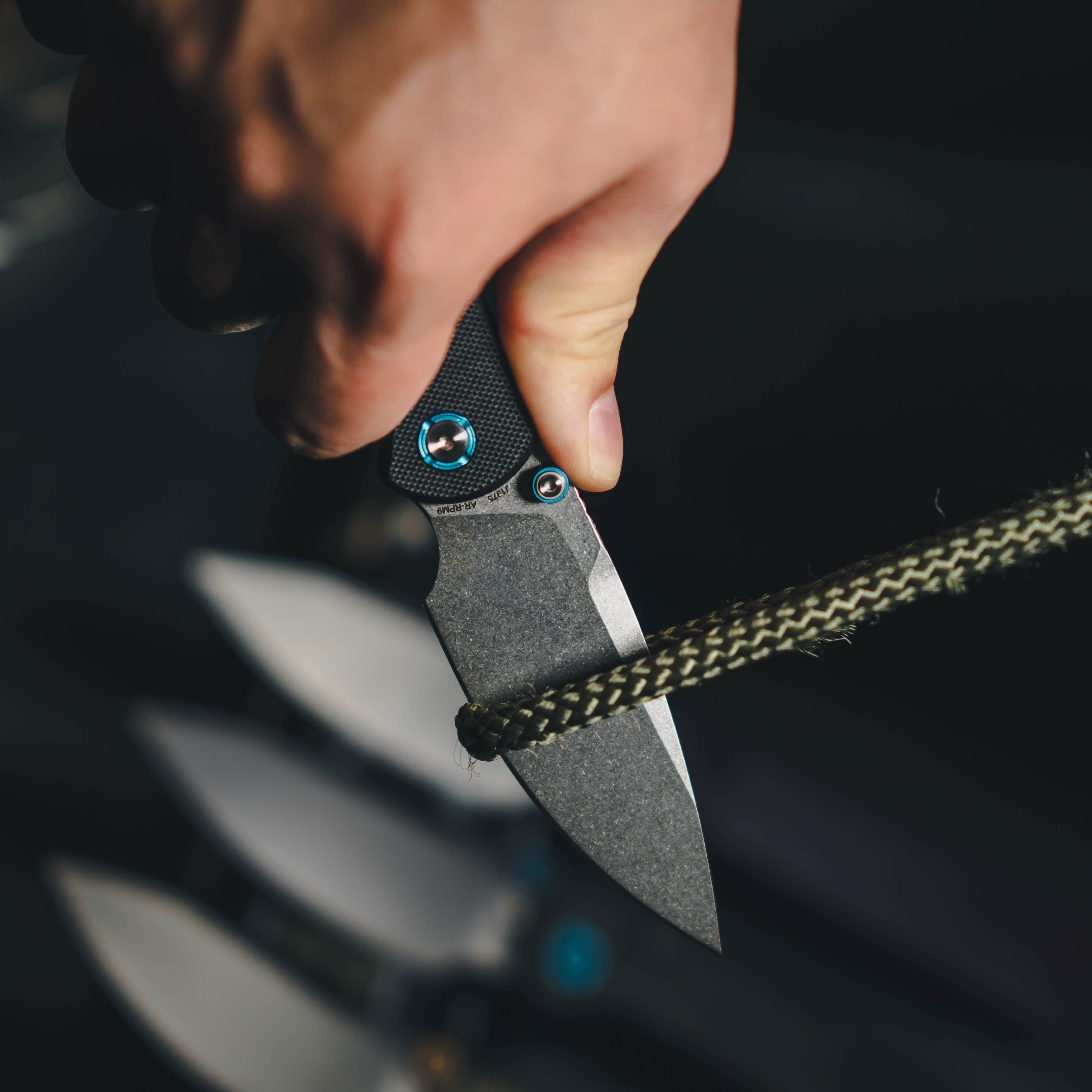


Damascus steel pocket knives are prized for their distinctive layered patterns, but maintaining those beautiful swirls requires more attention than standard blade steels. Unlike monosteel blades, pattern-welded damascus combines multiple steel types — typically a high-carbon steel for hardness and a nickel-bearing steel for the contrasting bright layers. This composite structure means the blade can be more reactive to moisture and requires a thoughtful maintenance routine.

Damascus steel patterns require specific care to maintain their contrast and beauty.
Whether you own a classic damascus folding knife or a modern EDC with a pattern-welded blade, understanding how to clean, oil, and store it properly will keep the pattern vivid and the steel protected for years.
Why Damascus Steel Needs Special Care
The alternating layers in damascus steel create its signature aesthetic, but they also introduce a practical challenge. The high-carbon layers — which provide edge hardness — are more susceptible to corrosion than the nickel layers. When exposed to moisture, acids from fingerprints, or humidity, the carbon layers can develop rust or pitting faster than a uniform stainless steel blade.
- Carbon layers oxidize faster — the darker etched layers in damascus are often the more reactive steel
- Fingerprints leave acids — skin oils can cause discoloration within hours if not wiped away
- Humidity is the enemy — coastal or high-humidity environments accelerate corrosion
- Improper cleaning can dull the pattern — aggressive abrasives can reduce the contrast between layers
Daily Maintenance Routine
Every time you handle or carry a damascus pocket knife, a simple post-use habit takes seconds but makes a significant difference:
- Wipe the blade clean with a soft microfiber cloth after each use. This removes fingerprints, skin oils, and debris before they can react with the steel.
- Apply a light oil coating if the knife won't be used again soon. A thin layer of mineral oil, specialized knife oil, or even food-grade oil creates a protective barrier against moisture.
- Store in a dry environment — avoid sheaths or pockets that trap humidity. If storing long-term, a silica gel packet in the storage case helps control moisture.
Deep Cleaning Damascus Blades
For deeper cleaning, especially if you notice dulling of the pattern or minor discoloration:
| Method | When to Use | What to Avoid |
|---|---|---|
| Warm water + mild soap | After cutting food or sticky substances | Harsh detergents, bleach, or ammonia |
| Isopropyl alcohol wipe | Removing stubborn oils and grease | Acetone or paint thinner — can damage handle materials |
| Baking soda paste | Light surface rust spots | Steel wool or abrasive scrub pads |
After any wet cleaning, dry the blade immediately and thoroughly with a soft cloth. Pay special attention to the pivot area and any crevices where moisture might hide.
Oiling Your Damascus Folding Knife
Regular oiling serves two purposes: corrosion protection and smooth action. The pivot needs lubrication for the opening mechanism, while the blade surfaces benefit from a protective oil film.
- Mineral oil — food-safe and effective; ideal for EDC knives that might cut food
- Synthetic knife oil — better wear protection for pivot points; lasts longer between applications
- Camellia oil — traditional choice for Japanese knives; provides excellent rust protection without gumming
Apply a single drop to the pivot, open and close the knife several times to work it in, then wipe any excess. For the blade surface, a very light coat — less than you think you need — is sufficient.
Restoring Faded Damascus Patterns
Over time, the contrast between the dark and light layers of a damascus blade can fade. This is normal and reversible. A light etch with a mild acid — such as diluted ferric chloride or even instant coffee — can restore the contrast. However, this is best left to experienced enthusiasts or professionals. Over-etching can pit the blade and damage the edge geometry.
Storage Best Practices
- Use a dry storage area — avoid bathrooms, basements, or humid rooms
- Consider a knife slip or pouch — padded storage prevents scratches but should breathe
- Add silica gel — desiccant packs absorb ambient moisture in closed storage
- Avoid leather sheaths for long-term storage — leather retains moisture and can promote rust on carbon steel layers
What Not to Do
Some common mistakes can damage damascus blades permanently:
- No dishwasher — heat and moisture will ruin the blade and handle
- No prolonged soaking — water can seep into the pivot and handle scales
- No abrasive cleaners — they'll scratch the pattern and reduce contrast
- No ultrasonic cleaners — vibration can damage handle materials and loosen pins
With the right care, a damascus steel pocket knife will retain its striking appearance and functional performance for decades. The maintenance routine is simple: wipe after use, oil regularly, and store dry. For more on choosing the right folding knife for your carry style, explore our folding pocket knife collection.


Leave a comment
This site is protected by hCaptcha and the hCaptcha Privacy Policy and Terms of Service apply.