

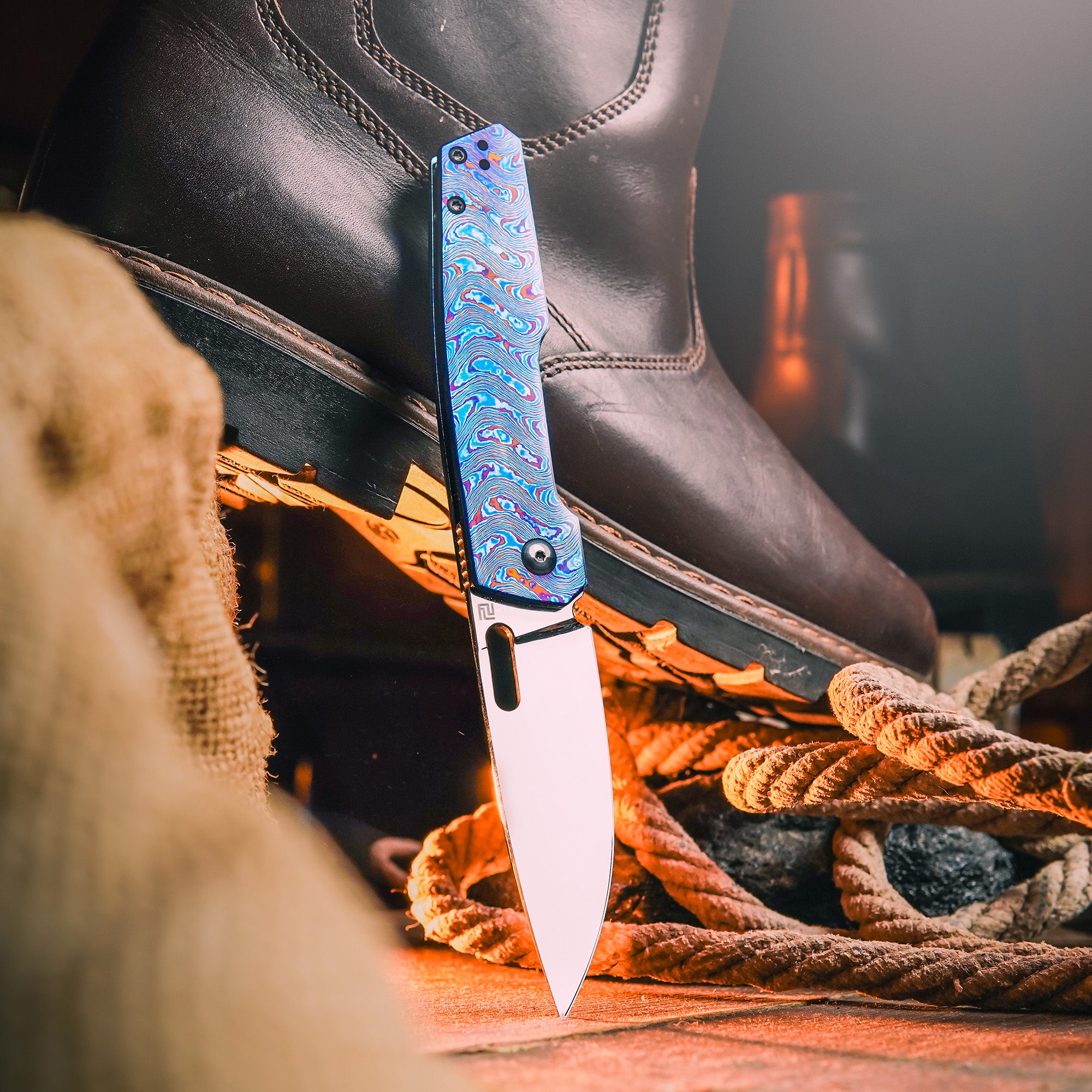
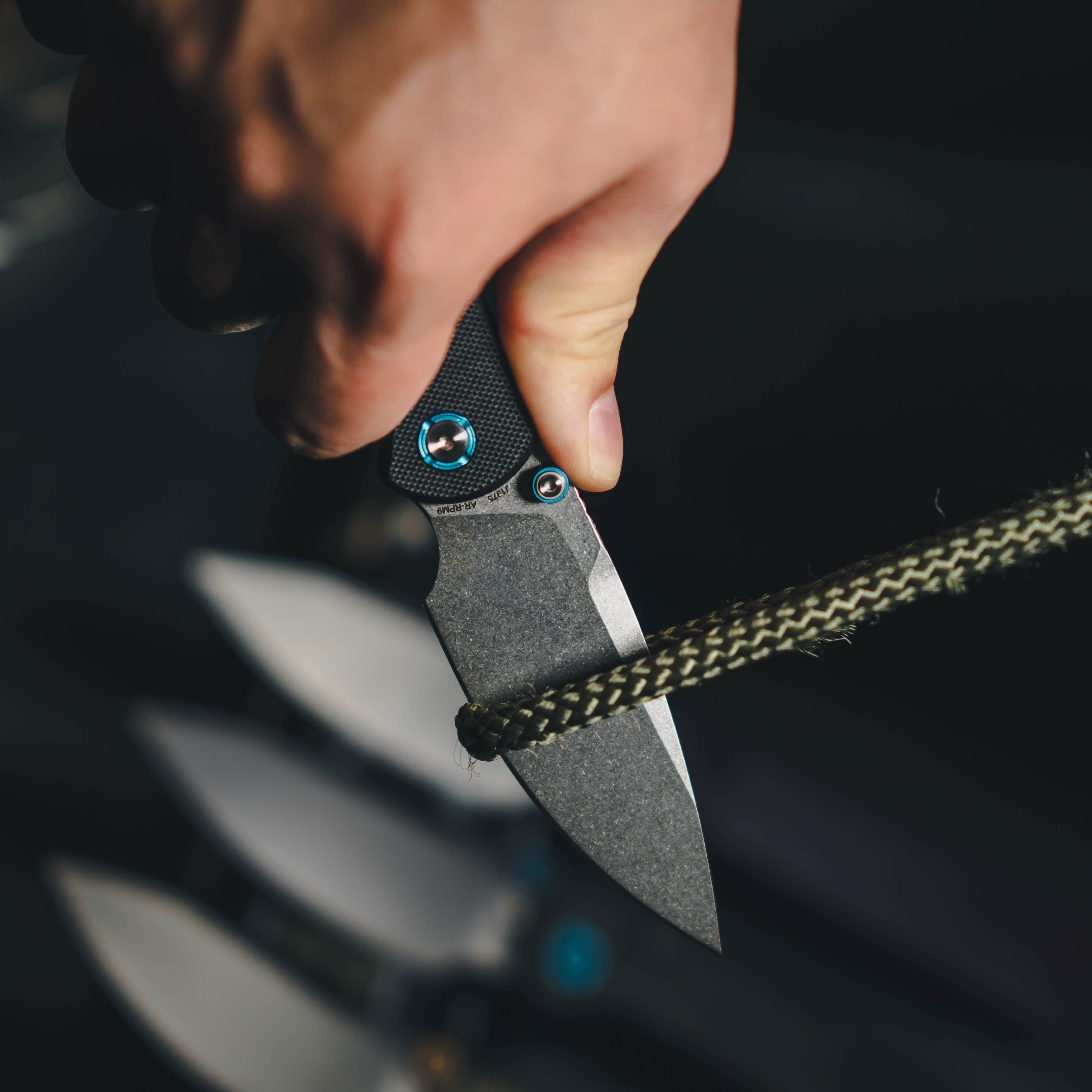
Titanium is one of the most popular handle materials in premium EDC folding knives — and for good reason. It offers an exceptional strength-to-weight ratio, natural corrosion resistance, and a sophisticated appearance that develops character over time. Whether you own an Artisan Cutlery knife with a titanium handle or another premium folder, understanding how to care for titanium will keep your knife looking its best.
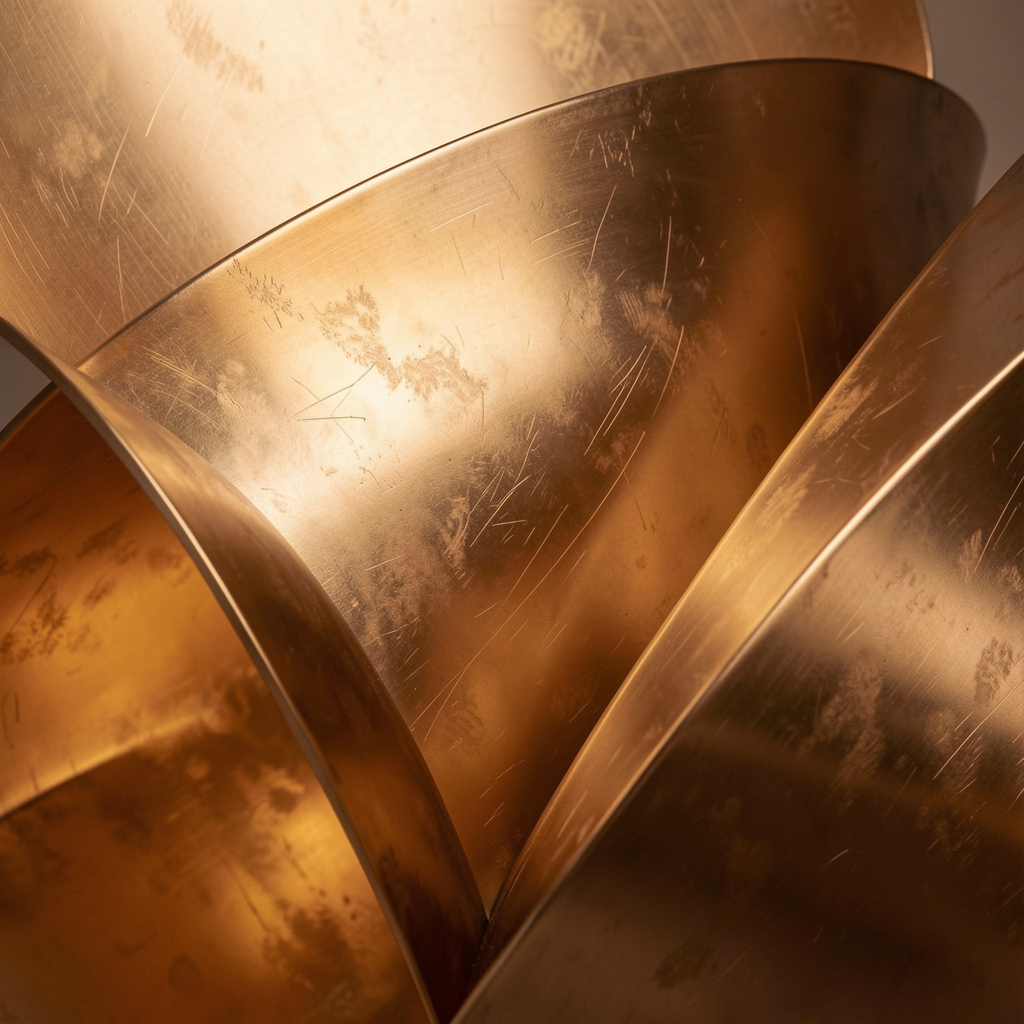
Titanium handles develop character over time but benefit from proper care and maintenance.
Unlike steel blades or aluminum handles, titanium has unique properties that affect how it responds to cleaning, wear, and customization. Here’s what you need to know.
Why Titanium for Knife Handles?
Titanium handles are prized in the knife world for several reasons:
- Lightweight — Approximately 40% lighter than steel for the same volume, making it ideal for EDC carry
- Corrosion-proof — Titanium forms a natural oxide layer that resists rust and corrosion from sweat, humidity, and moisture
- Hypoallergenic — Safe for users with nickel or metal allergies
- Strength — Excellent strength-to-weight ratio means thin, pocket-friendly handles without sacrificing structural integrity
- Anodizable — Titanium can be anodized to produce a range of colors from bronze to blue to purple by varying voltage
Daily Cleaning Routine
Titanium doesn’t rust, but it does collect oils, dirt, and debris. Regular cleaning keeps the handle looking fresh and prevents buildup in textured areas:
- Wipe down after carry — A microfiber cloth removes skin oils and prevents fingerprint buildup. This is especially important if you carry the knife in a pocket against skin.
- Mild soap and water — For deeper cleaning, use warm water with a drop of dish soap. Titanium is completely non-reactive to soaps, so you don’t need special cleaners.
- Dry thoroughly — While titanium won’t rust, moisture in the pivot area can affect action over time. Dry the handle and pivot area with a clean cloth.
- Pivot lubrication — Apply a drop of knife oil to the pivot after cleaning to maintain smooth action.
Removing Scratches from Titanium
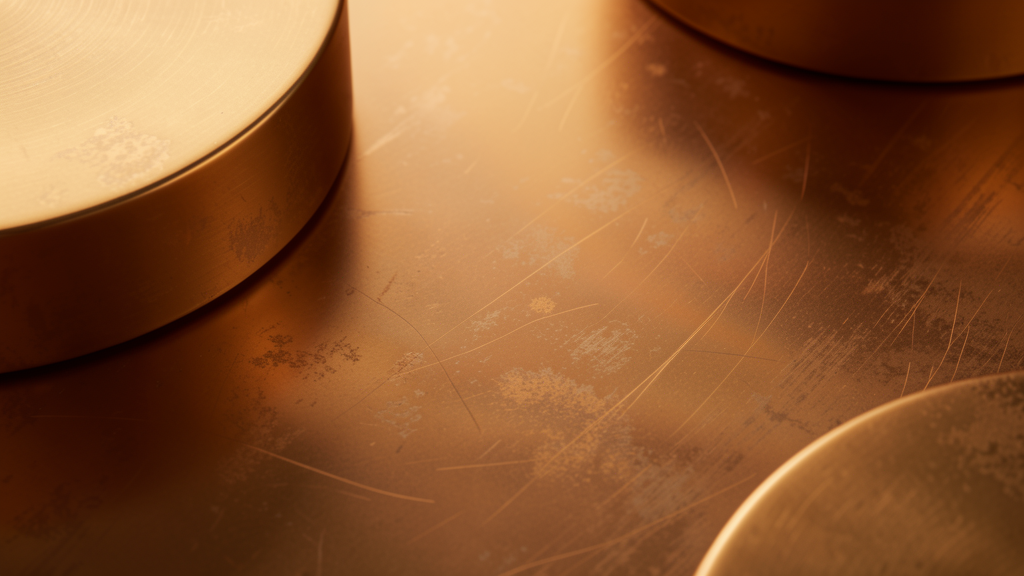
Scratches on titanium handles are inevitable with regular carry, especially on pocket-clipped knives that rub against keys, coins, and other pocket items. Fortunately, titanium scratches are relatively easy to address:
| Scratch Depth | Method | Tools Needed |
|---|---|---|
| Light surface scratches (snail trails) | Green Scotch-Brite pad or 1000-grit sandpaper | Fine abrasive pad, water |
| Medium scratches | 400-600 grit wet sanding, then finish with 1000 grit | Wet/dry sandpaper, water, cloth |
| Deep gouges | File or 200-grit sanding, then progressive refinement | Needle file, sandpaper 200-2000 grit |
Important: Always sand in one direction (not circular) and match the original finish direction. Stonewashed titanium handles are easier to maintain because the textured finish hides scratches naturally — a simple Scotch-Brite pass in random directions can refresh the look. Satin or bead-blasted finishes require more careful technique to restore evenly.
Anodizing and Refreshing Color
One of titanium’s unique properties is that it can be anodized to produce vivid colors. The color comes from the thickness of the oxide layer, not from dye or paint. Over time, anodized colors can fade or become uneven due to wear.
To refresh or change anodized colors, the process involves cleaning the titanium thoroughly, connecting it as the positive terminal in an electrolytic bath, and applying precise voltage. Common voltages produce specific colors:
- 15-20V — Bronze to gold
- 25-30V — Purple to dark blue
- 30-40V — Light blue to teal
- 40-50V — Green to yellow-green
- 50-60V — Yellow to pink
- 70-80V — Purple to blue-violet
Anodizing requires proper safety equipment and should only be attempted by those familiar with the process. Many owners prefer to leave this to professional modders. For most users, a simple cleaning and Scotch-Brite refresh is sufficient to keep the handle looking great.
What to Avoid
- Avoid bleach or chlorine — These can damage the oxide layer and cause discoloration
- Avoid ultrasonic cleaners — The vibration can damage pivot bearings and loosen screws
- Avoid harsh abrasives — Sandpaper rougher than 200 grit can leave deep scratches that are difficult to remove
- Avoid acid cleaners — Hydrochloric or sulfuric acid can etch titanium permanently
When to Let Patina Develop
Many titanium knife owners choose to embrace the natural wear that comes with use. The small scratches, color shifts from pocket carry, and subtle patina that develops over time tell the story of the knife’s life. Unlike a blade that needs to be sharp and corrosion-free, a titanium handle gains character with use. Some collectors prefer the worn look of a well-carried titanium knife over a pristine, polished finish.
Ultimately, titanium is one of the lowest-maintenance handle materials available. A quick wipe, an occasional wash, and a light pivot oiling are all most titanium-handled knives will ever need. For more on premium folding knife materials, explore the Artisan Cutlery folding knife collection featuring titanium, carbon fiber, and G10 handle options.



Leave a comment
This site is protected by hCaptcha and the hCaptcha Privacy Policy and Terms of Service apply.