


Few knife patterns are as old or as misunderstood as the dagger. A dagger is defined by geometry: two cutting edges, a symmetrical point, and a straight central spine built for thrusting. That simple formula has produced everything from medieval armor-piercing spikes to the compact double-edge blades issued to Allied commandos in World War II — and it still shapes the way modern designers think about symmetry, grinds, and balance.
Dagger geometry: two edges, a centered point, and a stiff spine built for thrusting.
This guide walks through the classic dagger designs, what each was engineered to do, and how to think about a dagger or double-edge knife today — including the legal realities and the folding alternatives that capture the same look.
What Makes a Dagger a Dagger
The word "dagger" describes a category, not a single knife. Three features separate a true dagger from other blades:
- Two edges. Both sides of the blade are sharpened, meeting at a centered point.
- A symmetrical profile. The blade mirrors itself along its length, which puts the point in line with the hand for a straight thrust.
- A thrusting geometry. A dagger is optimized to penetrate, not to chop or slice along a long curve.
Everything else — length, grind, guard, handle — varies by era and purpose. That is why two knives that look nothing alike can both be correctly called daggers.
The Rondel Dagger: Medieval Europe's Armor-Piercing Spike
When plate armor made cutting attacks nearly useless, European smiths answered with the rondel dagger. Its defining feature is a disc-shaped guard and pommel, which locked the hand in place so the blade could be driven through gaps in armor with body weight behind it. Blades were often narrow and stiff, sometimes triangular in cross-section, with the strength to resist bending under a hard thrust.
The rondel is the ancestor of every stiff, narrow fighting dagger that followed — including the spike-style blades collectors still prize.
The Fairbairn-Sykes Fighting Knife
The Fairbairn-Sykes fighting knife is the most recognizable dagger of the twentieth century. Developed by William E. Fairbairn and Eric A. Sykes, both veterans of the Shanghai Municipal Police, it was issued to British commandos and special-operations units starting in 1941.
The design is pure thrust: a long, slim double-edge blade with a pronounced taper, a small guard, and a slim handle intended for a single purpose. The earliest patterns were noticeably thinner and lighter than the knives that replaced them, and the pattern stayed in service for decades across several "marks."
The Applegate-Fairbairn Fighting Knife
Rex Applegate, an American officer who worked with Fairbairn on close-combat training, later reworked the concept into the Applegate-Fairbairn fighting knife. His version kept the double-edge symmetry but broadened the blade and adjusted the profile so the tip was less prone to breaking under hard use.
The Applegate-Fairbairn is a designer's classic second look at a first idea: same philosophy, more durable execution. It remains one of the most-copied double-edge patterns in production cutlery.
Trench Knives and Boot Daggers
World War I produced the trench knife — a close-combat tool built around the realities of confined fighting. The American M1917 and M1918 patterns combined a triangular blade with a cast brass knuckle handle; later patterns simplified this into the M3, a single-edge utility-fighter.
The boot dagger took the same idea in the opposite direction: a light, concealable dagger-profile fixed blade with a slim sheath. Boot knives remain a common fixed-blade format because the symmetric blade carries and indexes easily.
Anatomy of a Modern Dagger
Modern dagger makers work with the same handful of variables their predecessors did:
- Grind. A full flat grind keeps the blade thin and light; a hollow grind creates a keener edge but a thinner cross-section; a saber or partial grind leaves a thicker spine for stiffness.
- Symmetry. True daggers are mirrored edge to edge. Some "false edge" designs sharpen only the front portion of the back edge — a single-edge knife wearing a dagger's silhouette.
- Guard. From the rondel disc to the Fairbairn-Sykes's small crossguard, the guard stops the hand from sliding forward onto the edge during a thrust.
- Handle. A dagger handle is usually straight and slim, since the design assumes a thrusting grip rather than a chopping one.
Dagger Designs at a Glance
| Design | Era | Blade | Primary Role |
|---|---|---|---|
| Rondel dagger | 14th-16th century | Narrow, stiff, often triangular | Armor-gap thrusting |
| Fairbairn-Sykes | 1941 onward | Long, slim, double edge | Military close combat |
| Applegate-Fairbairn | Post-WWII | Broader double edge | Military close combat |
| Trench knife | WWI | Triangular or single edge | Confined close combat |
| Boot dagger | Post-WWII | Short dagger profile | Concealable fixed blade |
Folding Daggers and Double-Edge EDC Folders
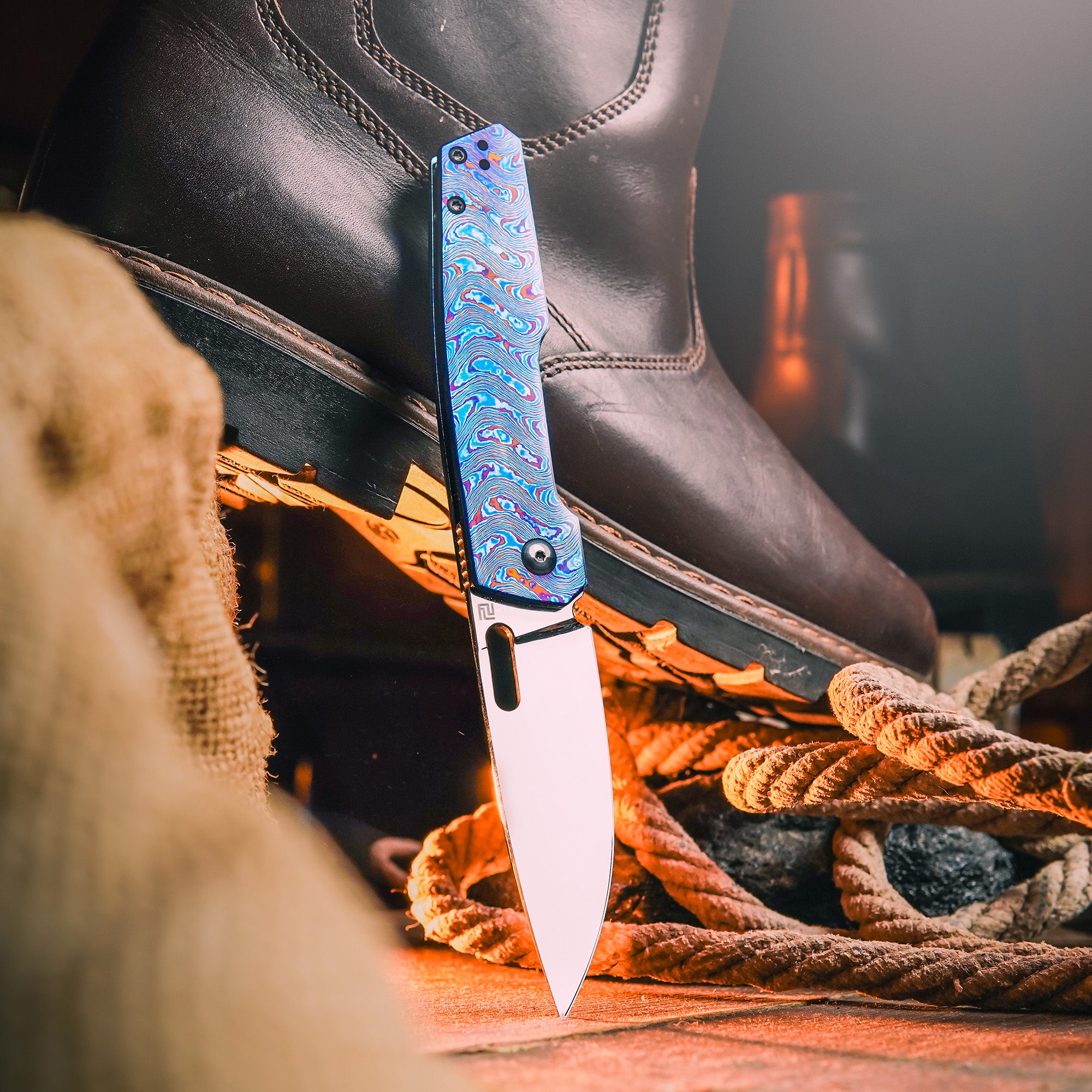
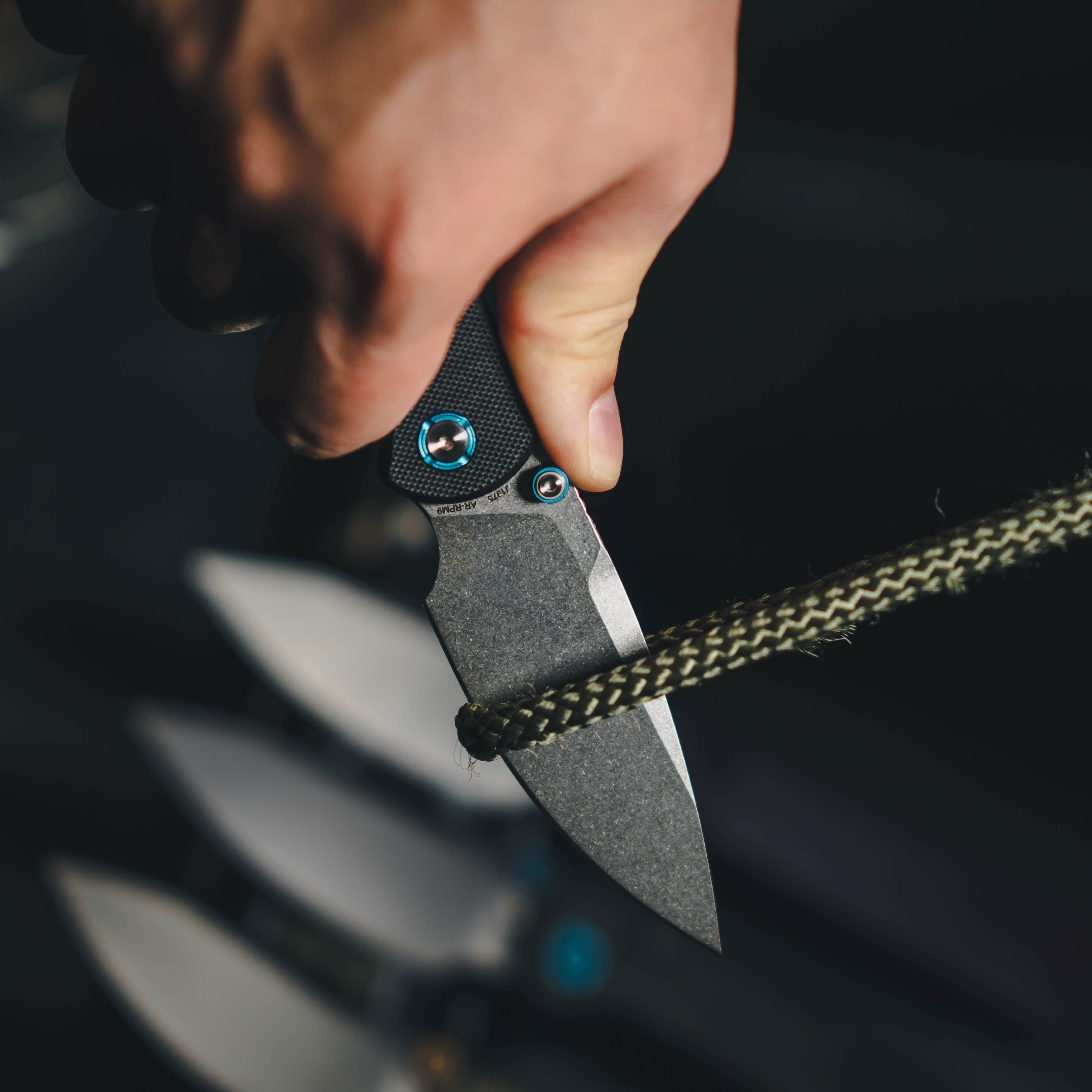
The double-edge silhouette is hard to put in a folding knife, because a second sharpened edge has to be covered by the handle when the blade is closed — and most handle designs only protect one edge. Even so, plenty of modern folders borrow the look: symmetric spear-point profiles, centered points, long swedges, and dagger-inspired grinds that give a folding knife the same visual balance without a true second edge.
If you like the symmetry of a dagger but want something you can actually pocket, a modern folding knife is the practical route. Artisan Cutlery's lineup leans heavily on exactly the qualities a dagger aesthetic depends on — clean symmetrical profiles, premium blade steels, and titanium or carbon-fiber handles — while keeping a single edge that folds safely into the handle.
Choosing a Dagger or Double-Edge Knife Today
Before you buy, separate two very different goals:
- Collecting. A Fairbairn-Sykes or Applegate-Fairbairn reproduction belongs in a display case. Historical accuracy, finishes, and markings are what matter.
- Carrying. Double-edge fixed blades are treated differently from single-edge knives in many jurisdictions, and some states restrict them specifically. Check your local law before you carry.
For everyday use, the honest answer is that a folding knife does the work: it is legal to carry in far more places, easier to transport, and covers almost every cutting task a dagger was never meant for anyway.
Frequently Asked Questions
Is a dagger the same as a stiletto? No. A stiletto is a particular narrow, needle-pointed thrusting blade; a dagger is the broader family that includes it.
What is a false edge? A partially sharpened back edge that gives a single-edge knife a dagger-like look without a full second cutting edge.
Can a folding knife be a dagger? Only in appearance. A true double edge needs a sheath or a folder design that protects both edges, which is rare in production folders.


Leave a comment
This site is protected by hCaptcha and the hCaptcha Privacy Policy and Terms of Service apply.