

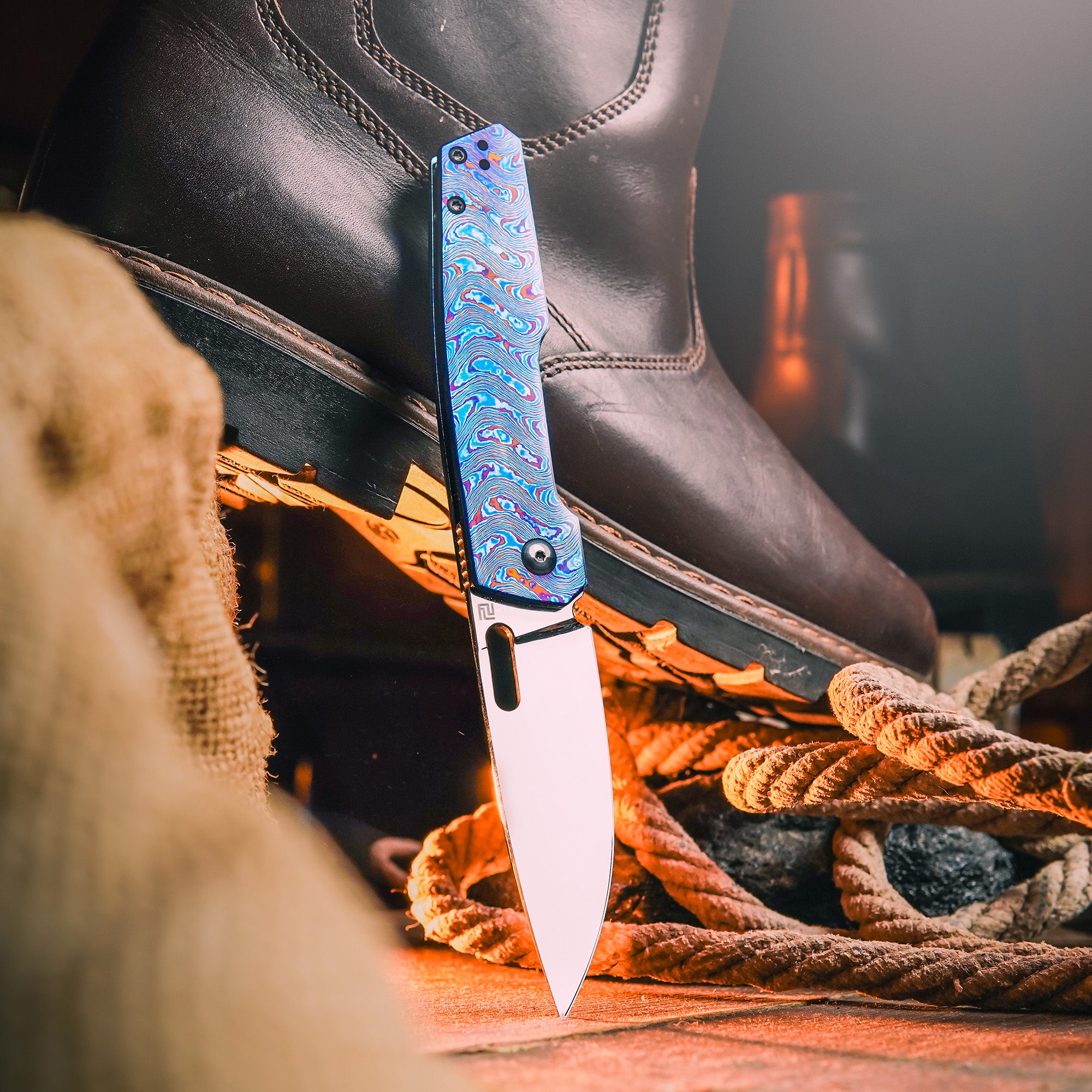
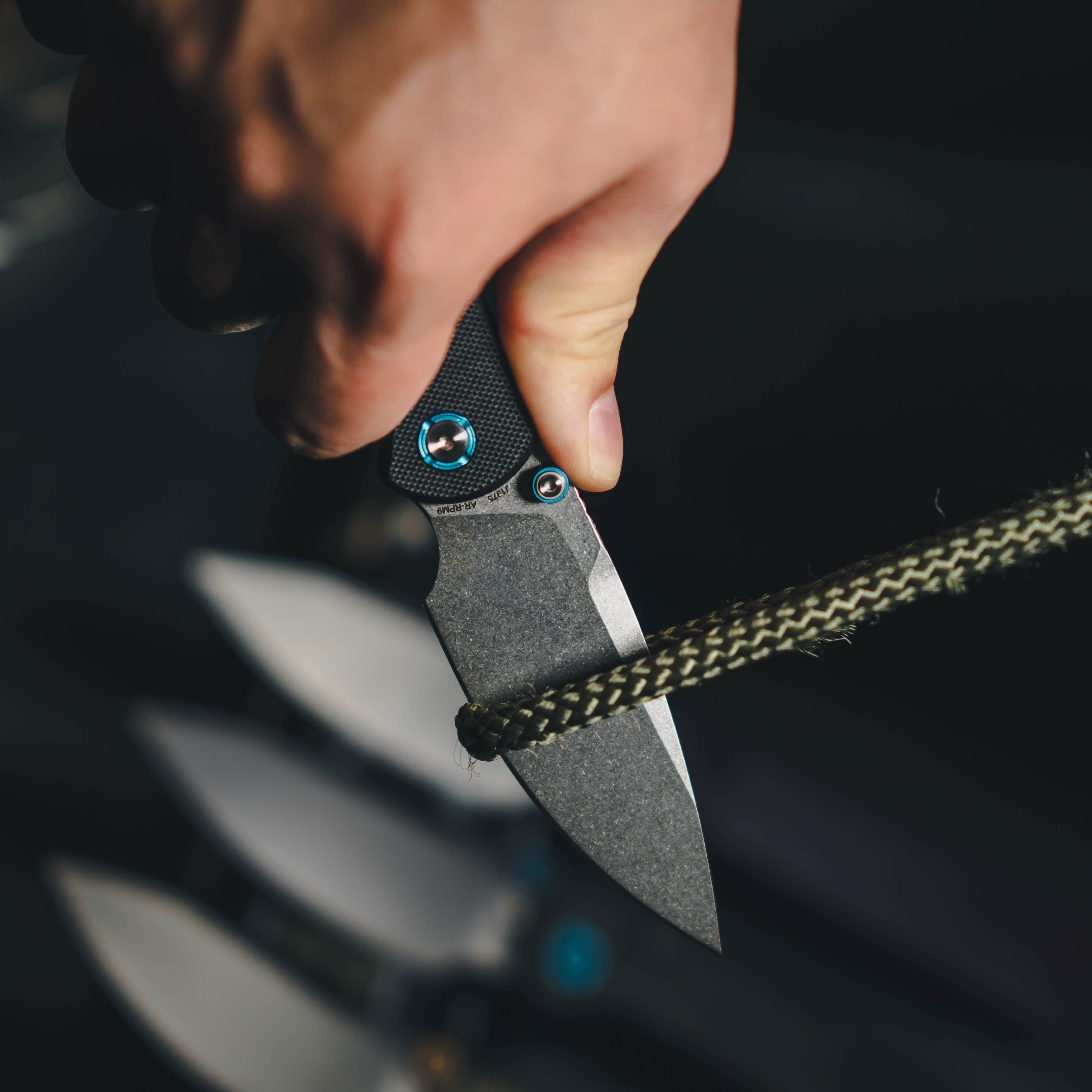

A folding knife is a small machine. A pivot pin or bearing, a pair of washers, a detent ball, and a locking interface all have to move against each other thousands of times without galling, sticking, or grinding themselves apart. Lubrication is what keeps that system smooth — and the wrong lubricant is what turns a crisp action into a gritty one.
A drop is enough: lubricant belongs at the pivot, not spread across the blade.
This guide covers what to lubricate on a folding knife, which lubricants actually belong there, the step-by-step routine, and where a drop of threadlocker (not oil) is the right answer.
Why Folding Knives Need Lubrication
Metal-on-metal contact at the pivot creates friction and, over time, wear. A thin film of lubricant does three jobs:
- Reduces friction so the blade opens and closes with less resistance.
- Carries away debris, letting grit and metal dust work out of the pivot instead of embedding in it.
- Resists corrosion at the exact spot where two dissimilar surfaces sit together.
Bearings and washer pivots have different needs: a washer pivot wants a slightly heavier film to stay put, while a caged-bearing pivot usually wants a lighter oil that will not gum up the ball track.
What to Lubricate (and What Not To)
Be specific. Over-oiling a knife is as bad as never oiling it — excess lubricant traps pocket lint and grit.
- Pivot and washers or bearings: a small drop on each side of the pivot.
- Detent track: a trace where the detent ball rides, which smooths the opening and the half-stop feel.
- Lock interface: a very light film on the lock face, not a puddle — heavy grease on a liner or frame lock can make the lock feel mushy.
- Blade and handle: wipe, do not soak. The blade only needs a corrosion-inhibiting film if you use it in wet conditions.
Types of Knife Lubricant Compared
| Lubricant | Best For | Notes |
|---|---|---|
| Mineral oil | Budget, food-safe use | Cheap and nontoxic; needs reapplying more often |
| Synthetic knife oil | General pivot duty | Purpose-made, clean, low odor, stays put |
| PTFE / dry lubricant | Dusty or gritty environments | Dries to a film and does not attract grit |
| Grease | Heavy-use washers, tangs | Stays put but can gum with lint; avoid on bearings |
| CLP / multi-purpose oil | Field maintenance | Cleans and protects; heavier than a dedicated pivot oil |
There is no single best lubricant. Match the product to the pivot: a light synthetic oil for bearings, a slightly heavier film for phosphor-bronze washers, and a dry lubricant where you know grit will be present.
Step-by-Step: How to Lubricate a Folding Knife
- Clean first. Open the knife, flush the pivot with warm water and a drop of dish soap, work the action, then blow out the water. Never lubricate a dirty pivot — you will just seal grit in.
- Dry completely. Water left in a pivot is the fastest route to rust.
- Apply one drop. Put a single small drop of oil on each side of the pivot where the blade meets the handle.
- Work the action. Open and close the knife slowly a dozen or so times so the lubricant spreads through the washer or bearing track.
- Wipe the excess. Blot any oil that migrates onto the blade or handle. A thin film is the goal.
- Do the lock lightly. Add a trace to the lock face and the detent track.
- Reassemble and test. If you removed the pivot for cleaning, reinstall it to a snug-but-not-crushed tension and check for blade play and centering.
How Often Should You Lubricate?
- Daily carry: a light touch roughly every month, or sooner if the action feels dry.
- Heavy or dirty use: after any job that leaves grit or moisture in the pivot — then clean and relubricate.
- Storage: a film of oil before a knife goes into long-term storage, plus a check for rust every few months.
Pay attention to feel rather than the calendar. A crisp, quiet action means the pivot is fine; a gritty or stiff one means it is time.
Should You Use Loctite on a Folding Knife?
Threadlocker and lubricant solve opposite problems, and it matters which screw gets which. Pivot and body screws on a folding knife loosen over time from the constant cycling of the action. A low-strength thread-locking fluid — the medium-strength blue type — holds those screws without making them impossible to remove later.
Two rules:
- Use blue, not red. High-strength (red) threadlocker can require heat to break, which is more than most knife owners want to do at the workbench.
- Treat the pivot screw differently. Blue on body and clip screws; add a dab to the pivot screw only once you have dialed in the tension you want.
Common Lubrication Mistakes
- Using WD-40 as a long-term lubricant. It is primarily a water displacer and cleaner rather than a durable lubricant — its solvent carrier evaporates and leaves the pivot dry.
- Cooking oil from the kitchen. It works for a day and then turns sticky as it oxidizes.
- Greasing the whole blade. Lubricant belongs at the pivot and lock, not smeared across the blade you are about to cut with.
- Flooding the pivot. More oil means more places for lint and grit to collect.
- Never cleaning. Lubricant on top of debris is worse than a dry but clean pivot.
For a food-safe, low-cost option, a thin coat of mineral oil works well on knives used around food, since it is nontoxic and easy to reapply.
Keep Your EDC Running Smooth
A two-minute cleaning and oil routine, once a month, is all most folding knives need to stay fast, quiet, and free of rust. Start with a clean folding knife, apply a drop where the metal actually meets metal, wipe the excess, and add a little blue threadlocker to the screws that keep working loose. That is the whole system — and it is the difference between a knife that feels new for years and one that feels gritty within a season.


Leave a comment
This site is protected by hCaptcha and the hCaptcha Privacy Policy and Terms of Service apply.